YouTube Users Can Limit Gambling Ads, More Options Forthcoming from Google

Social media giant Google will give users an option to limit gambling ads they can view. The move starts with its YouTube division.

Google says it prioritizes transparency
Google CEO Sundar Pichai pictured above. His company will let users limit the number of gambling ads they can view. (Image: Justin Sullivan/Getty Images)

The new feature begins with YouTube ads in the US. It is likely to be offered worldwide for Google Ads and YouTube in early 2021.

It applies to both gambling and alcohol ads. But those nations with legal restrictions on gambling or alcohol marketing will not see changes.

We’ve heard feedback that some people would prefer to limit ads in certain categories like alcohol, so … we’re launching a new control in Ad Settings, enabling people to see fewer alcohol ads, with gambling as an additional option,” Debbie Weinstein, vice president, YouTube and Video Global Solutions, said in an online company statement on Thursday.

Google users could previously hide specific ads through a Mute option. But individuals could not limit categories of ads.

The new option does not eliminate all alcohol or gaming ads. It just limits them.

“With a click of a button, you can choose to see fewer gambling and alcohol ads. It is also reversible; should you change your mind, you can click to see such ads again,” Weinstein said.

Google Says It Prioritizes ‘Transparency’

“Building tools that provide transparency and control has always been a top priority for us, and over the years, we’ve empowered people to shape their ads experience through user controls,” Weinstein claimed in the post.

In 2019, Casino.org reported how another social media giant, Facebook, had gambling ads allegedly targeting children.

Also, the UK Gambling Commission (UKGC) partnered with Facebook in September to reduce gambling-related content that is shown to at-risk adults, such as problem gamblers, on the social media platform.

Google Among Media Sites Criticized by Trump Supporters

The latest move by Google follows attacks on the company — and to a greater degree on Facebook and Twitter — by supporters of President Donald Trump — that the media sites unfairly posted information on the recent presidential campaign. Critics said postings favorable to Joe Biden were covered but not ones that were negative about the president-elect.

Also, many negative postings on Trump were included in the social media sites, the critics claim. More positive stories on Trump often were not seen on the sites, critics add.

In addition, Engadget, a technology news site, reported this week that YouTube says it will remove videos from its site which challenge the certified 2020 presidential election results. Google said, that since September, it banned over 8,000 channels and “thousands” of videos for “harmful and misleading” claims, Engadget added.

In addition, this week Google told advertisers that starting on Thursday it was eliminating its ban on political ads that went into effect after polls closed on Nov. 3, according to Axios, a US-based news site.

But Google said it will continue to “rigorously enforce” ad policies, “which strictly prohibit demonstrably false information that could significantly undermine trust in elections or the democratic process, among other forms of abuse.”

In October, Republican Senators alleged Facebook, Google, and Twitter censored conservatives under the name of content moderation, Roll Call, a US political news site, reported.

For instance, Sen. Marsha Blackburn, (R-Tenn.), asked Google CEO Sundar Pichai during a Senate committee hearing whether the social media giant still employed Blake Lemoine, an engineer who criticized her online. Pichai told the Senator he did not know.


The post YouTube Users Can Limit Gambling Ads, More Options Forthcoming from Google appeared first on Casino.org.


TripAdvisor app banned in China over tenuous link to gambling

China continues to show that it will stop at nothing to hide any mention of gambling, unless, of course, it’s run by the state. This week, China blocked a total of 105 apps as its Internet police launched their latest crackdown, banning them for providing access to “obscene, pornographic, violent, bloody and other illegal information, and providing illegal services such as fraud, gambling and prostitution,” according to CNN. Caught up in the purge was a seemingly innocuous site that cannot realistically be lumped into that category. TripAdvisor is no longer accessible to the Chinese travel market. 

TripAdvisor app banned

The Cyberspace Administration of China (CAC), aka the keyholders of the Great Firewall that controls who accesses what in the country, reported the new list of blocked sites this week, adding in a translated statement, “The Cyberspace Administration of China will continue to … strengthen the supervision and inspection of mobile apps’ information services, promptly clean up and dispose of illegal mobile applications and application stores, and strive to create a clear cyberspace.” However, even though TripAdvisor found itself on the list, the site was still active in the country as of this past Tuesday, per CNN’s report. 

The CAC didn’t offer details on why certain sites found themselves on the banned list, and it’s not easy to find a connection between TripAdvisor and the explanation by the agency for why it prohibits the sites. However, the closest thing to a working theory available is the fact that China has been cracking down on gambling, especially cross-border gambling, and may have viewed TripAdvisor’s access to gambling destinations as a way around its controls. 

In China, anyone found operating an illegal casino can be punished with five to ten years behind bars. The same goes for anyone who markets foreign casinos to the country’s citizens, and China recently launched an effort to crack down on individuals and companies it feels is directly targeting the Chinese gambler. 

TripAdvisor hasn’t weighed in on any possible reason for the ban in the country. It only issued a statement that read, We’re not in a position to comment at this time. TripAdvisor’s brand in China is managed by a joint venture between TripAdvisor and Trip.com Group, which owns a majority share. Please forward all inquiries to pr@tripadvisor.cn.” Trip.com hasn’t spoken up, either.

TripAdvisor shareholders didn’t appreciate the announcement when it was first made. Since November 30, the company’s stock has been on the rise from $26.11, reaching $31.05 on December 7. By yesterday afternoon, it had dropped to $29.34 before closing at $29.37. While Trip.com owns most of the Chinese operations, TripAdvisor maintains control of 40% of the joint venture. 

The post TripAdvisor app banned in China over tenuous link to gambling appeared first on CalvinAyre.com.

Tilman Fertitta Confirms Casino, Restaurant IPO Plans

Texas billionaire Tilman Fertitta confirmed reports from last week that he is considering taking parts of his casino and dining businesses public amid strong investor appetite for new equity.

In an interview with CNBC, the businessman said Tuesday that he could list some of its business because “IPOs are so hot right now” and the size of his business, the restaurant industry, and the casino industry are “something that people would want to own.”

Mr. Fertitta owns casino operator Golden Nugget and the Landry’s Inc. dining empire, among other businesses. Bloomberg reported last week that the businessman was mulling taking a “substantial” portion of his gaming and restaurant operations public via an IPO.

According to sources familiar with ongoing listing discussions, the IPO could include several Golden Nugget casinos and a number of Landry’s-owned restaurants and would see the company be valued at several billions of dollars.

Golden Nugget currently operates five casinos in four states, including two in Nevada and one in Atlantic City. As for Landry’s, the multi-brand dining giant incorporates the Landry’s Seafood chain as well as a number of other brands operating under its umbrella.

People close to Mr. Fertitta said that in the event of an IPO the businessman would retain control of his company through a stake of well over 50%.

Being Public Is Fun, Businessman Says

If he takes his business public, Mr. Fertitta could take advantage of the recent rally in equity markets driven by record coronavirus lows this spring. Investors have maintained a strong appetite for initial public offerings after the pandemic hit the deals market.

Landry’s first went public in 1993 but was returned to the private market about a decade ago. Mr. Fertitta told CNBC that he enjoys being public and the “competitiveness of quarter to quarter and year to year.”

He further elaborated that a business could do “bigger deals” and that there is “much more opportunity when you have a stock book.” The businessman pointed out that they have tried several acquisitions in the last six months but lost out to public companies every time because these companies can pay a larger multiple.

Another company owned by Mr. Fertitta, Golden Nugget Online Gaming (GNOG), is taking an alternative route to the stock market. The iGaming and betting operator announced this summer that it would go public via a merger with a special purpose acquisition company.

The SPAC that GNOG is set to merge with, Landcadia Holdings II, Inc., is too led by Mr. Fertitta. The deal secured regulatory approval in New Jersey late last month. Landcadia shareholders are set to vote on the transaction on December 18 and it is expected to close shortly after.

Follow us on Facebook and Twitter to stay up to date on the day’s top casino news stories

The post Tilman Fertitta Confirms Casino, Restaurant IPO Plans appeared first on Casino News Daily.

UK Tote Group to expand into betting on human sports

The pari-mutuel betting group behind the UK Tote are planning to start taking wagers on human sports in a bid to lessen their reliance on bob-tailed nags. 

On Friday, Sky News reported that the UK Tote Group had raised £20m in new equity from existing investors. The money will be used in part to fund a diversification strategy that will see the race betting operator establish a new football betting division sometime next year. 

A Tote spokesperson stated that responding to “new opportunities … remains a key priority” for the well-heeled individuals behind Alizeti Capital, which acquired the Tote from former owners Betfred last year. 

Alizeti is comprised of key racing figures, including racehorse owners, breeders, trainers and jockeys. The UK Tote Group’s CEO is Alex Frost, a former Merril Lynch trader, who welcomed accountant John Williamson as Tote chairman in September. 

The Tote spokesperson said the new opportunities currently on the horizon include “being able to expand into other sports” and promote the Tote to “a broader base of sports fans” that have yet to succumb to pool betting’s charms. While the Tote is said to be doing alright, there appears to be a growing consensus that putting all its eggs into one basket is no longer an advisable strategy. 

UK race betting has struggled to rebound from a series of pandemic restrictions that forced racing ‘behind closed doors’ with no punters in the stands. In October, GVC Holdings sold its UK and Ireland on-course bookmaking operations, which GVC said were handling “minuscule” betting handle. 

UK racetracks in some pandemic regional ‘tiers’ welcomed back a limited number of spectators this week under strict health and safety precautions. But the Jockey Club recently stated that the pandemic would likely reduce its 2020 revenue by £90m with the damage bleeding into 2021 as well.  

In October, the Horserace Betting Levy Board (HBLB) announced that it would continue its “significantly increased support” for racing through the first four months of 2021. The HBLB has allocated nearly £32m from January through April, with nearly £7m in additional regulatory grants and another £650k to handle costs associated with pandemic protocols. 

However, HBLB chairman Paul Darling warned that “this level of funding … is unsustainable beyond the short-term.” Darling urged racing and betting stakeholders to “work together on future plans” as contributions return to normal levels. 

Last month, the Arena Racing Company waived entrance fees through the end of the year for struggling on-course bookies at all tracks that were allowed to admit spectators. ARC further promised to see what support it could offer the dwindling number of on-course bookmakers in 2021.

The post UK Tote Group to expand into betting on human sports appeared first on CalvinAyre.com.

Los Angeles Councilman Vows to Address City’s Rising ‘Slaphouse’ Problem

Los Angeles City Council will explore new measures to battle illegal gambling dens and so-called “slaphouses” in the city, per a new motion introduced this week by Councilman Bob Blumenfield.

Slaphouse
Slaphouse
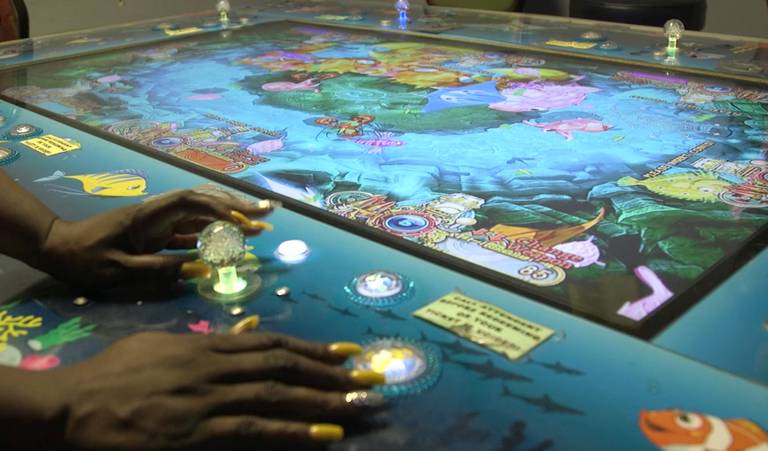
The “Fish Hunter” genre of arcade games (pictured), popular in China, Japan, and Korea, has become the prevalent game in the slaphouses of Los Angeles. (Image: Charlotte Observer)

The motion directs city departments to find ways to deter landlords from leasing commercial properties to those involved in illegal gaming and to force them to terminate leases when infractions are uncovered, MyNewsLA reports.

“These are not friendly weekend poker game,” Blumenfield said. “These are full-fledged illegal casinos fixed with gambling machines, many of which with deep ties to local and international organized crime syndicates. We need to get a handle on this now to shut them down.”

What’s a Slaphouse?

Slaphouses — apparently named for the button-bashing sound made by patrons playing on illegal machines — are a growing phenomenon in LA and elsewhere. Often springing up in areas where retail has taken a downturn, they usually look like vacant storefronts and sometimes still sport the signage of the previous occupying business.

Inside, you won’t find traditional slots. These gaming machines usually come from overseas – most often from Japan, China or Korea — and offer arcade-style, skill-based gambling games.  

Police raids have frequently turned up what authorities have described as an arcade-style “fishing game” built into a table. These are the “Fish Hunter” genre of games — which include titles like King of TreasuresDragon Hunter, and Ocean King. They’ve been popular in Asia for the past 15 years but are now an American slaphouse staple. These particular titles are made and distributed by various companies based in China, according to their websites.

European Connection?

According to Blumfield, slaphouses are linked to an increase in crime, including gang activity, the sale of drugs, and prostitution. Last year, LAPD executed 48 search warrants for illegal gambling dens, a 300 percent increase on the previous year.

FOX 11 recently joined Vice units from LAPD’s Valley Bureau on nine separate raids of illegal casinos operating throughout the San Fernando Valley. The news channel learned that in many cases the slaphouses’ finances and servers were controlled by criminals in Eastern Europe.

Blumfield’s motion also asks the Los Angeles Department of Building and Safety, in consultation with the Department of City Planning, Department of Water and Power and the LAPD, to prepare a report on strategies and tools that could deter gambling operators from setting up in abandoned storefronts. The councilman said this would have the dual purpose of eliminating slaphouses and providing enforcement tools other than the LAPD.

Last year, the California legislature passed a bill that made it easier for local authorities to seize assets from illegal gambling dens.

The post Los Angeles Councilman Vows to Address City’s Rising ‘Slaphouse’ Problem appeared first on Casino.org.