
GVC Treats Boss Kenny Alexander to Additional Stock

GVC Holdings’ boss reassured investors of his long-term commitment to the company after getting £2.5 million worth of shares

GVC Holdings has awarded its boss £2.5 million worth of shares nearly three weeks after he slashed his personal stake in the company and gave the shivers to investors, who interpreted his disposal of shares as a signal that he might be leaving the gambling powerhouse.

Kenny Alexander, who navigated GVC through the acquisition of bwin.party in 2016 and of Ladbrokes Coral in 2018, said that he was “totally committed to GVC” and promised not to sell any more company stock.

Earlier this month, the top executive offloaded more than a half of his personal holding in the major gambling operator to trouser £13.7 million. He said back then that he was committed to the company for the long term and that “at the very least [he has] a current plan that will take three-plus years to accomplish.”

Shares of GVC hit their lowest in nine years on the heels of news about Mr. Alexander’s decision to cut his personal stake.

The company announced earlier this week that it would award its boss 450,000 shares that were worth £2.5 million at market’s closure. The move was linked to performance targets. Mr. Alexander’s personal holding stood at 666,666 shares before he was awarded stock by the company. The combined value of his shares amounts to around £9.2 million.

Mr. Alexander reassured GVC and investors that he does not plan to sell any more shares while he is its CEO and that his commitment to the company is a long-term one.

Search for New Chairman in Process

Reports emerged last week that GVC’s Chairman, Lee Feldman, was leaving after more than a decade at the company. The gambling operator confirmed Mr. Feldman’s departure and said that the search for replacement has already begun.

Mr. Feldman, too, offloaded a massive chunk of his personal stake earlier this month. He sold nearly three-quarters of his holding for £6 million. Investors saw an indication of the GVC Chair’s possible departure, and they proved right. A spokesperson for the gambling powerhouse said last week that Mr. Feldman leaving the company had been “in the offing for a fair while before the share sale.”

GVC, just as all UK-facing operators, is facing growing regulatory pressure in its domestic market with the recent hike in the remote gambling duty and the pending FOBTs crackdown. The company is now heavily focused on the recently liberalized US sports betting market to offset any losses it is poised to suffer in the UK.

Last summer, the gambling operator formed a joint venture with Las Vegas casino and hospitality giant MGM Resorts International to exploit together the opportunities offered by the anticipated legalization of sports gambling in multiple states.

Follow us on Facebook and Twitter to stay up to date on the day’s top casino news stories.

The post GVC Treats Boss Kenny Alexander to Additional Stock appeared first on Casino News Daily.
Genting UK dumps London casino over weak sales

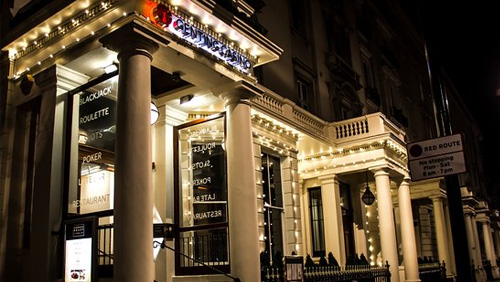
Genting UK has spent the past several years trying to find someone willing to take the Maxims Club Casino in Kensington, UK off its hands. It has finally found a buyer and its parent company, Genting Malaysia Bhd, announced last Friday that it has sold the casino’s operator, Coastbright Ltd., to a Canadian company for $45.6 million.

Genting UK dumps London casino over weak salesSonco Gaming Inc., along with several investors, is the new owner of Coastbright and Maxims. The Canadian company is mainly involved in the ownership and operation of gambling venues around the globe.

Maxims was once an exclusive casino in Kensington, a borough of London. It is located in a 19th century building that was once owned by a friend of Charles Dickens in one of the wealthiest parts of the UK. It has been competing with other exclusive gambling facilities and never gained the traction Genting expected. The gambling operator purchased the venue about ten years ago and continued slow performance has had it looking for a new owner for several years.

The Maxims brand covers other types of facilities, as well. It is found in casino resorts owned by Genting in Asia, but it isn’t clear whether or not the sale will force changes in those branded offerings.

In the fall of 2017, Genting put the property on the market, hoping to fetch about $52.71 million. It was willing to negotiate on the price if a valid offer came along, but there hasn’t been much movement until now. The company also contracted with the CBRE property consultancy company to handle the sale.

Selling the property will help Genting free up cash and reduce some of its debt. It will also open up opportunities to seek out new investment opportunities and the company expects to walk away with around $30.3 million after all fees are covered. In a filing with Bursa Malaysia, Genting stated, “The proceeds from the disposal are intended to reduce Genting UK group’s borrowings, and for other potential investment opportunities.”

While the sale will free up cash, it isn’t expected to significantly boost the consolidated earnings or net assets of Genting for the current financial year.

The post Genting UK dumps London casino over weak sales appeared first on CalvinAyre.com.

PAGCOR Forms Interagency Council to Combat Illegal Online Gambling

PAGCOR and four government departments form an interagency council to tackle the unauthorized provision of online gambling services

The Philippines’ gambling regulator, PAGCOR, has assembled an interagency task force to step up its fight against illegal online gambling. The move comes after the regulatory body announced late last year that it would ramp up efforts to purge the local gambling market from unlicensed operations.

PAGCOR and four government agencies signed a mutual cooperation agreement to intensify the nation’s campaign against the unauthorized provision of gambling services.

The Philippine National Police, the National Bureau of Investigation, the Bureau of Immigration, and the Department of Justice along with PAGCOR have formed an interagency council that will be tasked with cracking down on unlicensed online gambling activities, particularly offshore ones.

PAGCOR Chair and Chief Executive Officer Andrea Domingo said that there are 57 licensed online gambling companies in the Philippines, and that the new interagency council’s goal will be to clamp down on all other operators.

Ms. Domingo said that one of the big issues obstructing the fight against illegal operations was the fact that staff at foreign offshore gambling operators could not be deported immediately. Bureau of Immigration Chief Jaime Morente explained that if a foreign citizen was found guilty, they should serve prison time before their eventual deportation.

Efforts to Tackle Illegal Online Gambling

The members of the new interagency council will be sharing and gathering together information on how to combat illegal gambling. They will also provide manpower and will jointly implement investigation procedures that will help in discovering unlicensed operations.

Digital forensic examination, validation of gaming licenses, visa verification of foreign nationals employed at online gambling businesses, and filing charges against violators of Philippine gambling laws will all be part of the procedures that members of the council will be conducting.

Under the mutual cooperation agreement, PAGCOR will provide funds for different activities and projects aimed at curbing unauthorized gambling operations.

The Philippine gambling regulator said in a Thursday statement that it has seen a significant surge in revenue since the Philippine Offshore Gaming Operators (POGO) licensing system was introduced in 2016 and PAGCOR’s authority over offshore operations was extended.

According to the statement, POGO license holders generated PHP657 million in 2016, PHP3.9 billion in 2017, and PHP7.4 billion in 2018. Generally speaking, POGO licenses authorize their holders to provide offshore online gambling services from within the Philippines. However, these services cannot target customers that are located on the territory of the country.

Follow us on Facebook and Twitter to stay up to date on the day’s top casino news stories.

The post PAGCOR Forms Interagency Council to Combat Illegal Online Gambling appeared first on Casino News Daily.

Showboat Atlantic City Owner Bart Blatstein Pitches Standalone Casino Next to Resort

Showboat owner Bart Blatstein has gained a “certificate of compliance” from the New Jersey Casino Control Commission (CCC) to become eligible to operate a gaming venue.

Bart Blatstein Showboat Atlantic City casino

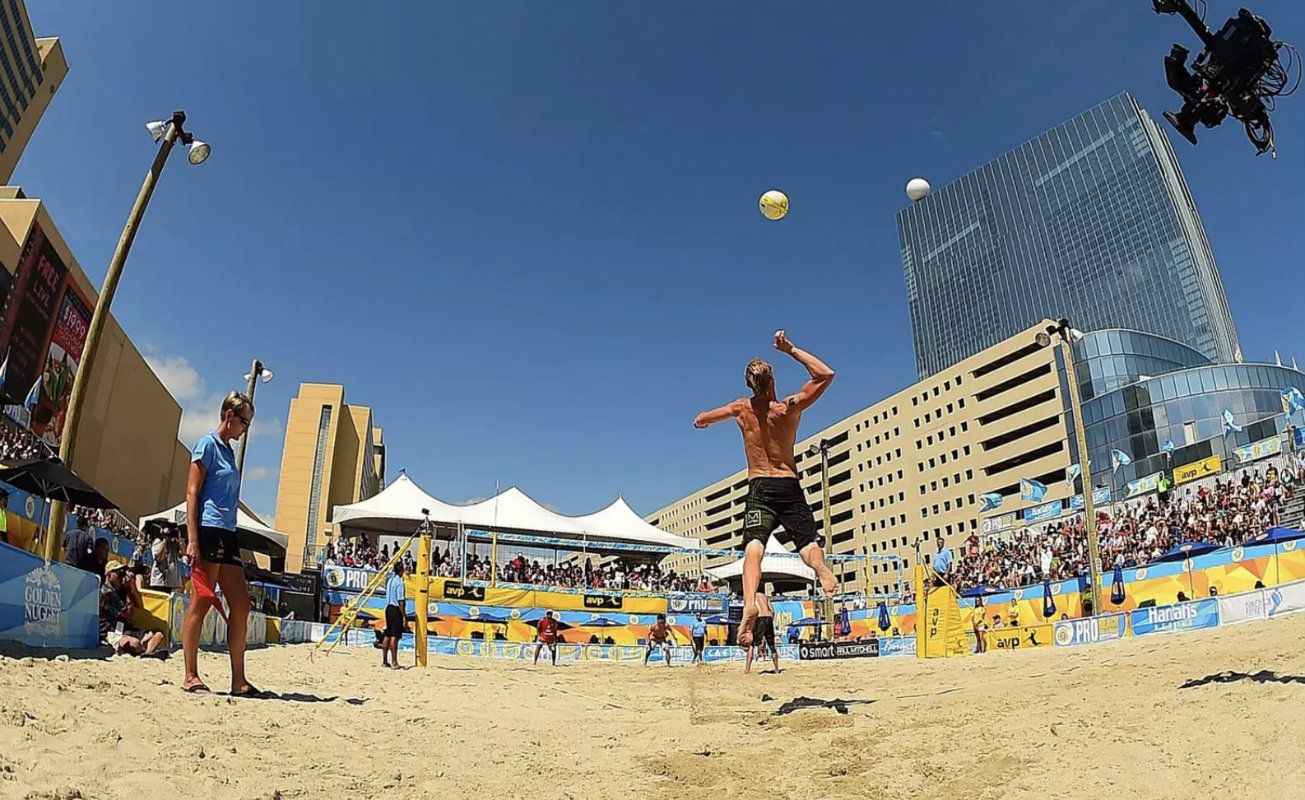
The beach volleyball area next to the Showboat Atlantic City might become the resort’s casino floor. (Image: Robert Beck/Sports Illustrated)

Acquired in January of 2016 for $23 million, Blatstein’s Showboat was one of four casinos that closed in the New Jersey beach town in 2014. Caesars Entertainment shuttered the Boardwalk property despite it remaining profitable in an effort to better stabilize operations at its three other casinos.

Before selling the Showboat in 2014 to eventual buyer Stockton University, Caesars placed a deed restriction on the 872-room hotel resort that prohibits casino gaming from taking place inside the structure. The restriction remains, but Blatstein has come up with a creative plan to bypass the prohibition.

The real estate developer told the CCC that he wants to build a separate casino venue adjacent to the Showboat on undeveloped land where beach volleyball is presently played.

USLegal.com says “deed restrictions are private agreements that restrict the use of the real estate in some way.” The legal advice site adds that “restrictions travel with the deed, and cannot generally be removed by new owners.”

Showboat Steams Forward

Stockton University had planned to reimagine the Showboat into a satellite campus with student housing. That’s when billionaire Carl Icahn – who in 2014 still owned the neighboring Trump Taj Mahal – interjected with liability concerns regarding college students residing next to his casino.

“The scenario of young college students residing full time in a dormitory a few steps away from the Taj is entirely different from allowing families to dine in our restaurants,” attorneys for the Taj told Atlantic County officials in 2014. The end result was yet another deed restriction that required the Showboat to be used only as a “first-class casino-hotel.”

Blatstein said this week he worked with Icahn to lift the stipulation and allow him to open the resort as a non-gaming property. He now plans to bypass the Caesars restriction by building a standalone casino on the 123,000-square-foot sand lot that is in between the Showboat and neighboring Ocean Resort.

Future Casino

With the CCC determining that Blatstein is qualified to proceed with obtaining a gaming license, he can now formally begin the application process. In the meantime, the Showboat owner told gaming regulators the casino he’s envisioning won’t be like others in town.

The old-style casinos are no longer in vogue,” Blatstein declared. “This gives me an opportunity to do something for today and tomorrow. It needs to be different.”

“Young people are very mobile and very experience-oriented, so it will be designed accordingly,” he stated.

Blatstein didn’t provide details on the number of machines and table games it might incorporate. He also didn’t comment on whether skill-based gaming – innovating gaming machines casinos believe might better appeal to millennials – would be included.

Regardless, additional gaming options in a town with nine casinos already battling for market share presumably won’t be welcomed by current operators.

New Jersey’s gaming industry reported gross gaming revenue (GGR) of $2.5 billion last year, a four percent increase. However, six of the seven casinos in operation prior to the introductions of Hard Rock and Ocean Resort last June all reported casino win declines.

The post Showboat Atlantic City Owner Bart Blatstein Pitches Standalone Casino Next to Resort appeared first on Casino.org.

Caesars Entertainment to Save $40M Annually by Reducing Corporate Positions

Caesars Entertainment has announced plans to trim its corporate costs by $40 million a year, as the future of the casino giant remains in limbo and billionaire corporate raider Carl Icahn continues to increase his position in the company.

Caesars Entertainment corporate jobs

Caesars Entertainment plans to reduce its overhead at the corporate level. (Image: Caesars Entertainment)

The $40 million savings plan will come by way of reducing “corporate overhead,” the company said in a statement yesterday. Caesars will cut a “small percentage” of corporate jobs, and also eliminate open positions. Consulting services will also be reduced.

The corporate overhaul was expected, as Caesars Entertainment CFO Eric Hession told investors during the company’s Q4 call, “We’re focused on reducing corporate costs. They are currently elevated due to our IT transformation and sports betting businesses, and we expect to show improvement later in the year from the current run rate.”

CEO Mark Frissora added, “Looking ahead, Caesars will implement more efficiency.”

Caesars officially emerged from Chapter 11 bankruptcy in October 2017. Bloomberg analysts said recently that the company’s reorganization left the casino operator with “distressed debt investors and hedge funds.” Today, those shareholders and entities have much influence over the Las Vegas gaming and hospitality group.

Private Equity Cashes Out

Apollo Global Management and TPG Capital – two of Caesars Entertainment’s largest shareholders over the last decade – officially departed the company this week after a tumultuous 11-year position.

Combined, the two private equity firms unloaded 38 million Caesars shares, per a filing with the US Securities and Exchange Commission (SEC). The total disbursement was $323 million, or 5.7 percent of the company.

The two firms acquired Caesars – then known as Harrah’s Entertainment – in January 2008 for $27.4 billion. At that time, shares of the casino operator were trading above $80. That same year, however, Lehman Brothers filed for Chapter 11 bankruptcy and ignited the worst US recession since the 1930s.

Today, those $80 Caesars shares are trading below $9.

Las Vegas Savings

Caesars’ announcement to cut costs to save $40 million follows MGM Resorts’ “2020 Plan” to save $100 million a year. MGM said in January it would reduce three percent of its workforce – or around 2,100 jobs – with the goal of increasing adjusted earnings before interest, taxes, depreciation, and amortization (EBITDA) by $300 million by the end of 2021.

Icahn now controls nearly 18 percent of Caesars Entertainment. The billionaire activist investor has been pressuring the company to sell. Golden Nugget and Eldorado Resorts have both expressed interest, but were rejected by the Caesars board.

That board has since changed, as Icahn has been afforded three seats. Along with better exploring potential reverse acquisitions, he’s using the presence to sell Affinity Gaming CEO Anthony Rodio as the best candidate to replace Frissora.

Frissora announced his resignation amid investor pressure in February. He’s staying with the company until his successor is identified. According to SEC filings, Caesars will pay Frissora an “equity grant” totaling $7 million for agreeing to stay through the end of April.

The post Caesars Entertainment to Save $40M Annually by Reducing Corporate Positions appeared first on Casino.org.