Swedish BOS Rejects Proposal for New Credit Card Ban in Gambling

Swedish-BOS-rejects-the-proposal-A-new-ban-on-gambling-on-creditThe Swedish Trade Association for Online Gambling (BOS) has formally submitted its statement to the Ministry of Finance regarding the memorandum titled “A new ban on gambling on credit,” which proposes a ban on the use of credit cards for gambling. BOS has firmly rejected this proposal, citing significant negative consequences for channelization.

Gustaf Hoffstedt, Secretary General of BOS, explained the association’s stance [pdf], emphasizing that such a ban would likely push consumers towards unlicensed and illegal gambling platforms, which currently constitute almost half of the Swedish online casino market. Hoffstedt stated, “In the name of consumer protection, Sweden should not add new restrictions on consumers that still place their bets on the legal gambling market.”

Alternative Proposal Suggested by BOS

If the government decides to proceed with the ban, BOS proposes an alternative approach: instead of placing the obligation on gambling operators, the responsibility should be on credit card issuers. Under this model, the Swedish Financial Supervisory Authority (Finansinspektionen) would supervise credit card issuers to ensure they do not process payments for gambling companies, including those operating illegally or without a license.

BOS argues that this approach would more effectively prevent the use of credit cards for gambling while avoiding further burdens on licensed operators. Hoffstedt pointed out that licensed gambling operators are already heavily restricted and additional limitations could drive more consumers towards the unlicensed market, undermining consumer protection goals.

BOS’s Rationale for Rejection

BOS has consistently supported measures to prevent gambling on credit. However, the association draws a line at banning credit cards, which are a common and regulated form of payment. “At least one credit check is conducted before issuing a credit card,” Hoffstedt noted, “and in most cases, credit is repaid monthly, accruing no interest.”

The association also highlighted that credit card usage for gambling is on the decline, with many consumers shifting to other payment methods like Swish. Those who do use credit cards for gambling are typically older with more organized finances, and the prevalence of problem gambling among them is relatively low.

The biggest challenge, according to BOS, is the prevalence of unlicensed gambling, a view shared by Finance Market Minister Niklas Wykman. Hoffstedt stressed that restrictive measures against licensed operators, such as the proposed credit card ban, combined with inadequate countermeasures against unlicensed operators, have led to a significant outflow from the legal gambling market. “This must end,” he said, emphasizing that enhancing the attractiveness of the licensed market is crucial for effective regulation.

Concerns Over Government’s Approach

BOS expressed concern over the government’s tendency to exempt state-owned or controlled gambling operators from new restrictions, creating an uneven playing field. The association fears that this might undermine competitive neutrality and consumer confidence.

In conclusion, Hoffstedt reiterated BOS’s position that the proposal to ban credit cards for gambling should be rejected. He emphasized that effective regulation should include measures to counteract unlicensed gambling while supporting the legal market.

“Sweden’s largest online casino operator is likely unlicensed,” Hoffstedt noted, underscoring the need for balanced regulation. BOS believes that imposing the ban on credit card issuers rather than gambling operators is a more effective and fair approach to achieving the intended consumer protection goals.

Source: Press release: BOS rejects the proposal A new ban on gambling on credit. BOS. May 23, 2024.

The post Swedish BOS Rejects Proposal for New Credit Card Ban in Gambling appeared first on Casino News Daily.

Brazil Bans the Use of Credit Cards and Crypto for iGaming Payments

credit_cards_and_crypto_banned_under_brazil_payment_rulesBrazil, one of the largest regulated iGaming markets in the world, has set new rules which ban the use of credit cards and crypto currencies for payments related to gambling and sports betting.

The new rules were published by the Regulatory Policy of the Prizes and Betting Secretariat and the Ministry of Finance on 18 April in the national Official Diary of the Union, in the form of Normative Ordinance Number 615.

This new set of rules represents the beginning of the first stage of a four-part regulatory campaign that was presented last week by the country’s Ministry of Finance. This campaign will ultimately implement Bill 3,626, which was ratified by the Brazilian president in December 2023. The first stage is expected to be completed by the end of April and it will establish new rules regarding payments, technical aspects and security regulations.

Normative Ordinance Number 615 has established several new rules, with the first and most important being that iGaming operators in Brazil can no longer accept payments from credit cards, payments in crypto currencies or in cash. Moreover, payments in the form of payment slips or cheques are also prohibited.

All bets, withdrawals and payouts can be executed only through electronic transfers between the operators and their customers’ accounts. Moreover, the respective accounts have to be previously authorized by the Central Bank of Brazil. Operators will also have the obligation to deny payments from accounts not registered with the respective customer or from third parties.

Intermediaries between players and operators are strictly prohibited, but certain institutions authorized by the Central Bank are allowed to offer accounts on behalf of iGaming operators in some situations, for example to allow players to receive a prize that they won.

Winning Bets Paid Out in Less Than 2 Hours

Normative Ordinance Number 615 has also set a time limit for receiving prize payments on winning bets, operators must deliver that into the player’s account in at most 120 minutes.

The new rules also obligate operators to set up a virtual account for players in which they will be able to analyze details regarding their betting habits. This is expected to allow players to have a better understanding of their financial and betting information and make better decisions when it comes to managing their gameplay.

The respective virtual accounts will display the respective player’s betting history over the previous three years, with key aspects such as the total value of open bets and their financial balance on display.

Operators will also be in charge of managing their liquidity risk, including establishing a financial reserve of at least 5 million Brazilian Real, which would convert in around 950,000 U.S. dollars.

Source: “Credit cards and crypto banned under Brazil payment rules“. iGaming Business. April 18, 2024.

The post Brazil Bans the Use of Credit Cards and Crypto for iGaming Payments appeared first on Casino News Daily.

New Legislation Bans Using Credit Cards for Online Betting in Australia

A lot is changing when it comes to Australian gambling law, and new legislation has just been passed. The use of credit cards as a payment method for placing online bets will be prohibited from now on, as the Australian Federal Parliament decided.

Important measure

Kai Cantwell, the CEO of Responsible Wagering Australia, supports this decision. He thinks that the country needs this decision since the residents will be allowed to gamble only with the money they actually have on their cards.

Cantwell commented: “This is an important measure to protect customers and their loved ones, making it easier for people to stay in control of their own gambling behavior. It will complement the existing offering of safer gambling account management tools by RWA members to customers to help them stay in control of their betting.”

Lotteries and keno issue

australian-parliament-passes-legislation-banning-online-credit-card-betting-He added that it was disappointing that some kinds of games, for example, lotteries and keno, were excluded from this ban since the lotteries are the most popular type of gambling in the country, especially in people from lower socioeconomic groups.

Only in 2020 and 2021 did citizens lose more than $3.2 billion playing these two types of games, according to the Australian Gambling Statistics. When online keno was legalized in Victoria, these numbers increased even further, and in 2022 and 2023, the losses increased by more than 400%.

There are other parts of the gambling law that lotteries are excluded from. There is also a National Self Exclusion Register, Betstop, so the Australians who already have excluded themselves from other forms of online gambling still have the opportunity to gamble up to $10.000 online by playing lotteries.

Cantwell added: “To effectively reduce gambling harm, consumer protection measures must exist across all forms of gambling. Otherwise, those at risk of harm will just move from one form of gambling to another less regulated type.”

Strict regulations

The industry is talking about the potential credit card ban from 2021. The RWA members collaborate with the federal government and financial institutions to deliver the best possible solutions when it comes to credit card bans and online gambling regulations. The institutions will continue to work hard on this, and the ban is supposed to be implemented in all online casinos in Australia within six months.

This is the newest regulation in the Australian market, but not the only one. Other prohibitions include banning external signage, reducing the cash-input limit, reducing the cap on machine entitlements, and others.

Source: Narayan, Niji, Australian Parliament Passes Legislation Banning Online Credit Card Betting”. European Gaming. December 7. 2023.

The post New Legislation Bans Using Credit Cards for Online Betting in Australia appeared first on Casino News Daily.

Missouri Man Shot Dad Dead, Hit Casino with His Credit Cards

A Lake Saint Louis, Mo. man suspected of shooting his father dead went to the Ameristar Casino St Charles with the victim’s credit card right after the alleged crime, The Saint Louis Dispatch reports.

Joseph M. Liszewski, Edward Liszewski, Lake Saint Louis, Ameristar St Charles
Joseph M. Liszewski in a Lake Saint Louis Police mugshot. The 39-year-old has admitted killing his father with a shotgun before heading out to the Ameristar Casino, according to a police report. (Image: KMOV)

Joseph M. Liszewski, 39, was charged with first-degree murder last Thursday following the discovery of his father’s body at the Lake Saint Louis home they shared.

When police later arrived at the house, Liszewski told them his father had inadvertently stepped on a shotgun and shot himself. That’s according to a probable cause statement seen by local media.

The suspect added that he didn’t know where his father was. Police suspected he had taken drugs.

Earlier, Liszewski was captured on security video at the Ameristar Casino St Charles, just hours after police suspect he killed his father.

Traumatic Event

Officers noticed there were dried drops of blood on the front porch of the house. In the hallway and kitchen, they found more blood, this time in splatters and pools, according to the report.

Officers concluded there was “obviously a traumatic event that had happened in the kitchen.”

Upstairs, they found the victim deceased and with a large gunshot wound to the left side of his face. He was covered by a comforter.

Police did not identify the victim by name. But neighbors who spoke to the Dispatch identified him as Edward Liszewski, 72.

Confession

Jospeh Liszewski, who has a history of DUI charges, was detained at the scene and booked on a $1 million bond. When police searched him, they found the suspect had his father’s bank cards and ID.

The suspect admitted that he and his father had gotten into an argument between midnight and 1am on Thursday morning.

He had killed his father in the kitchen with the shotgun, he stated. His father said, “You shot me, you shot me, you shot me,” according to the police report.

The suspect claimed he then tried to help his father by washing his face and placing towels on the wounds.

‘Blood and Guns’

Police were initially called to the crime scene after receiving a 911 call from a friend of the suspect. She had received text messages from Liszewski after he had returned from the casino.

Liszewski had told her “something terrible happened” and he “did it for her.”

The woman went to the house to check on him and found “blood and guns all over the place,” according to the probable cause statement.

Liszewski was also charged with armed criminal action and unlawful possession of a firearm.

The post Missouri Man Shot Dad Dead, Hit Casino with His Credit Cards appeared first on Casino.org.

VICI Credit Rating Affirmed at BBB-, Outlook Stable

VICI Properties’ (NYSE: VICI) corporate credit grade was affirmed at “BBB-“ with a “stable” outlook in a new report by Fitch Ratings.

Caesars asset sale
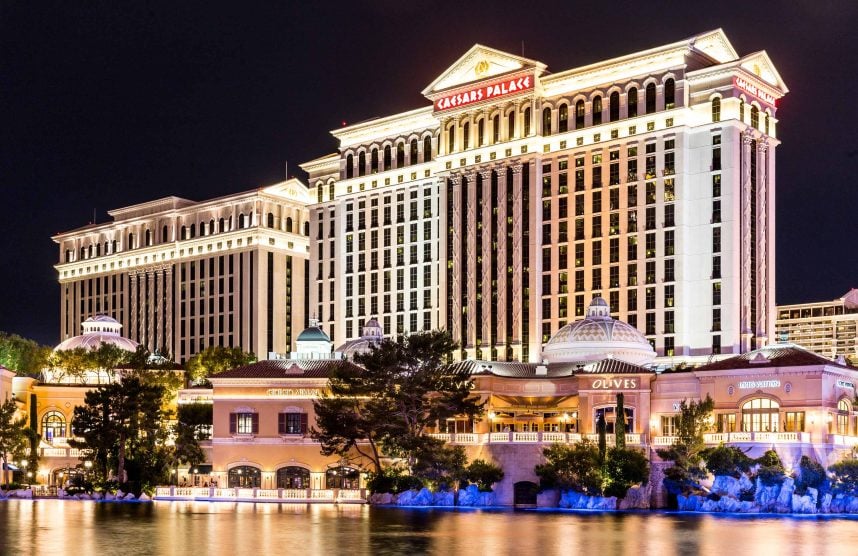
Caesars Palace on the Las Vegas Strip. Owner VICI Properties maintained an investment-grade credit rating at Fitch. (Image: CNN)

That means the largest landlord on the Las Vegas Strip carries the lowest possible investment-grade credit rating. Fitch noted that an upgrade to that mark is possible if the real estate investment trust (REIT) can sustain a net debt/earnings before interest, taxes, depreciation and amortization (EBITDA) ratio below 4.5x, if it diversifies its tenant base and if VICI and its rivals show the ability to easily tap capital markets if needed.

In terms of tenant diversification, VICI’s two biggest clients are MGM Resorts International (NYSE: MGM) and Caesars Entertainment (NASDAQ: CZR), providing the REIT with significant exposure to the Las Vegas Strip as well as a slew of regional casino markets.

VICI’s client roster also includes Apollo Global Management, Century Casinos and Hard Rock International, among others, confirming the gaming REIT is diverse across regions and casino sizes. However, Fitch notes MGM and Caesars combine for 76% of VICI’s adjusted revenue.

VICI Favorable Fundamentals

At a time of elevated stress in some corners of the commercial real estate market, namely office space, VICI stands tall in the broader real estate sector. Strong rent collections and an ability to thrive in inflationary environments are among the factors underpinning the REIT’s investment thesis.

Positively, the company has stable occupancy and rent collections with CPI-linked escalators, though overall gaming REITs have weaker contingent liquidity compared with more traditional CRE property types, which is a drag on the rating,” according to Fitch. “The ratings also contemplate Fitch’s expectation of deleveraging below 5.5x by YE 2024; if deleveraging is delayed as a result of operational issues or capital allocation, the ratings or Outlook may be revised.”

Due to a spate of deal-making over the past couple of years that significantly expanded the REIT’s client and property rosters, VICI’s leverage is running toward the higher end of the historical range. However, Fitch believes the company can drive that figure down to 5x to 5.5x by the end of 2024.

“Deleveraging will result from a combination of annual contractual increases in rental income (all fixed but includes potential upside from CPI-linked escalators) and whether retained cash flow post-merger is directed toward acquisitions,” added the ratings agency.

VICI Could Be Longer-Term Candidate for Better Ratings

Better credit ratings are imperative for any company because the higher an issuer’s grade is, the more it saves in interest payments when it sells corporate debt.

Ratings agencies, such as Fitch, typically don’t take corporate downgrades or upgrades lightly, but VICI is a credible candidate for a credit grade boost over the long haul. The ongoing desirability of Las Vegas and regional casino real estate is one reason why.

“Positively, non-traditional owners have increasingly been purchasing Las Vegas real estate (e.g. private equity), which has led to cap rate compression and is a longer term positive as it relates to the attractiveness of Las Vegas gaming real estate,” concluded Fitch. “Regional gaming outperformed many of the other hard-hit sectors during the pandemic, which should also be a longer-term positive as it relates to the attractiveness of regional gaming real estate.”

The post VICI Credit Rating Affirmed at BBB-, Outlook Stable appeared first on Casino.org.