New York Lawmaker Representing Seneca Land Urges Governor to Reach New Compact

An outgoing state lawmaker in New York has had enough of Gov. Kathy Hochul’s (D) lackadaisical approach to negotiating a new Class III gaming compact with the Seneca Nation.
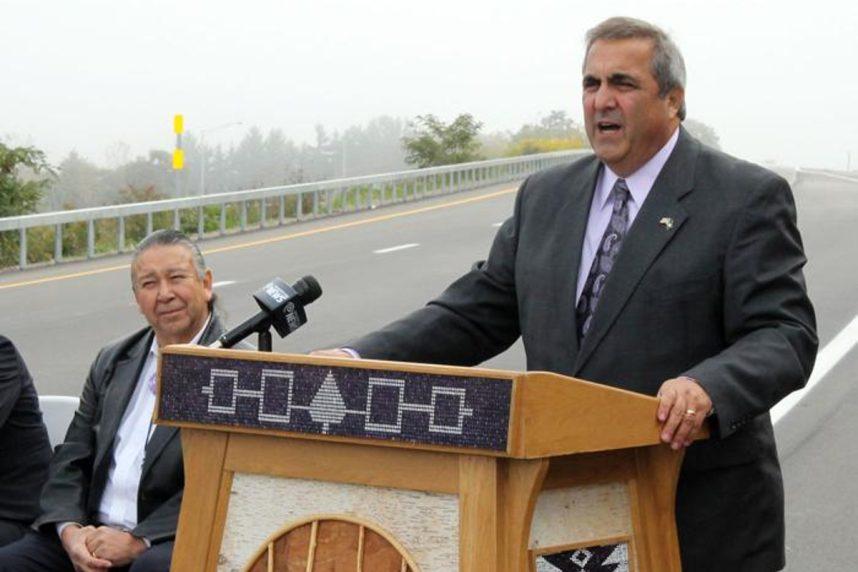
New York Seneca compact Joseph Giglio
New York Assemblyman Joseph Giglio, a longtime friend of the Seneca Nation, celebrates the reopening of Interstate 86 between exits 21 and 23 in Salamanca, on Oct. 14, 2014. Giglio is retiring from public service, but before he leaves, he is asking Gov. Kathy Hochul to hastily work to reach a new gaming compact with the Seneca tribe. (Image: The Salamanca Press)

New York Assemblyman Joseph Giglio (R-District 148) has represented the southwestern portion of the upstate region since 2015. His district includes Seneca territory where three of its gaming properties operate.

Giglio is urging Hochul and Democratic leaders, the party with strongholds on both chambers of the New York State Legislature, to work quicker in reaching a new revenue-sharing agreement with the Seneca Nation.

I’ve spoken with Seneca Nation Council members who told me every time they think they have a deal, something happens that derails the talks. A new gaming compact is vital to our regional economy across Western New York,” Giglio told the Olean Times Herald.

The Seneca Nation’s gaming compact that provides the tribe exclusive rights to slot machines and live dealer table games west of State Route 14 in Upstate New York expired in December 2022. Since then, the tribe has directed 25% of its gross slot revenue to an escrow account.

Giglio is not seeking reelection. With the State Legislature adjourned for 2024, his legislative duties have ended, pending the possibility that Hochul could call a special session to approve a gaming compact.

Negotiations Slow

Hochul’s office and the Seneca Nation a year ago this month surprisingly announced a tentative agreement that would have initiated a new 20-year compact. A reduced slot tax rate and the authorization of a tribal casino in Rochester were reportedly included in the gaming terms.

The deal, however, stalled in the state Assembly after Rochester officials and state lawmakers representing the fourth most populated city in the state voiced opposition to a tribal casino. Those local officials said they should have been included in negotiations to bring a Las Vegas-style resort to the area.

Since the June 2023 tentative deal was folded on by the Assembly, talks regarding new terms have come to a standstill.

The tribe says a reduced tax is warranted after New York authorized four upstate commercial casinos in 2013 and three full-scale downstate casino licenses are likely to be awarded next year. The Senecas, Giglio says, deserve a new, fair deal that would allow escrow money to go to the many local towns that rely on it and allow the tribe to better prepare for its economic future.

It’s time for the executive branch negotiating team to come back to the table and negotiate in good faith with the Seneca Nation for the benefit of everyone in Western New York, both native and non-native,” Giglio said.

Seneca Nation casinos generate an annual impact of over $1 billion a year to the Western New York economy. The tribe’s casinos and gaming halls employ more than 6,000 people, with most being non-natives.

Automatic Extensions

After their 2023 compact was terminated, Hochul and the Seneca Nation agreed to automatically extend the expired compact quarterly until a new compact is reached. The next extension is scheduled for July 1.

Giglio’s district includes Seneca Allegany Resort & Casino, Seneca Gaming & Entertainment Salamanca, and Seneca Gaming & Entertainment Oil Spring.

The post New York Lawmaker Representing Seneca Land Urges Governor to Reach New Compact appeared first on Casino.org.

NOGA Urges Dutch Kansspelautoriteit to Act on Minors Gambling with Illegal Operators

Peter-Paul de Goeij, director of the Netherlands Online Gambling Association (NOGA), is calling for a “rigorous” response from Kansspelautoriteit (KSA) after research revealed that illegal operators are allowing minors to gamble. The findings, shared by Keurmerk Responsible Affiliates (KVA) and Licensed Dutch Gaming Providers (VNLOK), highlight a significant issue within the Netherlands’ gambling industry.

Research Findings on Underage Gambling

noga-urges-rigorous-ksa-response-after-research-finds-illegal-operators-accepting-bets-from-minorsThe research conducted by KVA uncovered that minors in the Netherlands can easily gamble with offshore operators. The study showed that these operators do not require the necessary age verification, allowing anyone with an email address or telephone number to create an account. This lack of oversight enables those below the legal gambling age of 18 to deposit and gamble, often using cryptocurrency for anonymous transactions.

Further, the study found that illegal casinos use the logos of banks and legal operators to mislead minors into believing that their deposits are safe. This practice is particularly concerning as it exploits the trust and security associated with these financial institutions.

Previous Research and Industry Concerns

KVA’s recent findings build on previous research from 2023, which indicated that illegal sites were targeting players attempting to bypass Cruks, the Netherlands’ self-exclusion scheme. This ongoing issue highlights the need for stringent regulatory measures to protect vulnerable groups from the risks associated with illegal gambling.

De Goeij emphasized the heightened risks for underage gamblers, noting their increased susceptibility to addiction and related mental health and financial problems. He urged the KSA to take decisive action to address these issues and fulfill its mandate to protect consumers.

“The Kansspelautoriteit (KSA), the Dutch Gambling Authority, is expected to address these issues rigorously,” De Goeij told iGB. “The KSA is likely to enhance monitoring and enforcement actions against unlicensed operators, imposing hefty fines and blocking access to these websites. Educating the public, especially minors and their parents, about the risks of unlicensed gambling and how to avoid these sites can be an effective preventive measure.”

Recommendations for KSA Action

De Goeij advocates for increased collaboration between the KSA and other jurisdictions, sharing intelligence and best practices to combat illegal operators. He also suggests that the KSA should work closely with financial institutions to block illegal transactions and cut off revenue streams to offshore operators.

“The KSA should employ advanced technologies like geolocation blocking and AI-driven monitoring to detect and shut down access to offshore gambling platforms,” De Goeij added. “Working with internet service providers (ISPs) to block unlicensed gambling sites could significantly reduce access.”

Broader Issues in the Dutch Gambling Market

The timing of KVA’s research coincides with growing industry concerns over regulatory changes in the Netherlands. Recently, a coalition agreement proposed increasing the gambling tax from 30.5% to 37.8%, aiming to generate an additional €202m in tax revenue. NOGA has expressed concerns that such measures could push operators towards the black market, undermining the regulated market’s integrity.

Earlier this year, the house of representatives voted to ban “high-risk” gambling, including online slots, and to prohibit online gambling advertising. These regulatory changes, combined with higher taxes, could drive more players to unlicensed sites, where consumer protections are minimal.

De Goeij is particularly worried about the potential impact on the legal market, warning that higher taxes and advertising restrictions might reduce revenue for the Dutch government and legal operators. This shift could lead to increased fraud, addiction, and other harms associated with unregulated gambling.

NOGA’s Strategic Recommendations

To combat the potential rise of the black market, De Goeij recommends that the KSA and the government adopt evidence-based regulations that do not overly burden legal operators. He believes that encouraging innovation and improving customer experiences in the legal market can help retain and attract players.

“The KSA and the government should encourage innovation and better customer experiences in the legal market to retain and attract players,” De Goeij said. “They should also be continuously researching market trends and player behavior to adapt regulations and strategies dynamically. Only by taking a proactive and balanced approach, the Netherlands can protect its citizens while maintaining a robust and attractive legal gambling market.”

Source: “NOGA urges rigorous KSA response after research finds illegal operators accepting bets from minors”iGaming Business, May 23, 2024.

The post NOGA Urges Dutch Kansspelautoriteit to Act on Minors Gambling with Illegal Operators appeared first on Casino News Daily.