Remembering the Las Vegas Strip’s Founding Mother

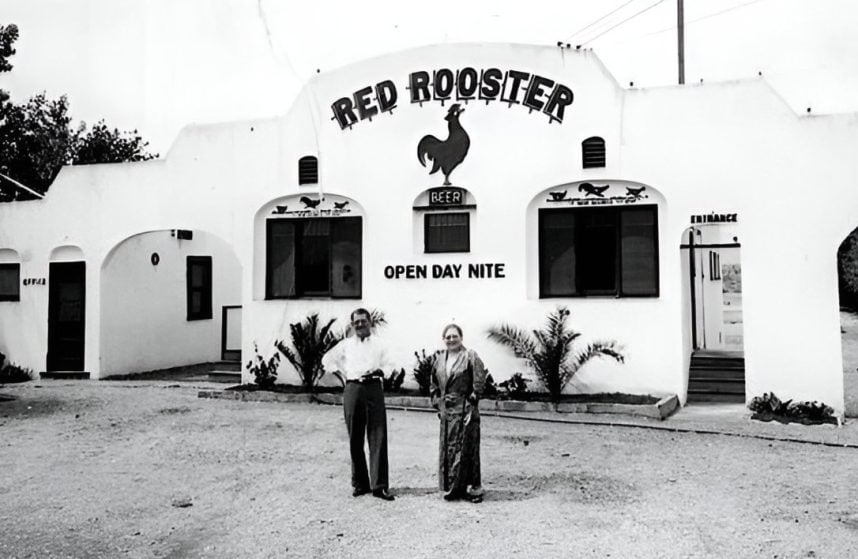
The Las Vegas Strip has a founding mother, not a founding father. On Mother’s Day, we remember Alice Morris, founder and proprietor the Red Rooster, the very first licensed casino on Las Vegas Boulevard.
Red Rooster
In what is believed to be the only surviving photo of Alice Morris, the founding mother of the Las Vegas Strip (right) poses with her husband in front of her Red Rooster nightclub circa 1933. Ninety-two years ago tomorrow (April 1), Morris became the future Strip’s first licensed casino owner. (Image: vintagelasvegas.com)

No, mobster Benjamin “Bugsy” Siegel didn’t create the Las Vegas Strip. A whopping four casinos and two full-fledged resorts beat the Flamingo to Highway 91, as the main road from Salt Lake City to Los Angeles was known in 1946. The first was opened n Nov. 26, 1930, on 12 acres where the north gate of The Mirage now stands. At first, it was a nightclub featuring dance marathons, live all-girl bands, and dining. (A chicken dinner would set you back $1.)

There was no gambling yet, at least not of the legal variety. As strange as this sounds, Las Vegas had outlawed it since Sept. 30, 1910.

Amid the moral reform of the Progressive Era of the early 20th century, Nevada banned most forms of gambling,” UNLV history professor Michael Green told Casino.org. “It didn’t become legal again until Governor Fred Balzar signed Assembly Bill 98 on March 19, 1931.”

Anxious to exploit the new revenue stream but having no experience with gambling, Morris did what the owners of many other Las Vegas clubs did at the time: she enlisted the advice of a gambling expert. And who were the gambling experts back then?

Mob Rules

Morris “Goldie” Goldsworth was lured to Las Vegas by the promise of illegal gambling profits in an untapped market. A rising player in the LA gambling racket at the time, he would be found beaten to death by a hammer in the back seat of his car on Oct. 16, 1958. The LA coroner called the gunshot wounds to his head “only superficial.” He was 52.

When he was still breathing, Goldie agreed to set up and run Morris’ gambling operation in exchange for an undocumented cut of the profits. He applied for a modest license — for a blackjack table and three slot machines –, and on April 1, 1931, the Red Rooster became the first Clark County establishment on Highway 91 to receive a gaming license under the new law.

The Red Rooster also became the first Las Vegas Strip casino to lose its gaming license because serving alcohol was another thing that was, surprisingly, against the law at the time. It would remain so across the US until the repeal of Prohibition on Dec. 5, 1933.

Alcohol had been available at the Red Rooster since the day it opened. In February 1931, Prohibition agents even dropped in to issue Morris a warning. And she complied, temporarily. But on May 18, 1931, the Red Rooster received a second visit from the feds that wasn’t so friendly. They arrested Morris and her husband, who were found guilty, granted probation, and fined $500.

Goldie wasn’t arrested during the raid. But when he applied to renew the Red Rooster’s gaming license on July 7, 1931, it was denied due to the previous liquor violation.

Other Pre-Flamingo Strip Casinos

Like the Red Rooster, the Pair O’ Dice opened as a nightclub and restaurant in 1930, serving alcohol under the table. Unlike the Red Rooster, however, owners Frank and Angelina Detra never got busted. They also applied for a gaming license but didn’t receive one until May 1931, a month after the Red Rooster was issued theirs.

The El Rancho Vegas opened in April 1941. It had the largest casino on Highway 91, with 70 slot machines and four table games. It also had its own swimming pool and a 63-room hotel. So, it can rightfully be called the first resort on the Las Vegas Strip. As far as casinos go, however, it was No. 3.

In 1941, the Pair O’ Dice was sold and incorporated into the Hotel Last Frontier. Its 1942 grand opening made it the fourth official casino on the Strip and the second resort.

The Flamingo Hotel didn’t open until Dec. 26, 1946, as the future Las Vegas Strip’s fifth casino and third resort.

Red Rooster Crows On

The Red Rooster’s timeline continued after losing its casino license. In 1933, Clark County gave Morris’s business a new life by granting it a dance hall license. After Prohibition was repealed later that year, the county followed up with a beer-only liquor license. Though the Red Rooster suffered a fire in July 1933, Morris rebuilt and reopened it on Dec. 30 of that same year. It remained popular throughout World War II.
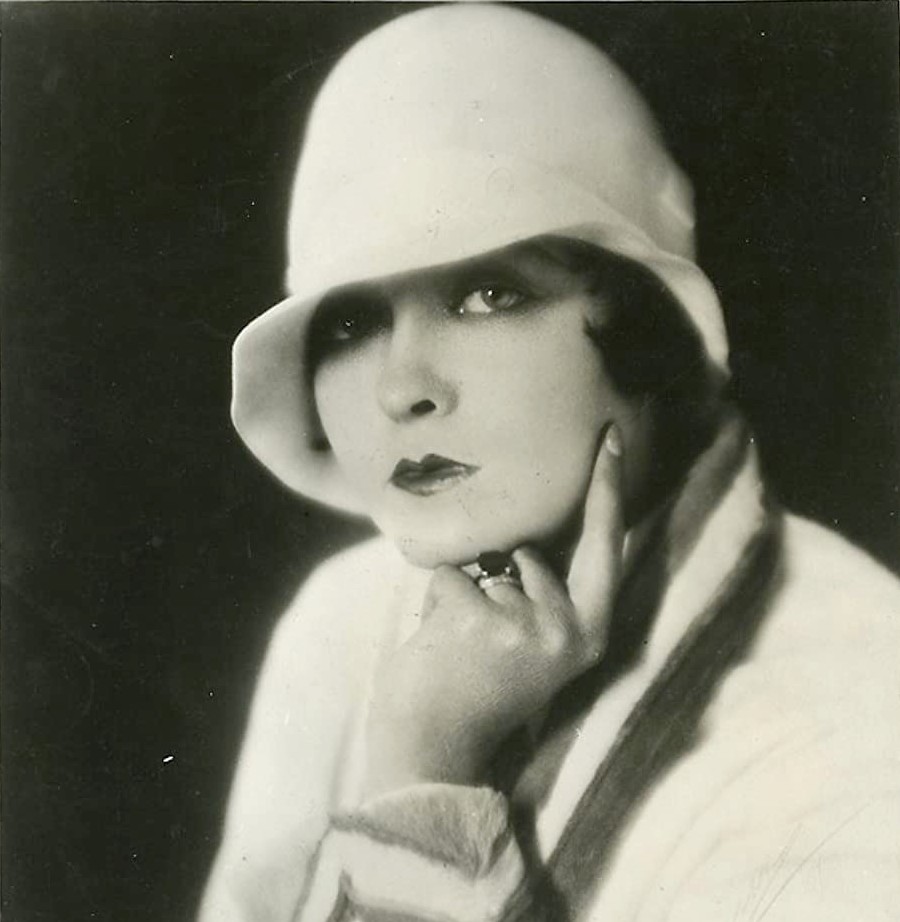
Vaudeville singer/actress Grace Hayes in her 1930s heyday. (Image: IMDB)

In 1947, Morris sold the Red Rooster to former vaudeville star Grace Hayes. By then, a motel, the Sans Souci (French for without care), had been added to the property. In 1962, it would be demolished to create The Castaways.

Like so many former vaudevillians, Hayes was unable to transition to big-screen stardom. The singer and actress had managed to nab just two leading roles, playing a version of herself in 1936’s Maid for a Day and in 1941’s Zis Boom Bah.

So, Hayes enacted her Plan B. Exploiting her fading name recognition, she opened the Grace Hayes Lodge in Sherman Oaks, Calif., in 1938.

After deciding to relocate both herself and her club to Las Vegas, she paid Morris $15K for the Red Rooster and the 12 acres it sat on, renaming the club after herself and having a ranch house built behind it as her residence.

The club remained successful with Hayes at the helm, attracting many of the town’s early movers and shakers. In a 1981 interview with the Las Vegas Review-Journal, Hayes estimated that Howard Hughes was in the place at least three times a week.

“I don’t know what I served him,” Hayes told the newspaper. “I know I served him a drink. I mixed a drink. He didn’t care what it was. He never drank it, and he never paid me for a drink in his life.”
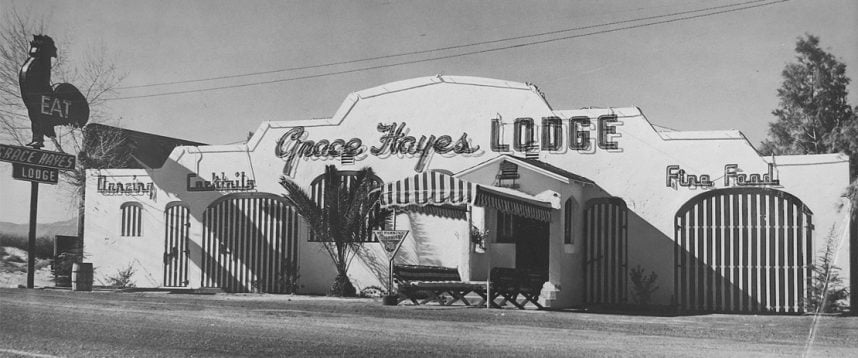
In 1947, the Red Rooster became the Grace Hayes Lodge. Note the original rooster road sign to its left. (Image: vintagelasvegas.com)

Growing tired of operating a club, Hayes leased it to others. When Willie Martello, better known for operating houses of gambling and prostitution in Searchlight, Nev., took over in 1949, he changed its name to Willie Martello’s Red Rooster. That’s because its regulars never stopped referring to the club by its former name.

After Martello, the club operated under a revolving door of different owners and new names. These included the Hi-Ho Club, The Patio, The Rendezvous, and finally, the Grace Hayes Lodge again. The club closed in 1957 and was torn down in 1959 by Standard Oil (which became Mobil Oil in 1966). Hayes had leased the land to the company to open a gas station.

Hayes Stays

Hayes continued living in the ranch house on her property. It eventually made history as the last remaining private home on the Strip. Her son and daughter-in-law joined her in Vegas, entertainers Peter Lind Hayes and Mary Healy, who were actively involved in the community.

In 1987, Steve Wynn paid Hayes $2M for her house and the Mobil station where the Red Rooster once stood. As part of the deal, she lived out her final days in a lavish suite at Wynn’s Golden Nugget resort downtown. Ill health forced Hayes to enter the Las Vegas Convalescent Center, where she died at age 93 in 1989. That’s the same year Wynn opened The Mirage on the site of her former home.
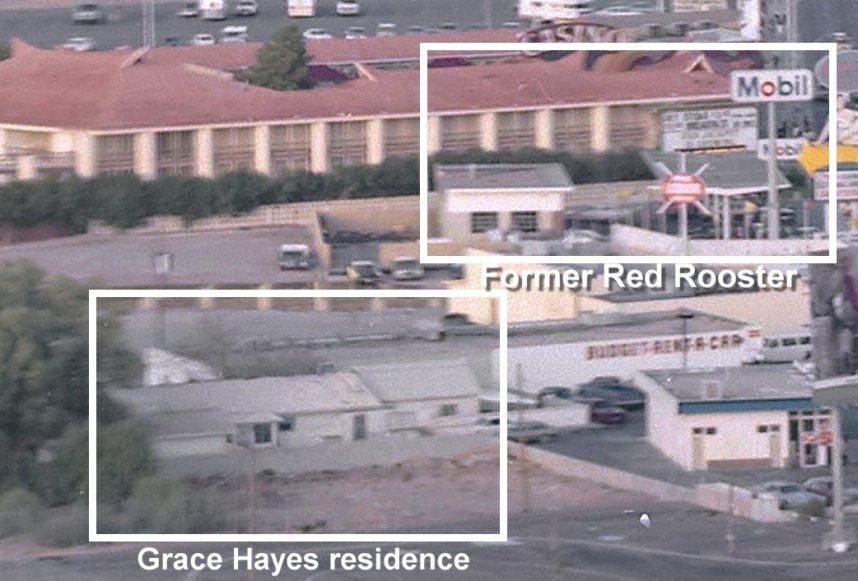
In this 1980s photo of the land on which Steve Wynn built The Mirage, Grace Hayes’ former residence can be seen in the foreground, along with the Mobil station built on the site of the Red Rooster. Behind that is the Castaways casino hotel. (Image: Twitter)

On almost the exact spot where the Red Rooster once stood, Wynn built The Mirage’s most famous public attraction. Sometime in 2024, his fake volcano is set to be demolished by Hard Rock International, which purchased The Mirage last year for $1.1B. The resort’s new owner intends to erect a 36-story guitar-shaped hotel tower in its place.

Since news of the volcano’s impending demolition broke, Baby Boomers and Gen-Xers have taken to social media to complain about Las Vegas’ lack of respect for its history. What’s amusing is that they think the volcano is the most historical thing that once occupied this site.

When you first see that guitar tower climbing toward the sky, know it is rising from the ashes of Las Vegas history.

“Remember the pioneers who came first,” Green said, “in this case, Grace Hayes and her predecessor, Alice Morris, the founding mother of the Las Vegas Strip.”

The post Remembering the Las Vegas Strip’s Founding Mother appeared first on Casino.org.
Living Las Vegas: Best of Vegas’ Arts & Entertainment

Looking for the best of Vegas’ arts and entertainment this season? From Stevie Nicks to Liberace, check out some of my recent experiences for some memorable experiences.

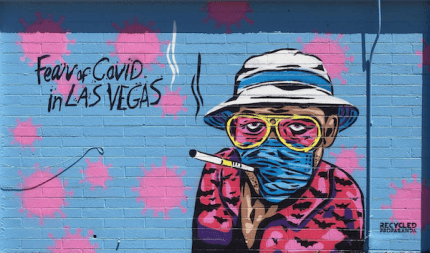
A mural by Recycled Propaganda. Check out their art gallery next time you’re in Vegas. (Image: Facebook)

In a two-week period, at this strikingly designed arena with impressively crystalline sound, I saw packed-out concerts by Stevie Nicks and Depeche Mode (both former PR clients of mine).

Stevie Nicks is at the edge of 75—and was as impossibly vibrant and playful as ever. She noted from the stage that she never felt freer by performing without her trademark platform shoes due to a recent broken toe.

Nicks brought the hits, deep cuts and a refreshing political/social consciousness. “Ukraine’s fighting for us,” she said before launching into an especially moving version of her older song, “Soldier’s Angel,” written after visiting soldiers at the Walter Reed Hospital in 2005. Stevie also put a psychedelic spin on Buffalo Springfield’s 1966 hit “For What It’s Worth,” explaining that Stephen Stills penned it about the 1966 Sunset Boulevard riots that protested an early curfew set by authorities.

Nicks said that she would have had a problem herself with that curfew: “I don’t even go to bed until 8:00 AM.” Bless Stevie Nicks’ wild heart—and long may she run.

Depeche Mode @ the Arena 

Depeche Mode are still the world’s biggest avant-garde rock band. Onstage, their elegantly dark songs with foreboding synths and intermittent spare guitar lines were shot through with non-stop charisma—and they raised the roof with their TV evangelist-bashing classic “Personal Jesus.”

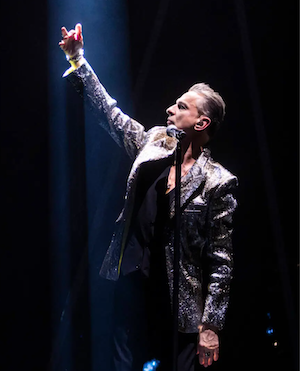
Dave Gahan on stage at the T-Mobile Arena in March. (Image: Las Vegas Journal-Review)

Now a duo, Dave Gahan and Martin Gore honored the recent death of bandmate Andrew Fletcher by displaying his image on multiple screens during their classic “World In My Eyes”; the song’s key lyrics (“That’s all there is/Nothing more than you can feel now”) took on a haunting new resonance. From their new album, Memento Mori (which means “remember that you must die” in Latin), the band rolled out the death-centric single “Ghosts Again” (“We know that we’ll be ghosts again”).

Guessing Bruno Mars won’t be covering this instant goth-rock anthem anytime soon at his residency at Dolby Live at Park MGM. Depeche Mode returns on December 1 to the arena.

KAOS at the Palms, Yachtley Crew

The soft-rock and R&B/jazz-tinged pop hits of the ‘70s and ‘80s, later branded as “yacht rock,” continue to have their day in the sun, thanks to the popularity of a dedicated Sirius channel to this music. Artists like Captain & Tennille, Christopher Cross, Toto, and many more were never allowed entry into the cool-kids club in their heyday, but their AM radio hits are now saluted in setlists by yacht rock bands like Yachtley Crew.

Billing themselves as the “Titans of Soft Rock,” they have a residency at KAOS at the Palms with new dates announced for June, October, November and December.

Their show is a feel-good, tongue-in-cheek celebration. The audience couldn’t care less what the rock critic intelligentsia had to say about a lot of this music when it was first released—they danced and loudly sang along to the smooth, easy-going sounds which suggest seemingly simpler times.

At the show, the nautical wear-attired band announced they’d scored a label deal with Jimmy Buffet’s indie label Mailboat Records.

They will release an album containing some original songs alongside their yacht rock covers. Personally, I never thought the music of unhip bands like Ambrosia and the Little River Band would rise again. It all goes to prove that you can’t hold back good melodies.

Recycled Propaganda, the Arts District

Bravo to Recycled Propaganda, the nom de plume for acclaimed artist Izaac Zevalking also serves as the name of his gallery and store in The Arts District.  His compelling artwork and murals—the images used for apparel, patches, pins and stickers—capture the paranoia and outrage of existing in a corporate-controlled society.

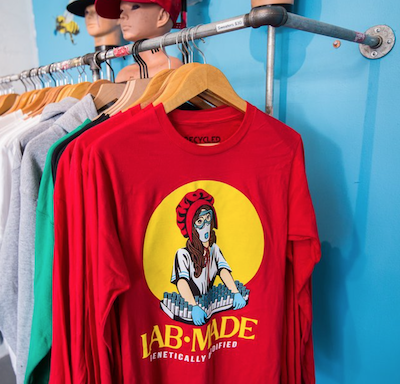
T-shirts for sale at Recycled Propaganda (Image: Yelp)

You can fight back against The Man by buying a “Tyranny of the Minority (Lobbying Light)” hoodie that uses Marlboro cigarette pack graphics or a “Start Unions” patch that visually calls out Starbucks. Also available for purchase is his artwork on canvas, wood and cardboard, with such titles as “Global Strike, “Question Everything,” and my favorite, “Genetic Carnage.”

Be sure to drop by this stimulating and purposeful gallery, which opened in 2018. It’s also “utilized as a platform to expose other established and up-and-coming artists.” Very cool to know that Recycled Propaganda is spreading the love around.

Hollywood Car Museum and Liberace Garage

It’s fun getting lost in the Hollywood Cars Museum, a 25,000-square-foot pop culture wonderland filled with vehicles that have appeared in more than 100 films, TV shows and videos (there’s another 5000 square feet in the back that’s rentable for special events). Under the same roof is the Liberace Garage with the pianist/icon’s insanely designed vehicles and other memorabilia reflecting his expensive and infectious bad taste.

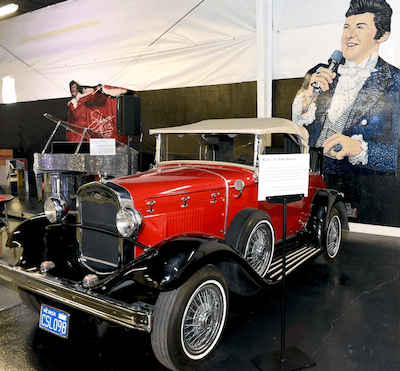
A car on display in Liberace’s Garage (Image: liberace.org)

Note: the folks at the museum and garage have graciously extended a special discount ($5.00 off the usual $20 adult admission price) for Casino.org News/”Living Las Vegas” readers who inquire about the offer at the ticket counter.

There’s so much to take in at the museum, like the “Starsky and Hutch” ‘70s Gran Torino stunt car; the supremely ridiculous 12-foot roller skate hot rod creation by fashion designer Marc Jacobs; the Batmobile from the TV show; and the Osprey Hovercraft from the James Bond film Die Another Day with Pierce Brosnan. Let’s not forget the 40-foot pink hot tub convertible limo used on the old TV show “Lifestyles of the Rich and Famous.”

This wonderfully exhaustive experience continues at the Liberace Garage, where you can fixate on his 1976 bicentennial Rolls-Royce, painted in stars and stripes with permission from the Rolls-Royce company. It was first incorporated onstage at his Las Vegas Hilton show, complete with (of course) fireworks exploding. Then there’s Liberace’s rhinestone-encrusted car seen on the cover of Duran Duran’s 2000 album Pop Trash. I also relished standing under the oversized original fiberglass and gold epoxy-coated dressing room door created for his shows at NYC’s Radio City Music Hall.

The man’s legend continues with the renaming this past December of Karen Avenue as Liberace Avenue (adjacent to Commercial Center). Look for Liberace events to take place there in mid-May. He would have been 104 on May 16.

Huntridge Shopping Center

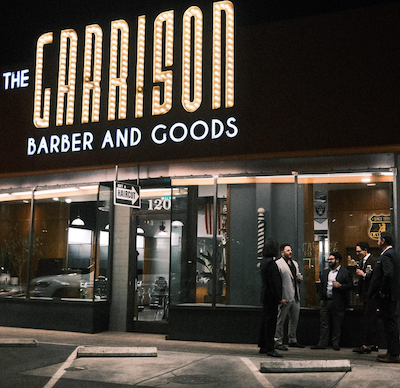
An exterior shot of The Garrison. (Image: Facebook)

Real estate developers Dapper Companies continue to wave their visionary magic wand over this colorful shopping plaza where even the exteriors of the Savers thrift store and Circle K gas station/convenience store have smart modern, throwback design touches.

And I could stare all day long at the center’s retro-inspired pylon sign unveiled in 2017. I’m now psyched for the imminent opening of Winnie & Ethel’s Downtown Diner, the winner of Dapper’s “The Great Las Vegas Coffee Shop Giveaway.” And If my head wasn’t shaved, I would probably frequent the uber-hip barbershop The Garrison.

Dapper plans to renovate the historic World War II-era venue, the Huntridge Theater, across the street. This architectural beauty was Vegas’ first desegregated movie theater before becoming a music venue which shuttered in 2004.  J Dapper told Vegas’ Review-Journal that the theatre, purchased for $4 million, is open to the public for tours with renovations to start in “about 12 months.” On April 7, Dapper relit the theater’s marquee and signed with an official ceremony. Whenever the Huntridge reopens, it won’t be soon enough.

——–

Each month, Mitch Schneider explores some of Vegas’ most unique offerings. Schneider has a decades-long publicity career working with some of the music industry’s biggest stars and was a rock critic for Rolling Stone in the ‘70s. He moved to Vegas from LA with his wife during the pandemic in March 2020. He’s loved the city ever since.

Each month, he explores Vegas’ most popular and best-kept secrets. Look for “Living Las Vegas” on Casino.org. Click here to read previously busted editions. 

The post Living Las Vegas: Best of Vegas’ Arts & Entertainment appeared first on Casino.org.

Usher Reportedly Injured in Las Vegas Dustup With Chris Brown

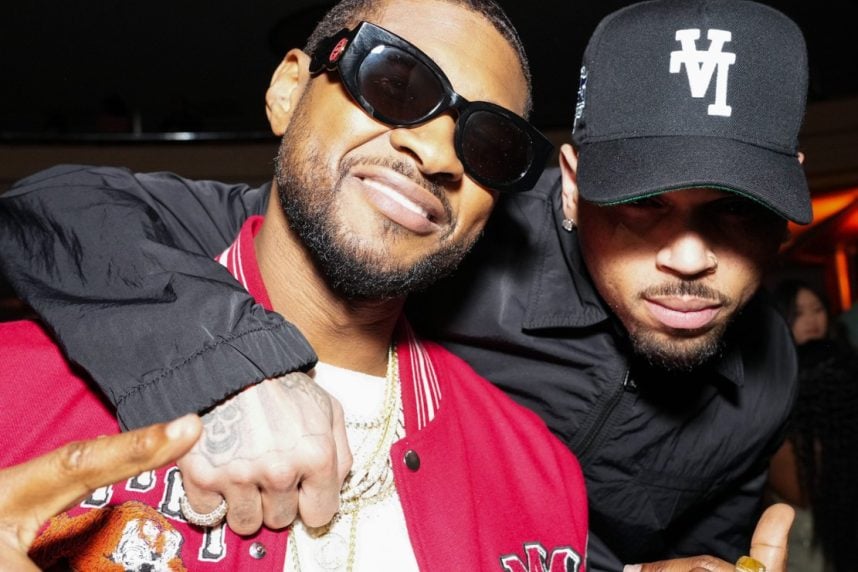
What began as a surprise 34th birthday party thrown by Usher for fellow singer Chris Brown at a Las Vegas skating rink ended up, reportedly, with a surprise melee and injuries for Usher. Multiple reports say Usher and Brown — who are both in town to perform at Saturday’s Lovers & Friends Festival — got physical over singer Teyana Taylor’s presence at Skate Rock City for the event.

Good friends Usher and Chris Brown pose together before Friday, May 5. (Image: Getty)

According to TMZ, the beef stemmed from a canceled appearance by Brown at last year’s American Music Awards. The singer was supposed to perform a tribute to Michael Jackson’s “Thriller” that he had rehearsed  for weeks. However, the segment was cancelled for unknown reasons. Taylor apparently had a hand in producing it.

Hate in This Club

According to TMZ, Brown confronted Taylor about the incident but she ignored him. This infuriated Brown, who demanded that she leave and that Usher help him kick her out. After Usher refused and stood his ground, Brown reportedly called him a “coward” and left the rink with his crew.

TMZ posted the following video, taken just as the celebration took a wrong turn…

Eyewitnesses told TMZ  that Usher went after them, boarding Brown’s tour bus and later emerging with what appeared to be a bloody nose.

Usher remains confirmed to perform at Lovers & Friends, despite his injuries and despite the presence of Brown on the bill. As of this writing, it is not clear whether Brown will perform. Neither Usher, Brown, nor Taylor have publicly acknowledged the altercation.

Usher and Brown have been close friends for years. Last year, Usher brought Brown up to join him for a song during his “My Way” residency at Park MGM. Presenting him with flowers in a viral video, Usher told Brown: “You a great. You’re a legend. We love you and we gonna continue to keep lifting you up, bro.”


The post Usher Reportedly Injured in Las Vegas Dustup With Chris Brown appeared first on Casino.org.

Elon’s Vegas Loop Green-Lighted for 18 More Transit Stations

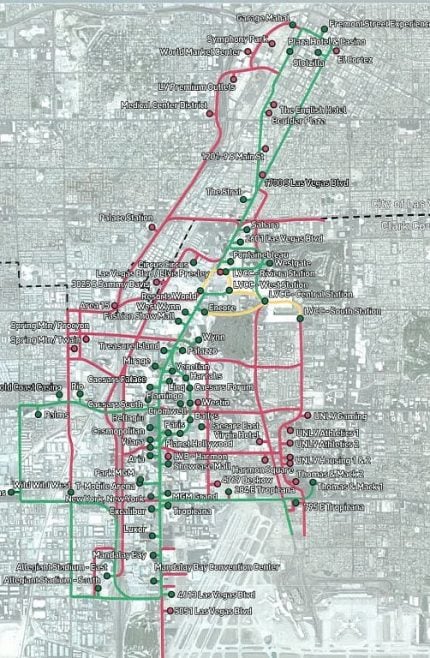
Clark County Commissioners on Wednesday approved plans from Elon Musk’s the Boring Company to build 18 new stations for its underground transit system. The approved plans call for about 25 miles of new tunnels, doubling the size of the Vegas Loop to 73 stations spanning 65 miles of tunnels.

Vegas Loop
The Vegas Loop plans at least 73 stations spanning 65 miles of Tesla tunnels underneath the Las Vegas Strip and immediately outlying areas. (Image: The Boring Company)

Included among the new stations are stops near the Palace Station and Circus Circus casino resorts on the Strip’s north end, as well as the proposed sites of the Dream and Oak View Group casino resorts south of the Strip. (Most of the Strip was previously covered by 55 stations, spanning 34 miles of tunnels, approved in 2021.)

The expansion was approved in a 6-1 vote after Boring Company attorney Stephanie Allen promised that her company would fund 100% of it, leaving no taxpayer burden.

The central section of the Vegas Loop’s latest operating map shows the latest set of approved tunnels/stations in red, the previously approved tunnels/stations in green, and the fully built and operational tunnels/stations in yellow. (Image: Clark County Nevada)

According to documents filed with the city, the project “will increase connectivity and convenience to visitors within the Resort Corridor and surrounding establishments” and it “encourage pursuing a variety of strategies to reduce reliance on private automobile travel, with the goal of reducing fossil fuel consumption and associated pollutant emissions from vehicles.”

Tunnel Vision?

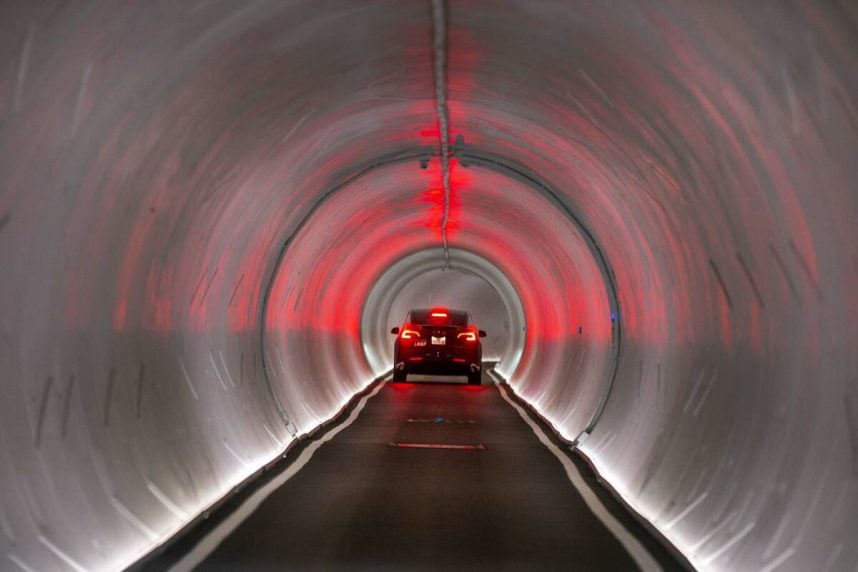
Currently, the only functioning part of the Vegas Loop sees a fleet of Teslas navigating three tunnels spanning 1.7 miles under the Las Vegas Convention Center (LVCC), along with a connection to Resorts World opened in July 2022.

“LVCC Loop connects the LVCC New Exhibit Hall with the existing campus (North/Central/South Halls), and reduces a 45 minute cross-campus walk time to approximately 2 minutes,” the Boring Company’s website claims.

According to the Las Vegas Convention and Visitors Authority, more than a million passengers have ridden the Vegas Loop to date, with a peak single-day ridership of 32,000.

Riders who tested the tunnel at the CES show in January 2022 were not impressed, however. They noted to electric vehicle news site Electrek.com that the company initially promised self-driving cars zooming at 150 mph, but delivered only manned vehicles going 35 mph.

Though approved by Clark County, the portions of the new tunnels that enter the City of Las Vegas, which is actually located north of the Strip, still need to be approved by Las Vegas City Council, which expects to vote on the plans sometime this summer.

The Vegas Loop is expected to be completed in 2027, including future expansions into residental areas north, west and east of the Strip.


The post Elon’s Vegas Loop Green-Lighted for 18 More Transit Stations appeared first on Casino.org.

High-Speed LA to Vegas Railway Gets Bipartisan Backing

A bipartisan congressional group from California and Nevada asked the Biden administration on Monday to fast-track federal funding for a high-speed railway link from LA to Las Vegas that was first proposed in 2009.

Brightline West
This undated rendering illustrates the high-speed rail line proposed by Brightline from LA to Las Vegas. A bipartisan congressional group California and Nevada asked the Biden administration to fast-track the federal portion of its funding. (Brightline West)

In a letter to US Transportation Secretary Pete Buttigieg, five of Nevada’s elected federal lawmakers, as well as four House Members from California, asked for $3.75 billion for the Brightline West project from the Biden-backed federal infrastructure law. The entire project will cost $10 billion, 70% of which will come from private funding, according to Brightline, using a combination of debt and equity.

The letter estimated that the project will create 35,000 union construction jobs as well as 1,000 permanent jobs, and will divert 3 million cars from the congested Interstate 15 “onto a faster, more efficient, zero-emission transportation option” that would stop the belching of 400,000 tons of CO2  into the air every year.

Brightline — which already runs a high-speed rail between Miami and West Palm Beach in Florida — plans to connect Las Vegas with Rancho Cucamonga, Calif., 220 miles southwest, via 200 mph passenger trains that run mainly within the I-15’s median. Brightline projects an average travel time of two hours and 15 minutes — half the time the trip currently takes in a car during the average weekend. Each train could transport up to 500 passengers.

California Democratic House members Nanette Barraga?n, Jimmy Gomez, and John Garamendi signed the letter — as did Republican Jay Obernolte. So did Nevada’s senior US Sen. Catherine Cortez Masto, a Democrat, and four House members, including Republican Mark Amodei.

Slow Train Coming

Amtrak passenger service from LA to Las Vegas ended in 1991 with the Desert Wind. That train regularly got stuck behind the increasing number of freight trains serving the growing desert region. Often, that trip took passengers 10 hours, and it feels like this high-speed rail project, first proposed in 2005, is moving with equal sluggishness.

It wasn’t until 2009 that the Federal Railroad Administration completed a draft environmental plan for the railway, which was then known as DesertXpress. Brightline acquired the project in 2018.

“After more than a decade of working to find a pathway, Brightline West will be the first true high-speed rail system in America and will serve as the blueprint for how we can connect major city pairs that are too short to fly and too far to drive,” read a statement from Brightline CEO Mike Reininger.

A draft environmental assessment for Brightline West was made public in October 2022 and the Federal Railroad Administration is expected to finalize permits in July.

The post High-Speed LA to Vegas Railway Gets Bipartisan Backing appeared first on Casino.org.