
An open letter to Dominic Cummings on the UK gambling credit card ban

I hope you’re reading this, Dominic Cummings. You recently came out with a blog post looking for assorted weirdos to help out with a complete overhaul of Downing Street. I applied under the “weirdo” title just for the hell of it. I’m writing to you now because you seem to have a brain and can listen. I’ve been waiting for someone like you to take the reins behind the scenes for years – an-open-letter-to-dominic-cummings-on-the-uk-gambling-credit-card-bansomeone with a deep mistrust of the political establishment and the strategic strength of mind of to take it on with courage. Your goal to flip the U.K. government on its head and gut Downing Street is exciting, and I’m watching your moves with much interest. Please don’t mess this up, Cummings.

I’m pretty lousy at a lot of things, but one thing I’m exceptionally good at is spotting dishonesty and policy sleight-of-hand. Here I’m talking about a new directive by the Gambling Commission to ban gambling with credit cards by April. Let’s talk about that in the broader context of the casino that nearly all capital markets have become over the last 12 years. Admittedly, the issue of whether punters can use their credit cards for gaming is a relatively minor one, but nevertheless it epitomizes what you and your team need to be on the lookout for in a broader sense in the years to come, if you are to have even a slim chance of success.

If gutting and cutting dangerous bureaucracies is your modus operandi, and I sincerely hope that it is, I recommend that you get rid of the Gambling Commission entirely. If you can’t do that outright because of the political repercussions to your boss, then at least defang the thing, let them write their reports and recommendations, let them keep their paychecks so they don’t whine too loudly, tell them reassuringly that you’re considering everything they say, and then feed all of it through a paper shredder.

Let’s go over this little announcement of theirs with a blunt-tooth comb. We need not even waste a fine-tooth comb on it. Or better yet, a rusty fork out of a dumpster will suffice. The key justification for this credit card ban is the following paragraph:

Separate research undertaken by the Commission shows that 22%** of online gamblers using credit cards to gamble are classed as problem gamblers – with even more at some risk of harm.

Zoom in on those two asterisks, and we find the following footnote:

**Data source: gambling participation research, March 2019. The research was conducted online by Populus and covered a representative sample of c.2000 adults, of whom c.150 had reported using a credit card to gamble online.

The document cited can be found here. I could not find anything on credit cards in the entire document, but I did find on page 5 that problem gambling rates are down 43% since 2017 with the decline across all age groups except 25-34. Just to be thorough though, I went to the Populus website and searched through all polls taken in 2019. Not a single poll related to gambling. Perhaps this poll actually exists somewhere. It would be nice to read the thing. I’m not saying the Commission is outright fabricating data, but if the poll actually exists, they’re sure making it difficult to analyze it.

Still, let’s assume 22% of those who use credit cards for gambling are problem gamblers. What would the consequences of banning credit cards be? Amazingly, we do not even have to speculate for ourselves, because in a rare fit of perhaps accidental honesty, the Gambling Commission does that for itself while at the same time admitting outright that (Section 5.39) (emphasis mine):

Whilst we do not hold data on the prevalence of gambling on credit cards, operators have indicated that credit card payments can amount to 10% and 20% of deposits. We will consider prohibiting or restricting the use of credit cards and the offering of credit but will explore the consequences of doing so. For example the danger of some consumers switching to more risky and higher cost payment methods such as pay-day loans.

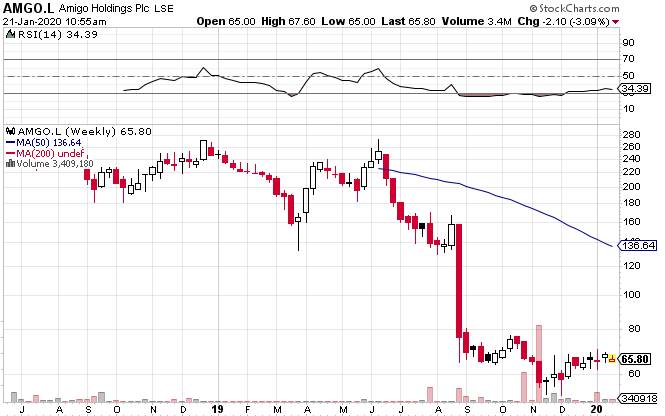
The document linked above is the same one linked in the Gambling Commission press release on the credit card ban. Speaking of commissions, can we commission separate research on how many bureaucrats on the Gambling Commission or their families own stock in Amigo Holdings?
an-open-letter-to-dominic-cummings-on-the-uk-gambling-credit-card-ban1

This U.K. payday loan shark is severely depressed precisely because of regulatory scrutiny from commissions like them, and has a dividend at above 9% now with the stock near an all time low. If the Gambling Commission isn’t simply lying through its teeth about its credit card statistics (I assume they’re not lying for legal reasons) and 22% of these credit card users actually are problem gamblers, then boy oh boy is Amigo going to get a bump once this ban is in force.

What’s going to happen in practice here is that casual gamblers who don’t want the hassle of paying through more difficult venues will simply stop gambling, while problem gamblers will be forced into an even darker corner of their problems.

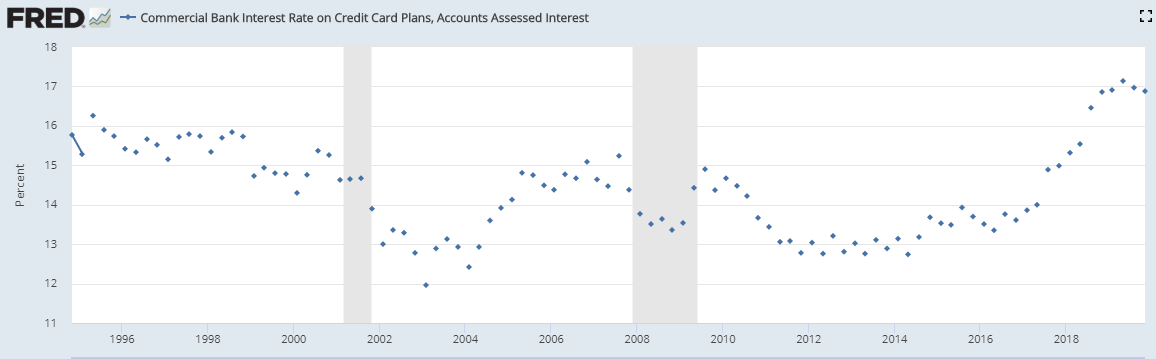
The larger point here though, Mr. Cummings, has little to do with the gambling industry. It’s also not that bureaucracies lie or throw their lazily-formed opinions around like trigger-happy angsty teenagers with regulation acne oozing regulation hormones. The overarching issue here is the incredible chutzpadik hypocrisy of governments that fund these bureaucracies by continually lowering interest rates to the point that they are actually paid to borrow at negative rates in some cases for the sake of their own severe problem gambling levering up the taxpayer like never before in human history while forcing everyday consumers to borrow at record high rates of interest.
an-open-letter-to-dominic-cummings-on-the-uk-gambling-credit-card-ban3

If you think about this problem logically, the more credit being forcibly channeled into government debt by the Bank of England, the less credit is available for the consumer, and hence he has to borrow at higher and higher rates. It also turns equity markets into casinos themselves, as you well know. In practice, the banning of credit cards in the name of protecting problem gamblers is nothing more than a way to restrict consumer credit even further than it already is.

More importantly, as I explained in my “weirdo” email to you, the U.K. will soon encounter a serious problem of a falling pound sterling along with all other fiat currencies once the global debt bomb goes off. Brexit, as I said to you, is only the first step towards inoculating the country. The pound needs hard backing now. That needs to be your first move. If not, all your ambitious plans will amount to little since you will have no money to implement them I’m afraid, and your potential will be wasted.

The post An open letter to Dominic Cummings on the UK gambling credit card ban appeared first on CalvinAyre.com.

Inspired Announces Duo of Content Supply Deals with bet365, 888casino

Online gambling content provider Inspired Entertainment Inc. this week announced that a selection of its Virtual Sports titles has gone live in New Jersey with major gambling operator bet365.

Bet365 is the first operator to have launched Inspired’s Virtual Sports content within a sports betting environment, Inspired said in a press release on its official website.

A number of New Jersey-licensed operators have added Inspired’s Virtual Sports via wallet integration since 2018 when the provider first debuted its content in the Garden State. Inspired noted that the bet365 integration represented a change to a “more traditional integration to augment the expansion of live sports betting and a key development in the way the company distributes its offering.

Popular Inspired titles such as V-Play Soccer, Football, Stock Car Racing, and Horse Racing are now available on bet365’s New Jersey website. The gambling operator entered the New Jersey sports betting market in the summer of 2019 after a previously penned partnership with Hard Rock Hotel & Casino Atlantic City.

And as part of its content supply deal with Inspired, bet365 customers are set to be delivered Virtual Sports content every day of the week with coverage including more than 4,800 events per day. The launch of multiple channels of Inspired’s Football product follow the successful roll-out of V-Play Football on bet365’s global website.

888casino Launch

In a separate announcement, Inspired revealed that it has also penned a content supply deal with online gambling group 888 Holdings. Under the terms of the agreement, 888’s online casino brand 888casino will launch a selection of Inspired-developed casino content.

888casino will gain access to interactive games, virtual games, sports, lottery products, and online casino games, including hit titles Centurion FreeSpins, Super Hot Fruits, and Book of the Irish.

News about the recent partnership between 888casino and Inspired arrive shortly after the gambling operator debuted its new Orbit platform. Following the launch of the platform, the operator has been looking to team up with some of the industry’s leading content providers and boost its offering.

Commenting on their deal with Inspired, 888 SVP of B2C Guy Cohen said that the provider is an “industry-leading authority in multiple regulated markets and adds considerable value to 888casino players around the world.”

Inspired VP of Interactive Games Claire Osbourne added that they are delighted to be launching their titles across 888casino and that while their games are already extremely popular in Europe, the deal with 888 will help them build their North American presence as growth in North America is “a key priority for Inspired and working with 888 in New Jersey and beyond” is a major step towards their goal.

Source: Inspired Goes Live Online With Bet365 New Jersey

Inspired Entertainment Games Launch Across 888 Casino

Follow us on Facebook and Twitter to stay up to date on the day’s top casino news stories

The post Inspired Announces Duo of Content Supply Deals with bet365, 888casino appeared first on Casino News Daily.

MGM Sells MGM Grand, Mandalay Bay to Further Reduce Strip Casino Portfolio

Casino giant MGM Resorts International has offloaded two more Las Vegas properties as part of its strategy to become an asset-light company and as it seeks to strengthen its balance sheet.

The gambling company said Tuesday that its real estate investment trust, MGM Growth Properties (MGP), has entered into a definitive agreement with Blackstone Real Estate Income Trust (BREIT) to form a joint venture and acquire the real estate assets of MGM Grand and Mandalay Bay.

MGP spun off from MGM in 2015, while BREIT is an entity of New York financial giant The Blackstone Group.

Under the terms of the recently agreed acquisition, MGP and BREITs joint venture will take over the real estate assets of premier Las Vegas Strip resorts MGM Grand and Mandalay Bay in a deal that values the two properties at $4.6 billion. MGP will own 50.1% of the joint venture, while BREIT will own the remaining 49.9%.

The transaction is expected to close by the end of this quarter, subject to certain customary conditions. Once the deal is finalized, MGM will enter into a long-term triple net master lease for the two major casino resorts and will remain responsible for their day-to-day operations and will provide their new owners with annual rent payments.

The initial annual rent will be $292 million. Together, MGM Grand and Mandalay Bay feature 9,743 hotel rooms and suites, more than three million square feet of meeting space, and approximately 300,000 square feet of casino space with diverse gambling options.

Deal Not a Surprise

The sale of MGM Grand and Mandalay Bay did not come as a surprise as MGM revealed last year that it was in talks with suitors who were interested to purchase the two marquee properties. It emerged this past November that MGM and its REIT were looking to channel interest from companies that have been historically interested in Strip resorts and that a buyer for MGM Grand and Mandalay Bay could be announced by the end of 2019.

It should also be noted that Blackstone emerging as the buyer of the two casino resorts did not come as a big surprise, as well. The financial group last fall purchased MGM’s Bellagio in a deal that valued the iconic property at $4.2 billion.

In a similar manner, MGM and the property’s new owner entered into an agreement that enabled the casino operator to remain responsible for the day-to-day operations of the resort in exchange for an initial annual rent of $245 million.

MGM’s REIT focuses on the acquisition, ownership, and leasing of large-scale resorts. Its portfolio currently includes The Mirage, Excalibur, Luxor, New York-New York, and Park MGM. It also owns Mandalay Bay’s real estate. As for MGM Grand’s real estate, it is currently owned by MGM itself.

Management Comments

Of the latest transaction involving an MGM-operated property, MGP Chief Executive James Stewart said that the deal “illustrates the numerous opportunities available to grow our business and emphasizes the strong institutional demand for gaming real estate assets.”

Jon Gray, President and COO of Blackstone, added that the deal “reflects our continuing strong conviction in Las Vegas.”

Blackstone has been buying both gaming and non-gaming assets around Las Vegas since the city’s economy imploded. According to recent company data, it owns just under $13 billion in real estate in Nevada.

The company acquired The Cosmopolitan of Las Vegas hotel and casino resort for more than $1.7 billion in 2014. It also owns the Hughes Center office park not far from the Strip and the 5.4-million-square-foot World Market Center furniture showroom in downtown Vegas. Blackstone has also spent hundreds of millions of dollars on apartment complexes around the Las Vegas Valley in recent years.

Tyler Henritze, Head of US Acquisitions for Blackstone Real Estate, said that similar to the Bellagio, owning MGM Grand and Mandalay Bay under a lease with MGM “provides stable cash flow and excellent downside protection for our BREIT investors.”

Following the sale of MGM Grand and Mandalay Bay, MGM’s US real estate assets now include MGM Springfield and a 50% ownership in CityCenter, including the ARIA Las Vegas hotel-casino. Analysts believe that the two properties could be the next MGM would seek to divest as part of its strategy.

The company has said that it plans to use the money from the sale of properties to boost its balance sheet, reduce debt, and fund the development of an integrated resort in Japan.

Source: MGM Growth Properties and Blackstone Real Estate Income Trust to Form Joint Venture to Acquire the Las Vegas Real Estate of the MGM Grand and Mandalay Bay for $4.6 Billion and Simultaneously Execute Long-Term Lease with MGM Resorts

Follow us on Facebook and Twitter to stay up to date on the day’s top casino news stories

The post MGM Sells MGM Grand, Mandalay Bay to Further Reduce Strip Casino Portfolio appeared first on Casino News Daily.

Boston Casino Replaces Bartenders with Robot Drink Machines

Encore Boston Harbor denied that it has shed jobs at its back-of-house service bars in favor of automated beverage dispensers, but still admitted that automation has and would affect some jobs.
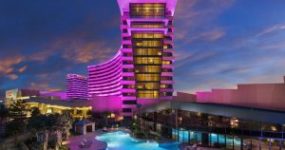
The $2.6 million integrated casino resort opened doors in June 2019 in the Greater Boston area. It created 5,000 jobs, but local news outlets reported this week that it is now cutting some of these positions.

According to sources quoted by Boston 25 News, 70 bartenders, apprentices, and casino workers at Encore were told last week that their jobs were being cut. It also emerged that the displaced bartenders who worked at back-of-house service facilities were being replaced by automated dispensary machines that cocktail servers would operate themselves.

In a statement responding to media reports, Encore said on Wednesday that “it has been inaccurately reported that 70 positions have been eliminated and/or replaced by automated beverage dispensers.”

The property went on to explain that they are currently right sizing our business as we continue to make adjustments to our organization based both on customer feedback and how best to meet our business needs.”

The statement read further that the drink dispensers were not unique to Encore and their addition would allow the property the opportunity to “significantly improve both the speed of service and provide a better guest experience.”

Automation Will Affect Some Jobs

Encore did admit that some jobs would be affected by the addition of the beverage dispensers, but said it could not project their exact number at the time.

According to Boston 25 News, Encore held on Monday a job fair for all the affected employees. However, the news outlet noted that there were not enough full-time or comparable jobs for everyone who turned up. The layoffs are set to take effect next Friday.

Encore said that they will continue to right size the business, but will “always do everything we can to provide alternate job opportunities for our employees within our organization.”

News about the job cuts at Encore emerge as the property is failing to live up to early revenue projections after opening with great fanfare this past summer. According to those early estimates, the property was expected to generate $800 million in gross gaming revenue during its first year of operation.

However, according to the latest financial figures released by the Massachusetts Gaming Commission, it generated just under $260 million between the last week of June, when it opened doors, and November 30. At this pace, the casino resort will certainly fall short of its $800 million target.

The slower-than-expected growth was blamed on rather weak slot machines performance. Unlike other properties in New England, Encore has failed to capture and has been unable to rely on a strong regional market.

To attract more local visitors, the property recently lowered its table game minimums and nixed parking fees. It is yet to be seen whether these efforts will finally push up its performance.

Source: Encore Boston not hitting lofty projections, blames soft revenue from slot machines

Follow us on Facebook and Twitter to stay up to date on the day’s top casino news stories

The post Boston Casino Replaces Bartenders with Robot Drink Machines appeared first on Casino News Daily.

Oklahoma Governor Taps Seattle Law Firm to Battle Tribes in Casino Compacts Dispute

Oklahoma’s Republican Governor, Kevin Stitt, has hired an out-of-state law firm to handle his legal dispute with three of the state’s tribes over their casino compacts.

Gov. Stitt tapped Seattle-based Perkins Coie to help him battle the tribes’ attempt to continue their casino operations without renegotiating their compacts with the state, which the Governor maintains expired on December 31, 2019.

Gov. Stitt’s general counsel, Mark Burget, signed last month a contract with Perkins Coie for legal services of up to $300,000. The contract signed on behalf of Oklahoma’s top official also authorized fees of up to $750 per hour.

Gov. Stitt spokeswoman Donelle Harder said on Friday that it is a common practice for states to seek outside counsel in “complex disputes or specialized areas” and that Perkins Coie attorneys already have experience with tribal gambling compact disputes as they recently worked on a similar issue in New Mexico.

Oklahoma’s Cherokee, Chickasaw, and Choctaw nations filed this past Tuesday a federal lawsuit seeking a declaratory judgment that their 15-year compacts with the state automatically renewed for 15 more years on January 1.

Oklahoma voters approved tribal casinos in 2004. In 2006, the state’s tribes signed 15-year gambling compacts, under which these would renew automatically once their term expired, unless either the tribes or the state requested to renegotiate the agreements within six months of their end.

It Is Business As Usual for Oklahoma’s Tribal Casinos

In July 2019, Gov. Stitt told the state’s federally recognized tribes that he wanted to renegotiate the terms of their agreements and warned that any failure to reach new agreements would mean that casino-style gambling would become illegal in the state as of January 1, 2020.

The state’s tribal casinos currently pay between 4% and 6% on revenue from their Class III slot machines and up to 10% on table game revenue in exchange for casino exclusivity. The state has received around $1.5 billion in exclusivity fees from its more than 100 tribal casinos over the past 15 years.

However, Gov. Stitt said that he wants the gambling venues to pay between 20% and 25% in exclusivity fees. If the tribes bow to these rates, which is highly unlikely, Oklahoma would become one of the most expensive places in the US to conduct casino gambling activities.

Gov. Stitt’s warning that tribal casinos would become illegal from January 1 had no impact on the venues’ operations. They continued to operate as usual without any disruptions. In their lawsuit, the three above-mentioned tribes said that they had met all the necessary requirements to make sure that their compacts with the state can renew automatically for another 15 years from January 1.

In a statement tacked onto their federal lawsuit, the Cherokee, Choctaw, and Chickasaw nations also noted that while they preferred negotiation over litigation, “the federal court is now the only reasonable alternative to bring legal certainty to this issue.”

Several tribal casinos have issued statements since the beginning of the year to inform their patrons that their operations will remain uninterrupted, despite the ongoing dispute with the state.

Source: Oklahoma governor hires law firm in tribal gambling battle

Follow us on Facebook and Twitter to stay up to date on the day’s top casino news stories

The post Oklahoma Governor Taps Seattle Law Firm to Battle Tribes in Casino Compacts Dispute appeared first on Casino News Daily.