Crypto Casino Founder Kim Admits to Losing Investor Cash on Sour Bitcoin Bets

Richard Kim, the founder of cryptocurrency casino ZeroEdge, admitted to losing $3.67 million in investor capital on leveraged bitcoin trades that went awry.
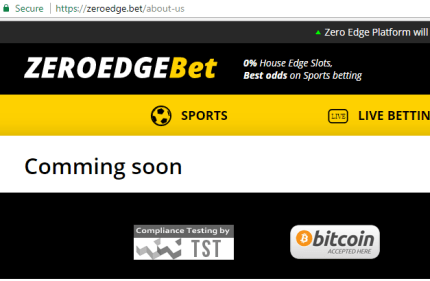
ZeroEdge
An image from the ZeroEdge cryptocurrency casino. Founder Richard Kim departed after admitting to stealing investor capital and using it on bad bitcoin trades. (Image: Medium)

Kim resigned from the startup gaming entity earlier this month. In an extensive Substack post, he admitted to misdeeds and acknowledged a “20-year struggle with gambling.” He said a phishing site that cost $80,000 “triggered old demons,” compelling the use of cash from a recent fundraising round on leveraged bitcoin trades that went bad.

I resigned immediately after the losses were crystallized, disclosing what happened to my partner and investors. I kept detailed records — this wasn’t about mixing personal and business funds,” wrote Kim. “My failure was in not speaking up sooner, paralyzed by fear and the desperate need to preserve my reputation.”

Kim’s bitcoin trades were made in June — a month which the largest cryptocurrency shed roughly $5,000. Leverage trades would have incurred steeper losses because such positions carry higher risk/reward profiles.

Kim Pledges to Move Forward

Kim acknowledged that he “really messed up,” but he’s also promising to move forward, telling investors they could benefit from their faith in him.

“To my investors: you didn’t just back a project; you invested in my vision, my potential. I will continue building because the world desperately needs what we started,” he wrote. “It is the precisely fact that I have proven untrustworthy that compels me to create trustless systems. Those who stick with me will be my lifetime beneficiaries.”

One of the investors whose capital Kim pilfered was Galaxy Digital — a crypto banking entity controlled by Mike Novogratz. The firm told crypto media outlets the sum it lost in the Zero Edge fraud was nominal.

In a somewhat defiant tone, Kim wax victim, framing his departure from ZeroEdge as an example of “institution vs. individual, trust vs. trustlessness, company vs. community, computer vs. casino.” He added that investors weren’t just supporting ZeroEdge, they were backing Kim as a person and his potential and vision.

What Future Holds for ZeroEdge

Following Kim’s departure, it’s not yet clear what the future holds for ZeroEdge, but it the cryptocurrency casino was attempting to employ a unique concept.

“ZeroEdge.Bet is a unique blockchain based online gambling platform with 0% house edge casino games, commission-free sports betting exchange and an open-source platform for parties wishing to build and operate their own games,” according to the company’s LinkedIn profile.

Crypto casinos have boomed in popularity in recent years, providing an avenue for increased adoption and use of bitcoin and other digital currencies. With ZeroEdge, the premise would be that bettors would place wagers with the Zerocoin token, thus positioning them to profit from the coin’s potential upside, which would be driven by more players embracing the 0% house edge model.

The post Crypto Casino Founder Kim Admits to Losing Investor Cash on Sour Bitcoin Bets appeared first on Casino.org.


Penn Entertainment Failing in Sports Betting, Should Consider Sale, Says Investor

In a letter to Penn Entertainment’s (NASDAQ: PENN) board of directors, the Donerail Group, which has long been an investor in the regional casino operator, said the gaming company is failing in online sports betting, is overcompensating CEO Jay Snowden, and should consider a sale to create shareholder value.

PENN Play
An image for Penn Entertainment. Investor Donerail Group said CEO Jay Snowden is overpaid and Penn should consider selling itself. (Image: Penn Entertainment)

Donerail Managing Partner Will Wyatt opined in the letter to Penn Chairman David Handler that the gaming company has spent four years and billions of dollars of shareholder capital in a bid to gain a foothold in the online sports betting space, but those efforts have proven unsuccessful.

Moreover, the growing pattern of guidance misses, alongside a demonstrated unyielding appetite to continue to invest in the Company’s fledgling Interactive projects, irrespective of past results and without a clear return framework, has significantly damaged the credibility of this management team and Board of Directors,” wrote Wyatt.

There’s something to those claims. Between January 2020 and February 2023, Penn shelled out about $551 million to acquire Barstool Sports in an effort to leverage that brand as a catalyst for its online and retail sportsbooks, but those dividends never accrued.

Last August, the regional casino giant sold Barstool back to founder David Portnoy for just $1 as it entered into a costly agreement with Walt Disney (NYSE: DIS) to use ESPN branding for the Penn-operated ESPN Bet mobile betting app. In addition to paying ESPN $1.5 billion over 10 years, the gaming company also granted the network $500 million in equity warrants. While ESPN Bet has performed better than Barstool Sportsbook, Penn has made little headway in terms of wresting market share from larger rivals DraftKings and FanDuel.

Penn Entertainment Sale Makes Sense, Says Donerail

The letter by Donerail, a Los Angeles-based, event-driven money manager, sparked a noteworthy rally by Penn shares with the stock closing high by 19.62% on volume that was more than quadruple the daily average. However, today’s showing was a departure from the norm.

As Wyatt pointed out to Handler, Penn shares shed 80% over the past three years. Today, the stock closed at $17.50 — a far cry from the all-time of $142 set in March 2021. That lengthy slump coupled with the aforementioned board and management missteps are among the reasons Donerail believes Penn should consider selling itself — a move that if executed could fetch more than double the operator’s current market value of $2.19 billion, according to Wyatt.

“Given our understanding of the Company’s assets, however, alongside an understanding of the industry participants’ current strategic appetite to grow inorganically, we do believe that a sale of the Company’s assets, if undertaken, could generate meaningful and certain value creation for equity investors,” he noted to Handler.

In the letter, Wyatt observed that Penn’s market capitalization represents a steep discount to the $13.35 billion average found among its peer group, but the Donerail partner didn’t directly identify potential suitors for the gaming company.

In recent months, Penn has been the subject of attention by professional investors. Last month, David Einhorn’s Greenlight Capital announced “medium sized” stake in Penn. Last December, HG Vora said it took an interest of 18.5% of Penn’s shares outstanding and demanded board seats in an effort to push for change at the gaming company. Despite that fanfare, the stock shed almost a third of its value since the start of 2024.

Donerail Decries Snowden Compensation

Wyatt didn’t hold back in his criticism of Penn’s compensation of CEO Jay Snowden, noting the board signed off on $99.3 million in total pay for the executive between 2020 and 2023 — a period that included significant declines by the stock.

Citing Institutional Shareholder Services (ISS), Wyatt said Snowden has the worst possible score issued by the firm in terms of his compensation being aligned with shareholder interests.

“In fact, Mr. Snowden’s compensation was deemed to be so gratuitous, As You Sow chose to use PENN as a case-study of wrongdoing in its report. Institutional shareholders appear to share our view, with leading institutional investors BlackRock, Vanguard, State Street Global Advisors, and CalSTRS all having voted against PENN’s executive compensation in the past, yet meaningful change has not been made by the Board’s compensation committee,” said Wyatt.

As You Sow, a leading shareholder advisory group, recently noted that Snowden was the third-most overpaid CEO among S&P 500 companies, but the stock was removed that index in September 2022.

The post Penn Entertainment Failing in Sports Betting, Should Consider Sale, Says Investor appeared first on Casino.org.