Wind Creek Hospitality Buying Birmingham Racecourse and Casino in Alabama

Wind Creek Hospitality has agreed with the owners of the Birmingham Racecourse and Casino in Alabama to acquire the gaming facility.
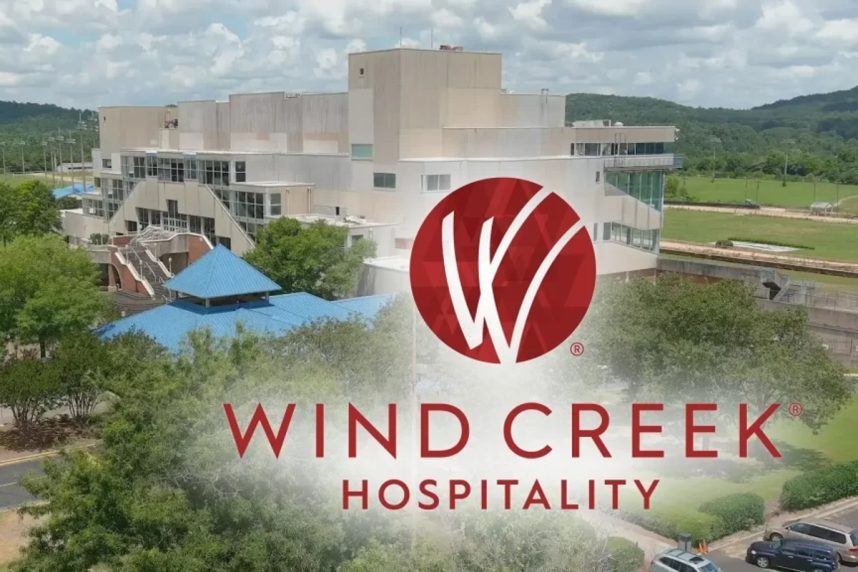
Wind Creek Hospitality Alabama Birmingham Racecourse
The Poarch Band of Creek Indians’ Wind Creek Hospitality is acquiring the Birmingham Racecourse and Casino. The casino offers slot-like historical racing machines. (Image: Wind Creek Hospitality)

Live greyhound racing ceased at the Birmingham Racecourse in March 2020 amid the COVID-19 pandemic. Though greyhound racing remains legal in Alabama, the Birmingham track was the last facility to offer live racing.

Wind Creek, a fully owned subsidiary of the Poarch Band of Creek Indians, one of the fastest-growing federally recognized tribes in the United States, is purchasing the Birmingham Racecourse and Casino from the McGregor family. The family has controlled the track and gaming venue since Milton McGregor bought it out of bankruptcy in 1992.

Since the pandemic, the racecourse has focused on its gaming operations, which include simulcast parimutuel wagering on horses and greyhounds and historical horse racing (HHR) machines. The Birmingham Racecourse Casino features about 300 slot-like gaming terminals.

We are excited to bring the Birmingham Racecourse into the Wind Creek family,” said Jay Dorris, president and CEO of Wind Creek Hospitality. “The McGregor family built and has operated the Birmingham Racecourse and Casino for decades. Over those years, it became clear to us that we share many of the same goals — providing great entertainment, attracting tourism, and creating economic growth In Alabama.”

The Birmingham Racecourse and Casino sale to Wind Creek is expected to close in early 2025. No sale price was disclosed.

One of the most charitable tribes in the nation, the Poarch Indians already support numerous organizations in the Birmingham region such as the Birmingham Zoo and Birmingham Promise, the latter being a college scholarship initiative. 

Wind Creek Birmingham? 

Wind Creek Hospitality owns and operates three Class I and II tribal casinos in Alabama featuring bingo-based electronic gaming machines. The company runs Wind Creek Atmore, Wind Creek Montgomery, and Wind Creek Wetumpka.

Because the Poarch Indians do not have historical ties to the Birmingham area, and therefore will not apply to have the racecourse property deemed as sovereign land, Wind Creek will continue to run the casino as a parimutuel wagering facility. With horse and greyhound racing continuing to be dying sports across the country, Wind Creek’s interest in Birmingham is presumably because of the casino’s HHR games, slot-like terminals that determine bet outcomes based on previously run horse races.

Wind Creek Hospitality did not respond to Casino.org’s inquiry into whether the company will rebrand the Birmingham facility to Wind Creek Birmingham. It’s also unclear if the tribe will invest in an on-site hotel and other resort amenities.

Wind Creek remains bullish on the U.S. gaming industry. Along with ongoing investments at Wind Creek Bethlehem, its full-scale, Las Vegas-like casino in Pennsylvania, the tribal company will soon open Wind Creek Chicago Southland in Illinois.

Located in the Chicago suburbs, the Southland casino has a 70K-square-foot casino with 1,400 slot machines, 56 table games, a poker room, and a sportsbook. The resort has 252 hotel rooms, a 75K-square-foot entertainment venue, 12K square feet of event space, and several restaurants and bars.

Victoryland Focus 

HHR gaming became the name of the game at controversial casinos in Alabama after the state’s Supreme Court in September 2022 ruled that grey electronic bingo machines at venues in Macon and Lowndes counties constituted illegal gambling despite voters approving them through local referendums. The ruling forced Victoryland, White Hall Entertainment, and Southern Star Entertainment to cease operating electronic bingo machines.

Victoryland remains owned by the McGregor family. Because the casino facility in Shorter possesses a parimutuel license, the gaming venue is allowed to incorporate HHR devices and therefore remains open, unlike the two other entertainment centers.

Lewis Benefield, the president of the Birmingham Racecourse Casino and Victoryland, said Alabama’s restrictive and opaque gaming laws led to the McGregors divesting one of its two major holdings.

The people of Birmingham desire the same types of entertainment offered at other facilities in and around Alabama. Unfortunately, differing state laws and enforcement actions regarding gaming have limited our ability to compete effectively,” Benefield said. 

“The McGregor family will now focus their efforts on Victoryland and advocate for unified gaming legislation in Alabama which would capture much-needed revenue for the people of Alabama,” Benefield concluded.

The post Wind Creek Hospitality Buying Birmingham Racecourse and Casino in Alabama appeared first on Casino.org.

New Alabama Bill Targets Illegal Gambling with Harsher Penalties

Bill-would-increase-penalties-for-illegal-gambling-in-Alabama-possession-of-slot-machinesAlabama lawmakers are taking steps to strengthen their stance against illegal gambling through a new bill that proposes harsher penalties for those found in violation. The bill, introduced by Republican State Representative Matthew Hammett, seeks to address persistent issues with illegal gambling operations by upgrading penalties from misdemeanors to felonies. These changes are aimed at deterring repeat offenders and curbing illegal activities that have continued to thrive despite current laws.

Proposed Changes in Penalties

Under the current system, those involved in illegal gambling face misdemeanor charges, which come with a maximum sentence of one year in jail and a fine of up to $6,000. However, Rep. Hammett’s bill proposes to elevate these offenses to felony-level crimes. Specifically, promoting gambling would be reclassified as a Class C felony, carrying a possible sentence of one to ten years in prison and a fine of up to $15,000. For repeat offenders, the situation becomes even more severe, with a second violation resulting in a Class B felony, which could lead to a prison sentence of up to 20 years and a fine of $30,000.

Hammett collaborated with Covington County District Attorney Walt Merrell in drafting this legislation. The need for stronger enforcement became apparent after Merrell observed that existing laws were not effective in stopping illegal gambling activities, such as the sale of scratch-off tickets in convenience stores. “I asked him what could be done,” Hammett said, and they worked together on crafting a proposal that would give law enforcement more power to address these problems.

Persistent Illegal Gambling Issues

Illegal gambling has long been a challenge for Alabama authorities. Despite ongoing efforts to shut down these operations, many venues continue to operate. Jefferson County, in particular, has seen electronic gambling halls reopen after being shut down, showing the limitations of current enforcement. Attorney General Steve Marshall has been actively involved in efforts to combat these illegal activities, but the relatively light penalties often allow offenders to return to business soon after facing charges.

Merrell noted that prosecuting illegal gambling cases is particularly challenging because the current laws do not impose harsh enough penalties to deter these activities. In many cases, the individuals running the operations are not the ones being prosecuted, and instead, it is low-level employees, such as store clerks, who end up facing legal action. “How do we hold store employees accountable when the real beneficiaries are those behind the scenes profiting from these illegal activities?” Merrell questioned, emphasizing that the bill seeks to target those truly responsible.

Clarifying Legal and Illegal Gambling

The proposed bill also aims to clarify what constitutes illegal gambling in Alabama, specifically addressing electronic gambling machines like those used in historical horse racing. These machines are currently in use at racetracks across the state, operating under laws that permit pari-mutuel wagering. Hammett emphasized that his bill is not intended to target racetracks or any legal gambling operations, explaining, “Our focus is on illegal activities, not operations that are running legally at tracks.”

Despite Hammett’s push for tougher enforcement, he has expressed personal opposition to gambling in any form. Merrell also voiced his disapproval, citing the negative effects gambling can have on communities. “Both legal and illegal forms of gambling increase poverty, drive up crime rates, and hurt local economies,” he said.

Hammett has pre-filed the bill, HB41, for the upcoming legislative session beginning on February 5, 2025. The legislation is designed to provide law enforcement and prosecutors with stronger tools to combat illegal gambling activities in the state. Discussions are expected to continue as lawmakers weigh the implications of the proposed changes.

Source:

House Bill 41, Alison Legislature.

The post New Alabama Bill Targets Illegal Gambling with Harsher Penalties appeared first on Casino News Daily.

Alabama Pension Fund Administrator Encourages Lawmakers to Authorize Gambling

The top official overseeing Alabama’s pension fund is calling on Gov. Kay Ivey (R) to initiate a special legislative session to continue talks about casino gambling authorization that stalled in the Montgomery capital earlier this year.

Alabama casinos gambling pension program
Retirement Systems of Alabama CEO David Bronner thinks allowing commercial casinos and other forms of gambling in the Cotton State could provide critical tax money that might be used to provide state retirees with a cost-of-living-adjustment. Gaming talks stalled earlier this year in Montgomery. (Image: Bham Now)

David Bronner is the chief executive officer at the Retirement Systems of Alabama (RSA), the pension fund program for state employee retirees. One of the world’s largest internally funded pension programs, the RSA is perhaps best known for developing the Robert Trent Jones Golf Trail, 11 golf courses spread across the state. Bronner was instrumental in the golf destination’s development.

Bronner is looking for new funding sources and thinks lawmakers who this year supported efforts to bring a lottery, commercial casinos, and sports betting to the state are on the right path.

However, the gaming package compromise reached by a special legislative committee failed to pass the state Senate this month by a single vote. The House had easily passed the gaming bill with the needed three-fifths majority support.

Special Session Warranted

Writing in the RSA’s June newsletter, The Advisor, Bronner says Alabamans participating in the state pension program haven’t received a cost-of-living-adjustment in 18 years. The additional state tax streams that lottery and casino gaming would deliver could help boost the pension payouts.

After the one-vote loss in the Senate, the most popular Alabama governor in my lifetime was asked about a special session, to which she replied, ‘Why would I do that?’ Simply put, because you can accomplish it,” Bronner wrote in calling on Ivey to initiate a special session to push the gaming bill across the finish line.

Ivey has been supportive of bringing slot machines, table games, sports betting, and a lottery to the Cotton State. But the governor said this month following the Senate gridlock that she won’t waste tax dollars on a special gaming session when lawmakers “cannot come to a consensus among themselves.”

Bronner says recent tax cuts made by the Legislature on groceries and overtime pay, as well as various tax credits, including $100 million for school vouchers, means less revenue for the state’s pension system.

“Antigaming folks might suggest increasing Alabama’s property taxes, which are the lowest in America, to replace this revenue, but this has been impossible to accomplish in the past,” Bronner continued. He concluded by encouraging RSA enrollees to ask the state lawmakers who voted against the gaming bill “how they plan to address the state’s problems without any new revenue in light of the recent tax cuts and loss of federal monies.”

Gaming Holdout

Legislative efforts to bring new forms of gaming to Alabama have persisted nearly every year since 1999 when state voters rejected a ballot referendum that would have created a state-run lottery. Alabama today remains free of a lottery, commercial casinos, racinos, sports betting, and iGaming.

The only permissible forms of gaming are charitable games of chance, parimutuel wagering, and Class II Indian gaming. The state’s lone federally recognized tribe, the Poarch Band of Creek Indians, runs three tribal casinos where electronic bingo-based games that resemble traditional casino slot machines operate.

The post Alabama Pension Fund Administrator Encourages Lawmakers to Authorize Gambling appeared first on Casino.org.

Donald Trump Jr. Shines Light on Alabama Gaming Expansion Deadlock

Donald Trump Jr. is headed to Alabama next week to rally on behalf of his father’s 2024 campaign. Before departing for the Cotton State, the former president’s eldest son took to X to weigh in on efforts to allow Alabamans to have a say on whether to expand gambling.

Donald Trump Jr. lottery casino gambling sports betting
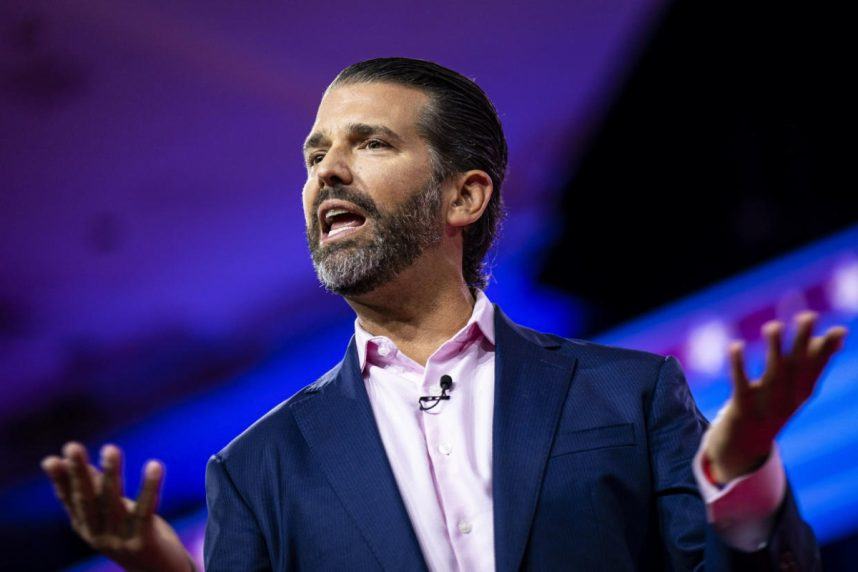
Donald Trump Jr. thinks lawmakers in Alabama should step aside to allow voters to decide the outcome of ongoing considerations to expand gambling. The legislature is deadlocked about what forms of gambling should be presented to voters through a ballot referendum. (Image: Bloomberg)

The Alabama Senate and House of Delegates had significantly different opinions on how the state should go about authorizing new forms of gambling during the legislative session this year.

The House proposed up to six commercial casinos and four tribal casinos with slot machines, table games, and sports betting. The House bill also recommended the creation of a state-run lottery.

The Senate overhauled the statute to include only three tribal casinos with slots and table games and seven racinos where slot-like historical horse racing (HHR) machines would operate at the state’s former pari-mutuel greyhound tracks and new facilities. While a lottery remained in the Senate version, sports betting became excluded.  

A conference committee last week recommended that a compromise be passed.

The proposal from the six-member panel endorsed three tribal casinos with slots and table games. Up to seven racinos would be allowed only electronic gaming machines but not live dealer tables. Sports betting would remain on the sidelines for both the racinos and tribal casinos. A lottery creation remained.

DJT Jr. Comments

The House of Delegates subsequently ratified the conference committee’s recommendations but the Senate fell a vote shy of the three-fifths majority needed to initiate the referendum. The Alabama Constitution currently prohibits such gambling, meaning voters must amend the state’s fundamental principles to allow the Legislature to legalize new forms of gambling.

Trump Jr. thinks it’s time state lawmakers in Montgomery step aside to allow voters to have the final say on the gaming discussions.

I’m excited to be in Alabama next week for a fundraiser for my dad, but whenever I ask anyone from there what’s going on in the state, this is all they talk about,” Trump Jr. said about the ongoing gaming and lottery talks. “Why is their Senate refusing to let the people vote on a clean bill to legalize the lottery and fund education when 45 states already do it?”

Trump Jr. asked why Alabama lawmakers wouldn’t rather keep the “billions of $$$ in Alabama instead of sending it to other states? Makes no sense to me!”

Gov. Kay Ivey (R) agrees. She recently voiced her opinion that “it’s time for voters of Alabama to have their say.”

Surprising Holdout 

State Sen. Greg Albritton (R-Atmore) has long advocated for legal casino gambling and a lottery. He served on the gaming conference committee but was among the 15 “no” votes in the Senate that stalled the gaming package by a single vote in the upper chamber.

Albritton’s district includes Wind Creek Atmore, one of three Class II tribal casinos run by the Poach Band of Creek Indians. Albritton said he was overruled in seeking to provide the tribe with an opportunity to build a casino off sovereign land in Northeast Alabama to draw in players from Georgia and Tennessee where casinos remain absent.

Albritton said the exclusion of a commercial casino for the state’s lone federally recognized tribe prompted his “no” vote.

The post Donald Trump Jr. Shines Light on Alabama Gaming Expansion Deadlock appeared first on Casino.org.