Virginia Lawmakers Mull Formation of Gaming Commission Following Expansion

Virginia lawmakers in Richmond continue to study whether the commonwealth should form an agency dedicated to the regulation of commercial gaming.
Virginia Gaming Commission casinos parimutuel wagering
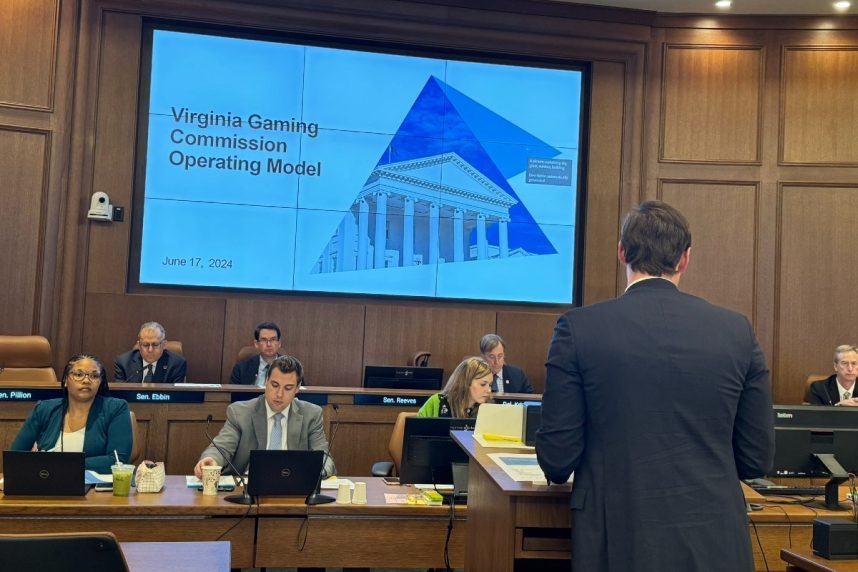
The Joint Subcommittee to Study the Feasibility of Establishing the Virginia Gaming Commission is seen in July 2024. Churchill Downs wants parimutuel wagering to remain under the regulatory scope of the Virginia Racing Commission. (Image: X)

Virginia has expanded gambling considerably in recent years to include up to five brick-and-mortar casinos with slot machines, live dealer table games, and sports betting. Virginia is also now home to online sports betting and slot-like historical horse racing machines that operate in parimutuel wagering facilities.

The Virginia Lottery oversees lottery gaming, casino activity, and retail and mobile sports betting. The Virginia Racing Commission regulates HHR gaming, horse racing, and parimutuel wagering.

A joint subcommittee of the Virginia General Assembly remains reviewing the feasibility of establishing a commercial gaming regulatory, which would be named the Virginia Gaming Commission. The body would regulate casino gambling, online sports betting, HHR wagering, and parimutuel facilities. The Virginia Lottery would return to only governing lottery operations.

The joint subcommittee is expected to make its recommendations to the General Assembly in January.

Consultant Recommends Formation 

During the joint subcommittee’s meeting on Wednesday, Brianne Doura-Schawohl, a consultant with her boutique Doura-Schawohl Consulting, LLC, recommended to the bipartisan panel to set aside funding for the establishment of the Virginia Gaming Commission. Doura-Schawohl said a central gaming regulatory agency is best at providing consumer protections, governing operators, and ensuring that the societal harms of expanded gaming are minimalized.

Doura-Schawohl said Virginia has an obligation to direct a percentage of its gaming tax for the research, prevention, treatment, and recovery of problem gambling.

The most comprehensive model to mitigate risk and reduce harm is a bifurcated approach between the state health agency and one central gaming regulatory agency,” Doura-Schawohl said. “The regulatory should be empowered to require and enforce stringent consumer protection provisions as part of licensure.”

Virginia, once among the most limited gaming states, is poised to become a big player in the US casino industry as retail casino resorts open across the commonwealth.

In January 2023, Rivers Casino Portsmouth became the first permanent casino to open in Virginia. Larger casino resorts are soon opening in Danville and Bristol.

Caesars Entertainment plans to open its $750 million integrated resort Caesars Virginia in Danville before the year’s end. Hard Rock International plans to open the $550 million Hard Rock Hotel & Casino Bristol this fall or winter.

Petersburg voters will decide whether to authorize a $1.4 billion mixed-use complex with an integrated resort casino this November. And the Pamunkey Indian Tribe continues to move forward with a more than $500 million casino project in Norfolk.

Churchill’s Opposition

Churchill Downs, Inc., which operates HHR machines in Virginia and is building The Rose Gaming Resort, a $460 million development, in Dumfries, is opposed to putting parimutuel wagering regulation under the scope of the proposed Virginia Gaming Commission.

Churchill, which also owns and operates the Colonial Downs Racetrack in New Kent, says other states that have moved parimutuel wagering regulation from a racing commission to a gaming commission have seen allocations to horsemen decline. The Kentucky-based company pointed to Michigan where in 1997 the Michigan Racing Commission merged with the newly formed Michigan Gaming Control Board.

Michigan’s once vibrant thoroughbred industry went from running over 1,000 races for $9 million in purses (2003) to ceasing thoroughbred racing,” Churchill’s presentation to the joint subcommittee detailed. “In 2003, there were 375 thoroughbreds foaled in Michigan and in 2022 there were four.”

Michigan’s final racetrack, Northville Downs, closed earlier this year bringing an end to Michigan’s horse racing industry.

“Given the nuances of parimutuel wagering, live horse racing, simulcast wagering, and advanced deposit wagering, Churchill Downs believes the oversight of historical and live horse racing should remain at the Virginia Racing Commission,” the company concluded.

The post Virginia Lawmakers Mull Formation of Gaming Commission Following Expansion appeared first on Casino.org.

PAGCOR Could Become PAGCAM in the Philippines, as Lawmakers Propose Overhaul

Philippines lawmakers have proposed overhauling the country’s gaming industry and ridding the government’s interest in operating slot machines, table games, and online gambling platforms.

PAGCOR Philippines casinos gaming industry
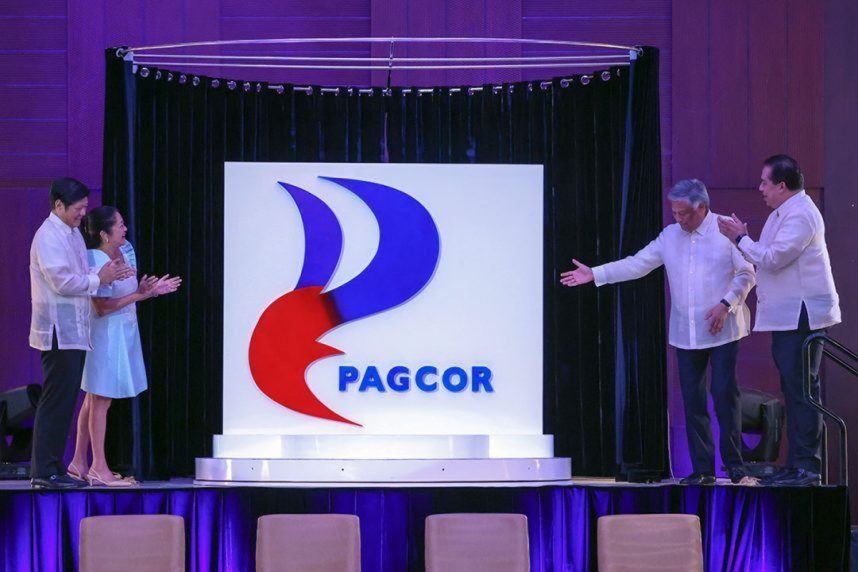
PAGCOR officials and Philippines President Ferdinand Marcos (far left) unveil the gaming regulatory and operator’s new logo in July 2023. PAGCOR in the coming years plans to sell off its government-owned casinos. (Image: Philippine Star)

Jonathan Flores, a senior member of the Philippines House of Representatives who chairs the chamber’s Committee on Government Reorganization, is calling on the Philippines Congress to support House Bill 3559. The measure was introduced in August 2022 by Rep. Ralph Recto, who is now the Secretary of Finance, but has sat unacted on in the Manila capital for nearly two years.

HB 3559 is an act to create the Philippine Amusement and Gaming Commission (PAGCOM). The government entity would regulate the many commercial casinos operating across Southeast Asia and additionally govern online gaming.

PAGCOM would succeed PAGCOR — the Philippine Amusement and Gaming Corporation — that currently both regulates and operates commercial casinos. PAGCOR’s casinos operate under the government’s Casino Filipino brand.

Conflict of Interest 

PAGCOR regulates commercial casino resorts in Manila and the capital’s Entertainment City, as well as casino venues in the Philippines’ freeport zones. Additionally, PAGCOR runs nine Casino Filipino branches and 33 Casino Filipino satellite locations.

There have for many years been calls for PAGCOR to sell off its Casino Filipino venues and transition to a regulatory-only capacity. During President Rodrigo Duterte’s reign, PAGCOR was readying to sell off those assets before the president concluded that their operations were too profitable to divest.

However, under President Ferdinand Marcos Jr., who assumed office on June 30, 2022, the government has begun the process of selling certain PAGCOR satellites. A handful of PAGCOR casinos have been divested since Marcos took office, though the most profitable Casino Filipino branches in Manila, Davao, Cebu City, and several other major cities and tourist destinations remain under PAGCOR ownership.

PAGCOR has committed to selling its remaining casinos by the end of the first quarter of 2026. PAGCOR Chief Executive Alejandro Tengco said last year that the agency is upgrading the casinos’ information technology systems and security protocols to ensure the government receives a premium price for the locations.

Privatization is at the forefront of our master plan with PAGCOR shifting its energy towards a purely regulatory role. Once these upgrades and renovations are complete, we expect our casinos to attract more players and guests, thus making our casinos more attractive to potential investors once we start offering them for sale,” Tengco said at last year’s G2E Asia expo.

“These projects and developments are geared towards our ultimate goal of decoupling PAGCOR’s role,” he continued. “Once we have a pure regulatory entity, you can expect a more dynamic and more lucrative Philippine gaming industry with a more level playing field that promotes fair competition and growth.”

Business Booming

The Philippines’ gaming market attractiveness has improved since China forced the government in Macau to better scrutinize junket operators. The travel organizers for many years had marketed to mainland Chinese people to gamble in the Special Administrative Region, the only place in the People’s Republic where casinos are allowed.

China President Xi Jinping declared that the large capital outflow of money through Macau posed national security risks. After a leading junket tycoon was successfully prosecuted on gambling crimes and sentenced to 18 years in a Chinese prison, most junkets fled for more favorable operating climates, including the Philippines.

The post PAGCOR Could Become PAGCAM in the Philippines, as Lawmakers Propose Overhaul appeared first on Casino.org.

Alabama Pension Fund Administrator Encourages Lawmakers to Authorize Gambling

The top official overseeing Alabama’s pension fund is calling on Gov. Kay Ivey (R) to initiate a special legislative session to continue talks about casino gambling authorization that stalled in the Montgomery capital earlier this year.

Alabama casinos gambling pension program
Retirement Systems of Alabama CEO David Bronner thinks allowing commercial casinos and other forms of gambling in the Cotton State could provide critical tax money that might be used to provide state retirees with a cost-of-living-adjustment. Gaming talks stalled earlier this year in Montgomery. (Image: Bham Now)

David Bronner is the chief executive officer at the Retirement Systems of Alabama (RSA), the pension fund program for state employee retirees. One of the world’s largest internally funded pension programs, the RSA is perhaps best known for developing the Robert Trent Jones Golf Trail, 11 golf courses spread across the state. Bronner was instrumental in the golf destination’s development.

Bronner is looking for new funding sources and thinks lawmakers who this year supported efforts to bring a lottery, commercial casinos, and sports betting to the state are on the right path.

However, the gaming package compromise reached by a special legislative committee failed to pass the state Senate this month by a single vote. The House had easily passed the gaming bill with the needed three-fifths majority support.

Special Session Warranted

Writing in the RSA’s June newsletter, The Advisor, Bronner says Alabamans participating in the state pension program haven’t received a cost-of-living-adjustment in 18 years. The additional state tax streams that lottery and casino gaming would deliver could help boost the pension payouts.

After the one-vote loss in the Senate, the most popular Alabama governor in my lifetime was asked about a special session, to which she replied, ‘Why would I do that?’ Simply put, because you can accomplish it,” Bronner wrote in calling on Ivey to initiate a special session to push the gaming bill across the finish line.

Ivey has been supportive of bringing slot machines, table games, sports betting, and a lottery to the Cotton State. But the governor said this month following the Senate gridlock that she won’t waste tax dollars on a special gaming session when lawmakers “cannot come to a consensus among themselves.”

Bronner says recent tax cuts made by the Legislature on groceries and overtime pay, as well as various tax credits, including $100 million for school vouchers, means less revenue for the state’s pension system.

“Antigaming folks might suggest increasing Alabama’s property taxes, which are the lowest in America, to replace this revenue, but this has been impossible to accomplish in the past,” Bronner continued. He concluded by encouraging RSA enrollees to ask the state lawmakers who voted against the gaming bill “how they plan to address the state’s problems without any new revenue in light of the recent tax cuts and loss of federal monies.”

Gaming Holdout

Legislative efforts to bring new forms of gaming to Alabama have persisted nearly every year since 1999 when state voters rejected a ballot referendum that would have created a state-run lottery. Alabama today remains free of a lottery, commercial casinos, racinos, sports betting, and iGaming.

The only permissible forms of gaming are charitable games of chance, parimutuel wagering, and Class II Indian gaming. The state’s lone federally recognized tribe, the Poarch Band of Creek Indians, runs three tribal casinos where electronic bingo-based games that resemble traditional casino slot machines operate.

The post Alabama Pension Fund Administrator Encourages Lawmakers to Authorize Gambling appeared first on Casino.org.