Genting NY Casino Bid Could Be Hindered by Las Vegas Controversy, Says CIMB

Genting Bhd’s effort to procure one of the three downstate casino licenses in New York could be damaged by potential regulatory discipline the operator faces in Nevada, according to CIMB Securities.
Selwyn Balkissoon
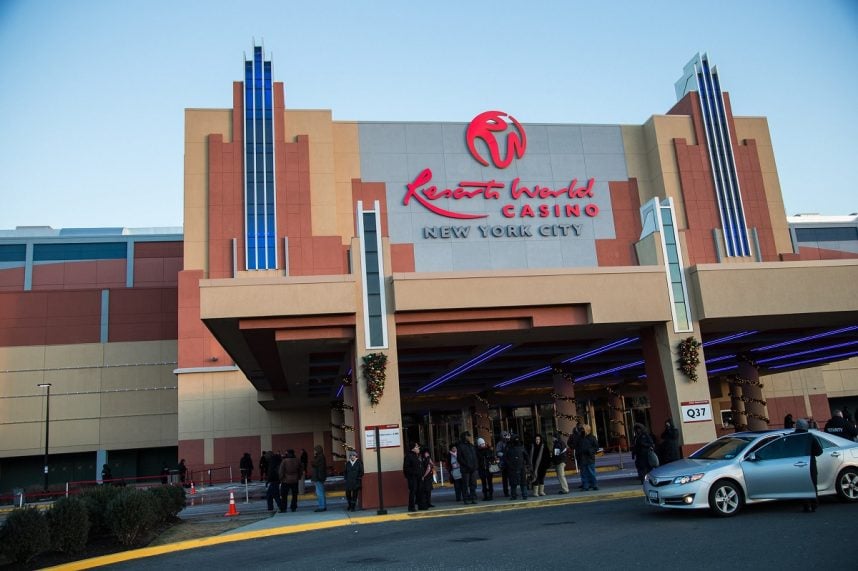
Resorts World New York in Queens. Operator Genting’s hopes of converting the venue to a traditional casino could be harmed by Las Vegas controversies, says a research firm. (Image: NYT)

Last week, the Nevada Gaming Control Board (NGCB) said it is examining financial penalties against Resorts World Las Vegas (RWLV) — Genting’s lone Nevada property — over that venue’s role in allowing known illegal bookmakers to wager there. Nevada regulators alleged that Resorts World Las Vegas not only knowingly allowed those bookies to bet there, but also didn’t scrutinize the source of their cash. That could call into question the veracity of the integrated resort’s anti-money laundering protocols.

We think another risk is that a negative review by the commission could jeopardize Resorts World New York City’s bid,” wrote CIMB analysts in a recent report to clients.

Genting-owned Resorts World New York is a slots-only venue in Queens. The venue has been operational for about 13 years and over that time, it’s delivered more than $4 billion in taxes for the state. That couple with its status as one of the highest-grossing regional casinos in the country despite having no table games has led to speculation that Resorts World New York is almost a lock to win one of three downstate permits.

Genting Could Face Hefty Fine in Nevada

CIMB Securities observed that Resorts World Las Vegas could have to answer for as many as 300 separate violations, which could result in fines totaling $75 million.

It’s also possible that if Nevada regulators want to take a hard line against Genting, RWLV’s non-restricted gaming license could be suspended or even revoked, though the research firm acknowledges that both a fine of that size and revocation of the gaming permit would be unusually harsh punishments.

“Some industry experts say that this is rare and the commission is unlikely to go that far, due to the uncertain long-term impact from taking such a drastic measure,” noted the brokerage firm.

Scott Sibella, the former MGM Resorts International and RWLV executive at the heart of the scandal, pleaded guilty in January to violating the federal Bank Secrecy Act and in May was tagged with $9,500 fine and a $100 special levy. In Nevada, he could face loss of his gaming license and up to $750,000 in fines.

Genting NY Casino Bid Could Withstand Controversy

To date, no New York regulators have commented on whether or not the goings on at Resorts World Las Vegas could endanger Genting’s Empire State ambitions. In New York, the current emphasis is on finding some way to expedite the start of the bidding process for the three downstate casino licenses — something that appears unlikely over the near-term.

About a year ago, rumors surfaced that MGM’s Empire City Casino could also be hampered in its efforts to land one of those permits because of Sibella’s ties to that operator. He served as president of MGM Grand on the Las Vegas Strip for a decade.

However, that’s just speculation and no New York regulator has publicly said the Genting and MGM bids there are in jeopardy due to controversies in Nevada. With both operators already established and known to New York policymakers and with both pledging billions of dollars enhancements to their existing venues and the creation of thousands of new jobs should they win traditional casino licenses, it’s possible their New York ambitions can withstand the Sibella-related imbroglio in Las Vegas.

The post Genting NY Casino Bid Could Be Hindered by Las Vegas Controversy, Says CIMB appeared first on Casino.org.
Washington, DC Could Soon Have Competitive Sports Betting Market

Washington, DC could soon allow multiple operators to conduct mobile sports wagering in the District after City Council member Kenyan McDuffie’s (I-At Large) amendment to broaden the market was included in the council’s proposed budget for fiscal 2025, which was passed Tuesday.

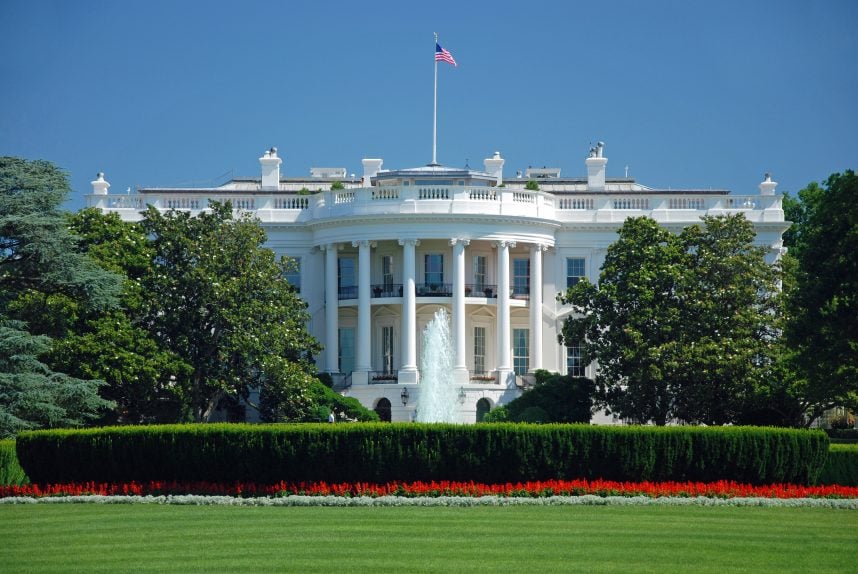
White House
A street-level view of the White House in Washington, DC. The city could soon open its online sports betting market to multiple competitors. (Image: Adobe Stock Images)

McDuffie introduced the Sports Wagering Amendment Act of 2024 in March. Mayor Muriel Bowser (D) still has to approve the budget, but if she does, that could open the door to the city having more than one mobile sports betting option. Currently, FanDuel has a monopoly on mobile betting in the US capitol city.

The unit of Flutter Entertainment took over online sports betting in the city in April after the city council allowed Intralot to subcontract its responsibilities out to another company. Intralot previously ran the heavily criticized GambetDC app.

Last month, representatives from BetMGM, Caesars Sportsbook, DraftKings, and Fanatics Betting & Gaming testified before the Washington, DC City Council’s Committee Business and Economic Development Committee to advocate for a more competitive mobile sports betting landscape in the city.

Usual Suspects Likely to Eye DC Sports Betting Entry

Should Washington, DC’s sports wagering market be liberalized, forcing FanDuel to shed its brief monopoly, the typical names in the industry would likely seek entry.

Currently, BetMGM (Nationals Park) and Caesars Sportsbook (Capital One Arena) have retail sportsbooks at professional sports venues in the city. Those operators would almost certainly pursue licenses if the District opens to mobile wagering competition as would rivals DraftKings and Fanatics.

A decision on making the District’s sports betting market could boil down to simple economics. FanDuel paid a $5 million conversion fee to the Office of Lottery and Gaming (OLG) to take over the Intralot deal and is promising $2 million to $4 million in annual operating payments to the city. If several other gaming companies made similar financial commitments, mobile betting expansion could be a significant moneymaker for the city.

However, there are market share considerations for operators. While Washington, DC is an enticing market for sportsbook firms, there are no guarantees adequate threats to FanDuel will be mounted. In the first quarter in neighboring Virginia, FanDuell commanded market share of 40.14%, or more than DraftKings and BetMGM combined.

Resistance to Open DC Sports Betting Market

Obviously, FanDuel wouldn’t be thrilled about the idea of shedding its monopoly in DC, but there’s likely to be resistance to an open market from other corners — namely small businesses that have sports wagering kiosks.

Those FanDuel-operated machines are found in 63 locations across the city, including bars and lottery retailers, and have become important revenue streams for those establishments.

Retailers that have those kiosks fear that if more mobile wagering options are permitted in the District, bettors will be less inclined to use the kiosks. McDuffie believes that other gaming companies could provide comparable devices to businesses should the Washington market be liberalized.

The post Washington, DC Could Soon Have Competitive Sports Betting Market appeared first on Casino.org.

PAGCOR Could Become PAGCAM in the Philippines, as Lawmakers Propose Overhaul

Philippines lawmakers have proposed overhauling the country’s gaming industry and ridding the government’s interest in operating slot machines, table games, and online gambling platforms.

PAGCOR Philippines casinos gaming industry
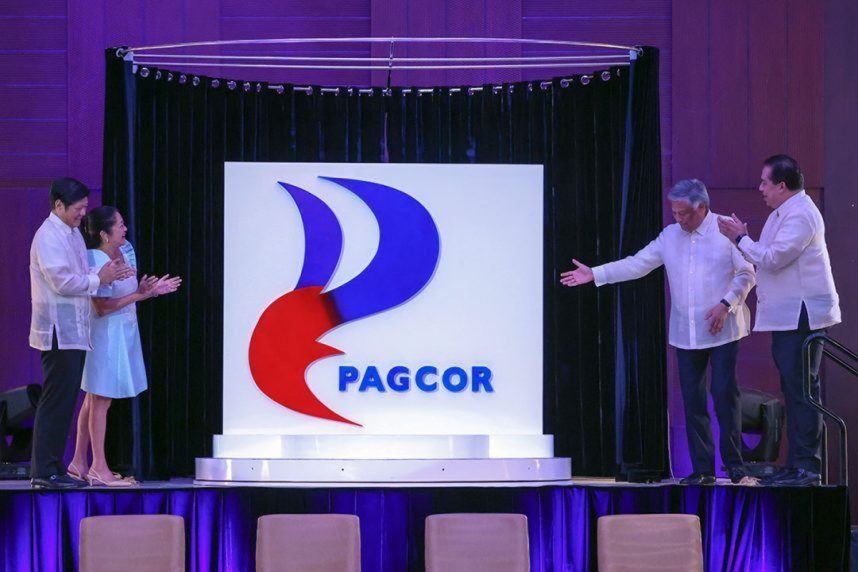
PAGCOR officials and Philippines President Ferdinand Marcos (far left) unveil the gaming regulatory and operator’s new logo in July 2023. PAGCOR in the coming years plans to sell off its government-owned casinos. (Image: Philippine Star)

Jonathan Flores, a senior member of the Philippines House of Representatives who chairs the chamber’s Committee on Government Reorganization, is calling on the Philippines Congress to support House Bill 3559. The measure was introduced in August 2022 by Rep. Ralph Recto, who is now the Secretary of Finance, but has sat unacted on in the Manila capital for nearly two years.

HB 3559 is an act to create the Philippine Amusement and Gaming Commission (PAGCOM). The government entity would regulate the many commercial casinos operating across Southeast Asia and additionally govern online gaming.

PAGCOM would succeed PAGCOR — the Philippine Amusement and Gaming Corporation — that currently both regulates and operates commercial casinos. PAGCOR’s casinos operate under the government’s Casino Filipino brand.

Conflict of Interest 

PAGCOR regulates commercial casino resorts in Manila and the capital’s Entertainment City, as well as casino venues in the Philippines’ freeport zones. Additionally, PAGCOR runs nine Casino Filipino branches and 33 Casino Filipino satellite locations.

There have for many years been calls for PAGCOR to sell off its Casino Filipino venues and transition to a regulatory-only capacity. During President Rodrigo Duterte’s reign, PAGCOR was readying to sell off those assets before the president concluded that their operations were too profitable to divest.

However, under President Ferdinand Marcos Jr., who assumed office on June 30, 2022, the government has begun the process of selling certain PAGCOR satellites. A handful of PAGCOR casinos have been divested since Marcos took office, though the most profitable Casino Filipino branches in Manila, Davao, Cebu City, and several other major cities and tourist destinations remain under PAGCOR ownership.

PAGCOR has committed to selling its remaining casinos by the end of the first quarter of 2026. PAGCOR Chief Executive Alejandro Tengco said last year that the agency is upgrading the casinos’ information technology systems and security protocols to ensure the government receives a premium price for the locations.

Privatization is at the forefront of our master plan with PAGCOR shifting its energy towards a purely regulatory role. Once these upgrades and renovations are complete, we expect our casinos to attract more players and guests, thus making our casinos more attractive to potential investors once we start offering them for sale,” Tengco said at last year’s G2E Asia expo.

“These projects and developments are geared towards our ultimate goal of decoupling PAGCOR’s role,” he continued. “Once we have a pure regulatory entity, you can expect a more dynamic and more lucrative Philippine gaming industry with a more level playing field that promotes fair competition and growth.”

Business Booming

The Philippines’ gaming market attractiveness has improved since China forced the government in Macau to better scrutinize junket operators. The travel organizers for many years had marketed to mainland Chinese people to gamble in the Special Administrative Region, the only place in the People’s Republic where casinos are allowed.

China President Xi Jinping declared that the large capital outflow of money through Macau posed national security risks. After a leading junket tycoon was successfully prosecuted on gambling crimes and sentenced to 18 years in a Chinese prison, most junkets fled for more favorable operating climates, including the Philippines.

The post PAGCOR Could Become PAGCAM in the Philippines, as Lawmakers Propose Overhaul appeared first on Casino.org.

DraftKings Q1 Earnings Could Benefit from Super Bowl Parlays, Prop Bets, Says Analyst

While most sportsbook operators were pinched by the Super Bowl because the underdog Kansas City Chiefs won outright, DraftKings’ (NASDAQ: DKNG) first-quarter earnings might prove sturdy due to the operator winning on parlays and some popular proposition wagers.

DraftKings stock
A DraftKings billboard appears at Times Square in New York City. An analyst believes the operator did well with the Super Bowl and could have big iGaming opportunities ahead. (Image: NASDAQ)

Following a meeting with several high-ranking DraftKings executives, including co-founder and CEO Jason Robins, JPMorgan analyst Joseph Greff said he came away “incrementally impressed.” He added that the operator likely notched decent hold on the Super Bowl because neither Kanas Chiefs tight end Travis Kelce nor running back Isaiah Pacheco scored touchdowns in the big game, meaning plenty of DraftKings clients that built same-game parlays with those props lost.

Continuous product iteration and technology competencies are driving higher structural hold rates, benefiting from increased adoption of its higher-margin parlay products and other diversified bet types that are unlocking increased engagement and monetization of its customer base,” observed Greff.

The analyst added DraftKings’ overall Super Bowl hold was solid even with the Chiefs winning and the operator may have given a clue to that effect by raising 2024 guidance earlier this month.

DraftKings iGaming Future Bright

As has been widely documented, gaming companies, including DraftKings, are enthusiastic about the long-term outlook for internet casinos, but just six states currently permit that form of wagering.

Greff told clients that DraftKings is considering pitching iGaming in Illinois as an avenue for plugging gaps in the that state’s budget. That’s viewed as a potential compromise to Gov. J.B. Pritzker’s (D-IL) recently proposed budget, which pitches raising the state’s tax on sports betting to 35% from 15%.

The JPMorgan analyst added that the DraftKings executives cited bullish revenue trends in the states that allow internet casinos and that the outlook for expansion is bright because some states, including New York and some in New England, are grappling with budget constraints and need to find new sources of revenue.

The executives also discussed DraftKings’ recently unveiled $750 million cash/stock deal for online lottery provider Jackpocket, telling Greff the firm will initially function as a standalone entity and later be integrated into the buyer’s sports betting and iGaming platforms. The acquisition could help DraftKings expansion efforts, including into Texas where Jackpocket is already operational, according to the analyst.

Speaking of Expansion…

DraftKings management told Greff they remain open to additional acquisitions and with a soaring share price and with $1.27 billion in cash and cash equivalents on hand at the end of 2023, the operator has the resources with which to make deals.

The analyst noted that the gaming company is open to international purchases and while specific jurisdictions weren’t mentioned, it appears DraftKings is unlikely to go shopping in Western Europe due to limited growth opportunities in that region.

Greff pointed out that given the firm’s strong cash position, it could consider a share repurchase program, but a potential dividend wasn’t mentioned.

The post DraftKings Q1 Earnings Could Benefit from Super Bowl Parlays, Prop Bets, Says Analyst appeared first on Casino.org.

Indiana iGaming Revenue Could Exceed 2 Billion Dollars Within Three Years

A report commissioned by the Indiana Gaming Commission and conducted by Spectrum Group has found that the iGaming industry in the state could be able to generate revenue of up to 2.1 billion dollars over the first three years after legalization.

The report’s detailed prediction was that the iGaming sector could bring in between 1.9 and 2.1 billion dollars in revenue. This prediction is 5 percent more optimistic than what was revealed in the 2022 report.

The study has also pointed out that iGaming tax revenue over the first three years following legalization could amount to 929 million dollars for the state of Indiana. That prediction also represents a 5 percent increase on the estimations of the previous report.

The introduction of legal online gambling has been discussed for a long time in Indiana, with opponents claiming that online casinos would affect the activity of the long-standing land-based casinos in the state. However, the report claims that iGaming did not have a negative impact on other forms of gaming in other American states where it was introduced.

Despite the data provided in the report, chances for the legalization of online gambling in Indiana appear slim in 2024 because state legislators have agreed not to bring in any new proposals to this respect this year.

Lacking iGaming Legislation

The online sports betting industry has grown at a fast pace during the past few years in the United States, with online sportsbooks now legal in nearly half of the American states. However, iGaming has not been accepted on such a large scale, currently online gambling is legal in just seven states.

The lack of legislation for iGaming has prompted a major player such as WynnBet to close its operations in a number of states in August 2023. That left the major casino operator with activities just in Nevada in Massachusetts, where it owns land-based properties.

The chances of iGaming being introduced in New York also appear unlikely in 2024 after Governor Kathy Hochul has not introduced online gaming in the executive budget for 2025. However, state senator Joseph Addabbo did file a revised iGaming bill last week.

The example of the states that have introduced legal online gambling does provide some interesting data, though. Pennsylvania, for example, saw iGaming help its industry to reach a new gambling revenue record in 2023, a total amount of 5.7 billion dollars.

The iGaming sector attracted gross revenue of 1.5 billion dollars across the United States in the third quarter of 2023, an increase of 26 percent year-on-year and an all-time record for a single quarter.

Source: “Report finds Indiana igaming revenue could exceed $2bn within three years“. iGaming Business. January 19, 2024.

The post Indiana iGaming Revenue Could Exceed 2 Billion Dollars Within Three Years appeared first on Casino News Daily.