Reno’s Grand Sierra Resort Agrees to $250K Settlement With Nevada Gaming Commission

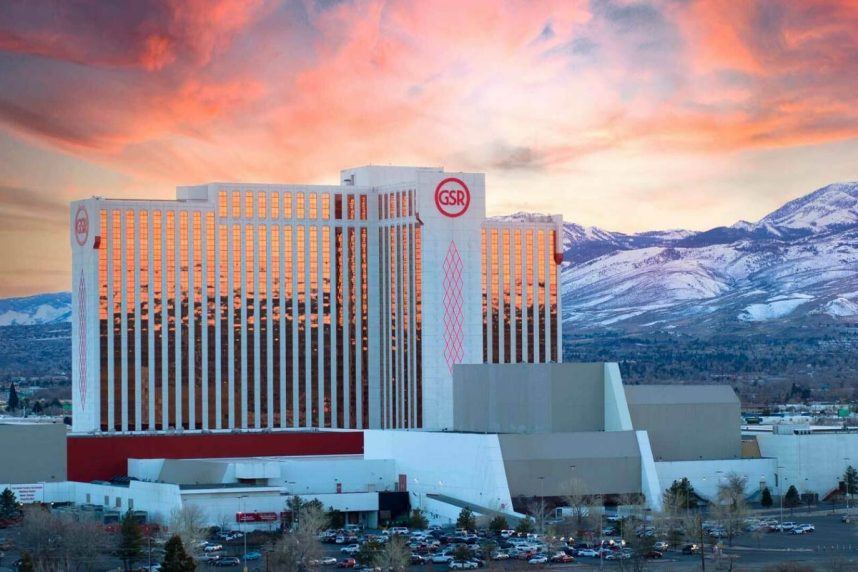
The Grand Sierra Resort in Reno has agreed to pay the Nevada Gaming Commission (NGC) a quarter of a million dollars to settle a regulatory complaint stemming from an incident last year.
Grand Sierra Resort Nevada Gaming Commission
The Grand Sierra Resort in Reno has agreed to pay $250K to settle a regulatory complaint brought by the Nevada Gaming Control Board. This week, the Nevada Gaming Commission signed off on the resolution. (Image: Grand Sierra Resort)

The Nevada Gaming Control Board (NGCB) brought a complaint against MEI-GSR Holdings, LLC, doing business as the Grand Sierra Resort, after one of its agents reported being denied prompt access to the property’s Grand Theatre during a routine inspection.

Michael Somps, a senior deputy attorney general in the Nevada Attorney General’s Office who represented the state in the matter, told the NGC that a Gaming Enforcement Division agent arrived at the Reno casino on Dec. 19, 2023. During the agent’s inspection, casino security approached the agent after he bypassed a metal detector outside the theater’s entrance.

Casino security told the agent, who had his NGCB badge and credentials displayed, that he had to relinquish his firearm before entering the theater. After about six minutes, higher-ups with the resort informed the security personnel that the gaming agent could enter the theater with his weapon.

Rare Occurrence

All establishments licensed by the Nevada Gaming Commission are subjected to routine inspections. State gaming agents are to have immediate and full access to “all portions of the premises,” with the definition of premises being “curb to curb,” said Somps.

The senior deputy attorney general explained that gaming agents review areas off of the casino floor to ensure that no illegal gambling or other unlawful activity is occurring inside the licensed gaming facility.

While a brief delay for access is sometimes common, a delay of six minutes, which the agent disputed and said was longer, is an outlier according to Somps. Paired with a similar incident in 2021 where a third-party security guard hired by the Grand Sierra blocked a gaming agent’s immediate access until he was wanded, Somps said a $250K penalty against the resort was warranted.

Licensees have a long history of complying and granting Board agents immediate access to all portions of the premises. The Board views the Grand Sierra Resort’s violation seriously and maintains that licensees and their employees understand that any Board agent be given immediate access to any portion of the premises of the gaming establishment after they display their credentials,” Somps said.

The Meruelo Group, the parent owner of the Grand Sierra Resort controlled by billionaire Alex Meruelo, did not contest the fine in agreeing to settle the complaint.

The $250K fine comes just days after Meruelo’s Grand Sierra donated $15K each to the Robert Mitchell Elementary School and Vaughn Middle School, both of which are part of the Washoe County School District.

Where the Money Goes 

The Nevada Gaming Commission and Gaming Control Board are responsible for the strict regulation of all persons, locations, practices, and activities associated with the state’s gaming industry. Nevada’s gaming law allows the NGC to impose fines on licensees found to be non-compliant with its regulations.

Fines received by the state gaming agency are directed to the Nevada General Fund. The $250K fine against Grand Sierra slightly offsets another decision made on Monday that determined that Nevada Restaurant Services Inc., the parent of Dotty’s gaming taverns, was owed a $3 million tax refund.

The post Reno’s Grand Sierra Resort Agrees to $250K Settlement With Nevada Gaming Commission appeared first on Casino.org.

EU Commission Declares FDJ Monopoly Compliant, Adjusts Payment Requirements

EU-Commission-says-French-gambling-provider-did-not-receive-unfair-state-aidThe European Commission has concluded its investigation into the state aid allegations surrounding Française des Jeux (FDJ), France’s exclusive lottery and sports betting provider, affirming the legality of FDJ’s monopoly while revising the payment terms required for this exclusivity. The in-depth probe, launched following complaints in 2020, examined whether France’s privatization of FDJ provided unfair state aid by allowing FDJ to operate with an insufficiently low fee for its exclusive rights.

Investigation Results in Adjusted Monopoly Fee

The investigation revealed that FDJ’s annual payment of €15.2 million, totaling €380 million over a 25-year term, was below what the European Union deemed compliant with competition rules. In response, the Commission raised the required payment to €477 million, or an additional €97 million. This adjustment aligns FDJ’s financial obligations with EU standards, which the Commission stated removes any potential advantage previously perceived as state aid.

Following the Commission’s ruling, FDJ expressed satisfaction with the outcome, citing alignment with the French Conseil d’Etat’s ruling from April 2023, which had upheld the framework established during FDJ’s privatization. “FDJ welcomes the closure of this investigation and the European Commission’s confirmation… that the legal framework adopted when the Group was privatised was robust,” the company stated.

Market Response and Future Implications

FDJ’s shares responded positively to the EU’s decision, with prices rising 5.6% on the Paris stock exchange, reflecting investor confidence in the company’s stability following the compliance confirmation. The Commission’s ruling comes amid FDJ’s recent acquisition of Kindred Group, in which FDJ gained a controlling stake of over 90%. The acquisition has led to some board resignations at Kindred, including Chairman Evert Carlsson, as FDJ integrates its new asset into operations.

However, FDJ may soon face additional competition. The French government has indicated that it is considering expanding the gambling market as part of its 2025 budget, suggesting the possibility of legalizing online gambling. A public consultation with industry stakeholders is planned for early November, signaling potential regulatory shifts that could alter the competitive landscape in the coming years.

Sources:

Conclusion of the European Commission’s Investigation“, groupefdj.com, October 31, 2024.

The post EU Commission Declares FDJ Monopoly Compliant, Adjusts Payment Requirements appeared first on Casino News Daily.

UK Gambling Commission Prepares First Study to Combat Online Black Market

Gambling-Commission-embarks-on-black-market-study-to-improve-monitoringIn a bid to clamp down on illegal online gambling, the UK Gambling Commission (UKGC) is set to release its first comprehensive study of the UK’s black market. Scheduled for publication in spring 2025, the study aims to provide the UKGC with data-driven insights into the scale of unlicensed gambling and inform its strategies for disrupting illegal operations.

The research will investigate consumer motivations, focusing on why individuals access unlicensed gambling websites. By collecting and analyzing web traffic data and player behavior, the UKGC hopes to estimate the financial impact of the black market, particularly in terms of gross gambling yield (GGY). This data will enable the regulator to better monitor and combat illegal activities, ensuring that the licensed market is protected and consumers are safeguarded from harmful practices.

How the UKGC is Measuring the Impact of the Black Market

To estimate the size of the black market, the UKGC is employing a mix of web traffic analytics and player spending data.

The regulator has collected information from over 139,000 gambling accountsacross seven UK operators between 2018 and 2019, using this data to estimate that the GGY for online slot machines on unlicensed sites is approximately £0.32 per minute. However, this approach has its limitations, particularly when it comes to other forms of gambling like sports betting, which may involve higher spending but are not accounted for in the current model.

The UKGC is also monitoring specific search terms that are likely to be used by consumers seeking unlicensed gambling platforms. By tracking popular queries via Google Trends and Similarweb, the Commission identifies search results that lead to unlicensed sites. Web traffic from these sites is then analyzed, providing insights into the behavior of UK consumers on illegal platforms.

International Comparisons and Challenges

The UKGC’s efforts align with similar studies conducted by other European regulators, such as the Netherlands and Sweden, where data has shown that consumers often spend more on unlicensed platforms than on regulated sites. This insight is reflected in the UKGC’s methodology, which acknowledges that spending habits on unlicensed sites may differ from those on licensed ones.

In a note about the study, the UKGC said, “With a better understanding of why and how consumers access unlicensed gambling websites, we can identify ways in which we can use data to identify unlicensed websites and make estimates of their usage by GB consumers.” This approach will help the Commission create more effective strategies for monitoring and disrupting the black market.

CEO Andrew Rhodes emphasized the social and economic risks posed by the black market. “The illegal market is bad from a human point of view – as it poses a risk to consumers, especially the vulnerable. It is also unlikely to operate in a way that is fair or safe. It is also a concern from an economic point of view – as it pays no tax and undercuts legitimate business,” he stated. Rhodes further highlighted the role that data analytics will play in addressing these challenges.

Future Research: Social Media and Encrypted Messaging

Looking ahead, the UKGC plans to expand its research to examine the role that social media platforms and encrypted messaging apps play in facilitating unlicensed gambling. Services such as WhatsApp, Telegram, Twitch, and Kick are increasingly being used to promote gambling content, and the Commission is eager to understand how these platforms drive traffic to unlicensed operators.

Over the past year, the UKGC has ramped up its efforts to combat the black market, issuing more than 750 cease-and-desist orders and removing 50,000 URLs from search engine results. The findings from the study, to be published in 2025, will guide the next phase of the UKGC’s strategy to combat illegal online gambling and protect consumers.

Source:

Unlicensed Gambling Using Data to Identify Unlicensed Operators and Estimate“, gamblingcommission.gov.uk, October 21, 2024.

The post UK Gambling Commission Prepares First Study to Combat Online Black Market appeared first on Casino News Daily.

Virginia Lawmakers Mull Formation of Gaming Commission Following Expansion

Virginia lawmakers in Richmond continue to study whether the commonwealth should form an agency dedicated to the regulation of commercial gaming.

Virginia Gaming Commission casinos parimutuel wagering
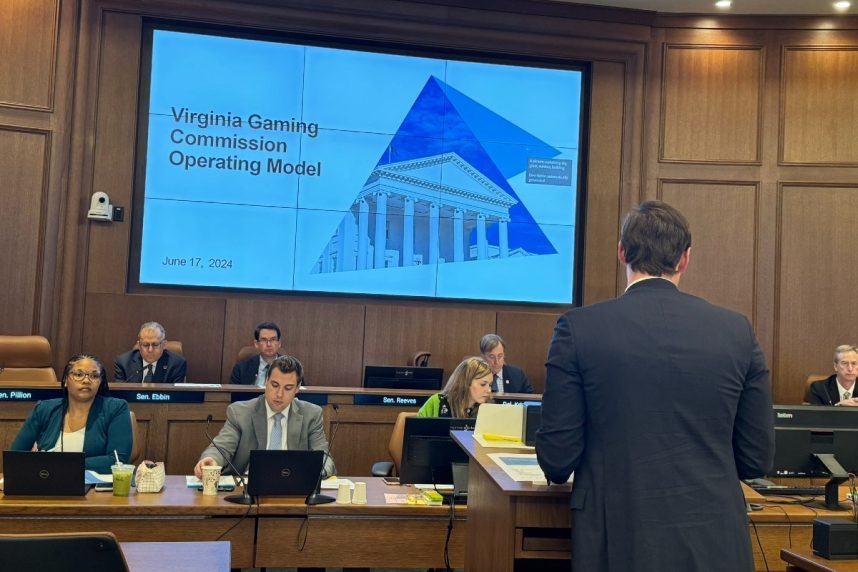
The Joint Subcommittee to Study the Feasibility of Establishing the Virginia Gaming Commission is seen in July 2024. Churchill Downs wants parimutuel wagering to remain under the regulatory scope of the Virginia Racing Commission. (Image: X)

Virginia has expanded gambling considerably in recent years to include up to five brick-and-mortar casinos with slot machines, live dealer table games, and sports betting. Virginia is also now home to online sports betting and slot-like historical horse racing machines that operate in parimutuel wagering facilities.

The Virginia Lottery oversees lottery gaming, casino activity, and retail and mobile sports betting. The Virginia Racing Commission regulates HHR gaming, horse racing, and parimutuel wagering.

A joint subcommittee of the Virginia General Assembly remains reviewing the feasibility of establishing a commercial gaming regulatory, which would be named the Virginia Gaming Commission. The body would regulate casino gambling, online sports betting, HHR wagering, and parimutuel facilities. The Virginia Lottery would return to only governing lottery operations.

The joint subcommittee is expected to make its recommendations to the General Assembly in January.

Consultant Recommends Formation 

During the joint subcommittee’s meeting on Wednesday, Brianne Doura-Schawohl, a consultant with her boutique Doura-Schawohl Consulting, LLC, recommended to the bipartisan panel to set aside funding for the establishment of the Virginia Gaming Commission. Doura-Schawohl said a central gaming regulatory agency is best at providing consumer protections, governing operators, and ensuring that the societal harms of expanded gaming are minimalized.

Doura-Schawohl said Virginia has an obligation to direct a percentage of its gaming tax for the research, prevention, treatment, and recovery of problem gambling.

The most comprehensive model to mitigate risk and reduce harm is a bifurcated approach between the state health agency and one central gaming regulatory agency,” Doura-Schawohl said. “The regulatory should be empowered to require and enforce stringent consumer protection provisions as part of licensure.”

Virginia, once among the most limited gaming states, is poised to become a big player in the US casino industry as retail casino resorts open across the commonwealth.

In January 2023, Rivers Casino Portsmouth became the first permanent casino to open in Virginia. Larger casino resorts are soon opening in Danville and Bristol.

Caesars Entertainment plans to open its $750 million integrated resort Caesars Virginia in Danville before the year’s end. Hard Rock International plans to open the $550 million Hard Rock Hotel & Casino Bristol this fall or winter.

Petersburg voters will decide whether to authorize a $1.4 billion mixed-use complex with an integrated resort casino this November. And the Pamunkey Indian Tribe continues to move forward with a more than $500 million casino project in Norfolk.

Churchill’s Opposition

Churchill Downs, Inc., which operates HHR machines in Virginia and is building The Rose Gaming Resort, a $460 million development, in Dumfries, is opposed to putting parimutuel wagering regulation under the scope of the proposed Virginia Gaming Commission.

Churchill, which also owns and operates the Colonial Downs Racetrack in New Kent, says other states that have moved parimutuel wagering regulation from a racing commission to a gaming commission have seen allocations to horsemen decline. The Kentucky-based company pointed to Michigan where in 1997 the Michigan Racing Commission merged with the newly formed Michigan Gaming Control Board.

Michigan’s once vibrant thoroughbred industry went from running over 1,000 races for $9 million in purses (2003) to ceasing thoroughbred racing,” Churchill’s presentation to the joint subcommittee detailed. “In 2003, there were 375 thoroughbreds foaled in Michigan and in 2022 there were four.”

Michigan’s final racetrack, Northville Downs, closed earlier this year bringing an end to Michigan’s horse racing industry.

“Given the nuances of parimutuel wagering, live horse racing, simulcast wagering, and advanced deposit wagering, Churchill Downs believes the oversight of historical and live horse racing should remain at the Virginia Racing Commission,” the company concluded.

The post Virginia Lawmakers Mull Formation of Gaming Commission Following Expansion appeared first on Casino.org.

Arkansas Supreme Court Rejects Casino Appeal, License Back to Racing Commission

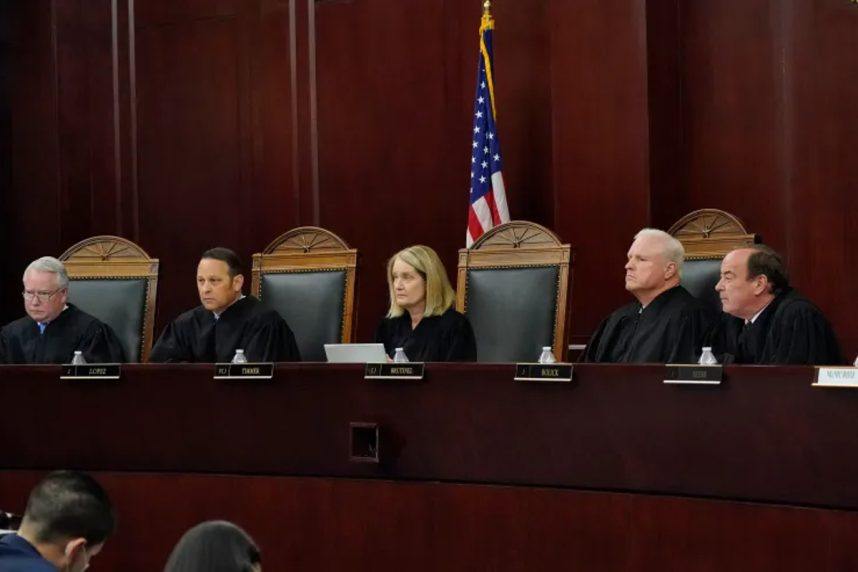
The Arkansas Supreme Court will not hear an appeal petitioned by the Cherokee Nation Businesses (CNB) regarding its planned Legends Resort & Casino in Russellville.

Arkansas Supreme Court Cherokee Pope County
The Arkansas Supreme Court will not take up an appeal from an Oklahoma tribe seeking to build a commercial casino in Pope County. The Cherokee Nation Businesses, however, is still the presumed front-runner for the gaming license. (Image: AP)

A year ago this month, Pulaski County Circuit Judge Tim Fox ruled that the Arkansas Racing Commission erred in issuing a commercial casino license earmarked for Pope County to CNB, the commercial business unit of the Cherokee Nation in Oklahoma. In considering a lawsuit challenging the granting by a rival casino bidder, Gulfside Casino Partnership in Mississippi, Fox determined that the Cherokee bid violated rules established through Amendment 100 of the Arkansas Constitution.

State voters in November 2018 passed the amendment to allow a single casino in the counties of Crittenden, Garland, Jefferson, and Pope. The casino bidding rules, however, required the state Racing Commission to only consider pitches from single entities.

Fox concluded that CNB applied as a consortium with a newly formed company called Legends Resort & Casino, LLC. The state Supreme Court last week opted to deny reconsidering the case. The high court in October upheld Fox’s decision in a 5-2 ruling.

License Returned to Racing Commission

With the Cherokee’s appeal formally settled, the Pope County casino license has been returned to the Arkansas Racing Commission. The state gaming regulator is expected to conduct a new bidding round, but the $300 million Legends Casino will presumably be the only qualified bid.

In separate litigation, it’s been determined through the Arkansas court system that bidders must have the support of either the sitting county judge or the present county quorum court. Last month, the Pope County Quorum Court voted 7-6 to endorse the CNB proposal. Pope County Judge Ben Cross has also backed the Legends development.

Gulfside previously applied with a letter of support from former Pope County Judge Ed Gibson, who issued his backing on the final day of his tenure before he exited the position in December 2018. Gulfside pitched a $254 million casino in Russellville called River Valley Casino Resort.

While Fox ruled against the Cherokees in January 2023, he also discredited the Gulfside plan when he decided that “the county judge” in Amendment 100’s language refers to the current judge — not a former county judge.

CNB will be expected to reapply as a single entity, likely as Legends Resort & Casino, LLC, which the company fully owns.

License Dilemma Continues

More than five years since Arkansans approved a casino in Pope County, the gaming license still hasn’t been issued. Meanwhile, casinos have opened in the three other counties.

The Pope County controversy began in 2020 when it was determined that Racing Commissioner Butch Rice had a bias in his grading of the Gulfside bid a perfect 100 out of 100 and the Cherokee plan just 29/100. The Racing Commission decided to exclude Rice’s scoring, which had tipped the overall score in Gulfside’s favor and opted to issue the license to the Cherokees.

That initiated the legal controversy, with Cherokee and Gulfside attorneys battling for the casino concession ever since. Ricer is no longer a commissioner on the seven-person state agency.

The post Arkansas Supreme Court Rejects Casino Appeal, License Back to Racing Commission appeared first on Casino.org.