UK Gambling Commission Prepares First Study to Combat Online Black Market

Gambling-Commission-embarks-on-black-market-study-to-improve-monitoringIn a bid to clamp down on illegal online gambling, the UK Gambling Commission (UKGC) is set to release its first comprehensive study of the UK’s black market. Scheduled for publication in spring 2025, the study aims to provide the UKGC with data-driven insights into the scale of unlicensed gambling and inform its strategies for disrupting illegal operations.

The research will investigate consumer motivations, focusing on why individuals access unlicensed gambling websites. By collecting and analyzing web traffic data and player behavior, the UKGC hopes to estimate the financial impact of the black market, particularly in terms of gross gambling yield (GGY). This data will enable the regulator to better monitor and combat illegal activities, ensuring that the licensed market is protected and consumers are safeguarded from harmful practices.

How the UKGC is Measuring the Impact of the Black Market

To estimate the size of the black market, the UKGC is employing a mix of web traffic analytics and player spending data.

The regulator has collected information from over 139,000 gambling accountsacross seven UK operators between 2018 and 2019, using this data to estimate that the GGY for online slot machines on unlicensed sites is approximately £0.32 per minute. However, this approach has its limitations, particularly when it comes to other forms of gambling like sports betting, which may involve higher spending but are not accounted for in the current model.

The UKGC is also monitoring specific search terms that are likely to be used by consumers seeking unlicensed gambling platforms. By tracking popular queries via Google Trends and Similarweb, the Commission identifies search results that lead to unlicensed sites. Web traffic from these sites is then analyzed, providing insights into the behavior of UK consumers on illegal platforms.

International Comparisons and Challenges

The UKGC’s efforts align with similar studies conducted by other European regulators, such as the Netherlands and Sweden, where data has shown that consumers often spend more on unlicensed platforms than on regulated sites. This insight is reflected in the UKGC’s methodology, which acknowledges that spending habits on unlicensed sites may differ from those on licensed ones.

In a note about the study, the UKGC said, “With a better understanding of why and how consumers access unlicensed gambling websites, we can identify ways in which we can use data to identify unlicensed websites and make estimates of their usage by GB consumers.” This approach will help the Commission create more effective strategies for monitoring and disrupting the black market.

CEO Andrew Rhodes emphasized the social and economic risks posed by the black market. “The illegal market is bad from a human point of view – as it poses a risk to consumers, especially the vulnerable. It is also unlikely to operate in a way that is fair or safe. It is also a concern from an economic point of view – as it pays no tax and undercuts legitimate business,” he stated. Rhodes further highlighted the role that data analytics will play in addressing these challenges.

Future Research: Social Media and Encrypted Messaging

Looking ahead, the UKGC plans to expand its research to examine the role that social media platforms and encrypted messaging apps play in facilitating unlicensed gambling. Services such as WhatsApp, Telegram, Twitch, and Kick are increasingly being used to promote gambling content, and the Commission is eager to understand how these platforms drive traffic to unlicensed operators.

Over the past year, the UKGC has ramped up its efforts to combat the black market, issuing more than 750 cease-and-desist orders and removing 50,000 URLs from search engine results. The findings from the study, to be published in 2025, will guide the next phase of the UKGC’s strategy to combat illegal online gambling and protect consumers.

Source:

Unlicensed Gambling Using Data to Identify Unlicensed Operators and Estimate“, gamblingcommission.gov.uk, October 21, 2024.

The post UK Gambling Commission Prepares First Study to Combat Online Black Market appeared first on Casino News Daily.

EGBA’s 2024 Report: Regulation, Black Markets, and Sustainability

European-CEOs-share-growing-concerns-over-black-market-resurgenceThe European Gaming and Betting Association (EGBA) has released its 2024 Sustainability Report, shedding light on the current state of the online gambling industry in Europe and emphasizing the urgent need for balanced regulation. The report is a comprehensive overview of the association’s and its members’ efforts to promote sustainable and responsible gambling while addressing the growing issue of black market gambling.
Addressing Black Market Gambling

The EGBA’s report highlights a significant concern: the rise of black market gambling across Europe. CEOs from leading operators, including Flutter, Entain, Evoke and Kindred warn that stringent regulations in countries like the Netherlands, Italy, Spain, and Sweden are inadvertently driving players towards unregulated offshore sites. These sites often lack basic consumer protections and are primarily profit-driven, posing severe risks to players.

Peter Jackson, CEO of Flutter Entertainment, alongside other prominent CEOs, emphasized in the report, “Severe restrictions in these countries prevent an attractive and competitive offer to players that steers them toward safer, locally regulated websites.” The consensus is clear: while enforcement against black market operators is crucial, creating competitive, regulated online markets is the only effective solution to safeguard players.

The Importance of a Balanced Approach

The report advocates for a balanced regulatory framework that not only ensures robust consumer protections but also maintains the competitiveness of the legal market. The EGBA stresses over-regulation can make illegal alternatives more appealing, especially to vulnerable players. In France, for instance, the number of players using black market websites now exceeds those using regulated sites, according to data from the country’s gambling regulator.

“Competitive, regulated online gambling markets are the only effective solution,” the report states. The EGBA calls on national policymakers to design regulations that protect consumers without driving them to unsafe alternatives.

Progress in Responsible Gambling

Despite the challenges posed by black market gambling, the EGBA report highlights significant progress in promoting responsible gambling within the legal market. In 2023, a record 65% of European gamblers used safer gambling tools, up from 60% in 2022. This increase is attributed to a 49% rise in safety messages sent to players, with over a third being personalized based on individual playing behavior.

The report notes that 65% of customers displaying potentially problematic play either improved or stabilized their gambling behavior following safety interventions. This underscores the effectiveness of proactive measures and personalized communication in promoting safer play.

Enhanced Player Protection Measures

The EGBA and its members have made substantial investments in developing advanced safety tools and player intervention mechanisms. These systems leverage health experts, technology, and AI to provide a personalized approach to player safety. The goal is to analyze individual behavior, identify risks, and trigger appropriate interventions to encourage safer gambling practices.

In 2023, 21 million customers had one or more safety tools activated on their accounts, a 14% increase from the previous year. Deposit limits remain the most popular tool, used by 70% of customers who voluntarily activate safety measures.

Looking Ahead: A Sustainable Future

The report also highlights the broader contributions of EGBA members to European society, including significant financial support for problem gambling research, education, and treatment. In 2023, contributions to these areas increased by 25%, reaching €61.2 million.

The EGBA is committed to fostering a culture of sustainable and responsible gambling. The report outlines plans for the fourth edition of European Safer Gambling Week in November 2024, aiming to surpass previous records for engagement and participation.

The EGBA’s 2024 Sustainability Report is a call to action for regulators and policymakers to balance consumer protection with market competitiveness. By fostering a well-regulated and attractive legal market, Europe can effectively combat the risks posed by black market gambling and ensure a safer gambling environment for all players.

Source:

EGBD | European Gaming & Betting Association | Sustainability Report 2024 [pdf]

The post EGBA’s 2024 Report: Regulation, Black Markets, and Sustainability appeared first on Casino News Daily.

Casino Chip Grabber Nominated to Nevada ‘Black Book’

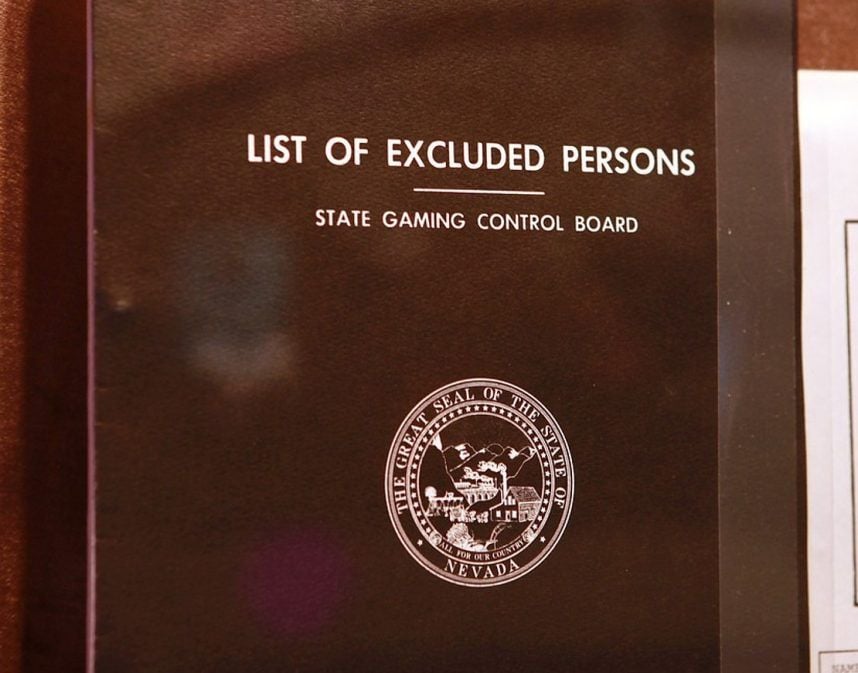
A man accused of stealing fistfuls of chips from tables and casino patrons has been nominated to Nevada’s so-called “black book,” its list of individuals who are forever banned from all casinos in the state.

A copy of the Nevada Gaming Control Board’s so-called ‘black book’ of excluded persons is displayed at the Mob Museum in Las Vegas. (Image: Mob Museum)

The Nevada Gaming Control Board nominated Neal Ahmed Hearne to its List of Excluded Persons at its Wednesday meeting, after watching surveillance videos of a man identified as Hearne grabbing chips from a table game at Aria in Las Vegas in January 2018.

Hearne was convicted of a crime related to the incident.

Hearne met three criteria for inclusion on the list, Senior Deputy Attorney General John Michela argued during the meeting:

  1. a prior felony conviction
  2. a conviction of a crime of moral turpitude
  3. a judicial order banning him from a casino

Gaming Control Board Chair Kirk Hendrick added that nominating Hearne for inclusion was necessary because his “brazen” actions could easily escalate into dangerous situations.

If the five-member Nevada Gaming Commission votes to concur at a future meeting, then Hearne will become the 37th person added to the black book.

A Dishonor Just to be Nominated

Hearne will be notified of his nomination and given the opportunity to request a hearing before the commission to oppose his inclusion. He can choose to be represented by legal counsel who can gather evidence to counter the allegations.

Last month, the commission unanimously voted to add Shaun Joseph Benward, a Mississippi illusionist who allegedly uses his knowledge of distraction to scam roulette dealers, as the black book’s 36th excluded person.

Every few years, the attorney general’s office will review the whereabouts of individuals on list and seek a regulatory action to purge the names of those they can confirm have died.

The post Casino Chip Grabber Nominated to Nevada ‘Black Book’ appeared first on Casino.org.

European Regulator Forum GREF Releases Strategy to Fight Black Market Operators

european_regulator_forum_gref_releases_strategy_to_fight_black_market_operatorsThe Gaming Regulators European Forum (GREF) is comprised of gaming and betting authorities in some of Europe’s most active markets. The forum recently outlined a commonly agreed upon commitment on how they plan to address problem gambling across the continent.


A statement released by GREF detailed some of the ways members would work together through cross-border cooperation that includes coordinating “joint actions” against what it deems to be illegal gambling websites operating in Europe. Each country is free to use its own definition of “illegal gambling”.

Regular Meetings and Other Communications to Keep the Forum Cohesive

Other items outlined include the sharing of expertise, information, and best practices as well as setting up alerts so that all member states can be on the same page at the same time when an issue needs to be addressed. The team also stated that the various national regulatory bodies would hold regular meetings to keep each other apprised and in the loop.

None of the language we have seen addresses grey markets – jurisdictions where gambling operations are not allowed unless they are licensed locally or sometimes even by another EU member state, but players are free to choose where they play. However, some of the participants are indeed from countries most widely seen as grey markets.

With the advent of countries such as Germany, Ireland, the Netherlands, and the UK undertaking regulatory reform, Europen gambling industry participants have been bringing up the subject of the black market and outright illegal operators in some discussions.

The statement from GREF reads: “This joint action will enable us to better identify and minimize illegal gambling activities while acknowledging that each regulator remains free to define what amounts to illegal gambling and to use the enforcement tools provided by its own national regulatory framework.

We expect that this common action will enable a constructive dialogue with online platforms, including social media platforms. We also expect that this common action will raise consumer awareness regarding the risks associated with illegal gambling.”

The Belgian Gambling Commission (BGC), l’Autorité Nationale des Jeux (ANJ) of France, Germany’s Gemeinsame Geschäftsstelle Glücksspiel (GGL), the Hellenic Gaming Commission (HGC) of Greece, Ireland’s Regulator of the National Lottery, and the Great Britain Gambling Commission (UKGC) are among the most prominent members of the forum.

Ireland’s Department of Justice has recently stated that it will include support for the Gambling Regulatory Authority of Ireland (GRAI) [Údarás Rialála Cearrbhachais na hÉireann]

in its Justice Plan 2023, carrying on the work begun in 2021 to repeal existing gambling law in Ireland and replace it with a modern framework that addresses both land-based and online betting and gambling.

The Irish Department of Justice and Equality is a member of the forum as is the Finnish Ministry of Social Affairs and Health. Both government bodies have been heavily involved in the push for new regulatory frameworks in their countries.

GREF: Unlicensed Operators put Consumers at Risk

As one voice, forum members assert that “illegal gambling” (as defined by each member-state) undercuts the development of a fair gaming market as well as consumer protections.

In light of these considerations, we commit ourselves today to working together against illegal gambling, in order to ensure effective implementation of our national regulations,” the organization stated.

Germany’s nascent regulatory authority, the GGL said upon its taking over responsibilities from regional ‘placeholders’ that it would create and implement tough standards and aggressively pursue unlicensed firms serving games or sports betting opportunities in the country.

Holland’s KSA has recently stepped up enforcement actions against licensed providers that breach the rules as well as foreign gambling websites they deem to be targeting Dutch players without a license.

However, not all regulated stakeholders are in unanimous agreement that stricter rules and enforcement are in players’ best interests.

According to research from PwC as provided to the UK’s Betting and Gaming Council (BGC) in early 2022, British gamblers who used unlicensed punting sites more than doubled in just two years. The count went from 220,000 to 460,000 in that timeframe. PwC estimated that the amount bet at non-UK-licensed online websites was billions of pounds annually.

The report stated: “This analysis suggests that the UK has a more ‘open’ online gambling market and currently has a smaller unlicensed market share than our European benchmarks.

Whilst it is not possible to isolate the impact of individual regulatory characteristics, the above assessment suggests that jurisdictions with a higher unlicensed market share tend to exhibit one or more restrictive regulatory or licensing characteristics.

Referring to the long-awaited UK Gambling Review, BGC Chief Executive, Michael Dugher said: “We support the Gambling Review but there is a real danger that it leads to the regulated industry being smaller and the illegal black market growing substantially.

This research is stark about the dangers of the black market, we have to learn lessons from abroad, and make the right choice at this dangerous crossroads.”

Stringent Regulations May Drive Players to Black Market Sites

The PwC report didn’t stop at the UK’s borders however and it examined several other European countries. It found the following:

After Norway created a state monopoly and restricted all gambling stakes, implemented affordability checks and advertising restrictions, the black market grew to more than a 66% share of all stakes.

The country’s plans for DNS blocking to keep Norwegian players at state-sanctioned websites recently hit a speed bump when it was determined that the landing page searchers would be redirected to, the Norwegian Lottery Authority’s website, which did not conform to national privacy standards.

Norway currently enjoys a 100/100 rating at Freedom House with 40/40 for political rights and 60/60 for civil liberties. It’s unclear if DNS blocking would affect that score.

In France, 57% of all money staked is at unlicensed websites rather than at France’s state-monopoly gambling portals.

Advertising for betting and gambling is strictly prohibited in Italy but the black market accounts for nearly a quarter of all money staked online, according to the report.
The report did not state the percentage of unlicensed betting that occurred prior to the increased regulatory restrictions.

However, it did also note that Spain has seen 20% of all stakes being placed at unregulated websites since a 2020 Royal Decree in Spain severely restricted all gambling advertising. The BGC asserts that those numbers are the result of players not having access to information on safe gambling due to the advertising ban.

In 2020 Denmark also placed restrictions on licensed operators banning deposit incentives such as match bonuses while the Danish Tax Authority warned of the potential of a 9% increase in the black market share.

In Sweden, 38% of self-excluded gamblers who chose to close their accounts at locally licensed operations were still able to bet online with operators not licensed in Sweden.

Source: Cross-Border Regulators Body Gref Outlines Black Market Strategy, SBC News, April 11, 2023

The post European Regulator Forum GREF Releases Strategy to Fight Black Market Operators appeared first on Casino News Daily.

Martingale Technique in Casino Betting

There are many betting strategies used by players try to win money from casinos. Among the most popular and simplest strategy is called Martingale technique. Although it is the simplest strategy use by most gamblers, it is one of the most dangerous methods that may causes you lose all you money fast if the game’s […]