Arkansas Supreme Court to Soon Rule on Pope County Casino Case

The Arkansas Supreme Court is expected to soon render its decision regarding a referendum seeking to repeal a commercial casino license earmarked for Pope County.
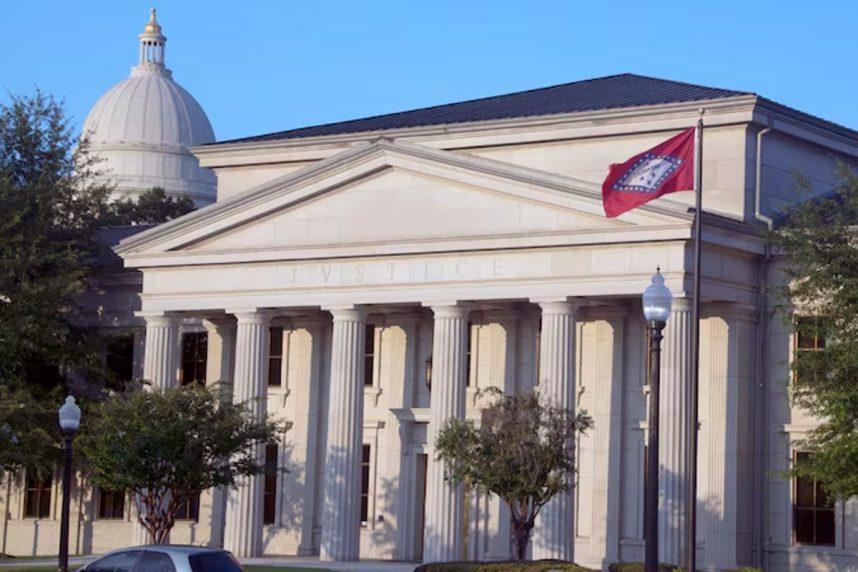
Arkansas Supreme Court Pope casino
The Arkansas Supreme Court will soon decide if a referendum that would repeal a casino in Pope County will go before voters. Two tribes in Oklahoma are behind the legal fight. (Image: Supreme Court of Arkansas)

The state’s high court is slated to rule on an appeal from Cherokee Nation Entertainment challenging Issue 2. The referendum was certified in August by Arkansas Secretary of State John Thurston for the Nov. 5 ballot.

The Arkansas Supreme Court agreed to expedite its review of the Cherokee allegations since Nov. 5 is fast approaching. Early voting in Missouri begins two weeks before Election Day.

The next round of briefs are due by Sept. 26, and the court says it will issue its ruling soon after reviewing each side’s claims.

Lawsuit Allegations

In June, Cherokee Nation Entertainment was deemed the winner of the Pope County casino license after it was the only bidder that met the Arkansas Racing Commission’s guidelines that submissions be accompanied by either a letter of support from Pope County Judge Ben Cross or a resolution of support from the Pope County Quorum Court. Pope County was designated for a commercial casino through a statewide referendum in 2018 that authorized gambling in four counties.

However, Pope County voters voted against the 2018 referendum. The county was one of only 11 among the 75 counties in the state that voted against the casino question.

Local Voters in Charge, a campaign funded by the Choctaw Nation, which is seeking to protect its tribal casinos in Eastern Oklahoma, wants to repeal the Pope casino concession. The campaign believes casinos should only be allowed in counties that want them.

The Cherokee Nation alleges that Local Voters in Charge violated a slew of canvassing laws in going about collecting signatures to put the gaming question before voters this fall. Through its own campaign, the Arkansas Canvassing Compliance Committee, the Cherokees allege that Local Voters in Charge paid canvassers based on the number of signatures they collected, provided faulty registration addresses for workers, and didn’t properly certify canvassing captains.

Referendum Likely to Prevail 

Eighth Judicial Circuit Court Judge Randy Wright, the special master appointed to the case to expedite the high court’s review, wrote in his “Report and Findings of Fact” based on the preliminary briefs that much of the plaintiff’s allegations are meritless.

Wright’s review concluded that less than 6,000 signatures that Thurston’s office certified should be disqualified because of canvassing errors. That still leaves the total number of valid signatures at 110,234 — far more than the 90,704 needed to place the referendum on the 2024 ballot.

If the referendum is defeated or rejected by the Arkansas Supreme Court, Cherokee Nation Entertainment would be cleared to proceed with its $300 million project in Russellville called Legends Resort & Casino.

The casino plan calls for a gaming floor measuring 50,000 square feet with 1,200 slot machines, 32 live dealer table games, and a sportsbook. A 200-room hotel would be complemented by several restaurants and bars, 15,000 square feet of meeting and conference space, a resort pool, and an outdoor music venue.

Recent polling reveals that just 42% of likely voters said they’ll vote in favor of Issue 2, while 28% said they would vote against it and 30% were undecided.

The post Arkansas Supreme Court to Soon Rule on Pope County Casino Case appeared first on Casino.org.

Spanish Supreme Court Partially Upholds Appeal Lodged by Jdigital

j+digital_labels_spain_ad_restrictions_annulments_very_positive_but_urges_cautionThe Spanish Digital Gaming Association (Jdigital), announced that the country’s Supreme Court has partially upheld the association’s appeal against Royal Decree 958/2020, a piece of legislation which introduced several restrictions for the industry. However, Jdigital called for more dialogue with the Spanish regulator in order to put the country’s iGaming market on the right path.
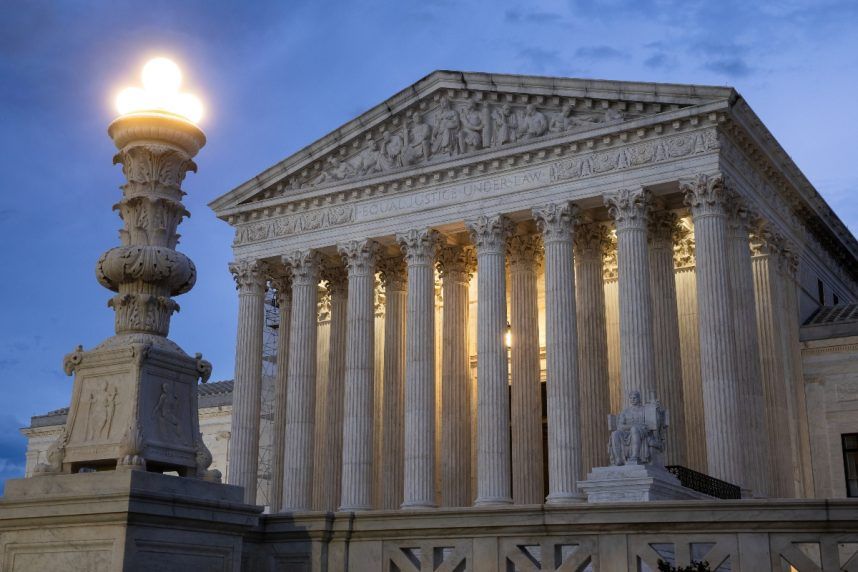
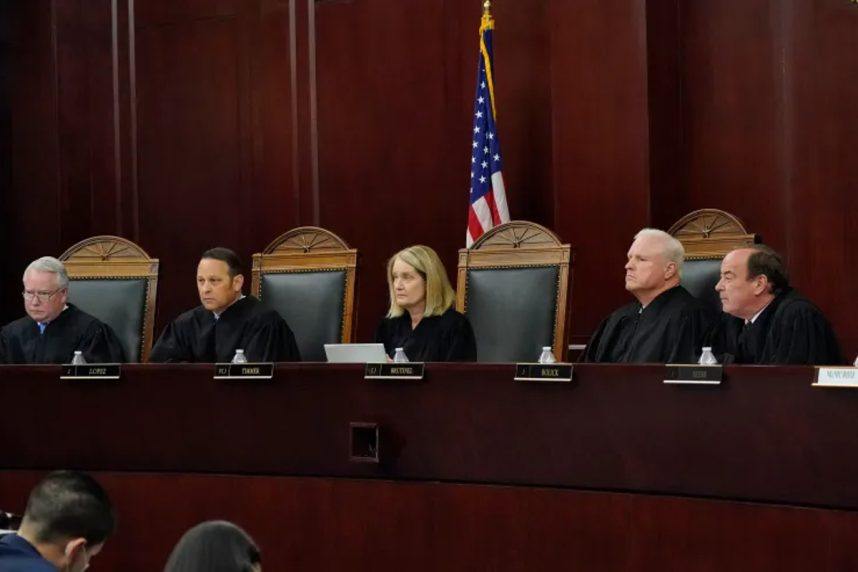

The Spanish Supreme Court decided to partially uphold an appeal lodged by Jdigital and annulled several measures stipulated in the Royal Decree 958/2020, which came into effect in November 2020. Almost four years later the Supreme Court ruled that several articles in that decree lacked legal basis.

One of the annulled bits of legislation was article 13, which was related to targeted advertisements towards new customers. Following the Supreme Court’s decision iGaming operators in Spain will once again be able to advertise their products to players who have held an account for less than 30 days. Moreover, they will be able to advertise in venues with public accessibility which sell lottery games.

The ruling by the Supreme Court also allows celebrities to appear in gaming advertising again, while the ban on gambling ads on video sharing platforms was overturned as well. This means that iGaming operators can advertise their products to social media users, but only to those above 18 years of age.

Very Positive News

A previous appeal by Jdigital was rejected by Spain’s constitutional court in November 2023. The victory at the Supreme Court was described by Jdigital in a statement as “very positive news for the online gaming sector.”

However, the Spanish Digital Gaming Association argued that the measures that remain in place still impose several limitations that are considered too restrictive by the industry. For example, the ban on advertising between 1am and 5am both on radio and television remains in place, as it is covered by the General Law of Audiovisual Communication.

Moreover, Article 12 of the Royal Decree 958/2020 was not annulled, which means that iGaming operators still can not use branding for events that minors can see or sponsor sporting events or broadcasts. That said, Jdigital called for increased dialogue between the iGaming industry and the regulatory authorities in order to boost responsible gambling efforts while also allowing sustainable growth for the industry.

Source:

“Jdigital labels Spain ad restrictions annulments “very positive” but urges caution“, igamingbusiness.com, April 11, 2024.

The post Spanish Supreme Court Partially Upholds Appeal Lodged by Jdigital appeared first on Casino News Daily.

Supreme Court Grants DOJ Additional Time to Submit Seminole Sports Betting Response

The United States Supreme Court has extended a deadline that was set for today, Friday, April 12, for the U.S. government to submit testimony on a pending case challenging Florida’s Class III gaming compact with the Seminole Tribe.

Supreme Court Florida Seminole sports betting
The U.S. Supreme Court has granted the federal government extra time to submit testimony on why it is of the opinion that Florida’s 2021 gaming compact with the Seminole Tribe does not violate federal law. The law in question is the Indian Gaming Regulatory Act. (Image: AP)

The Supreme Court granted the extension request from the U.S. Department of Justice, which is representing the U.S. Department of the Interior in the case West Flagler Associates, Ltd., et al v. Debra Haaland, Secretary of the Interior, et al. The new deadline is May 12 for the DOJ to submit its opinion on why Florida’s revised gaming compact with the Seminole Tribe struck in 2021 does not violate the federal Indian Gaming Regulatory Act (IGRA).

Justice Department officials said more time was needed because its attorneys have been working on “other matters before the Court.” The delay means the Seminoles’ Hard Rock Bet online sportsbook can continue to operate inside the Sunshine State until at least May 12 but presumably much longer, as the federal tribal gaming lawsuit likely won’t be resolved for at least several months.

Lawsuit Backstory

Florida Gov. Ron DeSantis (R) and the Seminole Tribe in May 2021 agreed to new revenue-sharing terms for the tribe’s Seminole and Hard Rock casinos.

The tribe pledged to direct the state a minimum of $6 billion through 2030 to retain its monopoly on slot machines outside of Miami-Dade and Broward counties and house-banked table game exclusivity statewide. In exchange for what DeSantis hailed as a “historic” and “mutually-beneficial agreement,” the tribe gained roulette and craps privileges at its six brick-and-mortar casinos, plus both retail and online sports betting.

The online sports betting component was quickly pushed back on by two pari-mutuel licensees — West Flagler Associates and Bonita-Fort Myers Corporation. Attorneys representing the entities that respectively run the Magic City Casino in Miami and Bonita Springs Poker Room alleged that the state’s decision to allow the tribe to conduct online sports wagering violates IGRA, which requires tribal gaming to be conducted only on sovereign lands owned by federally recognized tribes.

State attorneys argued since the Hard Rock Bet online sportsbook servers remain on Seminole property, the expansion to the internet remains in compliance with IGRA. The DOI and Secretary Haaland agreed while approving the 2021 compact.

Lower federal courts have also sided with Florida, which led to the case being appealed to the U.S. Supreme Court. Once the DOJ submits its testimony, SCOTUS will at some point issue a statement on whether it will accept the case.

State Challenge Remains

If West Flagler and Bonita Springs are dealt another federal loss, their last resort would be to continue with a state case. That litigation deals with whether DeSantis had the authority to expand gaming in Florida after state residents in 2018 passed a ballot that provides the public — not the state — with the “exclusive right to decide whether to authorize casino gambling.”

The Seminoles helped bankroll the 2018 constitutional amendment because their attorneys say it has to do only with new forms of commercial gambling — not tribal. The amendment was designed to block commercial casinos from coming to Miami where a Malaysia-based casino giant, Genting Group, was lobbying state lawmakers to allow an integrated resort.

The Florida Supreme Court last month reprimanded West Flagler and Bonita Springs attorneys for petitioning the case to the state high court without first going through lower courts.

The post Supreme Court Grants DOJ Additional Time to Submit Seminole Sports Betting Response appeared first on Casino.org.

Arkansas Supreme Court Rejects Casino Appeal, License Back to Racing Commission

The Arkansas Supreme Court will not hear an appeal petitioned by the Cherokee Nation Businesses (CNB) regarding its planned Legends Resort & Casino in Russellville.

Arkansas Supreme Court Cherokee Pope County
The Arkansas Supreme Court will not take up an appeal from an Oklahoma tribe seeking to build a commercial casino in Pope County. The Cherokee Nation Businesses, however, is still the presumed front-runner for the gaming license. (Image: AP)

A year ago this month, Pulaski County Circuit Judge Tim Fox ruled that the Arkansas Racing Commission erred in issuing a commercial casino license earmarked for Pope County to CNB, the commercial business unit of the Cherokee Nation in Oklahoma. In considering a lawsuit challenging the granting by a rival casino bidder, Gulfside Casino Partnership in Mississippi, Fox determined that the Cherokee bid violated rules established through Amendment 100 of the Arkansas Constitution.

State voters in November 2018 passed the amendment to allow a single casino in the counties of Crittenden, Garland, Jefferson, and Pope. The casino bidding rules, however, required the state Racing Commission to only consider pitches from single entities.

Fox concluded that CNB applied as a consortium with a newly formed company called Legends Resort & Casino, LLC. The state Supreme Court last week opted to deny reconsidering the case. The high court in October upheld Fox’s decision in a 5-2 ruling.

License Returned to Racing Commission

With the Cherokee’s appeal formally settled, the Pope County casino license has been returned to the Arkansas Racing Commission. The state gaming regulator is expected to conduct a new bidding round, but the $300 million Legends Casino will presumably be the only qualified bid.

In separate litigation, it’s been determined through the Arkansas court system that bidders must have the support of either the sitting county judge or the present county quorum court. Last month, the Pope County Quorum Court voted 7-6 to endorse the CNB proposal. Pope County Judge Ben Cross has also backed the Legends development.

Gulfside previously applied with a letter of support from former Pope County Judge Ed Gibson, who issued his backing on the final day of his tenure before he exited the position in December 2018. Gulfside pitched a $254 million casino in Russellville called River Valley Casino Resort.

While Fox ruled against the Cherokees in January 2023, he also discredited the Gulfside plan when he decided that “the county judge” in Amendment 100’s language refers to the current judge — not a former county judge.

CNB will be expected to reapply as a single entity, likely as Legends Resort & Casino, LLC, which the company fully owns.

License Dilemma Continues

More than five years since Arkansans approved a casino in Pope County, the gaming license still hasn’t been issued. Meanwhile, casinos have opened in the three other counties.

The Pope County controversy began in 2020 when it was determined that Racing Commissioner Butch Rice had a bias in his grading of the Gulfside bid a perfect 100 out of 100 and the Cherokee plan just 29/100. The Racing Commission decided to exclude Rice’s scoring, which had tipped the overall score in Gulfside’s favor and opted to issue the license to the Cherokees.

That initiated the legal controversy, with Cherokee and Gulfside attorneys battling for the casino concession ever since. Ricer is no longer a commissioner on the seven-person state agency.

The post Arkansas Supreme Court Rejects Casino Appeal, License Back to Racing Commission appeared first on Casino.org.