Supreme Court Grants DOJ Additional Time to Submit Seminole Sports Betting Response

The United States Supreme Court has extended a deadline that was set for today, Friday, April 12, for the U.S. government to submit testimony on a pending case challenging Florida’s Class III gaming compact with the Seminole Tribe.
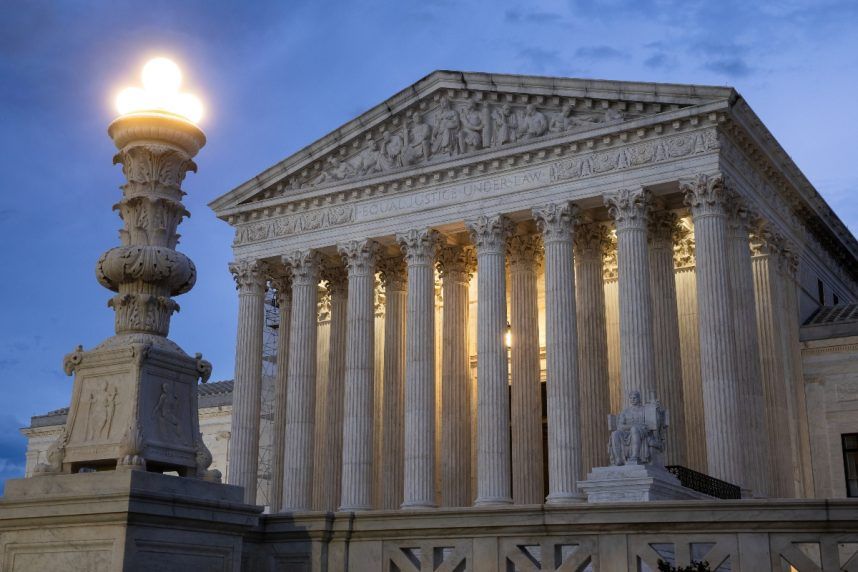
Supreme Court Florida Seminole sports betting
The U.S. Supreme Court has granted the federal government extra time to submit testimony on why it is of the opinion that Florida’s 2021 gaming compact with the Seminole Tribe does not violate federal law. The law in question is the Indian Gaming Regulatory Act. (Image: AP)

The Supreme Court granted the extension request from the U.S. Department of Justice, which is representing the U.S. Department of the Interior in the case West Flagler Associates, Ltd., et al v. Debra Haaland, Secretary of the Interior, et al. The new deadline is May 12 for the DOJ to submit its opinion on why Florida’s revised gaming compact with the Seminole Tribe struck in 2021 does not violate the federal Indian Gaming Regulatory Act (IGRA).

Justice Department officials said more time was needed because its attorneys have been working on “other matters before the Court.” The delay means the Seminoles’ Hard Rock Bet online sportsbook can continue to operate inside the Sunshine State until at least May 12 but presumably much longer, as the federal tribal gaming lawsuit likely won’t be resolved for at least several months.

Lawsuit Backstory

Florida Gov. Ron DeSantis (R) and the Seminole Tribe in May 2021 agreed to new revenue-sharing terms for the tribe’s Seminole and Hard Rock casinos.

The tribe pledged to direct the state a minimum of $6 billion through 2030 to retain its monopoly on slot machines outside of Miami-Dade and Broward counties and house-banked table game exclusivity statewide. In exchange for what DeSantis hailed as a “historic” and “mutually-beneficial agreement,” the tribe gained roulette and craps privileges at its six brick-and-mortar casinos, plus both retail and online sports betting.

The online sports betting component was quickly pushed back on by two pari-mutuel licensees — West Flagler Associates and Bonita-Fort Myers Corporation. Attorneys representing the entities that respectively run the Magic City Casino in Miami and Bonita Springs Poker Room alleged that the state’s decision to allow the tribe to conduct online sports wagering violates IGRA, which requires tribal gaming to be conducted only on sovereign lands owned by federally recognized tribes.

State attorneys argued since the Hard Rock Bet online sportsbook servers remain on Seminole property, the expansion to the internet remains in compliance with IGRA. The DOI and Secretary Haaland agreed while approving the 2021 compact.

Lower federal courts have also sided with Florida, which led to the case being appealed to the U.S. Supreme Court. Once the DOJ submits its testimony, SCOTUS will at some point issue a statement on whether it will accept the case.

State Challenge Remains

If West Flagler and Bonita Springs are dealt another federal loss, their last resort would be to continue with a state case. That litigation deals with whether DeSantis had the authority to expand gaming in Florida after state residents in 2018 passed a ballot that provides the public — not the state — with the “exclusive right to decide whether to authorize casino gambling.”

The Seminoles helped bankroll the 2018 constitutional amendment because their attorneys say it has to do only with new forms of commercial gambling — not tribal. The amendment was designed to block commercial casinos from coming to Miami where a Malaysia-based casino giant, Genting Group, was lobbying state lawmakers to allow an integrated resort.

The Florida Supreme Court last month reprimanded West Flagler and Bonita Springs attorneys for petitioning the case to the state high court without first going through lower courts.

The post Supreme Court Grants DOJ Additional Time to Submit Seminole Sports Betting Response appeared first on Casino.org.

Seminole Tribe, DeSantis Win Florida Sports Bet Ruling

seminole_tribe_desantis_win_florida_sports_bet_rulingAn error by a federal judge soon after sportsbooks launched in Florida lawmakers on the budget committee along with recipients of state funding as well as Gov. Ron DeSantis have scored a rather large victory in court – worth at least $2.5 billion and as much as $6b by some estimates.


A three-judge panel on the D.C. Circuit Court of Appeals has rejected a challenge to the 2021 state/tribal gaming compact in Florida that authorized the Seminole Tribe there to offer mobile sports betting. The practice was banned soon after books opened for business in 2021 and online sports betting in the state has been deemed in violation of the law since that time.

Sports Betting Could Open Back Up in Florida Right Away

However, that could change at any time with the new ruling. Sportsbetting could return to Florida virtually overnight.

In a nutshell, the judges decided that any conflict with the opposing party needed to be settled under state law as none of the assertions made actually had anything to do with federal law. So, while it may appear to be a landmark decision, it was really more of a venue correction than anything else in the final analysis and an appeal by the plaintiffs could send the industry right back into a death spiral at any time with a challenge to the decision and an injunction.

The Seminole Tribe applauded the decision but stopped short of saying it would resume sports betting right away.

A lawyer representing the casinos that had challenged the compact pointed out what the plaintiff side saw as nonsensical – according to Hamish Hume, the court had somehow “recognized” that federal gambling laws “cannot authorize gambling off of Indian lands, but then upheld a compact that purports on its face to do exactly that.”

The legal counsel stated, “We respectfully disagree with that decision, and are evaluating our possible next steps.”

The federal appeals court’s reversal of a lower court judge’s order was personally and politically important for Florida Governor Ron DeSantis because he personally lobbied lawmakers to pass the compact in 2021.

A spokesman for the governor stated: “While we are not surprised the lower court’s perplexing ruling was unanimously overturned, this is great news for Florida,” Mahon said in an email to Politico. “We will continue working with the Seminole Tribe of Florida to ensure the success of this historic compact — the largest gaming compact in US history.”

A spokesman for the Seminole Tribe said of the most recent decision: “The Seminole Tribe of Florida is pleased with today’s unanimous decision. It is a positive outcome for the Seminole Tribe and the people of Florida and for all of Indian Country. The Tribe is fully reviewing the decision to determine its next steps.”

New Compact Also Authorizes Table Games

In addition to authorizing sports betting the “new compact” also allowed the tribe to offer table games such as craps and roulette to its existing slots casinos and to build at least one more casino on its reservation the Hollywood area which already has a Hard Rock Hotel & Casino.

In the ruling that blocked implementation of the compact, D.C. District Judge Dabney Friedrich decided the compact was beyond what the laws allowed because it let people place sports bets anywhere in the state – which could be a violation of federal law that govern gambling on Tribal lands.

The impetus of the adverse decision was a pair of lawsuits brought by an anti-gambling group active in Florida, another that focuses primarily on the southern part of the state and casino competitors. Plaintiffs had sued U.S. Secretary of the Interior Deb Haaland, who didn’t block the compact but instead took no action and allowed it to automatically come into effect after some time as prescribed by law.

The erring judge also determined that it would take a new citizens’ initiative to authorize sports betting under the premise that voters passed a law in 2018 that required any expansion of casino gambling without a citizen’s initiative – that law was supported by both Disney Corp and the Tribe.

The Tribe and DeSantis relied on the legal theory that bets processed on servers physically situated on tribal lands were indeed placed “on the Reservation”. The Trump-appointed judge called that a “fiction” and stated that: “When a federal statute authorizes an activity only at specific locations, parties may not evade that limitation by ‘deeming’ their activity to occur where it, as a factual matter, does not.”

The panel of D.C. appeals court judges in essence said that neither argument mattered in this instance: “Whether it is otherwise lawful for a patron to place bets from non-tribal land within Florida may be a question for that State’s courts, but it is not the subject of this litigation and not for us to decide.”

We hold only that the Secretary’s decision not to act on the Compact was consistent with <federal law>,” wrote Wilkins who added, “We express no opinion as to whether the Florida statute ratifying the compact is constitutional” under Florida law.

The balance of arguments raised by the litigants against the legality of the compact was also summarily dismissed as a ‘matter for state courts to decide’.

Source: DeSantis scores big legal win upholding $2.5B gambling deal with Florida tribe, Politico, June 30, 2023

The post Seminole Tribe, DeSantis Win Florida Sports Bet Ruling appeared first on Casino News Daily.