The Grand Sierra Resort in Reno has agreed to pay the Nevada Gaming Commission (NGC) a quarter of a million dollars to settle a regulatory complaint stemming from an incident last year.
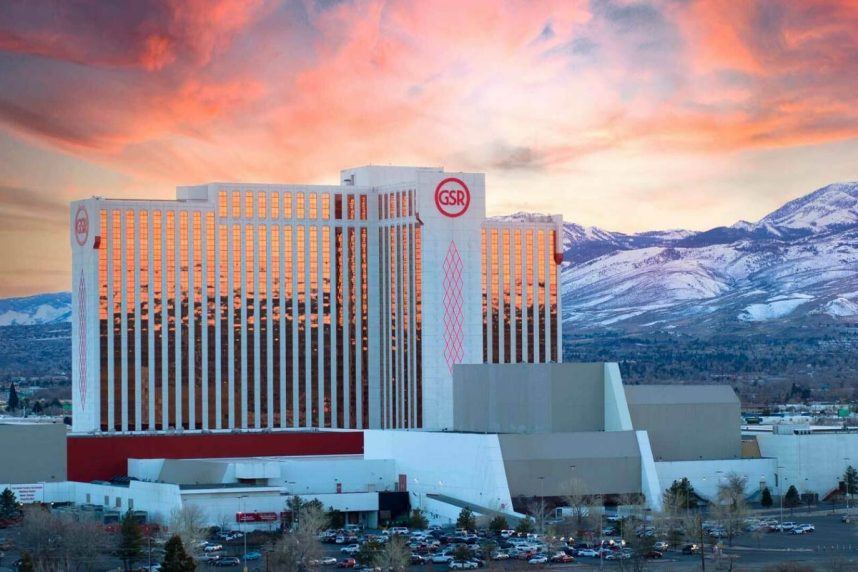
The Nevada Gaming Control Board (NGCB) brought a complaint against MEI-GSR Holdings, LLC, doing business as the Grand Sierra Resort, after one of its agents reported being denied prompt access to the property’s Grand Theatre during a routine inspection.
Michael Somps, a senior deputy attorney general in the Nevada Attorney General’s Office who represented the state in the matter, told the NGC that a Gaming Enforcement Division agent arrived at the Reno casino on Dec. 19, 2023. During the agent’s inspection, casino security approached the agent after he bypassed a metal detector outside the theater’s entrance.
Casino security told the agent, who had his NGCB badge and credentials displayed, that he had to relinquish his firearm before entering the theater. After about six minutes, higher-ups with the resort informed the security personnel that the gaming agent could enter the theater with his weapon.
Rare Occurrence
All establishments licensed by the Nevada Gaming Commission are subjected to routine inspections. State gaming agents are to have immediate and full access to “all portions of the premises,” with the definition of premises being “curb to curb,” said Somps.
The senior deputy attorney general explained that gaming agents review areas off of the casino floor to ensure that no illegal gambling or other unlawful activity is occurring inside the licensed gaming facility.
While a brief delay for access is sometimes common, a delay of six minutes, which the agent disputed and said was longer, is an outlier according to Somps. Paired with a similar incident in 2021 where a third-party security guard hired by the Grand Sierra blocked a gaming agent’s immediate access until he was wanded, Somps said a $250K penalty against the resort was warranted.
Licensees have a long history of complying and granting Board agents immediate access to all portions of the premises. The Board views the Grand Sierra Resort’s violation seriously and maintains that licensees and their employees understand that any Board agent be given immediate access to any portion of the premises of the gaming establishment after they display their credentials,” Somps said.
The Meruelo Group, the parent owner of the Grand Sierra Resort controlled by billionaire Alex Meruelo, did not contest the fine in agreeing to settle the complaint.
The $250K fine comes just days after Meruelo’s Grand Sierra donated $15K each to the Robert Mitchell Elementary School and Vaughn Middle School, both of which are part of the Washoe County School District.
Where the Money Goes
The Nevada Gaming Commission and Gaming Control Board are responsible for the strict regulation of all persons, locations, practices, and activities associated with the state’s gaming industry. Nevada’s gaming law allows the NGC to impose fines on licensees found to be non-compliant with its regulations.
Fines received by the state gaming agency are directed to the Nevada General Fund. The $250K fine against Grand Sierra slightly offsets another decision made on Monday that determined that Nevada Restaurant Services Inc., the parent of Dotty’s gaming taverns, was owed a $3 million tax refund.
The post Reno’s Grand Sierra Resort Agrees to $250K Settlement With Nevada Gaming Commission appeared first on Casino.org.
 Following years of litigation, a U.S. judge on Thursday approved a $415 million class-action settlement against DoubleDown Interactive LLC and International Game Technology PLC (IGT.N). The settlement resolves claims that the “social casino” and the online gaming company violated consumer protection provisions and Washington state gambling law where personal gambling online is a felony.