Las Vegas Trump Supporter Denies Wrongdoing at California Rally for Former President

The Las Vegas man who was apprehended over the weekend at a pro-Donald Trump rally in Coachella, California is proclaiming his innocence this week despite weapons charges.

Donald Trump
Former President Donald Trump, pictured above. A Las Vegas man was cited on weapons charges at the rally for Trump. (Image: X.com)

Vem Miller, 49, who runs a “Veterans in Politics” podcast, was arrested on  Saturday after deputies located firearms and ammo in a car he was driving. He faces two misdemeanors and initially was suspected of an assassination attempt.

As far as what took place this weekend, the allegations made by the sheriff and the deputy are false,” Miller told Las Vegas TV station KTNV. “The only thing that happened is what I do when I go to all these rallies, which is to … let police know I’m carrying, lawfully, firearms in my trunk.”

He didn’t realize gun laws in California’s Riverside County are different from those in Nevada.

Officers charged him after the magazine of his gun was in the chamber and a barrel was improperly on his gun, Miller told KTNV.

He carries the weapons because people have made death threats against him, Miller revealed.

He’s also expecting to bring a case to court in an effort to clear his name.

Miller Loves Trump

Also, Steve Sanson, a Las Vegas resident who serves as president of Veterans In Politics International, further told KTNV that, “Miller loves President Trump.”

He has canvassed for him. He is one of the canvas captains. He was invited by the Trump team to come to California,” Sanson added.

“In California, you have to separate the magazine from the weapon to be in the vehicle legally. In Nevada, the magazine can be in the weapon. That was the only thing he did wrong.”

The car Miller was driving is owned by his parents, according to Sanson. He may not have realized it was unregistered. Miller had multiple IDs in the car because he changed his name when he ran for political office, Sanson added.

Sheriff Defends Deputies

But Riverside County Sheriff Chad Bianco said his deputies actually may have halted an attempted assassination against Trump by apprehending Miller.

A sheriff’s deputy “found multiple passports with multiple names, multiple driver’s licenses with different names, the vehicle was unregistered, and the license plate was what we in law enforcement would recognize as one that is homemade and indicative of a group of individuals that claim to be sovereign citizens,” Bianco said in a statement.

There is absolutely no way that any of us are going to truly know what was in his head,” Bianco added. “I can tell you that none of the other probably 50,000 people that showed up for that event brought multiple passports with different names and guns. I am glad that we’re not talking about this after we shot him.”

In recent weeks, there have been two assassination attempts on Trump’s life. In one of them Trump suffered a wounded ear.

The post Las Vegas Trump Supporter Denies Wrongdoing at California Rally for Former President appeared first on Casino.org.

California Legislature Approves Bill Granting Tribes Right to Sue Cardrooms

California-Legislature-Approves-Bill-Granting-Tribes-Right-to-Sue-CardroomsIn a significant legislative development, the California Senate on Saturday passed an amended version of Senate Bill 549, a bill that will grant the state’s tribes a singular opportunity to sue cardrooms and determine whether these establishments are violating state law. The bill, which has now cleared both legislative chambers, will proceed to Governor Gavin Newsom for final approval.
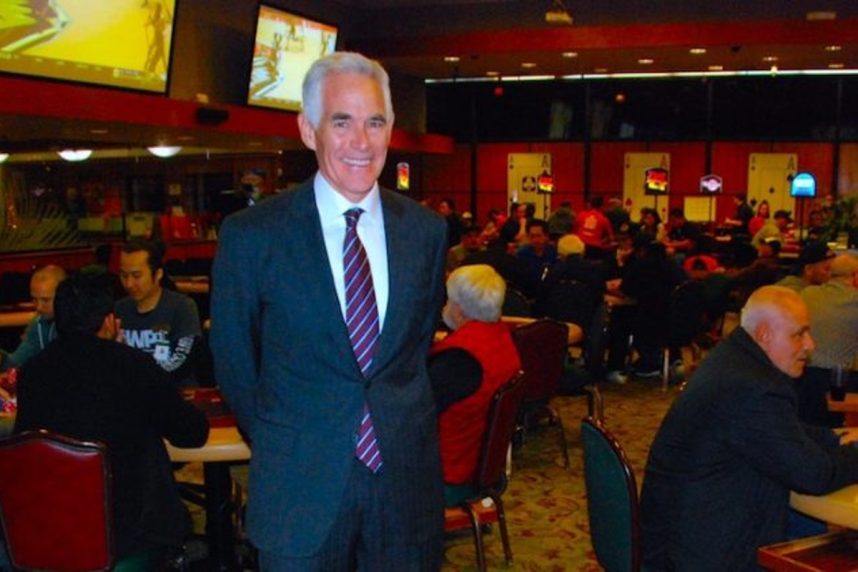
At the core of this legislative action is the contentious issue of third-party providers acting as the bank in games such as blackjack and roulette. This practice, tribes argue, infringes upon their exclusive gaming rights granted by California law and serves as a symbol of broader issues surrounding the respect for Indian rights in the state.

Legislative Success for Tribes

The Senate passed the amended bill on the final day of the 2024 legislative session, following its earlier approval by the General Assembly. The General Assembly unanimously supported the proposal, while the Senate passed it with a 32-2 vote.

If Governor Newsom signs the bill into law, California’s tribes will have one opportunity to sue the state’s cardrooms, seeking a legal determination of whether these venues are operating in violation of state law.

Referring to the news as a fantastic one for California’s tribal nations, James Siva, chairman of the California Nations Indian Gaming Association, expressed his satisfaction:

“For over a decade, California tribes have engaged in considerable efforts to defend our exclusive gaming rights guaranteed in the California Constitution. The Tribal Nations Access to Justice Act gives tribes access to justice that has been denied not only in this case but throughout California history.”

The bill, however, comes with certain limitations. The tribes will not be able to seek monetary damages, and any lawsuit must be filed by April 1, 2025. The bill’s text specifies that it authorizes a California Indian tribe, under specific conditions, to bring legal action solely against licensed card clubs in California and third-party proposition player services providers.

The purpose of such an action would be to seek a declaration on whether a controlled game operated by a licensed California card club and banked by a third-party proposition player services provider constitutes a banking card game that violates state law, including tribal gaming rights under the California Constitution. Additionally, tribes can request injunctive relief to prevent the continuation of such practices.

Historical Context and Tribal Rights

The issue of gaming rights has long been a critical matter for California’s tribes. In 2000, California voters granted tribes exclusive rights to Las Vegas-style gambling, which has allowed many tribes to build businesses that support their members and lift them out of poverty.

However, the introduction of third-party providers (TPPs) in 2007 altered the gaming landscape. Cardrooms began employing TPPs to act as the bank in player-banked games such as blackjack, which tribes argue undermines their exclusivity and costs them significant revenue.

Cardrooms maintain that if they are forced to abandon this model, it could lead to financial ruin. However, tribes counter that cardrooms operated successfully under different systems prior to 2007 and should be able to revert to those practices without infringing on tribal gaming rights. According to tribal estimates, the use of TPPs by cardrooms has cost tribes at least $100 million annually.

A Broader Struggle for Rights

The passage of SB 549 is not just about gaming rights; it represents a broader struggle for the recognition and respect of Indian rights in California. Tribes argue that this issue is part of a long history of promises made to them by the state, which have often been broken.

According to Siva:

“All too often throughout history, tribes in California were promised certain treaty rights and even large tracts of fertile land that were taken away from us. In those cases, we were stripped of our ability to defend those rights as we were denied access to justice. If this bill becomes law, it will reflect a new day in California history in regard to the civil rights of this state’s tribal nations.”

The amended version of the bill includes several key provisions. Notably, it clearly states that the state of California is not a party to any action brought under this law. Additionally, should the tribes win a lawsuit, the court order would not take effect until 60 days after the entry of the order. A severability clause has also been added, ensuring that if any part of the law is found to be “invalid or unconstitutional,” the remaining provisions will continue to be enforceable.

Path Forward and Potential Challenges

After stalling for nearly a year, the Tribal Nations Access to Justice Act began gaining traction again in June 2024. Despite opposition from cardrooms, labor unions, and local newspapers in cities with cardrooms, which argued that the bill would result in lost revenue and reduced public services, the tribes remained steadfast in their pursuit of justice.

Tuari Bigknife, attorney-general for the Viejas Band of Kumeyaay Indians commented as follows:

“We’re not moved by the fact that they are not going out there to innovate or find ways to make revenue. The cardrooms have been in existence over 100 years, they have only been doing this illegal gaming since 2007. So there is no reason that they cannot go back to the way it was before instead of trying to do it on the backs of tribes.”

In a related development, the California Assembly also approved Senate Bill 931, sponsored by State Senator Bill Dodd, which ratifies key intergovernmental agreements between the state and Native American tribes for the purposes of gaming. This bill, along with Dodd’s other measure to enhance wildfire safety, now awaits Governor Newsom’s signature.

Source:

“California legislature votes to give tribes their day in court”, igamingbusiness.com, Jill R. Dorson, September 1, 2024.

The post California Legislature Approves Bill Granting Tribes Right to Sue Cardrooms appeared first on Casino News Daily.

Kyle Kirkland, Owner of California Cardroom, Running to Succeed US Rep. Kevin McCarthy

California businessman Kyle Kirkland is running for Congress to succeed US Rep. Kevin McCarthy (R-California). McCarthy officially departed Congress effective Dec. 31 after he was shockingly removed as House Speaker last October.

Kyle Kirkland California cardroom casino
Kyle Kirkland in 2020 poses for a photograph at his Club One Casino in Fresno. Kirkland is running for Congress by way of California to succeed former US Rep. Kevin McCarthy’s seat. (Image: The Business Journal)

Kirkland owns Club One Casino in Fresno, a cardroom that primarily runs poker games. The Central California gaming facility features 51 table games, a 24-hour restaurant, and three bars.

A Republican, Kirkland is among what’s becoming a crowded field for McCarthy’s 20th Congressional District seat. One of the reddest parts of the state, the current field includes McCarthy’s hand-picked successor, state Assemblyman Vince Fong (R-Bakersfield).

Fong wants to run for both state reelection and Congress. A state Superior Court judge last month said Fong can conduct dual campaigns, though California Secretary of State Shirley Weber says she’ll appeal the decision through the state Courts of Appeal.

Kirkland says he watched the Fong controversy play out and decided to throw his hat into the pool.

Political Newcomer

Before buying Club One Casino in February 2008, Kirkland enjoyed a lengthy career in the music industry. He served as chairman of Steinway Musical Instruments for 18 years, the longest tenure for someone not named Steinway.

Asked why he decided to enter politics despite a successful business career in music and gaming, Kirkland said he’s long had an interest in government and lawmaking.

I felt like this was an opportunity for a noncareer politician to get involved,” Kirkland told Ray Appleton on his KMJ Now News Talk Radio podcast. “I certainly see the issues people are facing and concerned about — the economy, border crisis, unanswered crime. If there was ever a time where Congress needed new thinking and someone who is action-oriented and looking for change, it’s now.”

Kirkland says he’s on the ballot for the 2024 primary on March 5.

Kirkland told Appleton that the economy and high costs of living are his top two priorities. He believes his business experience makes him more qualified to handle such complex topics than career politicians who have never been responsible for people’s jobs and livelihoods.

Club One Casino, he says, is a large taxpayer that “employs a lot of people.” The California Gaming Association, which Kirkland is president, says the Golden State’s cardroom industry generates more than 32,000 jobs a year and almost $5.6 billion a year in economic activity.

McCarthy Downfall

McCarthy officially exited DC on Dec. 31 following 17 years in Congress.

After some in his party agreed to oust him as Speaker last fall for him agreeing to work with Democrats to avoid a government shutdown, McCarthy said he would depart the Capitol. McCarthy plans to help GOP political newcomers seek and win office.

“I have decided to depart the House … to serve America in new ways,” McCarthy wrote in The Wall Street Journal. “I will continue to recruit our country’s best and brightest to run for elected office. The Republican Party is expanding every day, and I am committed to lending my experience to support the next generation of leaders.”

The post Kyle Kirkland, Owner of California Cardroom, Running to Succeed US Rep. Kevin McCarthy appeared first on Casino.org.

California Tribal Casino Debuts Kid-Friendly Ninja Course and Trampoline Park

A California tribal casino some 70 air miles southeast of Sacramento in Tuolumne is making a big bet on keeping its resort bustling in 2024 with more family-friendly draws.

California tribal casino Black Oak
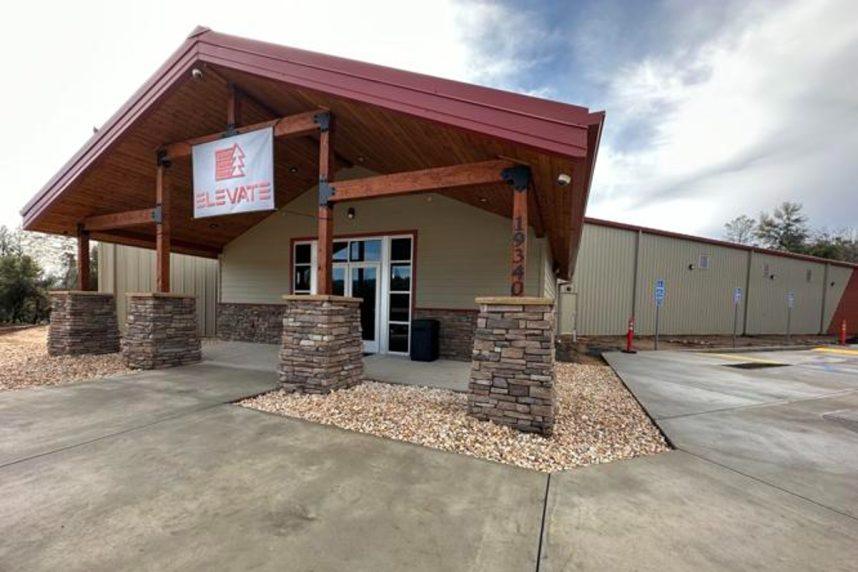
Elevate is a new standalone family-friendly entertainment center located at the Black Oak Casino Resort in California. The facility brings an array of new kid-appropriate fun to the destination southeast of Sacramento. (Image: The Union Democrat)

The Black Oak Casino Resort is owned and operated by the Tuolumne Band of Me-Wuk Indians. Ahead of the Christmas and New Year’s holidays, the tribe opened its casino’s newest attraction — a 20,000-square-foot family fun center called “Elevate.”

The facility provides entertainment for all ages. Guests can tackle a ninja warrior course, jump around on an indoor trampoline park, play dodgeball, throw axes, golf on indoor simulators, and perform high-flying slam dunks.

Elevate officially opened its doors on Dec. 20. The facility is open 2 p.m. to 9 p.m. Wednesday through Friday and 11 a.m. to 9 p.m. on the weekend.

We aim to provide a fun entertainment experience that elevates the entire family,” a statement from the tribal casino read. “A place where not only visitors but our local community of all ages can come together and experience family fun.”

Tuolumne County residents with proof of residency receive a 10% discount on admission to Elevate. For non-residents, the family-friendly attraction offers an array of passes. A 90-minute “jump pass” to the trampoline area starts at $23 for guests aged seven and older. Guests aged six and under get in for $18.

Added Reasons to Visit

Like so many casinos across the country, Black Oak is presumably trying to add destination value by way of non-gaming amenities, as casinos continue to spread in the US and legal gaming outlets are more widely available. The Black Oak property is the primary economic engine of the tribe, which operates slot machines and table games through a Class III Indian gaming compact with the State of California.

Black Oak opened in 2001 with slots and a small restaurant. It’s undergone significant expansions since, with the resort today offering nearly 1,200 slots and 22 table games on a 50,000-square-foot casino floor. About 325 machines are located on a smoke-free second floor that measures around 11,000 square feet.

Elevate isn’t the tribe’s first non-gaming investment in the resort.

Along with its 18-hole championship golf course that it purchased in 2019, the Black Oak Casino Resort in January 2005 opened a 53,000-square-foot “Family Fun Floor.” The facility features a 24-lane bowling alley and an arcade.

Resort Expansion Planned

The Tuolumne Band of Me-Wuk Indians has plans to further expand its casino resort. Though the tribe is for now staying mum on specifics, tribal leaders say the investments will include upgrades and expansions to the current resort.

Along with the aforementioned gaming and entertainment, Black Oak features a 148-room hotel with five full-serve restaurants, plus a convention and event center. An accompanying 85-space RV park has full power capabilities with restrooms and showers, a dog park, and a catch-and-release fishing pond.

The Black Oak RV park is a popular stop for recreational motorists, as the resort borders Yosemite National Park and Gold Country.

The post California Tribal Casino Debuts Kid-Friendly Ninja Course and Trampoline Park appeared first on Casino.org.

$2B Powerball Winner Identity Revealed, California Man Skips Lottery Celebration

November’s $2.04 billion Powerball winner has come forward and revealed his name, but the lucky man who claimed the all-time richest lottery jackpot in US history isn’t looking for additional publicity.

Powerball California Lottery $2.04 billion jackpot
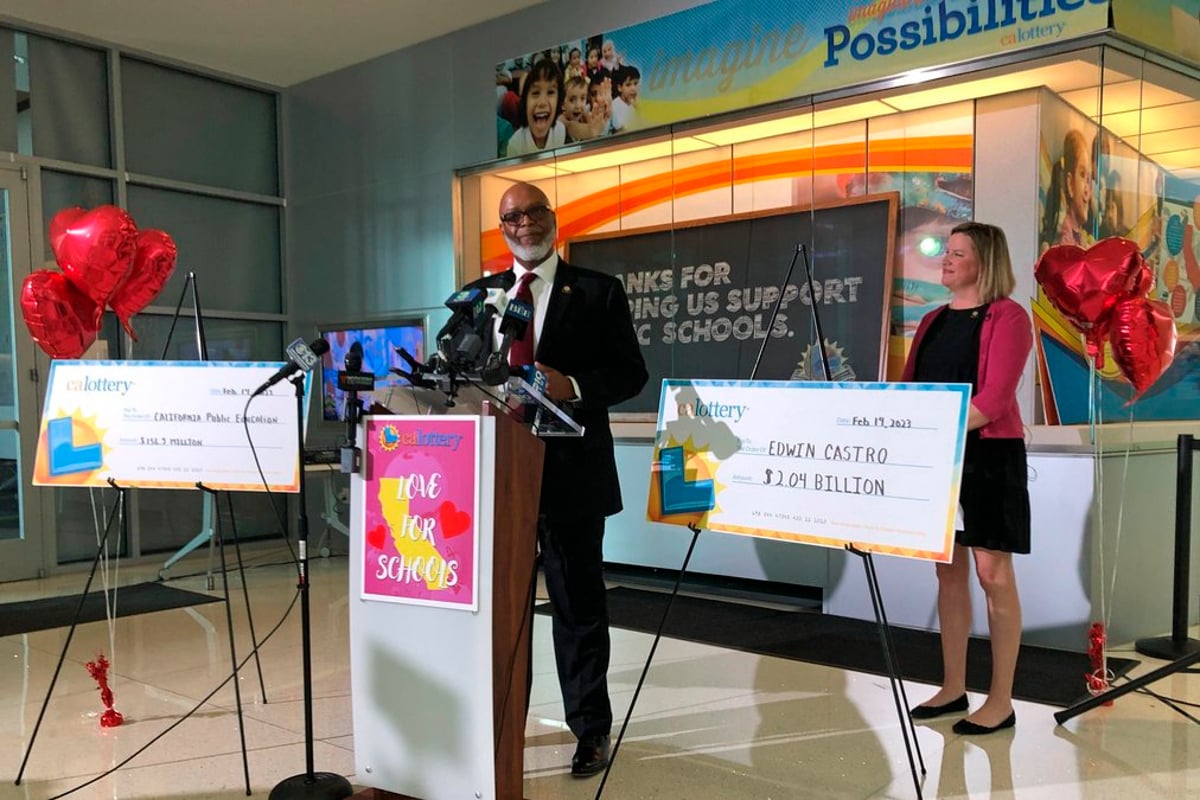
California Lottery Director Alva Johnson announces the November 2022 winner of the richest Powerball prize in history. The lucky winner of the $2.04 billion jackpot, Edwin Castro, chose not to attend the publicity event in hopes of remaining as private as possible. (Image: California Lottery)

After 40 consecutive drawings without a jackpot winner, Powerball’s November 7 drawing offered up a prize north of $2 billion. The winning numbers that night were 10-33-41-47-56 and red Powerball 10.

The Multi-State Lottery Association (MUSL), which operates Powerball for the lottery game’s 48 participating jurisdictions, soon after announced that a single ticket had matched all six numbers to claim the $2.04 billion prize.

California lottery rules require that winners allow their identities to be made public and the retail location of where their ticket was purchased to be known. California mandates that winners’ identities be disclosed in order to maintain public trust in the lottery system.

The California Lottery on Valentine’s Day announced that the $2.04 billion winner was Edwin Castro. The lottery did not specify his age or occupation, nor what he plans to do with the money.

Cash Option Chosen

The California Lottery said Castro respectfully declined the opportunity to appear publicly and wishes to remain private. But he did issue a statement that celebrated the school tax benefit that his historic Powerball win will provide California schools.

As much as I am shocked and ecstatic to have won the Powerball drawing, the real winner is the California public school system. The mission of the California Lottery, which is to provide supplemental funding for California public education — both public schools and colleges — makes this a huge win for the state.”

“As someone who received the rewards of being educated in the California public education system, it’s gratifying to hear that, as a result of my win, the California school system greatly benefits as well,” Castro’s statement, which reads like it might have been crafted in part with lottery officials, continued.

The California Lottery primarily benefits public education in the state. The lottery says 34 cents of every dollar raised goes back to public schools and colleges.

Since the lottery’s inception in 1985, it has benefited public schools and colleges to the tune of more than $41 billion. The $2 billion in lottery proceeds that went to public education during the state’s 2021-22 fiscal year accounted for just 1% of the state’s annual budget for its public school system.

Castro opted for the one-time cash option of $997.6 million. After the federal tax of 37%, Castro’s net haul comes to about $628.5 million. Fortunately for Castro, California doesn’t tax lottery winnings as personal income, and therefore, his riches won’t be further taxed by his home state.

$1M for Local Retailer

Castro wasn’t the only big winner during the November 7 Powerball drawing. The California Lottery said Castro purchased his ticket at Joe’s Service Center in Altadena, which is a Mobil gas station in Los Angeles County and an authorized California Lottery retailer.

For selling the record ticket, Joe’s Service Center received a $1 million commission. The business’s owner is a Syrian immigrant named Joe Chahayed.

Altadena is about 15 miles northeast of downtown Los Angeles and just north of Pasadena in the Verdugo Mountains.

The post $2B Powerball Winner Identity Revealed, California Man Skips Lottery Celebration appeared first on Casino.org.