Canadian Gambling Industry Sees 79.3% Surge in Suspected Fraud in H1 2024

Suspected-Digital-Fraud-Coming-from-Canada-Up-Nearly-11_-Since-H1-2023-Reveals-New-TransUnion-AnalysisThe Canadian gambling industry is experiencing a significant surge in suspected digital fraud attempts, with a staggering 79.3% year-over-year (YoY) increase in the first half of 2024 (H1 2024). According to a new report by TransUnion, the gambling sector, including online sports betting and poker, saw the highest rate of suspected fraud among all Canadian industries, with 9.6% of all transactions flagged as suspicious.

This dramatic rise in fraud outpaced other major sectors, such as retail (9.2%) and government services (7.7%). The sharp increase highlights growing concerns within the gambling industry over the security of digital transactions as online gambling continues to expand across Canada.

Gambling Industry Leads Fraud Rates in Canada

Among the 19 regions analyzed by TransUnion, Canada’s gambling sector stood out for its high rate of suspected fraud. While global trends showed a 9.2% decline in suspected fraud attempts within the gambling industry, Canada bucked the trend with its nearly 80% increase. This growth in fraudulent activity has been particularly alarming as more players turn to online platforms for sports betting and poker.

The report noted that, across all sectors in Canada, the overall suspected fraud rate was 5.74%, meaning that gambling-related fraud was almost double the national average.

The increased risk of fraud is largely attributed to the boom in online gambling, which has flourished since the legalization of iGaming in Ontario in 2022. However, this growth has also made the sector a prime target for fraudsters, raising concerns for operators and players alike. Fraud can damage user trust and impact the overall experience, making it essential for businesses to implement strong security measures.

Fraud Types and Business Impact

Fraud in the gambling industry typically falls into several categories, including scam/authorized fraud, account takeovers, and synthetic identity fraud. Scam/authorized fraud was the most common, cited by 31% of businesses in a separate TransUnion survey. Account takeovers, where fraudsters gain access to users’ online gambling accounts without their permission, were the second most prevalent, impacting 19% of businesses.

As a result of these fraud schemes, Canadian businesses across all sectors reported losing approximately 6% of their revenue—an estimated $78 billion—in the past year due to fraud. Gambling operators, who rely heavily on trust and security to maintain player engagement, are particularly vulnerable to the impact of these losses.

Calls for Stronger Fraud Prevention in the Gambling Sector

In response to these alarming trends, experts are urging Canadian gambling operators to prioritize fraud prevention technologies to protect both their businesses and consumers. Patrick Boudreau, Head of Identity Management and Fraud Solutions at TransUnion Canada, emphasized the importance of advanced security measures to combat evolving fraud tactics.

“Protecting customers and their businesses from fraud is essential to enabling safe and tailored consumer experiences,” Boudreau stated. He highlighted the need for identity verification, IP intelligence, and device reputation monitoring as critical components of a comprehensive fraud prevention strategy.

Source:

Suspected Digital Fraud Coming from Canada Up Nearly 11% Since H1 2023, Reveals New TransUnion Analysis, globenewswire.com, October 16, 2024.

The post Canadian Gambling Industry Sees 79.3% Surge in Suspected Fraud in H1 2024 appeared first on Casino News Daily.

Wynn Investors Land $70M in Securities Fraud Lawsuit

Wynn Resorts (NASDAQ: WYNN) and some former executives of the gaming company agreed to pay investors $70 million for their alleged roles in covering up the sexual misdeeds of founder and former CEO Steve Wynn. Defendants will pay $9.4 million of  that sum with insurance providers covering the rest of it.

Steve Wynn, Associated Press, Halina Kuta, defamation, Nevada Supreme Court
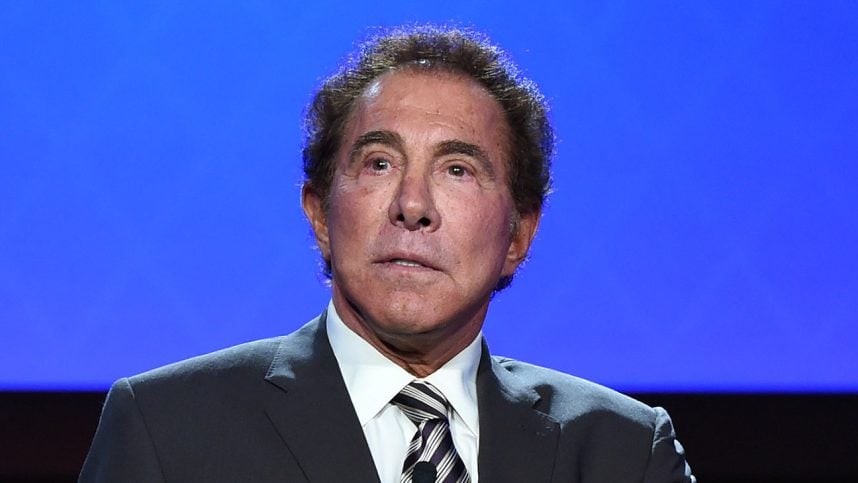
Steve Wynn. The gaming company bearing his name will pay $70 million to plaintiffs that brought a securities fraud suit against it. (Image: Getty)

Earlier this week, Pomerantz LLP filed a motion asking the United States District Court for the District of Nevada to sign off on initial approval of the settlement in the case Ferris, et al. v. Wynn Resorts Ltd., et al. Representing plaintiffs in the class action suit, Pomerantz claimed some now former Wynn executives obfuscated Steve Wynn’s sexual misconduct, making “material misrepresentations to shareholders during the period of March 28, 2016, to March 12, 2018.”

The complaint alleged defendants were aware of numerous allegations of sexual misconduct made against Wynn over the course of several decades and defendants repeatedly denied those allegations and helped to cover them up,” according to a statement issued by the law firm.

Steve Wynn is widely viewed as the first high-profile executive whose misdeeds were exposed by the “Me Too” movement. A January 2018 article by the Wall Street Journal , which was rumored to have been driven by  Elaine Wynn — Steve’s ex-wife — detailed the gaming executives inappropriate behavior toward various female employees, resulting in his ouster from the company he founded.

Wynn Securities Fraud Lawsuit Is Significant

In many instances, class action suits brought by law firms representing disappointed shareholders fall flat because courts often rule that shareholders, in exchange for potential upside in a company’s stock, assume risk.

The assumption of risk is one thing, but when it’s heightened by malfeasance of executives, the door is open for courts to rule in favor of plaintiffs. Wynn’s stock price action confirmed as much. During the aforementioned March 2016 to March 2018 period, the gaming equity nearly doubled, helping Steve Wynn dump his stake at favorable prices. By June of 2018, the stock started sliding in significant fashion as both the Massachusetts Gaming Commission (MGC) and the Nevada Gaming Control Board (NGCB) commenced investigations into goings on at Wynn.

“These events led to a drop in Wynn Resorts’ share price, which caused significant damage to the company’s shareholders,” added Pomerantz.

That’s an accurate claim because in Massachusetts, the gaming company was slapped with $35.5 million in penalties with $500,000 levied against then CEO Matt Maddox — Steve Wynn’s replacement. Prior to those fines being handed down, there was rampant speculation about the gaming company’s ability to retain its operating license for Encore Boston Harbor and rumors that it might be forced to sell the casino hotel to a rival. Though that chatter proved false, it weighed on the stock price.

Maddox, general counsel Kim Marie Sinatra, and then CFO Stephen Cootey were among the executives named in the suit. Maddox left the gaming company on Feb. 1, 2022. Cootey is now employed by Red Rock Resorts.

“This case should serve as a warning to corporations and their officers that talk is not, in fact, cheap,” said Pomerantz partner Murielle Steven Walsh in the press release. “Investors care about corporate integrity and accountability, and companies that are accused of making statements to cover up or deny allegations of serious misconduct by executives face a potentially steep financial reckoning.”

Busy Period for Wynn Legal News

News of the Wynn settlement with investors arrived less than weeks after the company said it reached an agreement with the Department of Justice (DOJ), requiring it to pay $130.13 million and admit to wrongdoing in a long-running, unregulated money transfer scheme that took place at Wynn Las Vegas.

The DOJ said that is the largest ever penalty levied against a single US gaming venue. As part of a non-prosecution agreement (NPA), the gaming company had to admit to violations of anti-money laundering guidelines.

On Sept. 10, Wynn Resorts announced the sale of $800 million of corporate bonds, telling investors it will use proceeds to wipe out debt maturing next year and to pay the fine to the federal government.

The post Wynn Investors Land $70M in Securities Fraud Lawsuit appeared first on Casino.org.

Baroness Mone’s Grand National Favorite in £202M PPE Medpro Fraud Storm

A racehorse owned by the UK’s most controversial couple may be pulled from England’s famous Grand National steeplechase, despite being one of the favorites for the race.

Michelle Mone, Doug Barrowman, Monbeg Genius, PPE Medpro, Grand National, fraud
Baroness Michelle Mone, left, with her husband, Doug Barrowman, may be the UK’s most hated couple. But what does that mean for their racehorse, Monbeg Genius, one of the favorites for the Grand National? (Image: BBC News)

Monbeg Genius is owned by Baroness Michelle Mone and her husband, Doug Barrowman, and is priced by bookmakers at 20/1 to win, making it the third favorite.

But the couple is at the center of a media storm. Mone and Barrowman are currently under investigation by the National Crime Agency, the UK’s version of the FBI, over alleged links to PPE Medpro. That company won government contracts worth £202 million (US$253 million) to produce PPE equipment during the Covid-19 pandemic.

PPE Medpro Scandal

Mone, a Scottish former model who founded the lingerie company Ultimo in 1996, was made a “life peer” in September 2015 for her services to business. This allowed her to sit in the House of Lords, the UK’s upper house, and call herself Baroness Mone of Mayfair.

PPE Medpro was contracted to supply facemasks and surgical gowns without competitive tenders under COVID-19 emergency rules that waived regular procedures.

In January 2022, it emerged that Mone used her government position to “aggressively” recommend Medpro for the contract five days before the company had been incorporated.

Much of the supplied equipment fell below the required standard, and the UK government has initiated proceedings to recoup £122 million (US$153 million) from the company.

Despite the couple’s repeated denials of involvement with PPE Medpro, The Guardian reported in November 2022 that an offshore trust received £29 million from the company via a series of transactions involving Barrowman. Mone and her children were the beneficiaries of the trust.

In late January, it was reported that £75 million worth (US$94 million) of assets controlled by the couple had been “frozen or restrained” by a court order obtained by Crown prosecutors.

Wedding Present

Meanwhile, the British Horseracing Authority is investigating whether Monbeg Genius is one of those frozen assets. Mone purchased the eight-year-old gelding in November 2020 as a wedding present for her husband.

The BHA is aware of reports regarding a court order in relation to the assets of Michelle Mone and Doug Barrowman,” a British Horseracing Authority spokesperson said in a statement. “We are in contact with the relevant individuals to understand what implications, if any, there are for their involvement with racing.”

Should Monbeg Genius be free to run, as has been suggested by The Daily Mirror, it would be bad optics for the BHA.

The Grand National is a national institution and the only horse racing event with which the general public engages every year. For bookmakers, it’s huge because it captures the “one-bet-a-year” demographic – those who choose to place a bet. After all, they see it as a harmless tradition.

The race comes with a £500K (US$627K) prize for the winning horse’s owner. Should Monbeg Genius run and come through at 20/1, he may just be the most unpopular winner in the race’s 185-year history.

The post Baroness Mone’s Grand National Favorite in £202M PPE Medpro Fraud Storm appeared first on Casino.org.

Questionable MGM Hack Fraud Claims Spread as Lawyers Troll for Victims

On Oct. 5, MGM Resorts International revealed that hackers were able to access the names, Social Security numbers, birth dates, and driver’s license and passport numbers, from “some customers who transacted with us prior to March 2019.”

Digital security watchdogs have now identified the hackers behind the MGM and recent Caesars cyber attacks as the groups’ Scattered Spider, Muddled Libra, and UNC3944. (Image: iStock/Getty)

However, according to a letter sent to customers by company CEO Bill Hornbuckle, the company has “no evidence that the criminal actors have used this data to commit identity theft or account fraud” and “does not believe customer passwords, bank account numbers, or payment card information” were leaked.

This contradicted a claim that widely circulated on social media two days earlier. A statement, purportedly posted by a Pat Ellis to the MGM Rewards Facebook group, claimed that “the hackers have now begun draining the BetMGM accounts and access your tax documents.”

The claim continued: “My balance was wiped out in front of my eyes, the phone number was changed to the hackers’ number, and the money was sent to an unknown Visa card.”

The poster claimed to have been informed by MGM “that they will not do anything to assist in the recovery of any funds or information regarding the thieves.”

Don’t Believe Everything You Read

Casino.org joined the MGM Rewards Facebook group on Oct. 4 and attempted to locate the post, but it did not exist. If the post had been published there, it was probably deleted by a group administrator. However, this is not evidence of the claim’s validity. Casino.org searched for and found no similar claims before we were banned from the group within 10 minutes of posting a solicitation for other claims.

Claims are widespread from social media users complaining that they can’t access their BetMGM accounts, but Casino.org identified only five similar claims of theft and fraud. Attempts were made to contact all these claimants, but none responded to our requests for an interview by late Friday.

Though this does not prove that the claims are all false, it supports MGM’s story and strongly suggests that these alleged victims may be scammers themselves.

Lawyers Gonna Lawyer

Whether these claims are true or not, one thing is for certain: Attorneys will use almost any opportunity to troll for plaintiffs.

According to Wall Street Journal sources, MGM expects its third-quarter earnings to be down $100 million due to its Sept. 10 ransomware attack, which the casino giant chose not to pay. Caesars Entertainment admitted suffering a similar attack sometime before Sept. 7 that it did pay — reportedly to the tune of $15 million.

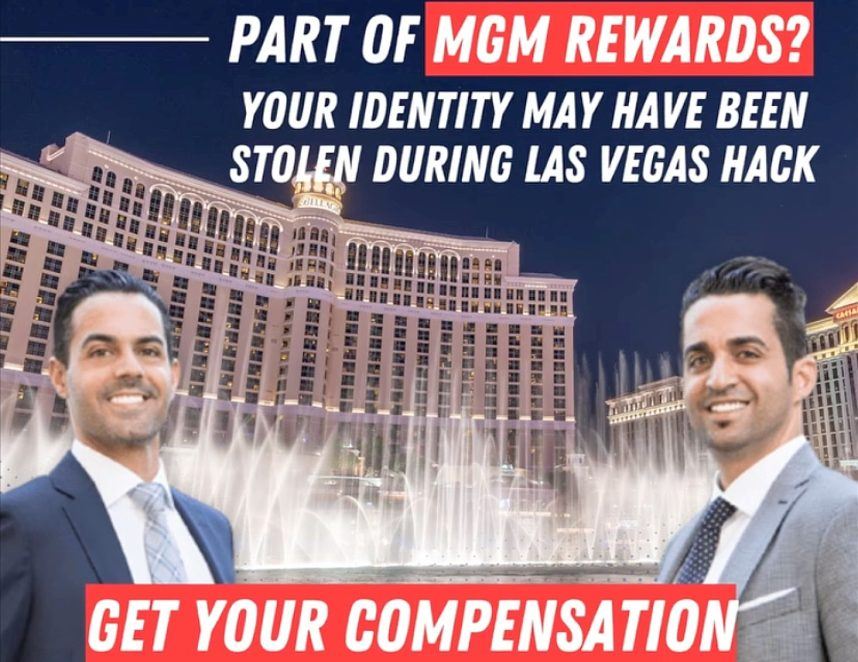
The L.A.-based law firm of J&Y, run by attorneys Jason Javaheri and Yosef Yahoudai, posted this advertisement on Facebook. (Image: Casino.org screengrab via Facebook)

Up to nine lawsuits have already been filed by customers of the two casino giants. But none of the suits demands compensation from MGM and Caesars for acts of fraud or theft already suffered.

The post Questionable MGM Hack Fraud Claims Spread as Lawyers Troll for Victims appeared first on Casino.org.