Lawsuit Targets Google and Apple Over Sweepstakes Casino Apps

Apple-Google-get-hit-with-RICO-lawsuit-over-sweepstakes-in-New-JerseyTech giants Google and Apple are under legal scrutiny in New Jersey, facing allegations of violating the Racketeer Influenced and Corrupt Organizations (RICO) Act. The lawsuit, filed on November 27, implicates their roles in hosting and processing payments for sweepstakes casino apps—a controversial sector blending social gaming with gambling-like features. Julian Bargo, the lead plaintiff, claims losses exceeding $1,000 while engaging with these platforms, which he asserts operate as illegal gambling enterprises.

Sweepstakes Casino Operations Under Fire

Sweepstakes casinos function by allowing players to use virtual currency purchased with real money to access gambling-like games, including slots, blackjack, and roulette. Some platforms add sweepstakes mechanics, offering real-money prizes to further entice users. While popular for their accessibility and entertainment value, these platforms have sparked criticism for allegedly turning smartphones into unregulated gambling devices.

Unlike traditional casinos, sweepstakes operators are not subject to U.S. licensing or regulatory oversight. This lack of regulation enables them to avoid gaming taxes, despite primarily targeting American consumers. Many major operators, such as Australia-based Virtual Gaming Worlds (VGW), are headquartered offshore. VGW, which runs platforms like Chumba Casino, LuckyLand Slots, and Global Poker, exemplifies the sector’s financial success, reporting $4 billion in revenue and $322 million in net earnings in 2023.

Critics argue that the regulatory gap disadvantages licensed operators who comply with strict U.S. laws. Additionally, the accessibility of these apps raises concerns about problem gambling, particularly among younger users drawn to their casual gaming format.

Legal Implications for Google and Apple

The lawsuit accuses Google and Apple of enabling these platforms by hosting their apps on the Google Play Store and Apple App Store. It further alleges that their payment systems, Google Pay and Apple Pay, facilitate transactions for purchasing virtual currency, effectively supporting and profiting from the alleged illegal activities.

According to the suit, “The sweepstakes casino enterprise is an association-in-fact composed of the App Defendants and the Gaming Defendants who are engaged in, and whose activities affect, interstate commerce, and which have affected and damaged interstate commercial activity.” The plaintiff asserts that both companies’ involvement constitutes a violation of RICO statutes, which are traditionally used to combat organized crime. By leveraging RICO’s provisions, the case remains in civil court, bypassing arbitration procedures that often apply to disputes involving app platforms.

Broader Industry and Regulatory Challenges

The rapid growth of sweepstakes casinos has drawn attention from the regulated gaming industry. Licensed online casinos operating in just seven U.S. states generated $6.1 billion in gross revenue in 2022, according to the American Gaming Association (AGA). In contrast, legal sports betting, available in over 30 states, brought in $11 billion during the same period. Stakeholders in the regulated market view sweepstakes platforms as a competitive threat operating outside traditional oversight mechanisms.

The lawsuit against Google and Apple underscores calls for stricter regulatory oversight of sweepstakes casinos. Advocates for regulation argue that aligning these platforms with traditional gambling laws would enhance consumer protections, ensure tax contributions, and level the competitive landscape. However, the offshore nature of many operators presents significant enforcement challenges.

As the case unfolds, it marks the first instance where Google Pay and Apple Pay have been named in legal action concerning sweepstakes casinos. Previously, similar lawsuits, such as one in Florida against VGW, included payment processors like Worldpay as co-defendants. This New Jersey lawsuit could set a precedent, reshaping how tech giants manage app platforms and payment systems linked to controversial gaming models.

Source:

Google Pay and Apple Pay named in US sweepstake casino lawsuit, paymentexpert.com, December 3, 2024.

The post Lawsuit Targets Google and Apple Over Sweepstakes Casino Apps appeared first on Casino News Daily.

Colorado State Attorneys Ask Federal Court to Toss Tribal Sports Betting Lawsuit

State attorneys in Colorado have asked a federal court to dismiss a lawsuit filed by two federally recognized tribes challenging how sports betting was rolled out in The Centennial State.

Colorado sports betting Ute tribes
A patron at the Ute Mountain Casino Hotel Sportsbook places a wager. The Ute Mountain Ute and Southern Ute Indian tribes have sued the state of Colorado for how online sports betting debuted. (Image: Ute Mountain Casino Hotel)

In July, the Southern Ute Indian Tribe filed a lawsuit in Colorado’s US District Court on claims that the state and Gov. Jared Polis (D) failed to negotiate in good faith as required by the federal Indian Gaming Regulatory Act (IGRA). The Ute Mountain Ute Tribe joined the case in September.

The lawsuit challenges how Polis and the Colorado Division of Gaming finalized the state’s sports betting regulations after voters authorized sports gambling during a 2019 statewide referendum.

“The Tribes’ position is substantively incorrect,” the state’s filing read. “However, this Court need not address the merits of this case because it lacks subject matter jurisdiction over the Tribes’ claims and the Tribes fail to state a claim.”

The tribes allege they were kept in the dark about the state deciding not to expand their Class III gaming compacts to include online sports betting. The sovereign nations say they received cease-and-desist letters from the state gaming agency in June 2020 — a month after commercial mobile sportsbooks went live — ordering them to yank their online sports betting platforms. 

State Seeks Dismissal

When Colorado’s online sportsbooks regulated by the Gaming Division took their first wagers in May 2020, so did the mobile Sky Ute Sportsbook. The following month, as the Ute Mountain Ute Tribe was readying to launch its mobile sports wagering operation, the state threatened to revoke the operator licenses of the tribes’ sportsbook partners, US Bookmaking and IGT.

The state told the tribes that while their Class III gaming compacts expanded to include retail sports betting privileges following the 2019 referendum, the constitutional amendment didn’t expand tribal gaming to the internet.

As the Tribes argue that they have a sovereignty interest in their right to control gaming on Indian lands, so too does the State possess a sovereignty interest in the ability to regulate sports betting in Colorado,” the motion to dismiss continued.

The tribes believe the state wants to reap as much revenue from sports betting as possible. And since their Class III gaming compacts don’t include revenue-sharing provisions, a rarity among states that have entered into compacts with their tribal nations, allowing online tribal sportsbooks would presumably cut into the state’s windfall.

State officials told the tribes that they could only operate online sportsbooks if they agreed to share 10% of the sports betting revenue with the state. Another condition was agreeing to have their online sports betting platforms regulated by the Gaming Division.

The tribes say they tried to engage in discussions with the state before the rollout of online commercial sportsbooks but those requests went unfulfilled.

The Sky Ute Casino Resort shuttered its retail sportsbook in July 2023 after determining the operation to be unfruitful. A retail book remains at the Ute Mountain Casino Hotel.

Seminole Repercussions

The crux of the Colorado tribes’ lawsuit seems to hang on a recent federal ruling in Florida that concluded the Seminole Tribe’s running of an online sportsbook doesn’t violate the IGRA so long as the tribe’s internet sportsbook computer servers remain on the tribe’s sovereign land.

The Southern Ute and Ute Mountain Ute tribes seek financial damages and for the court to declare that their compacts provide online sportsbook privileges.

The post Colorado State Attorneys Ask Federal Court to Toss Tribal Sports Betting Lawsuit appeared first on Casino.org.

Wynn Investors Land $70M in Securities Fraud Lawsuit

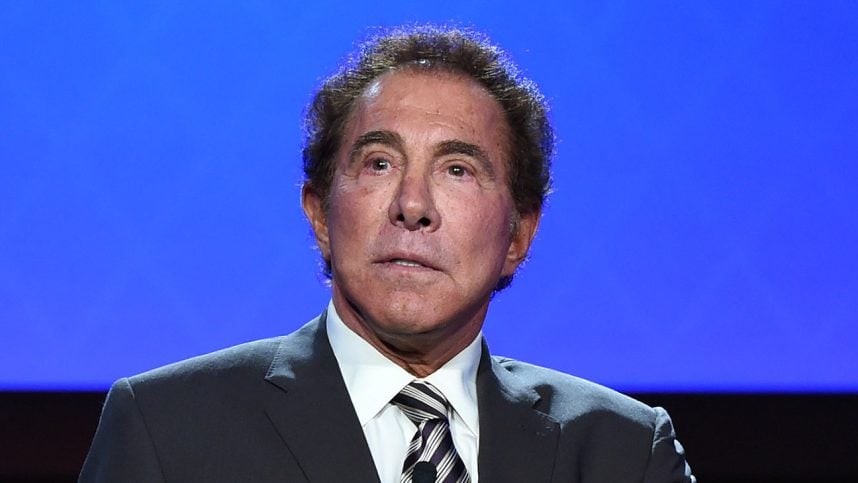
Wynn Resorts (NASDAQ: WYNN) and some former executives of the gaming company agreed to pay investors $70 million for their alleged roles in covering up the sexual misdeeds of founder and former CEO Steve Wynn. Defendants will pay $9.4 million of  that sum with insurance providers covering the rest of it.

Steve Wynn, Associated Press, Halina Kuta, defamation, Nevada Supreme Court
Steve Wynn. The gaming company bearing his name will pay $70 million to plaintiffs that brought a securities fraud suit against it. (Image: Getty)

Earlier this week, Pomerantz LLP filed a motion asking the United States District Court for the District of Nevada to sign off on initial approval of the settlement in the case Ferris, et al. v. Wynn Resorts Ltd., et al. Representing plaintiffs in the class action suit, Pomerantz claimed some now former Wynn executives obfuscated Steve Wynn’s sexual misconduct, making “material misrepresentations to shareholders during the period of March 28, 2016, to March 12, 2018.”

The complaint alleged defendants were aware of numerous allegations of sexual misconduct made against Wynn over the course of several decades and defendants repeatedly denied those allegations and helped to cover them up,” according to a statement issued by the law firm.

Steve Wynn is widely viewed as the first high-profile executive whose misdeeds were exposed by the “Me Too” movement. A January 2018 article by the Wall Street Journal , which was rumored to have been driven by  Elaine Wynn — Steve’s ex-wife — detailed the gaming executives inappropriate behavior toward various female employees, resulting in his ouster from the company he founded.

Wynn Securities Fraud Lawsuit Is Significant

In many instances, class action suits brought by law firms representing disappointed shareholders fall flat because courts often rule that shareholders, in exchange for potential upside in a company’s stock, assume risk.

The assumption of risk is one thing, but when it’s heightened by malfeasance of executives, the door is open for courts to rule in favor of plaintiffs. Wynn’s stock price action confirmed as much. During the aforementioned March 2016 to March 2018 period, the gaming equity nearly doubled, helping Steve Wynn dump his stake at favorable prices. By June of 2018, the stock started sliding in significant fashion as both the Massachusetts Gaming Commission (MGC) and the Nevada Gaming Control Board (NGCB) commenced investigations into goings on at Wynn.

“These events led to a drop in Wynn Resorts’ share price, which caused significant damage to the company’s shareholders,” added Pomerantz.

That’s an accurate claim because in Massachusetts, the gaming company was slapped with $35.5 million in penalties with $500,000 levied against then CEO Matt Maddox — Steve Wynn’s replacement. Prior to those fines being handed down, there was rampant speculation about the gaming company’s ability to retain its operating license for Encore Boston Harbor and rumors that it might be forced to sell the casino hotel to a rival. Though that chatter proved false, it weighed on the stock price.

Maddox, general counsel Kim Marie Sinatra, and then CFO Stephen Cootey were among the executives named in the suit. Maddox left the gaming company on Feb. 1, 2022. Cootey is now employed by Red Rock Resorts.

“This case should serve as a warning to corporations and their officers that talk is not, in fact, cheap,” said Pomerantz partner Murielle Steven Walsh in the press release. “Investors care about corporate integrity and accountability, and companies that are accused of making statements to cover up or deny allegations of serious misconduct by executives face a potentially steep financial reckoning.”

Busy Period for Wynn Legal News

News of the Wynn settlement with investors arrived less than weeks after the company said it reached an agreement with the Department of Justice (DOJ), requiring it to pay $130.13 million and admit to wrongdoing in a long-running, unregulated money transfer scheme that took place at Wynn Las Vegas.

The DOJ said that is the largest ever penalty levied against a single US gaming venue. As part of a non-prosecution agreement (NPA), the gaming company had to admit to violations of anti-money laundering guidelines.

On Sept. 10, Wynn Resorts announced the sale of $800 million of corporate bonds, telling investors it will use proceeds to wipe out debt maturing next year and to pay the fine to the federal government.

The post Wynn Investors Land $70M in Securities Fraud Lawsuit appeared first on Casino.org.

Atlantic City Casino Smoking to Remain, as New Jersey Judge Dismisses Lawsuit

Atlantic City casino smoking will remain after a judge in New Jersey dismissed a lawsuit challenging the state’s permittance of tobacco use on the gaming floors.

Atlantic City casino smoking New Jersey
A gambler plays a slot machine while smoking a cigarette at Ocean Casino Resort in Atlantic City on Nov. 29, 2023. A New Jersey judge has ruled that casino smoking does not violate protections afforded to workers under the New Jersey Constitution. (Image: AP)

New Jersey’s 2006 Smoke-Free Air Act banned indoor tobacco use in most indoor places other than private residences. The law provided some exemptions, with licensed casinos in Atlantic City being allowed to designate up to 25% of their gaming areas for tobacco use.

The United Auto Workers, which represents table game dealers, workers who are most exposed to secondhand smoke, and CEASE — Casino Employees Against Smoking’s Effects — challenged the 2006 law on the grounds that casino workers’ rights to personal health safety protections under the New Jersey Constitution were being violated. New Jersey Superior Court Judge Patrick Bartels disagreed in dismissing the claim.

“Because of the publicly known risks of secondhand smoke, that smoking has never been banned in casinos except for a short period during COVID-19, that the Smoke-Free Air Act’s exceptions only affect a few industries, and that the Smoke-Free Air Act does not hinder or affect a person’s ability to seek work in a smoke-free environment, it cannot be said that the New Jersey Legislature’s actions in providing exceptions to the Smoke-Free Air Act restricts the casino workers’ right to pursue safety under the New Jersey Constitution,” Bartels wrote in his opinion published Friday.

Each of the nine casinos in Atlantic City takes advantage of its smoking allowance. Critics say smoke knows no boundaries and dangerous, toxic secondhand smoke permeates the casino areas.

Odds Favor Appeal 

Attorney Nancy Erika Smith argued on behalf of CEASE and the UAW. She said an appeal to the New Jersey Supreme Court is forthcoming.

While the rest of the nation moves away from poisoning workers for profits, New Jersey shames itself,” Smith said. “As long as the governor, the legislature, and the courts allow the extremely rich casino industry to poison its workers, we will continue our fight.”

CEASE cofounder Lamont White said the “fight is far from over.” White hopes the court ruling will bring more enthusiasm to Trenton for state lawmakers to support bipartisan legislation to amend the Smoke-Free Air Act to rescind the casino smoking exemption.

Legislation last year in each legislative chamber had more than enough cosponsor support to force the casinos to go smoke-free. But Democratic leadership reportedly stalled the measures because of the November 2023 election where all 120 seats were on the ballot.

However, after retaining their majority in both chambers, the smoking bills still didn’t progress. Some of the 2023 support was subsequently lost after the casino industry, as well as a union that represents casino workers in nongaming roles, said a smoking ban would cost thousands of jobs and possibly result in a casino closing. 

Casinos Celebrate

For now, Bartels’ ruling is a win for the nine Atlantic City casinos. The retaining of smoking comes as Atlantic City’s casinos last week revealed that their operating profits slid nearly 2% in the second quarter despite increased revenue.

We are gratified by the court’s decision to dismiss the plaintiff’s complaint and deny its attempt to change the Smoke-Free Air Act outside of the legislative process,” said Mark Giannantonio, president of Resorts Casino and the Casino Association of New Jersey. “We look forward to continuing to work with stakeholders towards a solution that addresses the health concerns of our employees, while also protecting the collective interest and well-being of the entire Atlantic City workforce.”

Commercial casinos/racinos operate in 28 states. Seventeen allow indoor smoking.

The post Atlantic City Casino Smoking to Remain, as New Jersey Judge Dismisses Lawsuit appeared first on Casino.org.

Las Vegas Magician David Copperfield Trashed $7.4M Penthouse, Lawsuit Alleges

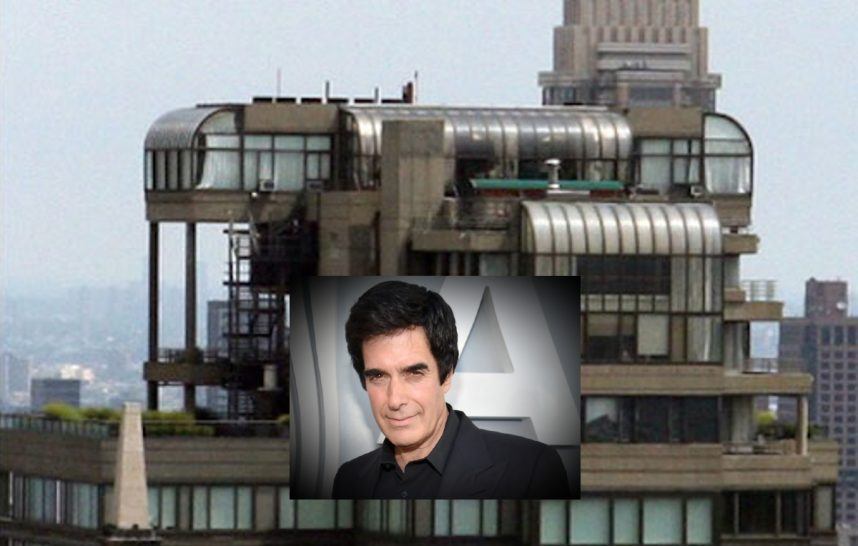
Las Vegas mainstay David Copperfield, 67, is accused in a New York lawsuit of trashing his penthouse condominium that he’s owned since 1997.

David Copperfield penthouse New York
David Copperfield’s penthouse atop the Galleria Condominium building in Manhattan has fallen into disrepair, a lawsuit alleges. Copperfield allegedly abandoned the residency in 2018. (Image: Casino.org)

The board of the Galleria Condominium building located at 117 E. 57th St. in Manhattan alleges in its lawsuit filed in Manhattan’s Supreme Court that Copperfield has been negligent in his residential unit’s ownership. The board argues that Copperfield abandoned the property in 2018 and allowed it to fall into disrepair.

Two major events, one in 2015 and another last December jeopardized the structural integrity of the 55-story building, the complaint adds. Copperfield’s 54th-floor unit, the condo board says, was “a formerly pristine multilevel penthouse” with views of Central Park and Manhattan’s East Side.

In 2015, Copperfield’s rooftop pool allegedly burst due to shoddy construction causing the destructive water flow some 30 stories below. Last December, the plaintiffs say a faulty plumbing valve in Copperfield’s unit caused another water downpour on floors below.

Architects have warned the Condominium that, among other things, Copperfield’s apartment contains unrepaired water damage that is so severe that it presents risks to the ‘concrete structure of the building,’ facilitated the growth of mold and mildew, and actively endangers other apartments,” the lawsuit read. “Copperfield’s motivation to trash his own apartment and permit it to decay is entirely unclear, especially when he still owns the Unit and is marketing it for sale.”

The condo board is seeking $2.5 million in damages from the illusionist to repair the building outside of the unit and compensate impacted homeowners.

David Copperfield penthouse New York
(Image: New York State Unified Court System)

More Allegations

One of Las Vegas’ most popular acts, David Copperfield’s reputation has taken a severe hit recently. In May, Casino.org reported on additional allegations of sexual misconduct brought by a group of women against the magician.

Copperfield has also been linked to Jeffrey Epstein, the late financier and politically connected operative who was later found guilty of sexually abusing underage girls. He committed suicide in a federal prison while awaiting trial on sex trafficking charges.

Copperfield continues to deny ever acting inappropriately with women despite 16 women raising allegations against him. Most said they were underage at the time of the alleged incidents.

The magician’s lawyers maintain that the allegations are “false and entirely without foundation.” The denial has allowed Copperfield to maintain his longstanding residency at MGM Grand on the Las Vegas Strip where he performs 15 shows a week.

Copperfield has been performing in Las Vegas since 1996. Forbes estimates his net worth to be around $1 billion. 

David Copperfield penthouse New York
(Image: New York State Unified Court System)

Penthouse Problems

Copperfield purchased his Gallery Condominium in 1997 for $7.4 million. Photographs obtained by Casino.org through the condo building’s lawsuit show a crumbling penthouse with peeling paint, exposed steel beams and HVAC ductwork due to water damage, stained carpet, mildew, and other bacterial growth.

Copperfield attorneys told the New York Post the photographs were part of “a simple insurance claim” and “don’t reflect the current state of the apartment.”

After purchasing the 15,000-square-foot unit, Copperfield, according to an expose on the property published in 2016 by Curbed New York, an urban real estate and interior design website, extensively renovated the property to make it fit for an illusionist. Oddities include trapdoors, a flight of stairs that turn into a slide, and an “exploding table.”

The post Las Vegas Magician David Copperfield Trashed $7.4M Penthouse, Lawsuit Alleges appeared first on Casino.org.