Thailand’s Casino Resorts to Open Doors for Global Investors Amid New Regulations

Thai-finance-minister-casino-industry-to-welcome-global-operatorsThailand is moving closer to legalizing casino resorts, as Deputy Finance Minister Julapun Amornvivat pushes for a comprehensive plan to establish entertainment complexes in the country. The finance minister has called on the customs, revenues, and excise departments to devise a tax-collection system for the proposed industry, with a plan expected to be ready by mid-October.

This initiative aligns with the government’s broader efforts to modernize the gambling landscape, which currently only allows for the national lottery and state-regulated horse racing. The introduction of casino resorts aims to boost tourism, attract investment, and provide new employment opportunities, echoing similar efforts in Japan.

Government Opens Market to Global Players

Julapun’s stance diverges from suggestions made by MP Korrawee Prissanantakul, who advocated for government-run casinos. Korrawee argued that such an approach would ensure that the profits benefit the country directly. However, Julapun stressed that the industry should be left to experienced investors, confirming that all private companies meeting the established criteria will be welcome to participate.

Under the proposed regulations, interested operators must be limited or public companies registered in Thailand, with a paid-up capital of at least 10 billion baht. The licensing process will involve a 100,000-baht filing fee, an initial license fee of 5 billion baht, and an annual fee of 1 billion baht. Licenses will be valid for 30 years and renewable every 10 years, ensuring long-term involvement from global players.

Major international casino operators, including Las Vegas Sands, MGM Resorts, Wynn Resorts, and Caesars Entertainment, have already expressed interest in joining the Thai market. Other potential contenders like Genting and Melco have also shown enthusiasm for entering this growing sector.

Strategic Plans for Casino Development

The current proposal outlines a vision for up to five casinos, with two located in Bangkok and others in popular tourist destinations such as Chiang Mai, Phuket, and the Eastern Economic Corridor. This strategy aims to spread the economic benefits of the casino industry across the country. According to industry expert Daniel Cheng, this could lead to “regional monopolies” unless multiple complexes are established in each location to foster competition.

In response, Korrawee Prissanantakul supported a wider industry structure that could distribute wealth more effectively, proposing that multiple casinos in each region might better share the economic gains.

Tax and Regulatory Challenges

One of the remaining challenges involves determining how tax collection will be handled. Julapun highlighted the need for precise regulations, suggesting that a new agency may be required to oversee tax matters. However, the State Fiscal and Financial Disciplines Act specifies that tax collection responsibilities fall under the Ministry of Finance’s customs, revenues, and excise departments.

Julapun reiterated that global entertainment companies like Walt Disney and Universal Studios could also establish a presence in Thailand, provided they adhere to transparency and regulatory processes.

As Thailand prepares to welcome these global operators, the government’s efforts to implement a robust regulatory framework will be key to ensuring a safe and profitable industry. With lawmakers finalizing their plans and international players eager to enter the market, Thailand is poised to become a major destination for integrated resort development in Southeast Asia.

Source:

All Private Investors Welcome to Participate in Thailand’s IR Industry“, asgam.com, 2 October 2024.

The post Thailand’s Casino Resorts to Open Doors for Global Investors Amid New Regulations appeared first on Casino News Daily.

Wynn Investors Land $70M in Securities Fraud Lawsuit

Wynn Resorts (NASDAQ: WYNN) and some former executives of the gaming company agreed to pay investors $70 million for their alleged roles in covering up the sexual misdeeds of founder and former CEO Steve Wynn. Defendants will pay $9.4 million of  that sum with insurance providers covering the rest of it.

Steve Wynn, Associated Press, Halina Kuta, defamation, Nevada Supreme Court
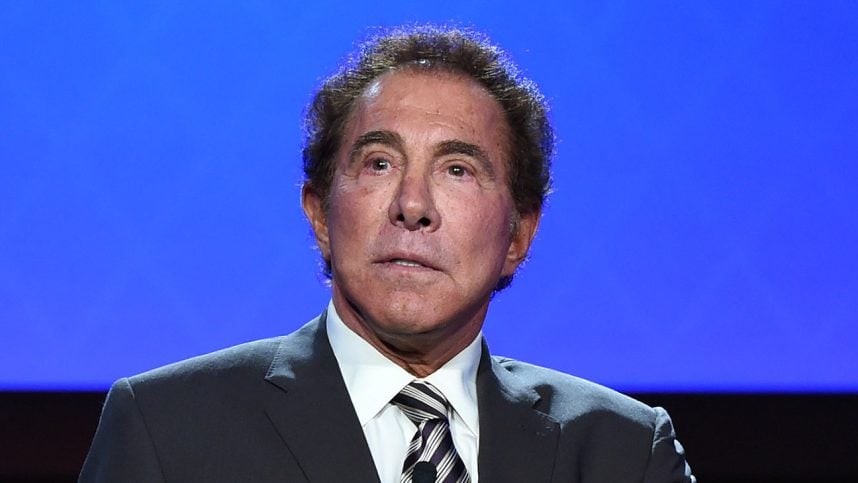
Steve Wynn. The gaming company bearing his name will pay $70 million to plaintiffs that brought a securities fraud suit against it. (Image: Getty)

Earlier this week, Pomerantz LLP filed a motion asking the United States District Court for the District of Nevada to sign off on initial approval of the settlement in the case Ferris, et al. v. Wynn Resorts Ltd., et al. Representing plaintiffs in the class action suit, Pomerantz claimed some now former Wynn executives obfuscated Steve Wynn’s sexual misconduct, making “material misrepresentations to shareholders during the period of March 28, 2016, to March 12, 2018.”

The complaint alleged defendants were aware of numerous allegations of sexual misconduct made against Wynn over the course of several decades and defendants repeatedly denied those allegations and helped to cover them up,” according to a statement issued by the law firm.

Steve Wynn is widely viewed as the first high-profile executive whose misdeeds were exposed by the “Me Too” movement. A January 2018 article by the Wall Street Journal , which was rumored to have been driven by  Elaine Wynn — Steve’s ex-wife — detailed the gaming executives inappropriate behavior toward various female employees, resulting in his ouster from the company he founded.

Wynn Securities Fraud Lawsuit Is Significant

In many instances, class action suits brought by law firms representing disappointed shareholders fall flat because courts often rule that shareholders, in exchange for potential upside in a company’s stock, assume risk.

The assumption of risk is one thing, but when it’s heightened by malfeasance of executives, the door is open for courts to rule in favor of plaintiffs. Wynn’s stock price action confirmed as much. During the aforementioned March 2016 to March 2018 period, the gaming equity nearly doubled, helping Steve Wynn dump his stake at favorable prices. By June of 2018, the stock started sliding in significant fashion as both the Massachusetts Gaming Commission (MGC) and the Nevada Gaming Control Board (NGCB) commenced investigations into goings on at Wynn.

“These events led to a drop in Wynn Resorts’ share price, which caused significant damage to the company’s shareholders,” added Pomerantz.

That’s an accurate claim because in Massachusetts, the gaming company was slapped with $35.5 million in penalties with $500,000 levied against then CEO Matt Maddox — Steve Wynn’s replacement. Prior to those fines being handed down, there was rampant speculation about the gaming company’s ability to retain its operating license for Encore Boston Harbor and rumors that it might be forced to sell the casino hotel to a rival. Though that chatter proved false, it weighed on the stock price.

Maddox, general counsel Kim Marie Sinatra, and then CFO Stephen Cootey were among the executives named in the suit. Maddox left the gaming company on Feb. 1, 2022. Cootey is now employed by Red Rock Resorts.

“This case should serve as a warning to corporations and their officers that talk is not, in fact, cheap,” said Pomerantz partner Murielle Steven Walsh in the press release. “Investors care about corporate integrity and accountability, and companies that are accused of making statements to cover up or deny allegations of serious misconduct by executives face a potentially steep financial reckoning.”

Busy Period for Wynn Legal News

News of the Wynn settlement with investors arrived less than weeks after the company said it reached an agreement with the Department of Justice (DOJ), requiring it to pay $130.13 million and admit to wrongdoing in a long-running, unregulated money transfer scheme that took place at Wynn Las Vegas.

The DOJ said that is the largest ever penalty levied against a single US gaming venue. As part of a non-prosecution agreement (NPA), the gaming company had to admit to violations of anti-money laundering guidelines.

On Sept. 10, Wynn Resorts announced the sale of $800 million of corporate bonds, telling investors it will use proceeds to wipe out debt maturing next year and to pay the fine to the federal government.

The post Wynn Investors Land $70M in Securities Fraud Lawsuit appeared first on Casino.org.