Pennsylvania Casino Smoking Targeted in New State Legislation

Pennsylvania Rep. Dan Frankel (D-Allegheny) is no fan of smoking exemptions for certain businesses like casinos. For a second year in a row, the Allegheny County Democrat has introduced legislation in the Harrisburg capital that seeks to end the smoking loopholes for casinos and other venues currently immune from the state’s indoor smoking law.
Pennsylvania casinos smoking gaming
Cigarettes and cigars inside Pennsylvania casinos are being threatened by recently introduced state legislation. State Rep. Dan Frankel (D-Allegheny) thinks the state’s brick-and-mortar casinos should be forced to go entirely smoke-free. (Image: Shutterstock)

Pennsylvania passed its Clean Indoor Air Act in 2008. The law prohibits indoor smoking in most public spaces and workplaces. However, the law that was signed by Gov. Ed Rendell (D) provides certain exceptions for casinos, cigar lounges, private clubs, and bars where alcohol generates the bulk of the establishment’s revenue.   

Frankel doesn’t believe casino workers should be subjected to working in toxic environments where secondhand smoke is prevalent. Though Pennsylvania casinos are limited to allowing indoor smoking on only half of their gaming floors, health experts say dangerous secondhand smoke lingers into the supposed nonsmoking areas.

Government Action Needed

Pennsylvania is home to 18 brick-and-mortar casinos. Only Parx Casino in Bensalem, north of Philadelphia, and Rivers Casino Philadelphia in the city proper are fully smoke-free casinos. The rest have maintained designated smoking sections on their casino floors.

Frankel says the majority of the casinos seem intent on keeping smoking. And the state Democrat feels that’s unfair to employees and guests who don’t light up.

Pennsylvanians should not have to choose between their jobs and their health. Despite a growing body of evidence suggesting that smoke-free environments attract more customers — not fewer — these businesses have not banned smoking on their own,” Frankel said in his newsletter this week.

Frankel last week filed House Bill 1657. The statute seeks to amend the Clean Indoor Air Act by repealing certain provisions that allow casinos and other businesses and clubs to permit indoor smoking.

HB 1657 has been directed to the House Health Committee, which Frankel chairs. The committee is set to meet this Wednesday, Sept. 20, to consider the smoking bill.

Casino Workers Rejoice

For the many Pennsylvania casino workers seeking a clean-air workplace, Frankel’s introduction of the anti-casino smoking bill was welcomed news. The Pennsylvania chapter of CEASE — Casino Employees Against Smoking Effects — said the bill poses the opportunity to save lives.

We thank Rep. Frankel for introducing legislation that we know will save our lives,” said Jen Rubolino, a table games dealer at Rivers Casino and the co-lead of CEASE PA. “Too many of us have been left to deal with the dangerous effects of secondhand smoke including cancer, asthma, and heart disease. It’s time to finally close the casino smoking loophole to protect our health.”

Casino smoking remains in nearby Atlantic City and in West Virginia. But casinos in the four other states that border Pennsylvania — Ohio, Maryland, New York, and Delaware — fully prohibit indoor smoking.

In research published in February, the U.S. Centers for Disease Control and Prevention’s Office on Smoking & Health concluded that smoke-free casino sections still have “elevated levels of Particulate Matter.”

“Despite robust evidence about the harms of secondhand smoke, tens of thousands of casino employees and tens of millions of tourists are exposed to high levels of secondhand smoke in Las Vegas casinos annually,” said Office on Smoking & Health Policy Team Lead Michael Tynan. “The only way to protect people from secondhand smoke exposure is to prohibit smoking in all indoor areas.”

The post Pennsylvania Casino Smoking Targeted in New State Legislation appeared first on Casino.org.
Point Shaving Scandals at Arizona State, Boston College, Northwestern, Tulane

Between 1978 and 1995, basketball players from Boston College, Arizona State, Tulane, and Northwestern were implicated in point shaving and sports betting scandals.

Boston College
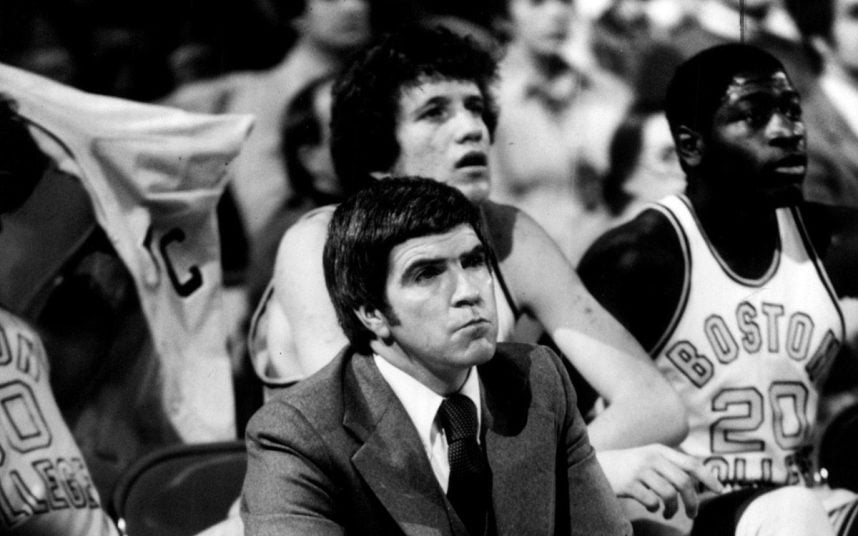
Boston College head coach Tom Davis on the bench in 1979 during a rocky season when players were involved in a point-shaving scandal. (Image: Getty)

In the late 1970s, several basketball players from Boston College were directly involved with notorious crime figures from New York City who were made famous by Martin Scorsese’s film “Goodfellas.”

Tulane shut down its basketball program in the mid-1980s after players were caught rigging games. In the 1990s, basketball players from Arizona State and Northwestern were caught up in different point-shaving scandals.

Each of these incidents occurred a full generation after multiple New York City schools were embroiled in their own point-shaving scandals at City College of New York (CCNY) in the early 1950s, and at NYU in the early 1960s.

In the last couple of weeks, Alabama fired its head baseball coach after he got involved in a betting scandal. The NCAA also launched an investigation into student athletes from Iowa and Iowa State, who violated sports betting rules and regulations.

Boston College, Henry Hill, and Goodfellas

The Boston College point-shaving scandal became the subject of an ESPN 30 for 30 documentary titled “Playing for the Mob,” which was narrated by actor Ray Liotta.

Rick Kuhn, a former minor league baseball player from Pittsburgh, accepted a basketball scholarship at Boston College after an injury prematurely ended his pursuit of professional baseball.

The Peralta brothers, Tony and Rocco, knew Kuhn from their hometown of Pittsburgh. They ran a sports betting syndicate and persuaded Kuhn to manipulate games during the 1978-79 season for $2,500 per game. The Peralta brothers had a common friend with Henry Hill. If the name sounds familiar, Hill was portrayed by Liotta in the film “Goodfellas.”

The mobsters in “Goodfellas” made an obscure reference to fixing games at Boston College. Hill got his friend Jimmy Burke (portrayed by Robert DeNiro) involved in the scheme to fix games.

Kuhn enticed his best friend, starting guard Jim Sweeney, to help him shave points.

“We won every game we should’ve won,” said Sweeny in the 30 for 30 documentary. “Sure, it should’ve been by a different margin, but we won those games.”

Boston College was a big favorite against Harvard and Fordham, but won close games.

Hill and the Peralta Brothers wanted Boston College to dump a game against Holy Cross, who was a 3-point favorite. Kuhn didn’t want to lose a huge rivalry game, but the mobsters persisted.

“You cannot play basketball with broken bones,” said Hill, who threatened Kuhn.

Holy Cross won by two points but Boston College narrowly beat the spread, much to the dismay of the mobsters.

The players thought they got away with shaving points that season until Hill was arrested for a drug charge. The government persuaded Hill to become an informant against Burke and other mafia figures, and he inadvertently mentioned the Boston College fixing scandal. The FBI launched an investigation, which was made public in 1981.

Kuhn was the only player from Boston College who served prison time. He was sentenced to 10 years in prison on RICO and sports bribery charges.

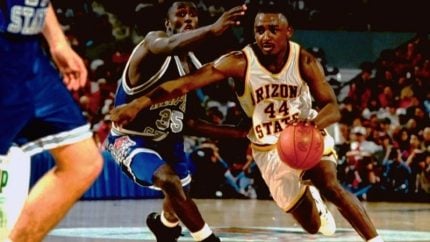
Hedake Smith Arizona State
Hedake Smith from Arizona State drives the lane during a game in 1994. (Image: AP)

Hedake Smith Shaving Points at Arizona State

Arizona State, under head coach Bill Frieder, was one of the better teams in the Pac-10 heading into the 1993-94 season.

Stevin “Hedake” Smith, the leading scorer and point guard for Arizona State, was a losing sports bettor. Smith owed Benny Silman, a campus bookie in Tempe, more than $10K while betting on college football and NFL games.

Joe Gagliano, a bond trader from Chicago, also used Silman as a bookie. Silman tipped off Gagliano about Smith’s gambling debt and mentioned Smith was willing to shave points to pay off his debt.

If your point guard is playing bad, your team is gonna suffer,” said teammate Isaac Burton. “If your point guard is point shaving, your team is definitely gonna suffer.”

Gagliano paid Silman $20K per game to fix two conference games against Oregon and Oregon State. Gagliano flew to Las Vegas with $500K and banked over $2 million betting on both fixed games.

Smith wanted to bet on himself to beat UCLA and asked Gagliano to wager $20K for him. Arizona State was a +4 underdog, but they lost by six points. Smith lost his wager.

To pay off his new debt, Smith agreed to shave points against USC. Although Gagliano won several million of that fixed game, he noticed that his action had significantly moved the line in Las Vegas. He believed the sportsbooks were getting suspicious about his wagers, but at that point, he had profited over $5 million.

A local bookie and drug dealer in Tempe named Big Red discovered Smith’s involvement and threatened to rat him out if he didn’t help shave points against Washington. Smith agreed and called Gagliano to let him know his predicament.

At that point, small-time bettors all over campus found out that the fix was in on the next Arizona State game, so they hopped in their cars and drove to Las Vegas. The line against Washington opened at -12, but quickly moved to -7 when sportsbooks realized the game wasn’t on the level. Gagliano bet $3 million at -7, but the line moved to -3 by the time the game tipped off.

The Nevada Gaming Commission contacted the FBI after they flagged the game. A typical college basketball line changes around 10 times, but the Arizona State vs. Washington line changed 44 times.

Arizona State trailed at halftime and Frieder told his team that the FBI was watching them, so they better play better in the second half. Smith and his teammates were freaked out, so they stopped shaving points. They erased a halftime deficit and won by 18 points.

All of the Arizona State students in Vegas lost their bets and Galiano incurred a $3 million loss on that game.

Smith, Silman, and Gagliano were caught and served time in prison. The Arizona State point-shaving scandal was featured in an episode of the Netflix series “Bad Sport.”


“@context”:”http://schema.org/”,”@id”:”https://www.casino.org/news/scandals-point-shaving-arizona-state-boston-college/#arve-youtube-p__ibomof4o645f0b0319345310882056″,”type”:”VideoObject”,”embedURL”:”https://www.youtube-nocookie.com/embed/P__IbomoF4o?feature=oembed&iv_load_policy=3&modestbranding=1&rel=0&autohide=1&playsinline=0&autoplay=0″

Tulane Frat Boys Fix Games in 1985

A point-shaving scandal rocked New Orleans in 1985 when several basketball players from Tulane were implicated in a scandal that involved both point-shaving and cocaine.

Gary Kranz, a student and campus cocaine dealer, offered senior forward Clyde Eads a payment of cash and drugs to shave points in a game against Southern Miss.

Eads asked several teammates, including center John “Hot Rod” Williams who was an NBA prospect, to help keep the game close. Kranz and his fraternity brothers bet on the fixed game, and participating players were paid between $400 and $900.

Kranz and the frat boys attempted to fix a second game against Virginia Tech, but failed. They focused on fixing a third game against Memphis State, who were 20-2 at the time, and who would eventually advance to the Final Four in the 1985 March Madness tournament.

Tulane was a +7 home dog but led by six points at halftime even though Williams purposely got himself into foul trouble. Memphis State pulled away in the second half and won by 11 points to cover the spread. Five players from Tulane earned $13,500 for fixing that game, and Williams banked $5,000.

Ned Kohnke, a local lawyer and Tulane alum, heard unsettling rumors about the rigged game against Memphis State. He launched his own investigation and discovered that the frat boys did very little to cover their tracks or keep the fix a secret.

Kohnke shared his evidence with New Orleans district attorney, Harry Connick, Sr., who launched a full investigation. If that name sounds familiar, it’s because he’s the father of musician Harry Connick, Jr.

Tulane shuttered its men’s basketball program in 1985 in the wake of the scandal. The program was reinstated at the start of the 1989-90 season.

Williams was selected by the Cleveland Cavaliers in the second round of the 1985 NBA Draft. In 1986, a jury found Williams innocent in connection with a sports bribery scheme.

Point Shaving at Northwestern

Northwestern is a prestigious academic institution in the Chicago suburbs, but they’re not known for their athletic excellence compared to other sports-crazed schools in the Big Ten. Northwestern basketball teams, in particular, are usually among the worst teams in the Big Ten. They posted just two winning seasons between 1970 and 1994.

Northwestern went 5-22 in 1994-95, so it’s surprising that players on a last-place team were involved in a point-shaving scandal.

In 1994, Northwestern suspended two student athletes for gambling on football games that didn’t involve Northwestern. Dennis Lundy, the star running back from the football team, and Dion Lee from the basketball team were busted by school officials.

Lee, a senior guard and starter, was suspended for six games at the start of the 1994-95 season. Upon his return to the team, he was approached by a local bettor to fix three conference games.

Kevin Pendergast, who played football for Notre Dame, wanted Lee to shave points against Wisconsin, Penn State, and Michigan.

Lee sought out another starter to help him fix the games. He persuaded senior forward Dewey Williams to assist him. They had a combined scoring average of 20.1 points per game, but each averaged 6.3 points per game in the three fixed games.

Pendergast offered Lee $4,000 to fix the Penn State game. Penn State was a -14 favorite and they defeated Northwestern by 20 points. Lee tallied just two points against Penn State.

Both Lee and Williams were indicted on federal charges for fixing those three games.

The post Point Shaving Scandals at Arizona State, Boston College, Northwestern, Tulane appeared first on Casino.org.

Washington State Woman with TB Faces Jail After Casino Visit

An unnamed Tacoma, Wash. woman who refuses to isolate with tuberculosis (TB) has visited an area casino at least once, according to court documents seen by The Tacoma News Tribune.

TB, tuberculosis, Tacoma, Casino Washington state
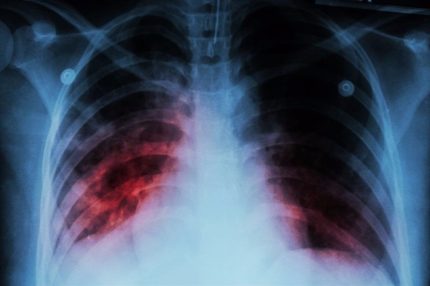
TB is a life-threatening bacterial infection that attacks the lungs. It killed 1.6 million people worldwide in 2021, but US deaths are rare, and  it can be treated with antibiotics. (Image: MyMed)

The woman, identified in filings only as “V.N.,” has been ordered by the Pierce County Superior Court to isolate and receive treatment for the disease. But thus far, she has failed to comply, The News Tribune reports.

V.N. has had the disease for over a year and has ignored over a dozen court orders.

On March 2, the woman was found to be in contempt of those orders and a warrant was issued for her arrest. Nevertheless, as of April 5, she remained at large and continued to avoid detention, according to court documents filed last week.

At the time of publication, it is not clear whether V.N. has been apprehended by the Pierce County Sheriff’s Office.

Public Consumption

A corrections officer has been assigned to surveil the respondent to “determine her habits in order to execute the warrant in a safe manner,” according to the filings.

The officer “observed a person they believed to be respondent leave her residence, get onto a city bus, and arrive at a local casino,” the documents said.

While TB is a life-threatening bacterial infection that attacks the lungs, frequent visitors to Tacoma-area casinos probably shouldn’t panic. Transmission usually occurs only after prolonged, frequent, or close contact with an infected individual.

That means it is far more likely to be transferred between members of the same household. Even then, 90% of those infected are asymptomatic and cannot pass on the disease. This is known as latent TB. For the 10% who develop active TB, the deathrate is around 66% if effective treatment is not received.

Global Killer

In 2021, the disease killed around 1.6 million people worldwide, according to the World Health Organization. Just 526 of those deaths occurred in the US, per figures from the CDC. Washington state averages around 200 cases per year, according to the Tacoma-Pierce County Health Department (TPCHD).

Treatment for active TB involves prolonged antibiotics courses of between four and 20 weeks because some strains of the disease are resistant to certain medications. This is something V.N. shows no willingness to be subjected to, according to court filings.

In a blog post days before V.N.’s arrest warrant was issued, the TPCHD admitted that such cases involve a fine balance between the risk to the public and the civil liberties of the patient.

“We are always hopeful a patient will choose to comply voluntarily. Seeking to enforce a court order through a civil arrest warrant is always our last resort,” the health department said.

The post Washington State Woman with TB Faces Jail After Casino Visit appeared first on Casino.org.

UConn Opens as a Favorite Against San Diego State in NCAA Championship Game

Two teams remain in the hunt for the March Madness men’s college basketball championship, and #4 UConn squares off against #5 San Diego State in the final on Monday evening in Houston, Texas. UConn is currently a 7.5-point betting favorite over San Diego State.

San Diego State Lamont Butler buzzer-beater Final Four March Madness FAU UConn championship odds
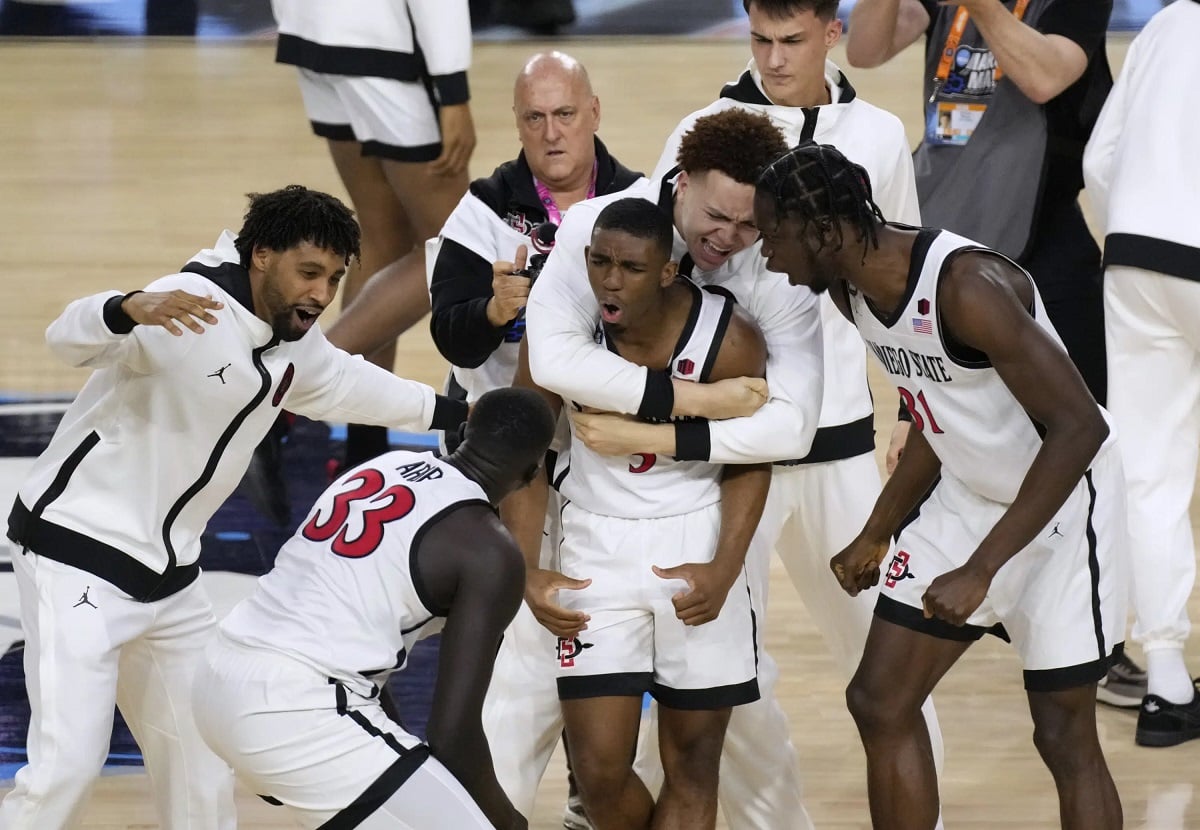
San Diego State players mob guard Lamont Butler (5) after he drilled a game-winning buzzer beater to lead the Aztecs to a victory against Florida Atlantic in the 2023 Final Four at NRG Stadium in Houston, Texas. (Image: AP)

When oddsmakers in Las Vegas opened the championship line on Saturday evening, UConn was installed as -6.5 favorite according to MGM. Early money backed UConn, and the line moved a full point as of Sunday morning.

For underdog bettors, San Diego State is now getting +7.5 points. You can back them on the moneyline at +290 on DraftKings. UConn is currently -350 as the moneyline favorite.

The points total in the championship game is currently 132 over/under. The total initially opened at 130.5 o/u.

UConn and San Diego State tipoffs off at 8:20pm ET at NRG Stadium in Houston.

According to ESPN, only 2.4% out of two million entries in their Men’s Tournament Challenge selected UConn to win the championship. Only 0.3% of all March Madness brackets at ESPN picked San Diego State to win the title.

San Diego State Advances on Buzzer Beater

San Diego State was the only team in the Final Four who were ranked according to the preseason AP Top 25 College Basketball Poll. The Aztecs began the season at #19, and they entered March Madness at #18.

San Diego State defeated Florida Atlantic, 72-71, on a buzzer beater to advance to the championship game. Florida Atlantic blew a 12-point lead in the second half, and San Diego State won their Final Four battle thanks to a 17-foot jumper at the buzzer from Lamon Butler.

Butler, a junior guard, averaged only 8.7 points per game for San Diego State this season. He had scored only seven points against Florida Atlantic prior to his game-winning shot.

I always dreamed of this moment,” Butler said. “I’m just happy it was able to come to fruition.”

San Diego State’s road to the Final Four included victories against #12 Charleston, #13 Furman, #1 Alabama, and #6 Creighton. San Diego State squeaked by Creighton in a one-point victory in the Elite Eight to advance to the Final Four.

Florida Atlantic embarked on a Cinderella run in this year’s March Madness as the #9 seed. The little-known Owls defeated #8 Memphis, #16 FDU, #4 Tennessee, and #3 Kansas State to earn their first-ever trip to the Final Four.

Before the tournament began, San Diego State was +6000 odds to win March Madness according to DraftKings’ futures board. Their title odds improved to +380 at the start of the Final Four.

San Diego State struggled to cover the point spread this season with a 19-16-2 ATS record, but they went 5-1 ATS during March Madness.


“@context”:”http://schema.org/”,”@id”:”https://www.casino.org/news/uconn-san-diego-state-betting-championship-game/#arve-youtube-wj30w_ckjy86429a6845d99c089338011″,”type”:”VideoObject”,”embedURL”:”https://www.youtube-nocookie.com/embed/Wj30W_CKjY8?feature=oembed&iv_load_policy=3&modestbranding=1&rel=0&autohide=1&playsinline=0&autoplay=0″

UConn Blows Out Miami

In the final AP Poll at the end of the regular season, UConn was ranked #10 in the nation, and Miami was ranked #16. Neither team earned a preseason ranking.

UConn obliterated everyone in their path to the championship game, and they won four March Madness games by at least 23 points. The Huskies became only the sixth team in March Madness history to win their first five tournament games by a double-digit margin. They blew out #13 Iona, #5 St. Mary’s, #8 Arkansas, and #3 Gonzaga to lock up a spot in the Final Four.

Miami fell behind early, but tied the game at 19-19 midway through the first half. Propelled by a 18-5 run, UConn headed into halftime with a 13-point lead. Miami trailed by 20-plus in the second half, but their last-gasp rallies fell short. UConn held on to win 72-59.

We’re able to kind of body blow our opponent,” said UConn head coach Danny Hurley.

“We feel like we’re the best defense in the nation,” added senior guard Tristen Newton.

UConn forward Adama Sanogo led all scorers with 21 points in the victory. The junior, originally from Mali, also hauled down ten rebounds and blocked two shots.

Miami was designated with a #5 seed in March Madness. They defeated #12 Drake, #4 Indiana, #1 Houston, and #2 Texas to earn a spot in the Final Four.

When the tournament began, UConn was +1600 odds to win March Madness. At the start of the Final Four, UConn saw their championship odds improve to -125.

UConn is the second-best betting team in the country this season with a 26-11-1 ATS record. They covered all five March Madness games, and they’re 10-1 ATS in their previous 11 games.


“@context”:”http://schema.org/”,”@id”:”https://www.casino.org/news/uconn-san-diego-state-betting-championship-game/#arve-youtube-u6tnfhmkgly6429a6845e186713118281″,”type”:”VideoObject”,”embedURL”:”https://www.youtube-nocookie.com/embed/u6TNfHMkglY?feature=oembed&iv_load_policy=3&modestbranding=1&rel=0&autohide=1&playsinline=0&autoplay=0″

The post UConn Opens as a Favorite Against San Diego State in NCAA Championship Game appeared first on Casino.org.

Bally’s to Pursue iGaming in Home State of Rhode Island

Bally’s Corp. wants to open up online casino gambling in America’s smallest, yet most densely populated state. Officials announced on Wednesday that they intend to seek approval from the Rhode Island government to bring fully licensed and regulated online gambling to the state. Bally’s is headquartered in the state’s capital, Providence.


The proposal was announced Wednesday afternoon at a luncheon held by the Greater Providence Chamber of Commerce. Asking for legislative and executive branch approval during this year’s General Assembly session, the company said it would propose legislation to allow the RI Division of Lotteries to authorize online slot games and table games for players in the state.

Pending all approvals, the company hopes to start offering online gambling in Rhode Island by January 1, 2024.

After commissioning a study on the matter, the company said it believes that broader liberalization of gambling regulation in the state would give its two casinos – Bally’s Tiverton Casino & Hotel and Bally’s Twin River Lincoln Casino Resort a better chance to remain competitive in the long run. The games would be served from one or both locations.

Increased Gambling Revenue for the State

The new metric would also help the company deliver more revenue to state coffers.

We intend to model this after the legislation used to establish online sports betting in Rhode Island, effectively giving the State complete regulatory control and the ability to ensure the integrity of the program, while maximizing revenue for the State,” said Elizabeth Suever, Vice President of Government Relations for Bally’s Corporation. The state would be paid a percentage of all online gambling revenue generated by the site or sites.

The announcement came as a surprise to many as the company announced about three weeks ago that it would cut 15% of its North American interactive workforce. The announcement came in the form of a letter to Bally workers and a filing with the U.S. Securities and Exchange Commission.

More recently, Bally’s announced that CEO Lee Fenton would step down, and Robeson Reeves, President of Interactive would take his place. Both leaders came onto the company as part of Bally’s friendly acquisition of UK-based Gamesys for $2.7 Billion in 2021. That deal was announced in March and consummated in October 2021.

The company completed several other acquisitions in the meantime and now has 15 land-based casinos throughout the US and was recently given the approval to build the first casino ever in Chicago, IL., America’s third-largest city. Bally’s also holds sports betting licenses in 18 states.

Spectrum Gaming Study

Prior to beginning a discussion in the state to promote its idea of online gambling, Bally’s commissioned industry experts Spectrum Gaming Group to conduct a study of the matter.

Some of Bally’s claims based on that study include the following assertions:

Retail casino gaming would be preserved in the state with few or no players switching completely from land-based gambling to online slots and tables. (Bally’s operates the only two casinos in Rhode Island).

The state could potentially reap $210 million in gambling taxes over the first five years.

Gross gaming revenue is projected to be an estimated $93.3 million in the first year, increasing to an estimated $130.6 million annually in year five.

The proposed legislation would leave the state in control of all responsible gambling protocols, security, system integrity, accounting, and operating procedures. The state would also set conditions and terms for online table gaming and slots.

Players would need to confirm their age and identity to gamble online. Geolocation and other services would be employed to guarantee that a person was physically located within the state’s borders any time they placed a bet.

The physical servers that process and record the wagers would be located within a restricted, secure location on the casinos’ premises.

Source: Bally’s Seeks to Expand Gaming in RI — Wants Approval for Online Casino Gaming, GoLocalProv.com, February 15, 2023

The post Bally’s to Pursue iGaming in Home State of Rhode Island appeared first on Casino News Daily.