Fertitta Unlikely to Pursue Wynn Takeover, Says Analyst

Tilman Fertitta increased his stake in Wynn Resorts (NASDAQ: WYNN) to nearly 10% of the shares outstanding, but one analyst believes the Golden Nugget chief executive officer is unlikely to purse an acquisition of his rival.

Fertitta Wynn
Billionaire businessman Tilman Fertitta. He’s unlikely to pursue an outright acquisition of Wynn Resorts. (Image: Bloomberg)

In a new report to clients, CBRE John DeCree said Fertitta is likely to remain a passive investor in Wynn despite increasing his position in the casino giant to 9.9% during the third quarter, up from the 6.1% he controlled following his initial investment in the gaming company two years ago. News of that boosted investment sent Wynn shares higher by 8.65% on Thursday with some of that jump attributable to Fertitta’s acquisitive history.

We can appreciate the speculation, particularly given Fertitta’s mergers and acquisitions track record, including the acquisition of Morton’s Restaurant Group and McCormick & Schmick’s, both of which started with 13G filings and culminated in full takeovers,” wrote DeCree.

It was a 13G filing that revealed Fertitta’s increased position in Wynn. Had it been a 13D, that would have signaled he planned to be an activist shareholder, pushing for some form of change at Wynn, including a potential sale.

Fertitta Takeover Speculation Plausible, But…

Combining Fertitta’s history of acquisitions with his Wynn investment now close to 10%, it’s easy to understand why the takeover talk restarted.

Ten percent is a level at which any company would need to listen to the investor holding that position. However, listening and appeasement are often two different things. Plus, there are myriad examples of investors acquiring sizable stakes in corporations and remaining passive. Warren Buffett’s Berkshire Hathaway is one of the prime examples of that.

For his part, Fertitta has made a decent amount of money on his original Wynn stake. DeCree said the stoke is up 70% since that position was revealed. It’s possible the Houston Rockets owner doesn’t want to mess with a good thing by turning activist, but he does see more upside potential in the shares.

“We view his recent move similarly, as an attractive value investment that could become strategic if a unique situation arises, such as an unfavorable economic cycle that results in further dislocation in the shares,” added the CBRE analyst.

Complexities Abound with Wynn Takeover

While Wynn could be an attractive takeover target for Fertitta or other suitors, there are complexities that need to be considered. Those include maintaining gaming licenses in Macau and the planned casino hotel project in the United Arab Emirates (UAE).

Those are moving parts not germane to some Wynn competitors and could signal that if Fertitta wants to push for change at the Encore operator, it could be in more strategic fashion rather than an outright acquisition.

Last week, speculation surfaced that Fertitta believes Wynn management isn’t doing a good job of conveying the stock’s performance — it’s topped peers for over a year — to shareholders and that the operator should considering expanding its venerable brand in the US. Currently , the operator’s US exposure consists of the Wynn/Encore complex on the Las Vegas Strip and Encore Boston Harbor, though the company is bidding for a New York City gaming permit.

The post Fertitta Unlikely to Pursue Wynn Takeover, Says Analyst appeared first on Casino.org.

Texas Sports Betting Unlikely Before 2027 Amid Rising Opposition

Indy-Gaming-Why-Texas-is-for-now-not-likely-to-legalize-sports-bettingEfforts to legalize sports betting in Texas are facing substantial hurdles, largely due to increased lobbying and campaign contributions aimed at legalizing casinos in the state. These actions have galvanized anti-gaming forces in Texas, reducing the likelihood that sports betting will be legalized in the near future.


According to a recent report by Eilers & Krejcik Gaming, a Southern California advisory firm specializing in sports betting analysis, Texas has been removed from the list of states likely to legalize sports betting by 2025. The firm attributes this decision to the intensifying opposition to gambling in Texas, driven primarily by efforts from Las Vegas Sands Corp.

Las Vegas Sands has invested millions of dollars over the past decade in failed attempts to legalize casinos in Texas. The company is once again leading a push for a casino bill as the state approaches its biennial legislative session. Despite these efforts, opposition to gambling in the state has only strengthened, creating significant obstacles for the legalization of sports betting.

The Texas Tribune reported in May that Miriam Adelson, who controls 53 percent of Las Vegas Sands, contributed $9 million to the Texas Defense Fund, a political action committee that supported Republican incumbents in the Texas House during the primary elections. In addition to this political involvement, Adelson spent $3.5 billion in December to acquire a 73 percent stake in the NBA’s Dallas Mavericks. The team, which recently lost to the Boston Celtics in the NBA Finals, is expected to advocate for a new arena in Dallas, potentially tied to a future hotel-casino resort operated by Las Vegas Sands.

Mark Cuban, co-owner of the Mavericks who retained a 27 percent stake in the team, emphasized the importance of the casino aspect of the project. Speaking at a sports economics forum in Dallas, Cuban stated, “The 10 percent of the people who gamble pay for everything else,” highlighting the financial viability of integrating a casino into the project.

Andy Abboud, Senior Vice President of Sands, also spoke at a recent event hosted by the North Texas Commission, a public-private partnership that includes Dallas-area businesses and local governments. Abboud briefed business leaders on the potential benefits of destination gaming, with the commission forming an exploratory committee to examine the issue further.

However, these initiatives have only intensified opposition from Texas’ anti-gaming faction, which is predominantly led by Republicans in the Texas State Senate. Chris Krafcik, an analyst from Eilers & Krejcik, noted that while the Texas House passed an online sports betting bill in 2023—backed by major sports betting companies, a coalition of Texas’ professional sports teams, and former Texas Gov. Rick Perry—it was ultimately blocked in the Senate. This development supports Krafcik’s view that “the Senate is the chamber that matters, and things there are not moving in the right direction.”

Krafcik also pointed out that the Texas Republican Party has explicitly instructed lawmakers to oppose any form of gambling expansion, as well as any budget proposals that include revenue from legalized gambling. He highlighted the party’s firm stance against gambling, noting that “[the party’s platform]

even explicitly addresses the warmer reception gambling expansion has had in the House.”

Given these challenges, Krafcik now believes that Texas may not legalize sports betting until at least 2027, with the earliest possible launch coinciding with the NFL season opener in the fall of 2028.

Source:

Indy Gaming: Why Texas is, for now, not likely to legalize sports betting, thenevadaindependent.com, August 21, 2024.

The post Texas Sports Betting Unlikely Before 2027 Amid Rising Opposition appeared first on Casino News Daily.

Trump, Harris Tax-Free Tips Pledge Unlikely, Law and Economics Professor Says

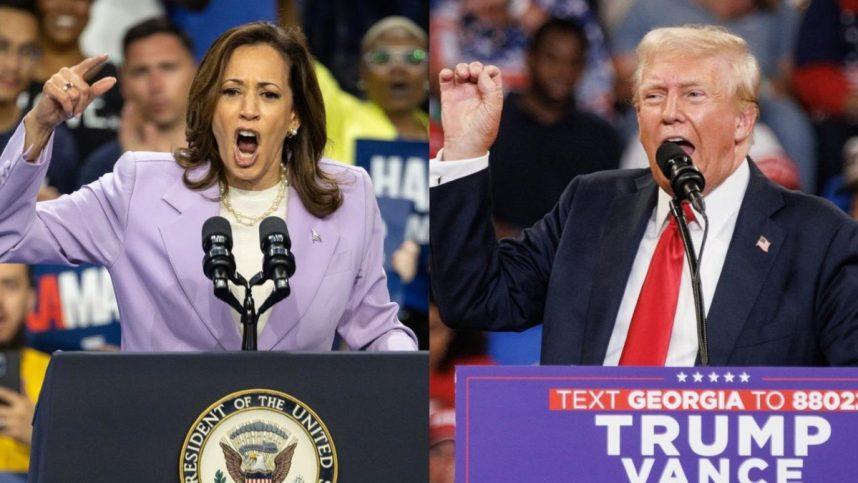
Donald Trump and Kamala Harris each pledged while stumping in Las Vegas to eliminate taxes on service workers’ tips.

Trump Harris taxes tips Las Vegas Nevada
Vice President Kamala Harris and former President Donald Trump both want taxes on tips removed for service workers. A leading law and economics professor says such a change would have significant consequences and wouldn’t be easy to implement. (Image: AP)

The tax-free tip commitments resonated in Nevada, the state home to the highest concentration of tipped workers in the country. But a prominent law and economics professor is casting doubt on either president’s ability to champion such a tax code change, a power that ultimately rests with Congress.

Speaking recently with the Associated Press, James Hines Jr., a law and economics professor at the University of Michigan and the research director of the Ross School of Business Office of Tax Policy Research, says amending how service workers are taxed would be complicated for the IRS and cost the federal government hundreds of billions of dollars.

“There’s no way that it wouldn’t be a mess,” said Hines Jr.

Michigan’s law and economics schools are consistently ranked among the nation’s 15 best by U.S. News & World Report. 

Tip of the Iceberg

Hines believes such a change would result in many workers attempting to reclassify their income as tipped wages.

For example, a contractor might take a $2,000 service bill and amend it to a $1,000 job with a $1,000 mandatory gratuity. Employers might also reclassify annual bonuses as tips to lessen their payroll taxes and allow workers to keep more of their pay.

You will have taxpayers pushing their attorneys to try to characterize their wage and salary income as tips,” Hines said. “And some would be successful, inevitably, because it’s impossible to write foolproof rules that will cover every situation.”

Fiscal estimates project that removing the IRS’ tip tax could cost the federal government as much as $25 billion a year. Hines thinks the change would end up benefiting the wealthy and high-income earners, not the low-income taxpayers Harris and Trump are seeking to help.

“If the issue is you’re concerned about low-income taxpayers, there are a lot better ways to address that problem,” Hines said, suggesting better avenues to be increasing the Earned Income Tax Credit or lowering tax rates.

This is good politics but bad policy,” added Erica York, a senior economist and research director at the Tax Foundation, a think tank headquartered in Washington, D.C.

There are about four million workers in the U.S. who work in a tipped occupation, or about 2.5% of the country’s labor force.

Union Embraces Harris Pledge

While both the Republican and Democratic presidential candidates agreed that tipped workers shouldn’t have to pay taxes on gratuities, the leading casino union in Las Vegas is only supporting Harris for Nov. 5. Culinary Union Secretary-Treasurer Ted Pappageorge expressed differing opinions on the candidates’ tip tax guarantees.

When Trump first pledged to remove taxes on tips in June, Pappageorge said, “Relief is definitely needed for tip earners, but Nevada workers are smart enough to know the difference between real solutions and wild campaign promised from a convicted felon.”

But after Harris this month made a similar pledge, Pappageorge responded that the vice president “acknowledged the hard-working men and women of the hospitality industry.”

On the political betting exchange Polymarket, Harris and Trump are in a dead heat at the time of this writing.

The post Trump, Harris Tax-Free Tips Pledge Unlikely, Law and Economics Professor Says appeared first on Casino.org.