Illegal Texas Horse Racetrack Raided, Drugs, Gambling Devices Seized

Authorities in West Texas raided an illegal quarter-horse racetrack and arrested nine people for offenses including promoting gambling, money laundering, racketeering, and the manufacture and delivery of a controlled substance.
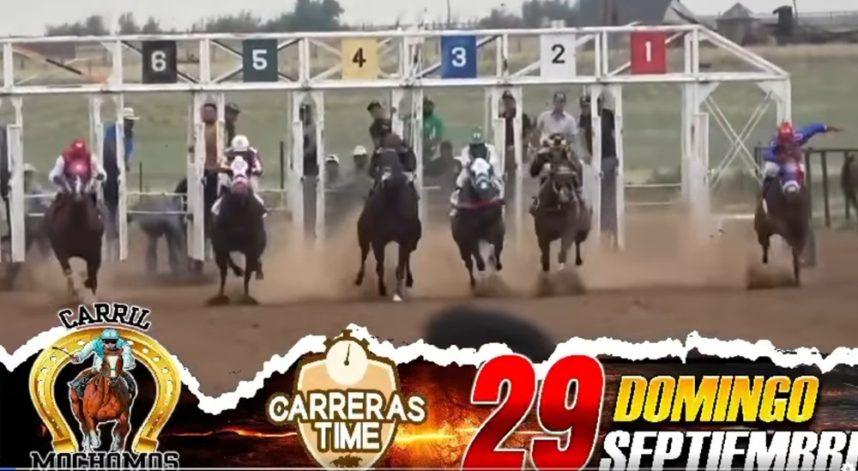
Carril Mochomos, racetrack, Levelland, Hockley County, Texas, bush racing
Footage taken from Carril Mochomos’ Facebook page, above, shows that it was a slick operation, with professionally produced highlights of races. (Image: Facebook/Carril Mochomos)

Police uncovered 135 grams of cocaine and numerous illegal gambling devices at the track, known as Carril Mochomos, near the city of Levelland, west of Lubbock, Texas.

The raid came after an investigation by animal rights group PETA into the clandestine world of unlicensed horse racing.

The organization said it identified as many as 50 illegal “bush tracks” across Texas, where a lack of regulatory oversight means that the drugging and abuse of horses is rife. PETA estimates that there are more than 150 such tracks throughout the US.

Advertising Openly

Carril Mochomos openly advertised its events on social media and produced professional quality videos of racing highlights, complete with informational graphics.

A September 13 post on its Facebook page written in Spanish advertises the track’s third anniversary, inviting visitors to bring their own beer while offering free candy and a bounce castle for the kids.

PETA said in a statement Monday that it had handed information about Carril Mochomos’ operations to the Texas Department of Public Safety (DPS), which coordinated the raid with the Texas Racing Commission and multiple law enforcement agencies.

PETA’s investigation also uncovered illegal racetracks in Georgia, which led to animal cruelty charges against six jockeys and a felony commercial gambling charge against an on-track bookmaker. Five of the jockeys who face charges in Georgia also race at licensed racetracks across the US.

Drugged, Whipped, Electroshocked

At the Rancho El Centenario bush track in Georgia, the animal rights organization claimed to witness trainers openly injecting horses with stimulants to make them run faster.

On six different visits to the track, PETA investigators collected 27 discarded syringes, which lab tests later revealed contained cocaine, methamphetamine, methylphenidate (Ritalin), and caffeine, sometimes in combination.

While racegoers would wager hundreds of thousands of dollars, trainers and jockeys would “drug, whip, and electroshock horses to try to win at any cost, the organization said.”

Jockeys whipped horses relentlessly — often over 20 times in a row — and other team members even struck the horses from behind as the starting gates opened,” according to PETA. “Jockeys and handlers also whipped and hit horses before races, during loading, and in the starting gates, as punishment and/or to control fractious behavior in the drugged-up horses.”

The PETA investigation in Georgia prompted the California Racing Board to ban its licensees, including jockeys, trainers, and owners, from participating in bush track racing. It’s the first state racing agency to do so.

The post Illegal Texas Horse Racetrack Raided, Drugs, Gambling Devices Seized appeared first on Casino.org.

Texas Sports Betting Unlikely Before 2027 Amid Rising Opposition

Indy-Gaming-Why-Texas-is-for-now-not-likely-to-legalize-sports-bettingEfforts to legalize sports betting in Texas are facing substantial hurdles, largely due to increased lobbying and campaign contributions aimed at legalizing casinos in the state. These actions have galvanized anti-gaming forces in Texas, reducing the likelihood that sports betting will be legalized in the near future.

According to a recent report by Eilers & Krejcik Gaming, a Southern California advisory firm specializing in sports betting analysis, Texas has been removed from the list of states likely to legalize sports betting by 2025. The firm attributes this decision to the intensifying opposition to gambling in Texas, driven primarily by efforts from Las Vegas Sands Corp.

Las Vegas Sands has invested millions of dollars over the past decade in failed attempts to legalize casinos in Texas. The company is once again leading a push for a casino bill as the state approaches its biennial legislative session. Despite these efforts, opposition to gambling in the state has only strengthened, creating significant obstacles for the legalization of sports betting.

The Texas Tribune reported in May that Miriam Adelson, who controls 53 percent of Las Vegas Sands, contributed $9 million to the Texas Defense Fund, a political action committee that supported Republican incumbents in the Texas House during the primary elections. In addition to this political involvement, Adelson spent $3.5 billion in December to acquire a 73 percent stake in the NBA’s Dallas Mavericks. The team, which recently lost to the Boston Celtics in the NBA Finals, is expected to advocate for a new arena in Dallas, potentially tied to a future hotel-casino resort operated by Las Vegas Sands.

Mark Cuban, co-owner of the Mavericks who retained a 27 percent stake in the team, emphasized the importance of the casino aspect of the project. Speaking at a sports economics forum in Dallas, Cuban stated, “The 10 percent of the people who gamble pay for everything else,” highlighting the financial viability of integrating a casino into the project.

Andy Abboud, Senior Vice President of Sands, also spoke at a recent event hosted by the North Texas Commission, a public-private partnership that includes Dallas-area businesses and local governments. Abboud briefed business leaders on the potential benefits of destination gaming, with the commission forming an exploratory committee to examine the issue further.

However, these initiatives have only intensified opposition from Texas’ anti-gaming faction, which is predominantly led by Republicans in the Texas State Senate. Chris Krafcik, an analyst from Eilers & Krejcik, noted that while the Texas House passed an online sports betting bill in 2023—backed by major sports betting companies, a coalition of Texas’ professional sports teams, and former Texas Gov. Rick Perry—it was ultimately blocked in the Senate. This development supports Krafcik’s view that “the Senate is the chamber that matters, and things there are not moving in the right direction.”

Krafcik also pointed out that the Texas Republican Party has explicitly instructed lawmakers to oppose any form of gambling expansion, as well as any budget proposals that include revenue from legalized gambling. He highlighted the party’s firm stance against gambling, noting that “[the party’s platform]

even explicitly addresses the warmer reception gambling expansion has had in the House.”

Given these challenges, Krafcik now believes that Texas may not legalize sports betting until at least 2027, with the earliest possible launch coinciding with the NFL season opener in the fall of 2028.

Source:

Indy Gaming: Why Texas is, for now, not likely to legalize sports betting, thenevadaindependent.com, August 21, 2024.

The post Texas Sports Betting Unlikely Before 2027 Amid Rising Opposition appeared first on Casino News Daily.

Political Chill Pill for Commercial Gambling in Texas?

political_chill_pill_for_commercial_gambling_in_texasBills are making their way through House committees and support for expanded gambling venues and sports betting in Texas is at an all-time high. However, Lt. Gov. Dan Patrick is the president of the Senate and he has no appetite for legalized gambling in the state – unless it is a Republican idea with broad GOP support in the Senate.

The Texas House State Affairs Committee recently approved two bills to be sent to the floor of the House for a vote, opening a path for them to be acted on by the Senate and potentially signed into law by the Governor. Governor Abbot has had a sort of fluid response to the issue of expanded gambling – once “wholeheartedly” opposed to it, then open to letting voters decide, and now seemingly leaning more toward sportsbetting but not too excited about casinos.

Charlie Geren (R-Fort Worth) saw his House Joint Resolution (HJR) 155 approved first and then Rep. John Kuempel’s (R-Seguin) saw his House Bill (HB) 2843 make it through the committee as supporting legislation. The companion bills would authorize destination casino resorts in limited numbers and at specific locations based on the population if Texas voters approve of the idea.

Bills Would Allow Voters to Decide

The bills lay out important frameworks for liberalized gambling in the state which is currently illegal and only allowed grudgingly on Native lands that the state has no control over. The legislation would simply allow voters in Texas to approve a constitutional amendment in November that would allow commercial gambling.

The current bills would allow for two casinos in the Dallas and Fort Worth area along with six others elsewhere in the state.

Some reports indicate that at least 75% of Texans favor being given the choice to decide for themselves. That doesn’t mean that three-quarters of all voting residents favor casino gambling or sports betting, only that they want to decide the issue for themselves.

Rep. Jeff Leach (R-Plano) got his mobile sports betting bill through the committee as well as a separate piece of legislation. This law would set a licensing fee of half a million dollars for mobile sportsbetting sites and levy a 10% tax on revenues.

In a March hearing on the Leach bill, the lawmaker said it would advance “freedom and liberty” in the state and empower tax collectors to make money for the state on an activity that already goes on anyway.

There are hundreds of our constituents — citizens of all ages, including minors — who right now, especially with March Madness, are placing unsafe, <sic> unsecure, illegal, criminal bets very easily,” Leach said.

Multiple local media outlets reported earlier this week that Texas Lt. Governor Dan Patrick was making the rounds on state broadcasting networks to make the case against any gambling bills lawmakers might be entertaining. According to his own words, it’s not so much a matter of whether or not Texans want to choose, but which side of the aisle the bills originate from or at least who supports them.

Lt. Gov Claims There is No Support for Voter Choice in Senate

According to Texomashomepage.com, the Senate president took a swipe at the House efforts saying there was “zero support” for the idea in the Senate even though one of his top allies in the Senate, a Republican, is sponsoring Senate Joint Resolution 39 – a constitutional amendment to allow sports betting if voters were to approve it during the next election.

Our members have been clear: they’re not in support today. We don’t have any votes in the Senate,” Patrick said. “Couldn’t find one Senator who supported it.”

Playing partisan hardball, Patrick reportedly said: “Unless I have 15 to 16 Republicans, meaning it’s a Republican-driven bill because we’re a Republican-driven state, I’m not bringing a bill to the floor,” he said. “I need Republican consensus otherwise, it’s a Democrat bill.

The Lt. Governor’s political posturing has not slowed down the push to let the people decide and it hasn’t dampened the drive to get the business taken care of. The Texas Destination Resort Alliance issued a statement in support of the bills making it through committee.

Matt Hirsch, a spokesperson for the Alliance said: “The efforts to bring destination resorts to Texas made significant progress with today’s vote. Texans have made it clear that they want destination resorts in Texas, and we are now one step closer to ultimately allowing them to decide on this issue.”

Dallas Mavericks owner, Mark Cuban has indicated he’d be open to moving his team to a new home when his current long-term lease comes to an end. A casino resort in Dallas would be an ideal location for the NBA franchise.

There are two very small slots/bingo casinos in the state including Naskila Casino near Livingston. The largest casino is also a native operation near the Mexican border at Eagle’s Pass. Legislation has been written to protect Kickapoo Lucky Eagle Casino from too much competition all at once by authorizing the tribe to operate any type of game or gambling a commercial operation is allowed to offer.

It’s estimated that Texans leave over $5 billion a year in out-of-state casinos and tribal gambling venues. Millions of visitor trips a year are logged to Oklahoma and other neighboring states with more liberal gambling laws.

Source: Texas House State Affairs Committee passes two bills on resort casinos and mobile sportsbetting, G3 NewsWire, April 5, 2023

The post Political Chill Pill for Commercial Gambling in Texas? appeared first on Casino News Daily.

Small Texas Slot Casino Pumps $212M a Year Into Local Economy

small_texas_slot_casino_pumps_dlr212m_a_year_into_local_economyNaskila Entertainment is a small, slots-only casino in Polk County, Texas with an outsized impact on the local economy. In fact, it’s really an electronic bingo facility but visitors get the feeling they are playing slots and most people would never know the difference – much like playing at a video lottery terminal (VLT) in a huge New York City casino.


The casino is operated by the Alabama-Coushatta Tribe of Texas on its Reservation near Livingston, about 75 miles north of Houston, a city of over two million people.

According to a report that was commissioned by the Texas Forest Country Partnership, the facility, directly and indirectly, pumped some $212 million into the county economy in 2022.

Casino Generates 800+ Permanent Jobs

TXP Inc. of Austin, the economic analysis firm that conducted the study reports that the operation is responsible for more than 800 permanent jobs, half of them at the casino, and a total payroll of $22.5 million a year collectively.

This economic impact and these jobs would simply not exist without Naskila. Because 95 percent of Naskila’s customers come from outside of Polk County, and more than 80 percent come from outside the region, Naskila is an economic engine that benefits every stakeholder in the region,” the study stated.

According to a report in Blue Bonnet News, the Winter 2023 TXP study was the third one the Texas Forest Country Partnership had commissioned on the casino’s economic impact. The venue opened as a 15,000 sq ft slot parlor in 2016 and has had to fight until fairly recently to defend its operation as legal under the 1988 Indian Gaming Regulatory Act.

Last summer the United States Supreme Court finally put overzealous Texas prosecutors to rest over the issue when the Court confirmed the gaming center’s standing.

Steady Increase in Economic Value

The first study, done in 2018 showed an economic impact of $140 million increasing to $170m in 2020 and continuing to grow to the current $212m arrived at in the current report found here, courtesy of the Liberty County news outlet. Overall direct and indirect jobs have grown from 550 to 700 and finally to 825 found today with nearly half of them part of the casino operation itself.

Chairman of the Alabama-Coushatta Tribe of Texas Tribal Council, Ricky Sylestine commented on the study and its findings: “We are grateful that our guests, our employees, and our neighbors in Deep East Texas have allowed the impact of Naskila Casino to continue to grow,” he said. “This facility helps sustain our Tribe and our region.”

The average salary and benefits for a Naskila employee are $50,000 according to the report. The impact includes a variety of quality-of-life improvements for those who are employed directly or not in the area with funding for scholarships and additional housing on the Reservation as well as a retail center, health care clinic, and a daycare center.

The growth of Naskila’s success is very good for Polk County,” said Polk County Judge Sydney Murphy. “Naskila draws visitors into our region and provides stable income and benefits for its employees. We know that Naskila will continue to play an important role in our county’s future.

Source: Study finds Naskila Casino injects $212 million into local economy, Bluebonnet News, March 13, 2023

The post Small Texas Slot Casino Pumps $212M a Year Into Local Economy appeared first on Casino News Daily.