Wynn Resorts Secures UAE’s First Commercial Gaming License

UAE-issues-first-commercial-gaming-licence-to-Wynn-ResortsWynn Resorts has made history by becoming the first company to receive a commercial gaming license in the United Arab Emirates (UAE). On October 4, the General Commercial Gaming Regulatory Authority (GCGRA) granted Wynn the license for its ongoing project on Al Marjan Island, located in Ras Al Khaimah (RAK).

The license will allow Wynn to operate a land-based casino as part of the massive Wynn Al Marjan Island Resort, which is expected to open in 2027. This luxury development is a joint venture between Wynn Resorts, Marjan, and RAK Hospitality Holding.

In a statement, Wynn Resorts expressed gratitude to the GCGRA, saying, “We are under way with the construction of our resort in Ras Al Khaimah and look forward to being a key partner in the development of its tourism economy.” The company also thanked the GCGRA for the confidence and trust placed in them with the approval of this license.

A Major Milestone for Gaming in the Middle East

Wynn’s Al Marjan Island project will be the first integrated gaming resort in the Middle East and North Africa (MENA) region. Spanning over 62 hectares on a man-made island, the project is located just 15 minutes from Ras Al Khaimah International Airport and 45 minutes from Dubai. It will offer more than just gaming, with plans for over 1,000 hotel rooms, convention facilities, luxury shopping, and high-end dining options.

Craig Billings, CEO of Wynn Resorts, described Al Marjan Island as an ideal location for this landmark development, calling it a “pristine setting” for Wynn to deliver its signature luxurious guest experiences.

The project is set to boost Ras Al Khaimah’s tourism industry, with Abdulla Al Abdooli, CEO of Marjan, emphasizing that Wynn’s reputation for creating world-class resorts will help attract visitors to the region. Al Abdooli said, “We are partnering with Wynn Resorts, one of the world’s most renowned integrated resort companies, which has a strong track record of developing luxury destinations with exceptional accommodation, dining, entertainment concepts, and gaming facilities.”

Other Operators Eyeing Opportunities

Wynn’s milestone comes just weeks after MGM Resorts CEO Bill Hornbuckle announced that his company had filed for a license to develop a gaming project in Abu Dhabi https://news.worldcasinodirectory.com/mgm-resorts-leads-the-charge-for-casino-licensing-in-the-uae-application-confirmed-115267. Speaking at the Skift Global Forum in New York City, Hornbuckle revealed that MGM applied for the license on September 19.

With the UAE’s commercial gaming landscape expanding, more global gaming giants may soon enter the market. For now, Wynn Resorts is leading the charge, with its Al Marjan Island resort expected to set a new standard for luxury hospitality in the region.

A First for UAE’s Gaming Sector

The GCGRA defines commercial gaming as games that involve a combination of skill and chance, where players wager money or equivalents to win cash or prizes. Wynn’s license is the first to be awarded for a land-based gaming facility in the UAE. However, the GCGRA previously issued a license for the country’s first authorized lottery earlier this year.

Wynn Al Marjan Island’s non-gaming amenities are also set to impress, featuring over 1,500 rooms and suites, a collection of 22 dining and lounge experiences, a sprawling pool complex, luxury shopping, and state-of-the-art meeting spaces. The resort will be topped off by 2025, with full operations expected to begin by 2027.

Source:

Wynn Resorts Announces Receipt of Gaming Operator License for Wynn Al Marjan Island, press.wynnalmarjan.com, October 5, 2024.

The post Wynn Resorts Secures UAE’s First Commercial Gaming License appeared first on Casino News Daily.
US Commercial Gaming Win Hits $66.5B, Third Year of Record Growth

The US commercial gaming industry reached a new annual revenue record for a third consecutive year.

commercial gaming casino revenue
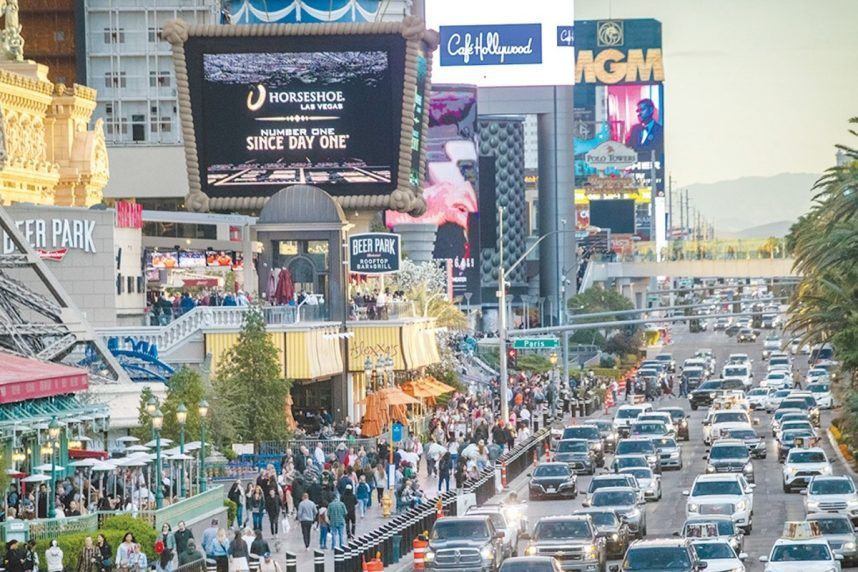
A bustling Las Vegas Strip is seen in April 2023. Commercial gaming in the US reached new highs last year, as gaming revenue hit $66.5 billion. (Image: Las Vegas Sun)

The American Gaming Association (AGA) reported Tuesday that 2023 commercial revenue from brick-and-mortar casinos, riverboats, racinos, iGaming, and sports betting hit a new annual high of $66.5 billion. The mark represents a 10% year-over-year premium.

From the traditional casino experience to online options, American adults’ demand for gaming is at an all-time high,” said AGA President and CEO Bill Miller. “Sustaining our momentum will take unified industry efforts around combating pernicious illegal operators and growing responsible gambling efforts in tandem with the growth of the legal market — both of which the AGA is committed to lead on throughout 2024.”

The 2023 gross gaming revenue (GGR) from commercial operations includes retail slot machines, table games, and sports betting, plus win generated online via internet sportsbooks and interactive casino platforms. The GGR doesn’t include gaming income from tribal casinos or lotteries.

The AGA is the preeminent trade group representing both commercial and tribal gaming interests in DC.

All Verticals Experience Gains

Commercial gaming was up across the board in 2023.

Legacy gaming, or physical slot machines and table games, combined to win $45.82 billion. Legacy revenue in 2022 was $44.19 billion, almost 4% less, or $1.63 billion.

The traditional gaming numbers suggest the ongoing expansion of online options isn’t poaching legacy play. But it’s worth noting that several states either entered the gaming industry or significantly expanded casino operations, including Illinois, Virginia, and Nebraska.

Four new casinos opened in Illinois, including Bally’s in downtown Chicago. In Virginia, Rivers Casino Portsmouth made history by being the first permanent casino to open in the commonwealth. A temporary casino from Caesars in Danville joined Hard Rock’s provisional gaming space in Bristol. Temporary casinos also opened in Nebraska.   

Sports betting, which is legal in almost 40 states, won an all-time best $10.92 billion from online and in-person bettors. Oddsmakers saw their win surge almost 45% from 2022 on a record handle of nearly $120 billion. Handle refers to the amount wagered.

iGaming, which is legal in just six states, including Connecticut, Delaware, Michigan, New Jersey, Pennsylvania, and West Virginia, took more than $6.17 billion from remote players. The online slot and table game win was also a new high.

The Las Vegas Strip led the top casino markets in 2023 with GGR climbing more than 7% to $8.83 billion. Atlantic City was a distant second at $2.85 billion, a smaller 2.5% year-over-year increase. Chicagoland, inclusive of casinos in and around the Windy City and Northwest Indiana, was third at $2.19 billion.

Ups and Downs

Sports betting and the half-dozen iGaming states largely saw revenue from such gaming verticals increase, with many reporting record highs in terms of gross income. Governments were also big winners in 2023, as commercial gaming revenue generated a record $14.4 billion in state and local gaming taxes.

Gaming’s success translates directly to the success of the states, cities, and towns in which we operate,” Miller added. “We are proud to be in 47 US jurisdictions, acting as economic drivers, creating jobs, and providing the funding that makes critical public education programs, infrastructure projects, problem gambling resources, and more possible.”

Of the 25 states that have commercial casinos/racinos, 17 saw legacy play increase from 2022.

The remaining eight, however, experienced year-over-year in-person slot and table declines. Those states were Indiana, Maryland, Mississippi, Michigan, Louisiana, West Virginia, and Florida.

The post US Commercial Gaming Win Hits $66.5B, Third Year of Record Growth appeared first on Casino.org.

Political Chill Pill for Commercial Gambling in Texas?

political_chill_pill_for_commercial_gambling_in_texasBills are making their way through House committees and support for expanded gambling venues and sports betting in Texas is at an all-time high. However, Lt. Gov. Dan Patrick is the president of the Senate and he has no appetite for legalized gambling in the state – unless it is a Republican idea with broad GOP support in the Senate.


The Texas House State Affairs Committee recently approved two bills to be sent to the floor of the House for a vote, opening a path for them to be acted on by the Senate and potentially signed into law by the Governor. Governor Abbot has had a sort of fluid response to the issue of expanded gambling – once “wholeheartedly” opposed to it, then open to letting voters decide, and now seemingly leaning more toward sportsbetting but not too excited about casinos.

Charlie Geren (R-Fort Worth) saw his House Joint Resolution (HJR) 155 approved first and then Rep. John Kuempel’s (R-Seguin) saw his House Bill (HB) 2843 make it through the committee as supporting legislation. The companion bills would authorize destination casino resorts in limited numbers and at specific locations based on the population if Texas voters approve of the idea.

Bills Would Allow Voters to Decide

The bills lay out important frameworks for liberalized gambling in the state which is currently illegal and only allowed grudgingly on Native lands that the state has no control over. The legislation would simply allow voters in Texas to approve a constitutional amendment in November that would allow commercial gambling.

The current bills would allow for two casinos in the Dallas and Fort Worth area along with six others elsewhere in the state.

Some reports indicate that at least 75% of Texans favor being given the choice to decide for themselves. That doesn’t mean that three-quarters of all voting residents favor casino gambling or sports betting, only that they want to decide the issue for themselves.

Rep. Jeff Leach (R-Plano) got his mobile sports betting bill through the committee as well as a separate piece of legislation. This law would set a licensing fee of half a million dollars for mobile sportsbetting sites and levy a 10% tax on revenues.

In a March hearing on the Leach bill, the lawmaker said it would advance “freedom and liberty” in the state and empower tax collectors to make money for the state on an activity that already goes on anyway.

There are hundreds of our constituents — citizens of all ages, including minors — who right now, especially with March Madness, are placing unsafe, <sic> unsecure, illegal, criminal bets very easily,” Leach said.

Multiple local media outlets reported earlier this week that Texas Lt. Governor Dan Patrick was making the rounds on state broadcasting networks to make the case against any gambling bills lawmakers might be entertaining. According to his own words, it’s not so much a matter of whether or not Texans want to choose, but which side of the aisle the bills originate from or at least who supports them.

Lt. Gov Claims There is No Support for Voter Choice in Senate

According to Texomashomepage.com, the Senate president took a swipe at the House efforts saying there was “zero support” for the idea in the Senate even though one of his top allies in the Senate, a Republican, is sponsoring Senate Joint Resolution 39 – a constitutional amendment to allow sports betting if voters were to approve it during the next election.

Our members have been clear: they’re not in support today. We don’t have any votes in the Senate,” Patrick said. “Couldn’t find one Senator who supported it.”

Playing partisan hardball, Patrick reportedly said: “Unless I have 15 to 16 Republicans, meaning it’s a Republican-driven bill because we’re a Republican-driven state, I’m not bringing a bill to the floor,” he said. “I need Republican consensus otherwise, it’s a Democrat bill.

The Lt. Governor’s political posturing has not slowed down the push to let the people decide and it hasn’t dampened the drive to get the business taken care of. The Texas Destination Resort Alliance issued a statement in support of the bills making it through committee.

Matt Hirsch, a spokesperson for the Alliance said: “The efforts to bring destination resorts to Texas made significant progress with today’s vote. Texans have made it clear that they want destination resorts in Texas, and we are now one step closer to ultimately allowing them to decide on this issue.”

Dallas Mavericks owner, Mark Cuban has indicated he’d be open to moving his team to a new home when his current long-term lease comes to an end. A casino resort in Dallas would be an ideal location for the NBA franchise.

There are two very small slots/bingo casinos in the state including Naskila Casino near Livingston. The largest casino is also a native operation near the Mexican border at Eagle’s Pass. Legislation has been written to protect Kickapoo Lucky Eagle Casino from too much competition all at once by authorizing the tribe to operate any type of game or gambling a commercial operation is allowed to offer.

It’s estimated that Texans leave over $5 billion a year in out-of-state casinos and tribal gambling venues. Millions of visitor trips a year are logged to Oklahoma and other neighboring states with more liberal gambling laws.

Source: Texas House State Affairs Committee passes two bills on resort casinos and mobile sportsbetting, G3 NewsWire, April 5, 2023

The post Political Chill Pill for Commercial Gambling in Texas? appeared first on Casino News Daily.