Spain Appoints Urbiola as Dedicated Minister for Federal Gambling Reforms

Spain-appoints-Urbiola-as-‘dedicated-minister-of-federal-gambling-reformsThe Council of Ministers of Spain has appointed Andrés Barragán Urbiola as Secretary General of Consumption and Gaming. In this role, Urbiola will oversee Spain’s ongoing federal overhaul of gambling laws, a directive led by the Ministry of Consumer Affairs. This appointment is part of a broader strategy to strengthen the regulation and safety of Spain’s gambling sector.

Leadership and Legislative Reforms

Pablo Bustinduy, Spain’s Minister of Consumer Affairs and Social Rights, advocated the need for a dedicated minister to oversee gambling reforms. Bustinduy has assumed the remit of gambling reforms from his predecessor, Alberto Garzon, who chose not to serve in Spain’s new ‘progressive left’ coalition government.

Since 2020, under Garzon’s leadership, Spain has undertaken a significant reorganization of its gambling laws, focusing on unified standards and centralized controls for both online and land-based gambling. Key among these reforms was the “Royal Decree on Gambling Advertising,” which reshaped the gambling landscape by banning betting sponsorships and restricting gambling advertisements to late-night hours.

In 2023, Garzon introduced the “Royal Decree on Responsible Gaming Environments,” preparing the Spanish gambling industry for additional changes. These include the implementation of a centralized player registry and the mandatory documentation of risk profiles for younger consumers, particularly those under 25.

Strategic Appointment

Appointing Urbiola as Secretary General of Consumption and Gaming is a strategic move by Spain’s government to continue its rigorous overhaul of gambling laws. Urbiola, who has a strong background in economic policy and financial analysis, was personally selected by Bustinduy to lead the federal reforms for the gambling sector.

Urbiola brings diverse experience from his tenure at the Ministry of Economy, Commerce, and Business, where he played a pivotal role in designing support measures for companies during the pandemic and planning Spain’s Transformation and Resilience Recovery Plan. His expertise in economic strategy and policy development makes him well-suited to navigate the complexities of gambling reform.

Focus on Compliance and Safety

As Secretary General, Urbiola’s primary focus will be on implementing and enhancing the measures laid out in recent decrees. By 2024, he aims to ensure that Spanish gambling operators comply with some of the strictest regulations in Europe. This includes strict adherence to advertising restrictions and robust mechanisms to protect younger and vulnerable consumers from gambling-related harms.

The appointment underscores Spain’s commitment to fostering a safer gambling environment and addressing gambling addiction challenges. It aligns with the new Action Plan on Addictions for 2025-2028, which Bustinduy will lead, focusing on comprehensive strategies to mitigate the risks associated with gambling.

Source:

Spain appoints Urbiola as ‘dedicated minister’ of federal gambling reforms, SBC News, June 25, 2024.

The post Spain Appoints Urbiola as Dedicated Minister for Federal Gambling Reforms appeared first on Casino News Daily.

Ontario iGaming Market Surpasses $2 Billion in Revenue, Sustains 15,000 Jobs

ONTARIO_IGAMING_MARKET_SUSTAINING_15000_JOBS_IN_SECOND_YEAR_SINCE_LAUNCHOntario’s regulated iGaming market has made significant economic strides, generating more than CAD$2 billion in revenue for the provincial government since its inception two years ago. According to a recent report by Deloitte, in its second year, Ontario’s competitive iGaming market (excluding the Ontario Lottery and Gaming Corporation’s iGaming offering) has sustained nearly 15,000 full-time equivalent jobs, marking an increase of 2,800 jobs from the first year.

A Recognized Leader in iGaming

“Our made-in-Ontario iGaming sector is being recognized internationally for its success as a leader in this space,” said Ontario Attorney General Doug Downey. “Working together with our partners and industry, we will continue to drive innovation and deliver robust player protections, all while displacing the unregulated market. Our iGaming sector is not only a job creator here in Ontario but it shows the world our ongoing commitment to building a sustainable and responsible iGaming industry.”

Deloitte’s report highlights that the total government revenue generated through the iGaming market reached $1.24 billion in the second year. This revenue includes $790 million supporting provincial government revenue, $75 million bolstering municipal government revenues, and $380 million aiding federal government revenue.

“This report puts Ontario’s iGaming market government revenue contribution at over $2 billion since it launched and with job contribution up by 24% from its first year, the benefits to Ontarians are significant,” said Heidi Reinhart, chair of the iGaming Ontario board.

Economic Contributions and Growth

Ontario’s iGaming market contributed $2.7 billion to Ontario’s GDP in its second year of operation, up from $1.58 billion in the first year. For every dollar spent by iGaming operations, an estimated $1.40 of GDP was supported in the Ontario economy, an increase from $1.14 in the first year.

The iGaming market has already achieved or nearly reached many of Deloitte’s year-five projections in its second year, with government revenue at 94%, direct jobs sustained at 120%, total full-time jobs sustained at 9%, and GDP contributions at 93% of the initial expectations.

“Through the development and growth of Ontario’s regulated iGaming market, we’re helping achieve the government’s goals in terms of job creation, innovation, and development while providing a safer experience for consumers,” added Martha Otton, executive director of iGaming Ontario.

Detailed Economic Impact

The report from Deloitte indicates that Ontario’s regulated iGaming market sustained 14,935 full-time equivalent jobs in its second year, a significant increase from the previous year. The market’s contribution to the GDP amounted to $2.7 billion, with a notable portion of $1.3 billion supporting labor income. This economic activity resulted from both operational activities and capital investments by licensed iGaming operators.

The breakdown of government revenue supported by the iGaming market is substantial: $790 million in provincial government revenue, $75 million in municipal government revenue, and $380 million in federal government revenue. These revenues include various taxes such as the Harmonized Sales Tax (HST), property taxes, and corporate and personal income taxes.

Comparing Year 1 and Year 2 Results

The growth from Year 1 to Year 2 of Ontario’s regulated iGaming market is significant. The estimated contribution to Ontario’s GDP grew by 70%, from $1.6 billion to $2.7 billion. The contribution to labor income increased by 45%, rising from $905 million to $1.3 billion. Employment contributions saw a 24% rise, growing from 12,070 full-time equivalent jobs to 14,935. Additionally, the contribution to provincial and municipal government revenue in Ontario increased by 66%, from $525 million to $865 million.

This robust growth illustrates the dynamic impact of Ontario’s regulated iGaming market on the province’s economy. The sector not only creates jobs but also drives significant revenue for the government, supporting a variety of public services and initiatives.

Source:

ONTARIO IGAMING MARKET SUSTAINING 15,000 JOBS IN SECOND YEAR SINCE LAUNCH, gamingintelligence.com, June 20, 2024.

The post Ontario iGaming Market Surpasses $2 Billion in Revenue, Sustains 15,000 Jobs appeared first on Casino News Daily.

Brazil Approves Bill to Legalize Casinos and Bingo

brazil_commission_votes_to_legalise_casinos_and_bingoBrazil’s Justice and Citizenship Commission (CCJ) has taken a significant step by approving a bill that legalizes casinos, bingo, jogo de bicho, and horserace betting. The bill, known as PL 2,234/2022, passed with 14 votes in favor and 12 against on June 19. Having been under consideration since 2022, it now advances to the Senate plenary for further voting, following its prior approval by Brazil’s chamber of deputies.

A Great Opportunity for Brazil

During the CCJ meeting, Senator Irajá highlighted the potential benefits of regulating betting and gaming in Brazil. He emphasized that this move represents a significant opportunity for the country, promising job creation, increased income, and enhanced tax revenues, which could be redirected toward essential sectors such as health, education, social services, and infrastructure.

“We can no longer lose this great opportunity that other competing countries have already understood and is seen to generate jobs, income and taxes, which will obviously be reversed into benefits for the Brazilian people in the most essential areas, such as health, education, social and infrastructure,” Irajá stated.

Regulations and Taxes

The bill sets forth specific regulations for various forms of gambling, including casinos, betting machines, bingo, and animal racing. It also introduces two new types of taxes: the Gaming and Betting Inspection Fee (Tafija) and the Economic Intervention Contribution levied on the marketing of games and betting (Cide-Jogos). Tafija would be paid quarterly, amounting to R$600,000 for casinos, R$300,000 for online gaming locations, and R$20,000 for bingo halls, Jogo de Bicho operators, and tourism companies. The Cide-Jogos tax rate would be set at 17% of gross revenue, with prizes over R$10,000 subject to a 20% income tax.

Casino Operations

Should the bill become law, casinos would be permitted in tourist centers or integrated leisure complexes, such as resorts and hotels with bars, meeting spaces, and a minimum of 100 rooms. Additionally, casinos could operate on boats and ships with at least 50 rooms, given certain river length parameters. There would be a limit of one casino per state and the Federal District, with São Paulo, allowed up to three casinos and Minas Gerais, Rio de Janeiro, Amazonas, and Pará up to two each. Each casino would be required to have a minimum paid-up share capital of R$100 million.

Bingo and Racing

The legislation also covers the legalization of bingo in card, electronic, and video formats. Each municipality could have one bingo house, with larger cities allowed one per 150,000 inhabitants. Licensed bingo houses could operate for 25 years, subject to renewal, and would need to provide proof of a minimum paid-up share capital of R$10 million.

For animal racing, the bill allows one legal racing entity per 700,000 inhabitants, except for Roraima, which would have a jogo do bicho operator due to its lower population. Bets on horseracing would be managed by Brazilian tourism entities accredited by the Ministry of Agriculture, which could also operate bingo and video bingo games within the same grounds as the races.

Protections and Enforcement

PL 2,234/2022 also proposes several measures to protect bettors. This includes a self-exclusion program called the National Registry of Prohibited Persons (Renapro), requiring venues to check if anyone attempting to enter a casino is registered. Additionally, the bill outlines the National Policy for the Protection of Players and Bettors, promoting honest conduct in gambling and discouraging compulsive behavior.

The bill introduces new criminal penalties for illegal gambling activities, with up to four years in prison for partaking in or advertising unlicensed games, doubled if minors are involved. Tampering with games or results could lead to up to seven years in prison, with penalties doubled if the victim is elderly, a minor, or registered with Renapro.

Legal and Economic Impact

Federal Supreme Court Minister Flávio Dino indicated that the Supreme Court might eventually need to rule on the constitutionality of this bill due to its potential interface with organized crime. The proposal aims to attract substantial investments, create millions of jobs, and generate significant annual revenue for Brazil.

Since President Luiz Inacio Lula da Silva approved Bill 3,626/2023 in December, which legalized sports betting and iGaming, Brazil has been moving rapidly towards establishing a regulated gaming industry. The Ministry of Finance expects sports betting and iGaming to be fully legal by the end of July, currently working on the regulatory policy for technical and security requirements for operators.

Source:

Legalization of casinos and bingos in Brazil could reach the Supreme Court, gamesbras.com, June 21, 2024.

The post Brazil Approves Bill to Legalize Casinos and Bingo appeared first on Casino News Daily.

Poker Player Dan Bilzerian Bashes Israel, Pro-Israel Lobby in Post With 2.2M Views

Controversial poker player Dan Bilzerian criticized Israel and the AIPAC lobbying group in a social media post this weekend. It got over 2.2M views.

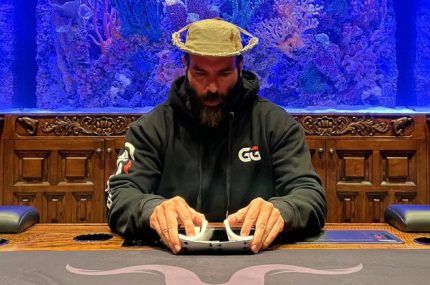
Poker player Dan Bilzerian
Poker player Dan Bilzerian, pictured above. He posted anti-Israel comments over the weekend. (Image: PokerNews)

Invoking conspiratorial theories, he claimed on X, formerly known as Twitter, that AIPAC, the American Israel Public Affairs Committee, “makes our government put Israel’s interests before ours.”

“[Jeffery] Epstein[‘s] island was an Israeli Mossad op[eration] to blackmail US politicians,” Bilzerian added.

Epstein was a convicted sex offender of Jewish heritage who had owned Little Saint James, an island in the U.S. Virgin Islands.

In addition, Bilzerian alleged, “Covid[-19] was a scam, and we got poisoned while Israeli big pharma made billions, and our Israeli-controlled government and media forced it. The US is an occupied nation.”

Many anti-Jewish and anti-Israel posts from hundreds of individuals were placed under Bilzerian’s comments.

Israeli Media Covering

His statements were the focus of an article in Israel’s leading news outlet, the Jerusalem Post.

On June 10, Bilzerian made similar online comments against AIPAC.

“Until AIPAC registers as a foreign agent, we will remain a puppet of Israel,” he posted on social media.

On May 28, he commented online, “In case y’all were confused on where I stand, let me be clear, F**k Israel,” the Jerusalem Post reported.

Casino.org reached out to AIPAC and the Anti-Defamation League, a Jewish-based civil rights organization, for comment. No immediate statements were available on Sunday.

Who is Bilzerian?

Bilzerian, 43, is sometimes called the “King of Instagram” and has a reputation as a playboy.

He was born in Tampa, Fla. and once lived in Las Vegas.

He took part in the 2008 World Series of Poker Main Event, and was ranked 180th. He also claims to have won $10.8M during one night of poker.

In addition, Bilzerian founded Toronto-based Ignite International Brands Ltd. Among its products are CBD oils, electronic cigarettes, vodka, and water bottles.

He also attempted to run for U.S. president in 2016.

In 2015, he avoided a jail sentence but was ordered to pay a fine after negligently failing to extinguish a fire on federal land near Las Vegas.

In January, Casino.org ranked him as the wealthiest poker player. Bilzerian’s net worth is reported to be $200M.

He claims his money comes from wins on high-stakes poker games, but news reports counter it’s mostly from a trust fund set up by his financially successful father who’s known for many corporate takeovers.

The post Poker Player Dan Bilzerian Bashes Israel, Pro-Israel Lobby in Post With 2.2M Views appeared first on Casino.org.

New York Lawmaker Representing Seneca Land Urges Governor to Reach New Compact

An outgoing state lawmaker in New York has had enough of Gov. Kathy Hochul’s (D) lackadaisical approach to negotiating a new Class III gaming compact with the Seneca Nation.

New York Seneca compact Joseph Giglio
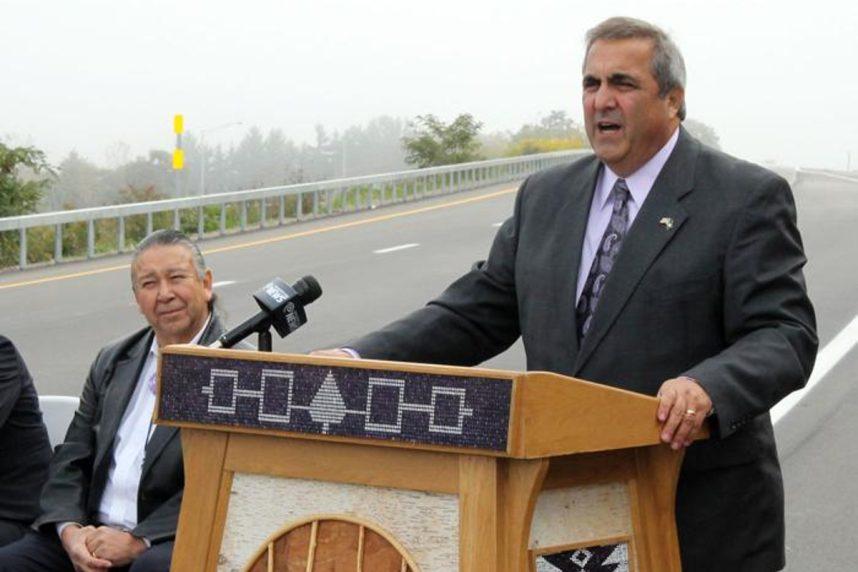
New York Assemblyman Joseph Giglio, a longtime friend of the Seneca Nation, celebrates the reopening of Interstate 86 between exits 21 and 23 in Salamanca, on Oct. 14, 2014. Giglio is retiring from public service, but before he leaves, he is asking Gov. Kathy Hochul to hastily work to reach a new gaming compact with the Seneca tribe. (Image: The Salamanca Press)

New York Assemblyman Joseph Giglio (R-District 148) has represented the southwestern portion of the upstate region since 2015. His district includes Seneca territory where three of its gaming properties operate.

Giglio is urging Hochul and Democratic leaders, the party with strongholds on both chambers of the New York State Legislature, to work quicker in reaching a new revenue-sharing agreement with the Seneca Nation.

I’ve spoken with Seneca Nation Council members who told me every time they think they have a deal, something happens that derails the talks. A new gaming compact is vital to our regional economy across Western New York,” Giglio told the Olean Times Herald.

The Seneca Nation’s gaming compact that provides the tribe exclusive rights to slot machines and live dealer table games west of State Route 14 in Upstate New York expired in December 2022. Since then, the tribe has directed 25% of its gross slot revenue to an escrow account.

Giglio is not seeking reelection. With the State Legislature adjourned for 2024, his legislative duties have ended, pending the possibility that Hochul could call a special session to approve a gaming compact.

Negotiations Slow

Hochul’s office and the Seneca Nation a year ago this month surprisingly announced a tentative agreement that would have initiated a new 20-year compact. A reduced slot tax rate and the authorization of a tribal casino in Rochester were reportedly included in the gaming terms.

The deal, however, stalled in the state Assembly after Rochester officials and state lawmakers representing the fourth most populated city in the state voiced opposition to a tribal casino. Those local officials said they should have been included in negotiations to bring a Las Vegas-style resort to the area.

Since the June 2023 tentative deal was folded on by the Assembly, talks regarding new terms have come to a standstill.

The tribe says a reduced tax is warranted after New York authorized four upstate commercial casinos in 2013 and three full-scale downstate casino licenses are likely to be awarded next year. The Senecas, Giglio says, deserve a new, fair deal that would allow escrow money to go to the many local towns that rely on it and allow the tribe to better prepare for its economic future.

It’s time for the executive branch negotiating team to come back to the table and negotiate in good faith with the Seneca Nation for the benefit of everyone in Western New York, both native and non-native,” Giglio said.

Seneca Nation casinos generate an annual impact of over $1 billion a year to the Western New York economy. The tribe’s casinos and gaming halls employ more than 6,000 people, with most being non-natives.

Automatic Extensions

After their 2023 compact was terminated, Hochul and the Seneca Nation agreed to automatically extend the expired compact quarterly until a new compact is reached. The next extension is scheduled for July 1.

Giglio’s district includes Seneca Allegany Resort & Casino, Seneca Gaming & Entertainment Salamanca, and Seneca Gaming & Entertainment Oil Spring.

The post New York Lawmaker Representing Seneca Land Urges Governor to Reach New Compact appeared first on Casino.org.