Rivers Casino Pittsburgh Celebrates 15th Anniversary With New Events Space

Rivers Casino Pittsburgh turns 15 years old in August. In anticipation of celebrating its quindecennial, the resort owned and operated by Chicago-based Rush Street Gaming recently finished a $6.6 million refreshment of the property.  
Rivers Casino Pittsburgh events rewards
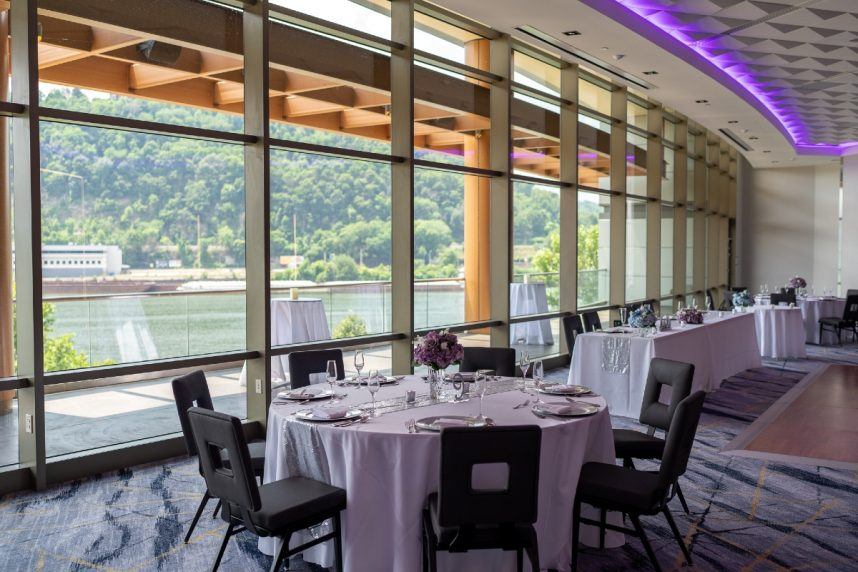
The newly opened Bridges Ballroom at Rivers Casino Pittsburgh overlooks the Ohio River. Rivers Casino recently spent $6.6 million to update and expand its events spaces and offer VIPs a dedicated players’ lounge. (Image: Rivers Casino Pittsburgh)

The investment focused on events, with the $6.6 million budget primarily allocated towards updating and expanding the casino’s ballrooms.

The project included a new events room called the Bridges Ballroom, a 7,044-square-foot second-floor venue overlooking the Ohio River. The indoor-outdoor space features a balcony and panoramic views of the river. Bridges can be broken down into three smaller rentable spaces ranging from the 1,151-square-foot Fort Duquesne Room to the 4,036-square-foot Fort Pitt Room.

Rivers added four private meeting rooms, too. The breakout spaces offer executives and boards an array of configurations.

With the [city’s professional sports] stadiums and other nearby attractions on the North Shore — not to mention our own full-service gaming floor, BetRivers Sportsbook, and The Landing Hotel — our events calendar fills up quickly,” Bud Green, general manager of Rivers Pittsburgh, said in a statement. “We’re happy to provide new spaces and more dates for hosting conferences, weddings, and special events.”

The casino’s largest space — the 25,000-square-foot Event Center — also underwent a refurbishment. The concert hall has sold out numerous shows from such acts as Boyz II Men, K.C. & The Sunshine Band, and an appearance from “Long Island Medium” star Theresa Caputo.

Player Amenities

Along with the event capabilities being expanded and upgraded, Rivers Casino Pittsburgh added amenities for gamblers. In addition to a full-service Starbucks Coffee located just inside the casino’s front entrance, Rivers opened a dedicated lounge for its VIPs.

The Black Card Room is billed as the casino’s “ultra-exclusive” casino retreat for Rush Rewards Players Club members who have achieved the loyalty program’s highest tier. The Black Card Room opened at the end of 2023.

To become a Black Card member in the Rush Rewards program, a patron must acquire a minimum of 25,000 tier points in six months. Rewards players receive a single tier point for every $5 played on slots and for every $10 bet on sports. Table games excluding poker award points based on average wager and length of play. Video poker provides a half point for every $5 played.

100 points equals $1 in free food and beverage. 200 points can be redeemed for $1 in free slot play.

Black Card members receive complimentary stays at Atlantis in the Bahamas, free priority valet, free check cashing, slot holds upon request, and four annual complimentary nights at Rio Las Vegas.

Rivers Market Share

Pennsylvania’s 17 brick-and-mortar commercial casinos last year generated gross gaming revenue (GGR) of $3.435 billion on their slots and table games.

Rivers Pittsburgh won $267.3 million on its slots to rank third in the state. The casino’s felt kept $87.2 million of players’ bets to place fifth.

With a combined GGR of approximately $354.5 million, Rivers Casino Pittsburgh maintained a more than 10% market share of the Pennsylvania casino industry in 2023.

The post Rivers Casino Pittsburgh Celebrates 15th Anniversary With New Events Space appeared first on Casino.org.

Interview with Erik King on Ontario’s Second Year of Regulated iGaming

Great news for the online gambling business as the Ontario regulated iGaming market has processed $63 billion in bets in its second year, leaving Canadian platforms like the ones found on Zamsino thriving. To shed more light on this development and what it means in the industry we talked to Erik King, an iGaming specialist and a writer.

Interviewer: Erik, it is great to have you with us today. It is interesting to know that within its second year of operation, Ontario’s iGaming market processed wagers worth $63 billion. What do you think about this accomplishment at the beginning?

Erik King: I am grateful to be here. It is positive news for Ontario’s iGaming industry for sure. This achievement marks that the popularity of regulated web-based gambling is increasing. It reveals the possibility of a significant economic effect and serves as a reference point for other regions that are planning to implement the same legal mechanisms.

Interviewer: The iGaming market in Ontario that is regulated has expanded at a fast pace. In your opinion what are the causes of this tremendous growth you have experienced?

Erik King: Ontario has created a stable and reliable environment in the sphere of regulation which benefits both operators and players. This has boosted confidence in the market.

Interviewer: How has the regulation affected the market?

Erik King: Ontario has the best regulatory approach since the operators are required to follow certain guidelines that make sure that the player is protected, the gambling is not reckless and the gameplay is fair. This has in turn reduced the risks involved in online gambling and has gone a long way in protecting the players. In addition, the framework has brought order and predictability that is crucial in the market development. It has also been able to attract other companies, especially the international ones, which have come with better skills and products that have continued to enhance the competition.

Interviewer: This is a huge amount of money, the $63bn in wagers. This implies what for local economy and the iGaming sector as a whole?

Erik King: This figure generates a lot of revenue for the local economy in terms of taxes and fees. It also implies employment in different fields like tech support, software development, and sales and marketing. For the iGaming industry, it shows that the market is healthy and growing, which could encourage other areas to consider regulation. It is proof that regulated online gambling markets are viable and profitable.

Interviewer: Owing to such growth, what do you think could be the potential problems with Ontario’s iGaming industry?

Erik King: The biggest issue will be the control of growth while at the same time ensuring the aspect of responsible gambling. In the future when the market grows, it will focus on how operators address issues associated with problem gambling. Other issues that will likely persist include managing changes in technology and the threats posed by criminals to the company’s systems.

Interviewer: What do you suppose the other regions will do when they see the positive results in Ontario? Are you expecting other regions to follow the same approach in regulation?

Erik King: It will be expected that the experience of Ontario will be followed by other areas.

Interviewer: What do you think are the major strategies that operators should consider to survive the competition in such a market?

Erik King: Thus, to be successful, operators should concentrate on the following strategies. First and foremost, they should focus on customer satisfaction by providing quality, entertaining, and diverse game selections. Through the integration of technologies such as artificial intelligence and machine learning customer experience in gaming can be improved and enhanced.

Interviewer: Last but not least, what do you think will be the future tendencies in the iGaming industry, especially in the regulated ones like Ontario?

Erik King: I expect the following to be quite promising and interesting. First of all, the use of advanced technologies like the blockchain and virtual reality will change the face of the gaming industry and make the gaming experience even better and more secure. Mobile gaming will continue to expand as a result of improvements in mobile devices and their accessibility.

Interviewer: It was an interesting time here today, Erik, thank you for the input. I hope that you enjoyed our conversation on the subject of the iGaming market development and trends.

Erik King: It was nice of you to have me. It is great to be here during the growth of the iGaming sector and I am eager to find out what the future has in store.

The post Interview with Erik King on Ontario’s Second Year of Regulated iGaming appeared first on Casino News Daily.

Stronach Group Founder Frank Stronach Faces Additional Sex Assault Charges

Canadian billionaire and Stronach Group founder Frank Stronach has been charged with eight additional counts of sexual assault after police said more victims had come forward.

Frank Stronach, the Stronach Group, 1/ST, sexual assault charges
Frank Stronach, above. The 91-year-old is facing sexual assault and rape charges dating from 1977 to earlier this year, according to court filings. He has denied them all through his lawyer. (Image: Fred Lum/The Globe and Mail)

The 91-year-old was arrested again Wednesday, three weeks after his initial detention on charges of rape, indecent assault on a female, sexual assault, and forcible confinement.

The new charges include six counts of sexual assault, one count of attempted rape, and one count of indecent assault on a female, according to court documents. The alleged incidents occurred from 1977 to February this year, per the filings.

Stronach Denies Allegations

The Stronach Group is the biggest thoroughbred racetrack owner in the US. It also has training centers and simulcast operations across the country. These include California’s Santa Anita racetrack and Golden Gate Fields, the latter of which closed earlier this month.

Gulfstream Park in Florida, as well as the Pimlico Racecourse, the Laurel Racecourse, and Rosecroft Raceway, all in Maryland, are also Stronach assets.

Stronach is no longer involved with the group, which now trades as 1/ST. His daughter, Belinda Stronach, is the current chairman, CEO, and president of the company.

Stronach’s lawyer, Brian Greenspan, said his client “denies and will vigorously defend these further untested allegations dating back to 1977.”

“He has spent his lifetime committed to the betterment of the Canadian community and industry,” Greenspan added.

Rags to Riches

Austrian-born Stronach came to Canada in the late 1930s with little to his name. In 1957, he opened a machine shop, which he transformed into a global auto parts business that became Magna International.

Magna is now one of the largest companies in Canada and the biggest auto parts manufacturer in North America.

A keen racing enthusiast and thoroughbred owner, Stronach bought Santa Anita in 1998 for $127 million and launched the Stronach Group in 2011 with Belinda Stronach. He resigned two years later to pursue a political career in his native Austria as an advocate of free-market neoliberalism.

Family Schism

In 2018, Stronach filed a lawsuit against his daughter and other family members alleging corporate mismanagement. It was settled in 2020, with Stronach being awarded a stallion and breeding business.

In 2017, he had an estimated net worth of C$3.06 billion (US$2.2 billion), according to Canadian Business.

The Stronach Group is aware of the serious charges that have been brought against Frank Stronach,” the company said in an official statement Thursday.

“Frank Stronach has not held a formal role or been involved with company operations in any capacity for several years. This matter is now before the courts and will be dealt with in the appropriate forum. The company has nothing further to add.”

The post Stronach Group Founder Frank Stronach Faces Additional Sex Assault Charges appeared first on Casino.org.

Washington, DC Could Soon Have Competitive Sports Betting Market

Washington, DC could soon allow multiple operators to conduct mobile sports wagering in the District after City Council member Kenyan McDuffie’s (I-At Large) amendment to broaden the market was included in the council’s proposed budget for fiscal 2025, which was passed Tuesday.

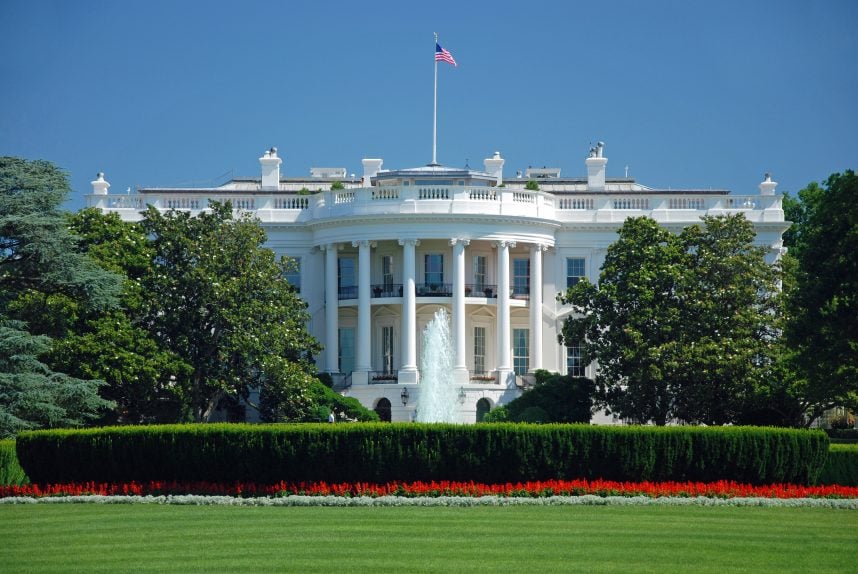
White House
A street-level view of the White House in Washington, DC. The city could soon open its online sports betting market to multiple competitors. (Image: Adobe Stock Images)

McDuffie introduced the Sports Wagering Amendment Act of 2024 in March. Mayor Muriel Bowser (D) still has to approve the budget, but if she does, that could open the door to the city having more than one mobile sports betting option. Currently, FanDuel has a monopoly on mobile betting in the US capitol city.

The unit of Flutter Entertainment took over online sports betting in the city in April after the city council allowed Intralot to subcontract its responsibilities out to another company. Intralot previously ran the heavily criticized GambetDC app.

Last month, representatives from BetMGM, Caesars Sportsbook, DraftKings, and Fanatics Betting & Gaming testified before the Washington, DC City Council’s Committee Business and Economic Development Committee to advocate for a more competitive mobile sports betting landscape in the city.

Usual Suspects Likely to Eye DC Sports Betting Entry

Should Washington, DC’s sports wagering market be liberalized, forcing FanDuel to shed its brief monopoly, the typical names in the industry would likely seek entry.

Currently, BetMGM (Nationals Park) and Caesars Sportsbook (Capital One Arena) have retail sportsbooks at professional sports venues in the city. Those operators would almost certainly pursue licenses if the District opens to mobile wagering competition as would rivals DraftKings and Fanatics.

A decision on making the District’s sports betting market could boil down to simple economics. FanDuel paid a $5 million conversion fee to the Office of Lottery and Gaming (OLG) to take over the Intralot deal and is promising $2 million to $4 million in annual operating payments to the city. If several other gaming companies made similar financial commitments, mobile betting expansion could be a significant moneymaker for the city.

However, there are market share considerations for operators. While Washington, DC is an enticing market for sportsbook firms, there are no guarantees adequate threats to FanDuel will be mounted. In the first quarter in neighboring Virginia, FanDuell commanded market share of 40.14%, or more than DraftKings and BetMGM combined.

Resistance to Open DC Sports Betting Market

Obviously, FanDuel wouldn’t be thrilled about the idea of shedding its monopoly in DC, but there’s likely to be resistance to an open market from other corners — namely small businesses that have sports wagering kiosks.

Those FanDuel-operated machines are found in 63 locations across the city, including bars and lottery retailers, and have become important revenue streams for those establishments.

Retailers that have those kiosks fear that if more mobile wagering options are permitted in the District, bettors will be less inclined to use the kiosks. McDuffie believes that other gaming companies could provide comparable devices to businesses should the Washington market be liberalized.

The post Washington, DC Could Soon Have Competitive Sports Betting Market appeared first on Casino.org.

Florida Gaming Regulators Afforded Personal Confidentiality With DeSantis Signature

The Florida Gaming Control Commission (FGCC) members have been provided with personal confidentiality protections through a bill signed into law by Gov. Ron DeSantis (R).

Florida Gaming Control Commission Ron DeSantis
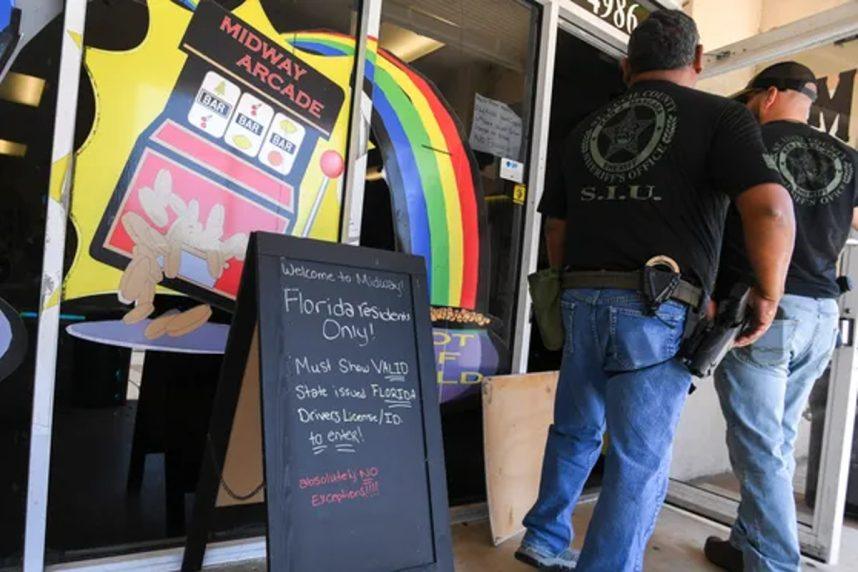
Law enforcement members with the Florida Gaming Control Commission raid an arcade on May 9, 2023, in Fort Pierce. Florida Gov. Ron DeSantis has signed a bill into law that provides gaming commissioners with protections from public records. (Image: Treasure Coast Palm Beach Post)

Senate Bill 692 was introduced in January by state Sen. Travis Hutson (R-Flagler). The measure seeks to provide exemptions from public records for current and former FGCC commissioners and their spouses and children.

The statute passed the Senate in February and the House in March, both by unanimous votes. DeSantis signed the act into law on June 21.

State gaming regulators and their immediate families can now keep confidential their home addresses, personal telephone numbers, dates of birth, their spouse’s places of employment, schools attended, and other personal information. SB 692 brought the FGCC into Florida’s longstanding public records act that provides exemptions for most elected and government-appointed officials.

The Legislature finds that the release of such personal identifying and location information might place the commission’s current or former commissioners and their family members in danger of physical and emotional harm from disgruntled individuals whose businesses or professional practices have come under the scrutiny of the commission,” the state’s lawmaking body wrote in its explanation of the bill sent to DeSantis.

The governor had no comment on signing the bill.

The FGCC has recently cracked down on arcades where law enforcement says illegal gambling machines are operating. The confidentiality statute could help protect commissioners from backlash from those business owners.

Gaming Regulatory Expanding

Florida’s gaming industry is amid considerable change after the U.S. Supreme Court last week denied an appeal challenging the state’s deal with the Seminole Tribe to allow the Hard Rock owner to operate online sports betting in the Sunshine State. Lower federal courts ruled that the U.S. Department of the Interior’s Bureau of Indian Affairs did not error in approving the Class III gaming compact that DeSantis and the tribe reached in 2021.

The amended compact that provides the Seminoles with the exclusive rights to slot machines outside of Miami-Dade and Broward counties and most house-banked table games statewide gives the tribe its first online gaming privileges. Opponents, including West Flagler Associates, which owns and operates the Bonita Springs Poker Room, argued the compact violated the federal Indian Gaming Regulatory Act (IGRA), which mandates that tribal gaming occurs only on tribal lands.

Federal courts opined that since the Hard Rock Bet online sportsbook computer servers remain on Seminole sovereign territory, and Florida lawmakers earlier passed legislation to redefine tribal gaming to permit the transmission of bets via the internet, the compact remains in IGRA compliance.

Gaming Oversight 

The Florida Gaming Control Commission has regulatory jurisdiction over most gaming in the Sunshine State except the Florida Lottery. The commission governs parimutuel wagering, slot casinos in Miami-Dade and Broward, and manages the Seminole Compact.

The lone form of gambling, along with the lottery, that doesn’t fall under the FGCC’s scope are the two gaming properties run by the Miccosukee Tribe. The tribal nation has not entered into a state gaming compact in favor of operating Class I and II gaming, which allows for electronic bingo-based slot-like devices at its Miccosukee Casino & Resort in Miami and gaming plaza along Alligator Alley.

The post Florida Gaming Regulators Afforded Personal Confidentiality With DeSantis Signature appeared first on Casino.org.