AGA: Regulators Should Probe Sweepstake Casinos and Sportsbooks

New-anti-sweepstakes-policy-released-by-American-Gaming-AssociationAs the popularity of sweepstakes-based wagering models continues to surge, the American Gaming Association (AGA) has sounded the alarm on the potential risks these platforms pose to consumers and the legal gaming industry. In a recently released policy statement, the AGA emphasized the need for increased regulatory oversight to prevent sweepstakes casinos from circumventing state gambling laws and exploiting legal ambiguities to operate unchecked.

Sweepstakes Casinos: A Growing Threat

The rise of so-called “sweepstakes casinos” has introduced a new and unregulated form of online gambling that mimics traditional casino games such as slots, roulette, blackjack, and poker. These platforms allow players to engage in gameplay either for free or by purchasing virtual currency, commonly known as Gold Coins. Alongside Gold Coins, players may also receive Sweep Coins, a secondary form of virtual currency that can be exchanged for cash or prizes, making these games increasingly indistinguishable from conventional online casinos.

However, the dual-currency model used by these operators—where Sweep Coins are presented as “free” but often require real money or significant time investment to redeem—has raised concerns among regulators and industry stakeholders. The AGA’s policy statement highlights the dangers posed by the lack of regulatory oversight, which “presents many risks for consumers as well as the integrity and economic benefits of the legal gaming market through investment and tax contributions.” The organization notes that many sweepstakes operators implement weak, if any, responsible gaming protocols and offer minimal self-exclusion processes, leaving players vulnerable to exploitation.

Michigan Takes Action Against Sweepstakes Operators

In response to the growing presence of sweepstakes casinos, some states have begun taking legal action to curb their operations. Michigan, in particular, has emerged as a battleground in the fight against unregulated sweepstakes gambling. In November and December of 2023, the Michigan Gaming Control Board (GCB) issued cease-and-desist orders to Cyprus-based Sweepstakes Limited (Stake.us) and San Francisco-based VGW Luckyland, both of which offer sweepstakes-based gaming services. These companies were found to be in violation of Michigan’s gaming laws, including the Lawful Internet Gaming Act, which mandates that internet gaming can only be offered by licensed operators.

The GCB’s crackdown on VGW Luckyland also cited violations of the Michigan Gaming Control and Revenue Act and the Michigan Penal Code. The GCB determined that VGW’s activities constituted illegal gambling, as they involved “conducting illegal gambling by offering an internet game in which a player wagers something of monetary value for the opportunity to win something of monetary value.” As a result of these violations, VGW and other sweepstakes operators have been forced to cease operations in Michigan.

A Call for Broader Regulatory Scrutiny

The AGA has called for more comprehensive regulatory scrutiny of sweepstakes casinos and sportsbooks operating under similar models across the United States. The trade group argues that these platforms exploit legal loopholes and often operate in a legal gray area, undermining the integrity of the regulated gaming industry and depriving states of crucial tax revenue. The AGA’s policy statement urges regulators and state attorneys general to investigate these companies thoroughly to ensure compliance with state laws and regulations.

In addition to enforcement actions, the AGA recommends that legislatures consider enacting new laws to close existing loopholes that allow unlicensed operators to offer online real-money gambling under the guise of sweepstakes. “Where state laws and regulations are not clear, legislatures should consider enacting legislation to prevent unlicensed operators from exploiting loopholes in sweepstakes regulations to offer online real money gambling,” the AGA stated in its policy.

The Need for Immediate Action

Industry experts warn that the rapid growth of sweepstakes casinos presents an urgent threat to consumers and the legal gaming industry. According to a recent report by Eilers & Krejcik, the market for sweepstakes gaming is expected to reach approximately $8.5 billion in 2024, with projections suggesting it could explode to over $11 billion by 2025. This growth has been fueled, in part, by a surge of private equity investment, with investors betting that states will be too slow to crack down on these operators.

As highlighted in a recent LinkedIn post, the opaque nature of sweepstakes operations “presents a prime opportunity for illegal activity and enriching bad actors.” The post further warns that sweepstakes casinos are “flooding into states in which online gaming is otherwise illegal, and it’s hitting unsuspecting consumers like a tidal wave.”

Given the potential for harm, the AGA and other industry stakeholders are urging regulators to take swift action to protect consumers and preserve the integrity of the legal gaming market. The sooner regulatory bodies and state attorneys general address these concerns, the better it will be for consumers, the industry, and the prevention of illegal activities such as money laundering.

The post AGA: Regulators Should Probe Sweepstake Casinos and Sportsbooks appeared first on Casino News Daily.
Nebraska Racing and Gaming Regulators Approve License Transfer to Ogallala

The Nebraska Racing and Gaming Commission (NRGC) last week voted unanimously to approve a transfer request for a horse racetrack license from Hastings to a forthcoming facility in Ogallala.

Nebraska casino Hastings Fairplay Ogallala
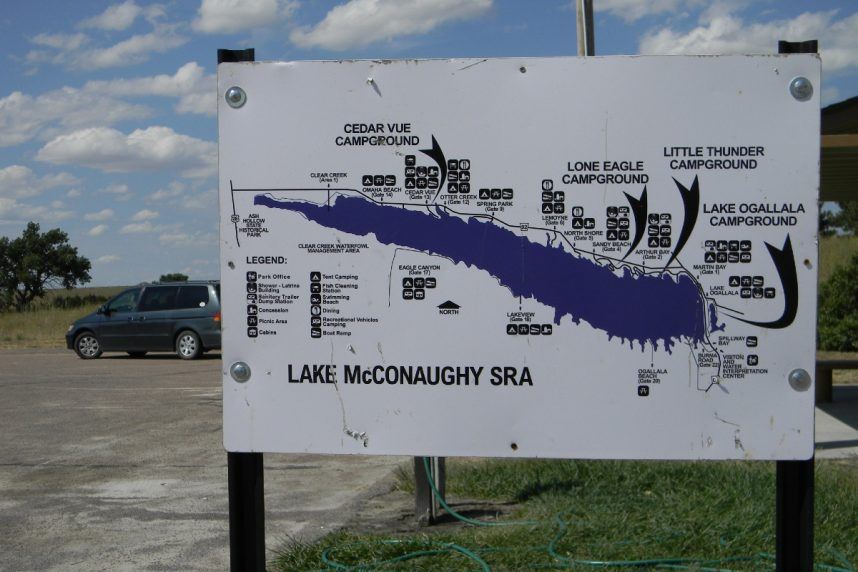
Lake McConaughy in Nebraska will add a casino resort to its list of attractions in the coming years. Nebraska gaming regulators recently signed off on allowing the racing license held by Fairplay Park to relocate to Ogallala for a new racetrack and casino resort. (Image: Getty)

Hastings Exposition and Racing, Inc. owner Brian Becker asked the NRGC to allow him to relocate his state-issued horse racing license from Fairplay Park to a new racetrack in Ogallala some 200 miles west.

Becker is partnered with Iowa-based Elite Casino Resorts on a new quarter horse racetrack measuring 5/8 of a mile and casino resort near Lake McConaughy. Dubbed Lake Mac Casino Resort & Racetrack, the $100 million project is targeting a 178-acre near Interstate 80 and Highway 26.

In 2020, Nebraskans passed a statewide ballot referendum that legalized commercial casino gambling at the state’s six horse racetracks. The measure additionally legalized in-person sports betting. 

Western Frontier

Though Hastings is still slightly east of Nebraska’s center, Fairplay Park has for decades been the westernmost horse racetrack of the six facilities. Understanding that the 2020 casino referendum could cause gaming saturation concerns, the initiative provided a one-time opportunity for racetrack owners to relocate their racing license to a more favorable market but on the conditions that they construct a new racetrack, conduct live racing, and gain local government support.

Becker initially partnered with the Chickasaw Nation of Oklahoma to build and operate a casino in Hastings. But after the Hastings City Council objected to the casino, Becker found a new partner in Elite.

Elite is also partnered with the Hall County Livestock Improvement Association where it’s under construction of converting Fonner Park into an entertainment destination called Grand Island Casino Resort. A temporary casino has operated inside the track’s grandstand since December 2022. The permanent resort is to open next year.

With Hastings just a 30-minute drive south of Fonner Park, Elite and Becker decided a more profitable casino could be realized in Ogallala. Lake McConaughy and its 30,000-acre state park is a popular summertime vacation destination.

Located near the Nebraska panhandle, Lake Mac Casino Resort will be much freer of competition.

We are thrilled to bring a first-class resort, grow out-of-state tourism, add jobs, and invest $100 million into Ogallala and Western Nebraska,” said Dan Kehl, CEO of Elite Casino Resorts.

In their 7-0 vote in approving Fairplay Park’s license transfer from Hastings to Ogallala, NGRC commissioners expressed enthusiasm for expanding the state horse racing industry west.

Fonner Park and Hastings had been our western frontier. We’re going to move that hundreds of miles to the west,” commented Dennis Lee, the chair of the NRGC. “Ogallala really has a unique opportunity to open racing and gaming to Western Nebraska.”

The tentative plan for Lake Mac includes a 37,000-square-foot casino floor with 650 slot machines, 14 live dealer table games, and a sportsbook. The destination’s planned amenities include a hotel with 180 rooms, a convention center, several food and beverage offerings, a rooftop restaurant, an RV lot, and an expansive truck stop and travel center.

WarHorse Omaha Opening 

During their Friday meeting, the NRGC signed off on allowing WarHorse Casino Omaha to open on August 6.

The forthcoming permanent casino located at Horsemen’s Park is a partnership between the Nebraska Horsemen’s Benevolent and Protective Association and WarHorse Gaming, the latter being a subsidiary of the Ho-Chunk, Inc., the commercial business arm of the Winnebago Tribe of Oklahoma.

WarHorse Omaha is set to open with 800 slots, 20 table games, and a sportsbook. An on-site restaurant and bar is also ready for guests.

The post Nebraska Racing and Gaming Regulators Approve License Transfer to Ogallala appeared first on Casino.org.

Florida Gaming Regulators Afforded Personal Confidentiality With DeSantis Signature

The Florida Gaming Control Commission (FGCC) members have been provided with personal confidentiality protections through a bill signed into law by Gov. Ron DeSantis (R).

Florida Gaming Control Commission Ron DeSantis
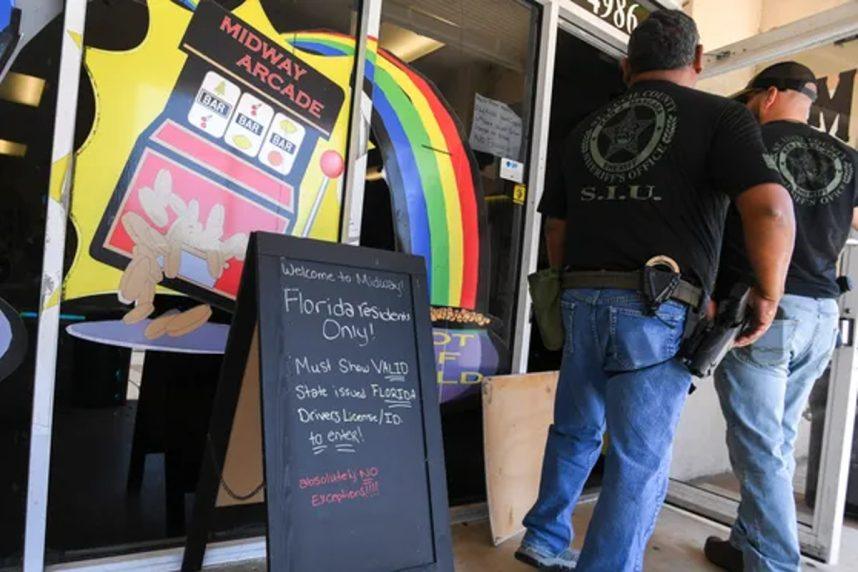
Law enforcement members with the Florida Gaming Control Commission raid an arcade on May 9, 2023, in Fort Pierce. Florida Gov. Ron DeSantis has signed a bill into law that provides gaming commissioners with protections from public records. (Image: Treasure Coast Palm Beach Post)

Senate Bill 692 was introduced in January by state Sen. Travis Hutson (R-Flagler). The measure seeks to provide exemptions from public records for current and former FGCC commissioners and their spouses and children.

The statute passed the Senate in February and the House in March, both by unanimous votes. DeSantis signed the act into law on June 21.

State gaming regulators and their immediate families can now keep confidential their home addresses, personal telephone numbers, dates of birth, their spouse’s places of employment, schools attended, and other personal information. SB 692 brought the FGCC into Florida’s longstanding public records act that provides exemptions for most elected and government-appointed officials.

The Legislature finds that the release of such personal identifying and location information might place the commission’s current or former commissioners and their family members in danger of physical and emotional harm from disgruntled individuals whose businesses or professional practices have come under the scrutiny of the commission,” the state’s lawmaking body wrote in its explanation of the bill sent to DeSantis.

The governor had no comment on signing the bill.

The FGCC has recently cracked down on arcades where law enforcement says illegal gambling machines are operating. The confidentiality statute could help protect commissioners from backlash from those business owners.

Gaming Regulatory Expanding

Florida’s gaming industry is amid considerable change after the U.S. Supreme Court last week denied an appeal challenging the state’s deal with the Seminole Tribe to allow the Hard Rock owner to operate online sports betting in the Sunshine State. Lower federal courts ruled that the U.S. Department of the Interior’s Bureau of Indian Affairs did not error in approving the Class III gaming compact that DeSantis and the tribe reached in 2021.

The amended compact that provides the Seminoles with the exclusive rights to slot machines outside of Miami-Dade and Broward counties and most house-banked table games statewide gives the tribe its first online gaming privileges. Opponents, including West Flagler Associates, which owns and operates the Bonita Springs Poker Room, argued the compact violated the federal Indian Gaming Regulatory Act (IGRA), which mandates that tribal gaming occurs only on tribal lands.

Federal courts opined that since the Hard Rock Bet online sportsbook computer servers remain on Seminole sovereign territory, and Florida lawmakers earlier passed legislation to redefine tribal gaming to permit the transmission of bets via the internet, the compact remains in IGRA compliance.

Gaming Oversight 

The Florida Gaming Control Commission has regulatory jurisdiction over most gaming in the Sunshine State except the Florida Lottery. The commission governs parimutuel wagering, slot casinos in Miami-Dade and Broward, and manages the Seminole Compact.

The lone form of gambling, along with the lottery, that doesn’t fall under the FGCC’s scope are the two gaming properties run by the Miccosukee Tribe. The tribal nation has not entered into a state gaming compact in favor of operating Class I and II gaming, which allows for electronic bingo-based slot-like devices at its Miccosukee Casino & Resort in Miami and gaming plaza along Alligator Alley.

The post Florida Gaming Regulators Afforded Personal Confidentiality With DeSantis Signature appeared first on Casino.org.

Regulators in Seven US States Ask US DOJ to Act Against Offshore Operators

regulators_in_seven_us_states-As_us_doj_to_act_against_offshore_operatorsThe following article reflects the knowledge, experience, and well-reasoned opinions of the authors and is not meant to be construed in any way as legal advice. Online gamblers in all US states should consult their state laws or seek legal counsel to determine if online gambling at unlicensed offshore websites or gambling venues licensed by regulators located anywhere but within their domiciled states is a crime or a right to be exercised freely by responsible adults. The same applies to federal gambling laws or any other ancillary issue related to online gambling.


Regulators from seven US states have contacted the United States Department of Justice in an attempt to nudge the DOJ into “doing something” about offshore competition in the online gambling market.

Not Understanding Federal Law?

As is usually the case when such actions occur, the signatories refer to all offshore gambling sites with a broad brush whether purposefully or not – lumping all other operators of gambling into one basket and broadly referring to them as “illegal online gambling sites.

At least that is the implication as state regulators and spokespeople from the American Gaming Association (AGA) consistently leave out any real differentiation among casino sites licensed offshore, illegal sportsbetting sites, and the very small handful of operators that provide services to players in the USA with no known license at all.

Painting every online gambling operator with the same broad brush appears to the informed consumer or observer as disingenuous at best.

The most recent public relations gambit is co-signed by regulators in some of the most financially successful US gambling states including Colorado, Illinois, Louisiana, Michigan, Mississippi, Nevada, and New Jersey.

Some of the issues addressed in the letter to US Attorney General Merrick Garland are some real and unreal dangers the ill-informed assume are associated with gambling online. These include age verification, money laundering concerns, responsible gambling protocol, game fairness, and the lack of each or any state capturing tax revenues.

The letter also states that offshore operators are not subject to any licensing requirements. The vast majority of those points are incorrect and are most likely based on good-faith misunderstandings of how offshore online gambling operators actually operate.

Well over 90% of offshore casinos and most sportsbooks that serve US players are licensed in the jurisdiction of Curacao (formerly known as the Netherland Antilles). Operators are required to verify the identity, age, ownership of financial instruments used to deposit, a player’s address, their subscription to local utilities, and quite often a copy of their bank account statements at a minimum.

Three Decades of Compliance

Operators in the offshore jurisdiction of Curacao have followed essentially the same protocol since the mid-1990s.

These documents cover nearly all of the concerns raised by the regulators including money-laundering concerns.

The over-arching government-sanctioned gambling license issuer makes sure that anti-money laundering concerns are taken care of through international authorities in compliance with an anti-money laundering/counter financing of terrorism (AML/CFT) framework that addresses both risk issues.

In a nutshell, what’s known as “document verification” – which is enforced by 99% of all offshore operators as any offshore player knows – addresses all concerns listed except responsible gambling issues and tax collections.

Responsible gambling is only addressed at the most critical level which is gambler self-exclusion. Even there, if an operator refuses to let a gambler self-exclude, they will have their Curacao license revoked. However, there are no auxiliary tools available for players to set deposit or time limits, force breaks at prescribed time intervals, or any of the other things more stringent regulatory regimes such as the Malta Gaming Authority or the British Gambling Commission may require.

That leaves the competition for the gambling dollar and state tax revenues buried in slurs of illegality, and black market accusations.

While this may seem to be counter-intuitive, offshore casinos are actually not illegal at the federal level nor have they ever been in the United States. It is, however, incumbent upon each consumer to check their own state laws to determine if the practice might be legal in their state. If competent legal counsel is indicated, that should be sought.

The Wire Act of 1961

Interstate or Inter-territorial sports betting is illegal in the United States and has been since 1961. While the US DOJ under various administrations has sided with casino moguls such as the late Sheldon Adelson in determining offshore casino gambling to be illegal, the world’s biggest lottery company by gross receipt,s, IGT recently sought and received a declaratory judgment (once and for all) that very specifically informs that The Wire Act only applies to sports betting operations. The act of casino gambling has no federal law to prohibit it.

The sticky wicket in this reality is the UIGEA (Unlawful Internet Gambling Enforcement Act of 2006) which neither creates new gambling laws nor modifies any existing laws as clearly stated in the law itself. It does, however, make most online financial transactions (deposits and withdrawals) illegal and de facto money laundering simply because US financial institutions have been given “guidance” that assumes the Wire Act applies to all interstate or inter-territorial wagers.

However, the very act of providing a gambling service or a US citizen partaking in offshore gambling is not a crime at the federal level by any law this editor has seen in nearly three decades in the industry. so it’s unclear how Attorney General Merrick Garland could be of assistance to state regulators unless he attacks the practice “from the side” and deems them all to be illegal thanks to incorrect guidance from the Federal Trade Commission (FTC) and the Federal Deposit Insurance Corporation (FDIC) which was issued during the Bush administration in 2007 under the false premise that the Wire Act actually applied to anything but sportsbetting.

In the letter to AG Garland, the Executive Director of the Michigan Gaming Control Board (MGCB), Henry Williams states: “In Michigan, strict laws and rules govern internet gaming and sports betting and provide consumer protections, promote confidence and ensure fair and honest gaming. We are willing to help the US Department of Justice in any way we can as it pursues enforcement of US laws against offshore illegal gaming enterprises that take advantage of our citizens.

State regulators like the MGCB ensure operators offer products that pass technical standards and testing, and we also require operators to comply with reporting requirements.

“Offshore operators flaunt state regulations and offer products that do not protect the public, which greatly concerns me and my fellow state regulators,” Williams added.

He continued, “Regulated operators recognize licensing is a privilege that can be taken away, but illegal operators do not face similar consequences for failure to follow laws and maintain integrity.”

Source: Regulators urge DoJ to take action on offshore gambling, iGaming Business, May 5, 2023

The post Regulators in Seven US States Ask US DOJ to Act Against Offshore Operators appeared first on Casino News Daily.