Illegal Gambling Operations Raided in Four States as Part of Continuing Crackdown

A series of raids on illegal gaming operations across the country has seen several people arrested over the past month.
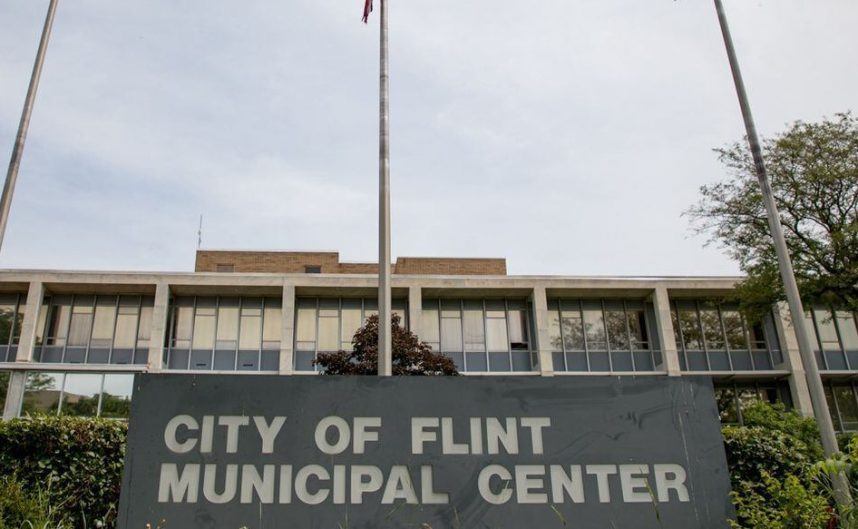
City of Flint Municipal Center
The City of Flint Municipal Center, pictured above. A local business was raided recently by Michigan authorities for alleged gambling. (Image: MLive.com)

In Flint, Mich., two men were charged earlier this month with running a gambling operation without a license, two counts of using computers to commit a crime, and a count of maintaining a gambling house for gain.

The suspects, Linos Antonio Kas-Mikha, 52, of Grand Blanc, Mich., and Robert Jamerson, 55, of Saginaw, Mich. were arrested last month after authorities raided a storefront business where the two reportedly operated 11 slot machines. Authorities also found 13 computers, which were used to operate the games.

Other properties linked to the men have been raided previously by authorities as part of investigations into illegal gambling.

Holding those who choose to break the law and run alleged illegal gambling operations accountable for their actions is paramount to ensuring the safety and integrity of our neighborhoods,” Michigan Gaming Control Board Executive Director Henry Williams recently said in a statement following the latest raid.

“By enforcing strict regulations and prosecuting offenders, we strive to maintain a gaming environment that is not only enjoyable, but also adheres to the principles of fairness, legality, and community safety.”

$30K Seized in California

Across the country in Modesto, California, authorities raided an illegal gambling operation last week.

The court-ordered search led to the seizure of more than $30K in cash and 17 gambling machines. Two unnamed men were charged.

The raid was linked to the investigation of illegal gambling at a convenience store and at other local businesses, as well as at a Modesto residence.

Ohio Gambling Den

In another case, an internet cafe in Dayton, Ohio was raided earlier this month for alleged illegal gambling.

Local police searched Lucky Day Internet Cafe following an undercover operation there, according to Ohio TV station WHIO.

Police seized several gambling machines and an unspecified amount of cash from the business. Criminal charges are likely.

$31K Seized, Arrests in Texas

In a separate raid in Corpus Christi, Texas, last month, authorities seized about $31K in cash from an illegal gambling operation at the El Patron Sweepstakes Gameroom, according to Texas TV station KRIS.

Police also seized 90 items associated with gambling.

Andria Thompson, 34, was charged with gambling promotion, possession of a gambling device, keeping a gambling place, and engaging in organized criminal activity. Twenty-three people identified as customers of the operation were issued citations.

The post Illegal Gambling Operations Raided in Four States as Part of Continuing Crackdown appeared first on Casino.org.

Evolution Announces Landmark Launch of Crazy Time in the United States

landmark-us-launch-for-crazy-time-evolutions-world-1-online-live-game-show-1Evolution, the world’s top supplier of live dealer games for online casinos, has announced that Crazy Time, one of its most popular live casino titles, has finally been launched in the United States.

Crazy Time was first released in 2020 and back then it was the most expensive live casino game show ever created by Evolution, a game that took more than a year to make.

Now the hugely popular live casino title was first made available to the American public as Evolution began to stream it from its live casino studio located in New Jersey. The release follows two other successful launches in the United States for Evolution as Crazy Coin Flip was unveiled in New Jersey and Super Sic Bo in Pennsylvania earlier this month. Evolution also announced that all three live casino titles will go live in more American states in 2024.

An Ambitious Game

Evolution describes Crazy Time as one of its “most ambitious games,” a title which features several cutting-edge technologies such as multi-camera live game show action, random number generator multipliers, augmented reality and slot-style video gaming elements.

The gameplay is centered on a main game which is complemented by four interactive bonus games. The main game has a two-reel Top Slot at its core, a slot that spins at the same time as a money wheel. Then the bonus games kick in, adding lots of excitement with features such as a shooting gallery in Cash Hunt, a Coin Flip, a Puck drop in Pachinko, and the bonus game.

In these bonus games players can really boost their potential earnings, considering that the maximum multiplier that can be reached is no less than 10,000x. The bonus games in has proven extremely popular and that is why they inspired Evolution to create new titles such as Crazy Coin Flip, Red Door Roulette and Crazy Pachinko.

Landmark Launch

Jacob Claesson, Chief Executive Officer for North America at North America, described the launch of Crazy Time in New Jersey as “a landmark moment” for the company and for the United States online gambling market as a whole.

“Operators and players alike have praised Crazy Time’s incredibly high production values, its commitment to entertainment and depth of engagement,” the Evolution executive underlined, while declaring himself “incredibly excited” to offer U.S. players such a successful live casino title.

The bonus games featured in Crazy Time “have reinvented the way casino games are played,” Jacob Claesson added, pointing out that the game delivers “a true game show experience unlike no other.”

Source: “Landmark Us Launch For Crazy Time, Evolution’s World #1 Online Live Game Show“. Evolution. December 12, 2023.

The post Evolution Announces Landmark Launch of Crazy Time in the United States appeared first on Casino News Daily.

Regulators in Seven US States Ask US DOJ to Act Against Offshore Operators

regulators_in_seven_us_states-As_us_doj_to_act_against_offshore_operatorsThe following article reflects the knowledge, experience, and well-reasoned opinions of the authors and is not meant to be construed in any way as legal advice. Online gamblers in all US states should consult their state laws or seek legal counsel to determine if online gambling at unlicensed offshore websites or gambling venues licensed by regulators located anywhere but within their domiciled states is a crime or a right to be exercised freely by responsible adults. The same applies to federal gambling laws or any other ancillary issue related to online gambling.


Regulators from seven US states have contacted the United States Department of Justice in an attempt to nudge the DOJ into “doing something” about offshore competition in the online gambling market.

Not Understanding Federal Law?

As is usually the case when such actions occur, the signatories refer to all offshore gambling sites with a broad brush whether purposefully or not – lumping all other operators of gambling into one basket and broadly referring to them as “illegal online gambling sites.

At least that is the implication as state regulators and spokespeople from the American Gaming Association (AGA) consistently leave out any real differentiation among casino sites licensed offshore, illegal sportsbetting sites, and the very small handful of operators that provide services to players in the USA with no known license at all.

Painting every online gambling operator with the same broad brush appears to the informed consumer or observer as disingenuous at best.

The most recent public relations gambit is co-signed by regulators in some of the most financially successful US gambling states including Colorado, Illinois, Louisiana, Michigan, Mississippi, Nevada, and New Jersey.

Some of the issues addressed in the letter to US Attorney General Merrick Garland are some real and unreal dangers the ill-informed assume are associated with gambling online. These include age verification, money laundering concerns, responsible gambling protocol, game fairness, and the lack of each or any state capturing tax revenues.

The letter also states that offshore operators are not subject to any licensing requirements. The vast majority of those points are incorrect and are most likely based on good-faith misunderstandings of how offshore online gambling operators actually operate.

Well over 90% of offshore casinos and most sportsbooks that serve US players are licensed in the jurisdiction of Curacao (formerly known as the Netherland Antilles). Operators are required to verify the identity, age, ownership of financial instruments used to deposit, a player’s address, their subscription to local utilities, and quite often a copy of their bank account statements at a minimum.

Three Decades of Compliance

Operators in the offshore jurisdiction of Curacao have followed essentially the same protocol since the mid-1990s.

These documents cover nearly all of the concerns raised by the regulators including money-laundering concerns.

The over-arching government-sanctioned gambling license issuer makes sure that anti-money laundering concerns are taken care of through international authorities in compliance with an anti-money laundering/counter financing of terrorism (AML/CFT) framework that addresses both risk issues.

In a nutshell, what’s known as “document verification” – which is enforced by 99% of all offshore operators as any offshore player knows – addresses all concerns listed except responsible gambling issues and tax collections.

Responsible gambling is only addressed at the most critical level which is gambler self-exclusion. Even there, if an operator refuses to let a gambler self-exclude, they will have their Curacao license revoked. However, there are no auxiliary tools available for players to set deposit or time limits, force breaks at prescribed time intervals, or any of the other things more stringent regulatory regimes such as the Malta Gaming Authority or the British Gambling Commission may require.

That leaves the competition for the gambling dollar and state tax revenues buried in slurs of illegality, and black market accusations.

While this may seem to be counter-intuitive, offshore casinos are actually not illegal at the federal level nor have they ever been in the United States. It is, however, incumbent upon each consumer to check their own state laws to determine if the practice might be legal in their state. If competent legal counsel is indicated, that should be sought.

The Wire Act of 1961

Interstate or Inter-territorial sports betting is illegal in the United States and has been since 1961. While the US DOJ under various administrations has sided with casino moguls such as the late Sheldon Adelson in determining offshore casino gambling to be illegal, the world’s biggest lottery company by gross receipt,s, IGT recently sought and received a declaratory judgment (once and for all) that very specifically informs that The Wire Act only applies to sports betting operations. The act of casino gambling has no federal law to prohibit it.

The sticky wicket in this reality is the UIGEA (Unlawful Internet Gambling Enforcement Act of 2006) which neither creates new gambling laws nor modifies any existing laws as clearly stated in the law itself. It does, however, make most online financial transactions (deposits and withdrawals) illegal and de facto money laundering simply because US financial institutions have been given “guidance” that assumes the Wire Act applies to all interstate or inter-territorial wagers.

However, the very act of providing a gambling service or a US citizen partaking in offshore gambling is not a crime at the federal level by any law this editor has seen in nearly three decades in the industry. so it’s unclear how Attorney General Merrick Garland could be of assistance to state regulators unless he attacks the practice “from the side” and deems them all to be illegal thanks to incorrect guidance from the Federal Trade Commission (FTC) and the Federal Deposit Insurance Corporation (FDIC) which was issued during the Bush administration in 2007 under the false premise that the Wire Act actually applied to anything but sportsbetting.

In the letter to AG Garland, the Executive Director of the Michigan Gaming Control Board (MGCB), Henry Williams states: “In Michigan, strict laws and rules govern internet gaming and sports betting and provide consumer protections, promote confidence and ensure fair and honest gaming. We are willing to help the US Department of Justice in any way we can as it pursues enforcement of US laws against offshore illegal gaming enterprises that take advantage of our citizens.

State regulators like the MGCB ensure operators offer products that pass technical standards and testing, and we also require operators to comply with reporting requirements.

“Offshore operators flaunt state regulations and offer products that do not protect the public, which greatly concerns me and my fellow state regulators,” Williams added.

He continued, “Regulated operators recognize licensing is a privilege that can be taken away, but illegal operators do not face similar consequences for failure to follow laws and maintain integrity.”

Source: Regulators urge DoJ to take action on offshore gambling, iGaming Business, May 5, 2023

The post Regulators in Seven US States Ask US DOJ to Act Against Offshore Operators appeared first on Casino News Daily.