Isle Casino Gambler Claims Jackpot with Fake Name, Gets Double-Busted

An Iowa man who joined the state’s self-exclusion program was arrested after he tried to claim a jackpot at the Isle Casino in Waterloo, Iowa, while pretending to be someone else.

Matthew James Wessels, Isle Casino, Waterloo, Iowa, self-exclusion, forgery, mathamphetamine
Matthew James Wessels, pictured in a mugshot from a 2016 arrest on drug charges. In May, he tried to claim a casino jackpot using a stolen identity, leading to charges of forgery and trespass. (Image: Sac County Sheriff’s Office)

Matthew James Wessels, 43, signed up for the program in January 2023, effectively meaning he agreed to ban himself from every state-licensed gaming venue in Iowa.

Nevertheless, Wessels visited the Isle Casino on May 17, 2024, where he gambled and hit a jackpot for an unspecified amount. But he used a false name and social security number when he filled out the paperwork to claim it.

Forgery, Trespass Arrest

Unhappily for Wessels, the true owner of the social security number was not down with the scheme and called the police, according to court documents.

Wessels returned to the casino on May 19 and was asked to leave, the filings state. Later, he was arrested on forgery and gambling charges, as well as trespassing.

The Iowa Racing and Gaming Commission’s self-exclusion program, like those in many states, allows gamblers to bar themselves from casinos, usually because they have a gambling problem.

Customers identified by the casino as excluded must be removed from the premises and can be subject to prosecution for criminal trespass.

In most states, including Iowa, the forfeiture of any winnings is a condition of joining the self-exclusion program.

Casinos themselves can face fines or even license suspension for failing to comply with state regulations related to self-exclusion. But most states limit disciplinary action to violations linked to willfully or inadvertently marketing to excluded individuals.

FBI Drugs Sting

After losing out on his jackpot, and now facing criminal charges, things were about to get a whole lot worse for Wessels. On July 16, he agreed to sell four pounds of methamphetamine for $14K to an undercover FBI agent posing as a drug dealer, according to federal court records.

Wessels agreed to meet the agent in the parking lot of a restaurant in Waterloo that same day. On arrival, the suspect carried a tan bag filled with drugs into the agent’s car and was arrested on the spot.

He is now facing federal charges of possession with intent to supply a controlled substance. Wessels is no stranger to such charges. In August 18, 2017, he was sentenced to more than six years in a federal prison after pleading guilty to conspiracy to distribute methamphetamine.

The post Isle Casino Gambler Claims Jackpot with Fake Name, Gets Double-Busted appeared first on Casino.org.

Sex Worker at Bellagio Steals $85K Rolex Watch from Casino Guest, Cops Reveal

A suspected prostitute is to appear in court next month for allegedly swiping an $85K Rolex watch and a $35K gold necklace from a guest in the Bellagio Las Vegas Hotel.

Maiah Meleschi
Maiah Meleschi, pictured above in mug shot. A suspected sex worker, she allegedly stole luxury jewelry from a man at the Bellagio. (Image: LVMPD via KLAS)

The incident took place on July 26, 2022. But the suspect, Maiah Meleschi, wasn’t arrested on a warrant charging her with the crime until days ago, on July 3.

The woman and man had met on the hotel’s casino floor after he’d been playing blackjack.

Meleschi walked up to him, and the two went up to his hotel room at about 5 a.m.

Two Had Sex

He paid her $1K in exchange for sex, police said. The man then fell asleep. When he woke up at noon, Meleschi was gone. So were his Rolex, the chain, and some $3K in cash.

He alerted the police. It took some time for Las Vegas Metropolitan Police Department (LVMPD) officers to identify the suspect. They watched a surveillance video of her meeting the man, and of the couple walking to hotel elevators to get to his room.

She was also seen in a video leaving the hotel wearing both the chain and the luxury watch, according to Las Vegas TV station KLAS.

Meleschi was charged with grand larceny and possession of stolen property, as well as two counts of burglary. She was booked at the Clark County Detention Center and has since been released from custody.

She’s next due in court on August 8. If she’s convicted, she could face a prison sentence.

No word what happened to the expensive watch or the missing cash. But the necklace was sold by Meleschi at a local pawn shop for $11,600, police said.

LVMPD officers said Meleschi was previously arrested for prostitution and trespassing, KLAS reported.

The man was visiting Las Vegas from an undisclosed hometown.

Trick Rolls Explained

LVMPD called the theft a “trick roll.” That’s commonly used to describe when a sex worker steals items of value or cash from a client.

Trick rolls are frequently reported to LVMPD officers. Often, they take place at hotels.

For instance, last September a visitor to Caesars Palace Las Vegas awoke to find that two women stole $120K in cash and his $20K Rolex watch. He had just won the jackpot at the casino.

He chose to collect the money in cash rather than taking a check. He had been drinking heavily when he met the two women on the gaming floor. The three then went to the victim’s room and had sex. The man fell asleep shortly after and awoke to find he had been the victim of a theft.

The suspects were identified as Coriana Singelton, 29, and Marriah Vanderwaal, 32. They were both charged with grand larceny, burglary, and conspiracy. It’s unclear how the cases against them were adjudicated.

The post Sex Worker at Bellagio Steals $85K Rolex Watch from Casino Guest, Cops Reveal appeared first on Casino.org.

Crypto Casino Founder Kim Admits to Losing Investor Cash on Sour Bitcoin Bets

Richard Kim, the founder of cryptocurrency casino ZeroEdge, admitted to losing $3.67 million in investor capital on leveraged bitcoin trades that went awry.

ZeroEdge
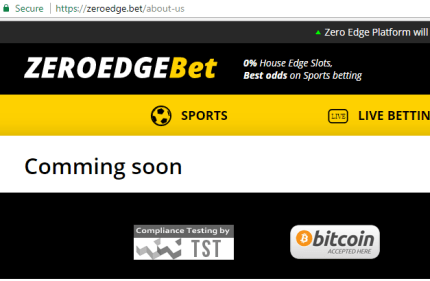
An image from the ZeroEdge cryptocurrency casino. Founder Richard Kim departed after admitting to stealing investor capital and using it on bad bitcoin trades. (Image: Medium)

Kim resigned from the startup gaming entity earlier this month. In an extensive Substack post, he admitted to misdeeds and acknowledged a “20-year struggle with gambling.” He said a phishing site that cost $80,000 “triggered old demons,” compelling the use of cash from a recent fundraising round on leveraged bitcoin trades that went bad.

I resigned immediately after the losses were crystallized, disclosing what happened to my partner and investors. I kept detailed records — this wasn’t about mixing personal and business funds,” wrote Kim. “My failure was in not speaking up sooner, paralyzed by fear and the desperate need to preserve my reputation.”

Kim’s bitcoin trades were made in June — a month which the largest cryptocurrency shed roughly $5,000. Leverage trades would have incurred steeper losses because such positions carry higher risk/reward profiles.

Kim Pledges to Move Forward

Kim acknowledged that he “really messed up,” but he’s also promising to move forward, telling investors they could benefit from their faith in him.

“To my investors: you didn’t just back a project; you invested in my vision, my potential. I will continue building because the world desperately needs what we started,” he wrote. “It is the precisely fact that I have proven untrustworthy that compels me to create trustless systems. Those who stick with me will be my lifetime beneficiaries.”

One of the investors whose capital Kim pilfered was Galaxy Digital — a crypto banking entity controlled by Mike Novogratz. The firm told crypto media outlets the sum it lost in the Zero Edge fraud was nominal.

In a somewhat defiant tone, Kim wax victim, framing his departure from ZeroEdge as an example of “institution vs. individual, trust vs. trustlessness, company vs. community, computer vs. casino.” He added that investors weren’t just supporting ZeroEdge, they were backing Kim as a person and his potential and vision.

What Future Holds for ZeroEdge

Following Kim’s departure, it’s not yet clear what the future holds for ZeroEdge, but it the cryptocurrency casino was attempting to employ a unique concept.

“ZeroEdge.Bet is a unique blockchain based online gambling platform with 0% house edge casino games, commission-free sports betting exchange and an open-source platform for parties wishing to build and operate their own games,” according to the company’s LinkedIn profile.

Crypto casinos have boomed in popularity in recent years, providing an avenue for increased adoption and use of bitcoin and other digital currencies. With ZeroEdge, the premise would be that bettors would place wagers with the Zerocoin token, thus positioning them to profit from the coin’s potential upside, which would be driven by more players embracing the 0% house edge model.

The post Crypto Casino Founder Kim Admits to Losing Investor Cash on Sour Bitcoin Bets appeared first on Casino.org.

Singapore Enhances Casino Regulations with New Due Diligence and Weapons Finance Scrutiny

Singapore-to-cut-casino-diligence-trigger-to-USdlr2950mediaWeapons-finance-scrutiny-to-be-part-of-Singapore-casino-AMLSingapore is set to implement significant changes to its casino regulations aimed at strengthening anti-money laundering (AML) and combatting the financing of terrorism (CFT) measures. The updates include lowering the threshold for customer due diligence checks and introducing new scrutiny for weapons finance. These measures will ensure that Singapore’s casino sector aligns with international standards set by the Financial Action Task Force (FATF).

Lowering the Due Diligence Threshold

The Gambling Regulatory Authority (GRA) of Singapore has announced a reduction in the cash deposit amount that triggers customer due diligence checks. Currently, this threshold is set at SGD5,000 (approximately USD3,685). However, the new regulations will lower this amount to SGD4,000 (approximately USD2,950). This change is expected to be implemented within the year, although the exact date has yet to be specified.

According to the updated Money Laundering National Risk Assessment, this reduction aims to enhance the casino sector’s AML/CFT regime. T. Raja Kumar, former president of the FATF and the inaugural chief executive of the Casino Regulatory Authority, emphasized the importance of aligning Singapore’s regulations with international standards.

Introduction of Weapons Finance Scrutiny

In addition to lowering the due diligence threshold, Singapore is also introducing new measures to address proliferation financing. This term, defined by the FATF, refers to funds or financial services used for nuclear, chemical, or biological weapons in violation of national laws or international obligations.

The proposed Anti-Money Laundering and Other Matters Bill, currently under review by Singapore’s parliament, includes provisions to tighten casino operators’ requirements for due diligence on the source of player funds. The bill will mandate that casino operators consider proliferation financing risks during customer due diligence checks. The Gambling Regulatory Authority of Singapore will be empowered to issue regulations to detect or prevent proliferation financing.

Enhanced Monitoring and Compliance

The Ministry of Home Affairs noted that the new regulations would require casino operators to conduct due diligence on patrons for any single cash transaction involving SGD10,000 (approximately USD7,371) or more, or when receiving SGD4,000 (approximately USD2,950) or more in a single transaction for deposit into a customer account.

Despite the moderately high risk of money laundering in Singapore’s casinos, the Money Laundering Risk Assessment Report Singapore 2024 reported no direct complicity by casinos in money laundering activities. However, there have been cases of third-party money laundering facilitated by casinos. One case involved an alleged conspiracy to cheat vessel owners of undelivered fuel, with proceeds amounting to about SGD1.9 million used to purchase casino chips.

Easing the Burden of Proof

The Anti-Money Laundering and Other Matters Bill also aims to ease the burden of proof in money laundering prosecutions. The amendment to the Corruption, Drug Trafficking and Other Serious Crimes (Confiscation of Benefits) Act will mean that prosecutors no longer need to show a direct link between criminal conduct and laundered money. It will be sufficient to prove that the money launderer knew or had reasonable grounds to believe they were dealing with criminal proceeds.

This change is designed to facilitate the prosecution of money mules, especially in cases where laundered money has passed through multiple bank accounts and intermediaries in foreign jurisdictions before entering Singapore.

Conclusion

Singapore’s enhanced regulations represent a significant step towards strengthening its AML/CFT regime within the casino sector. Singapore is aligning itself more closely with international standards by lowering due diligence thresholds and introducing new measures to combat proliferation financing. These changes underscore the city-state’s commitment to maintaining a robust and effective regulatory framework to combat financial crimes.

Sources:

Weapons finance scrutiny to be part of Singapore casino AML, ggrasia.com, July 1, 2024.

Singapore to cut casino diligence trigger to US$2,950: media, ggrasia.com, July 3, 2024.

The post Singapore Enhances Casino Regulations with New Due Diligence and Weapons Finance Scrutiny appeared first on Casino News Daily.

The Last Nordic Frontier: Iceland’s Gamble with Casino Regulations

Iceland’s isolated island environment is home to a booming digital frontier. Local tech companies have made great advances in video game graphics. Yet you’ll find that there is still no casino operating in the country. Despite lacking centralized data, you can chat with many people who say they participate in online gambling, especially online slots. New changes in regulations and societal viewpoints are redefining Iceland’s interaction with online gambling. Find out how this influences this Nordic country’s overall attitude to the iGaming industry.


Fueling the Icelandic Slot Machine Frenzy

Residents are increasingly looking to find the most entertaining online casino in Iceland. Here’s the intriguing part about Iceland though. Unlike the Nordic countries having state-controlled lotteries and closely governed online casinos, Iceland exists in a legal ambiguity. Physical casinos are banned, while the government does not give out any licenses for online gambling. But here is an important twist, there is no specific law that prevents Icelanders from participating on foreign-owned online casino websites.

You might be wondering exactly what draws Icelanders to online casinos then. The lengthy and severe winters with short daylight push people indoors to find fun activities Online slots serve as an easy and available distraction, supported by the high internet usage in Iceland.

Icelandic gamblers are left with the responsibility of selecting trustworthy and safe foreign operators, which is a difficult job due to the extensive and occasionally dishonest world of online casinos. This absence of regulation has become big news, with professionals urging local authorities in Iceland to confront and address this issue.

A Nordic Country at an Online Casino Crossroad

Statistics indicate that Icelanders annually pour more than 5 billion ISK into overseas betting websites. This considerable money drain has triggered legislators to rethink their approach. By forming a controlled market, Iceland aims to collect a slice of this profit. The strategy could yield significant tax earnings for communal facilities.

Iceland’s current situation can’t last indefinitely. Icelandic people have an entrepreneurial attitude and readiness to take risks. The laid-back gameplay and opportunity for big wins in online slots fall in line with this national character. People have been talking about setting up a regulatory framework for iGaming for years now. This could lead to improved customer protection and guarantee fair and responsible gambling practices. Additionally, this regulated market could create a lot of tax income for the Icelandic government.

The Iceland government has caught wind of the booming online gambling industry. New laws are being proposed to monitor and tax these ventures. The intended regulations would establish a legal structure for operators, marking a big departure from past rules.

Yet, there are still worries. Critics worry about a potential rise in gambling addiction rates and possible societal damage if regulations are softened up. The future path of Iceland’s iGaming industry is still uncertain. Will they decide to go with a more managed market like neighboring countries or continue in the grey area of unrestricted online gambling?

Sparking New Conversation Around iGaming

Online gambling’s surge has sparked a conversation in Iceland. There are concerns about addiction and financial pitfalls, causing demands for added protections. What is the way forward for Iceland to handle economic gains and social obligations?

New plans are being initiated by health officials in Iceland to tackle problem gambling. They have introduced online help groups as well as guidance services. Plus, voluntary limits and self-exclusion tools are being put in place by some iGaming companies. The goal of these steps is to encourage sensible gaming habits among players in Iceland.

It’s uncertain what Iceland’s iGaming future looks like. You can now see how his situation has major outcomes. A structured regulation system could modify Iceland’s social environment, boost its economic standing, and finally change its legal online gambling stance. The question remains if it will set a precedent for other Nordic countries or encounter even more obstacles.

The post The Last Nordic Frontier: Iceland’s Gamble with Casino Regulations appeared first on Casino News Daily.