Brazil Approves Bill to Legalize Casinos and Bingo

brazil_commission_votes_to_legalise_casinos_and_bingoBrazil’s Justice and Citizenship Commission (CCJ) has taken a significant step by approving a bill that legalizes casinos, bingo, jogo de bicho, and horserace betting. The bill, known as PL 2,234/2022, passed with 14 votes in favor and 12 against on June 19. Having been under consideration since 2022, it now advances to the Senate plenary for further voting, following its prior approval by Brazil’s chamber of deputies.

A Great Opportunity for Brazil

During the CCJ meeting, Senator Irajá highlighted the potential benefits of regulating betting and gaming in Brazil. He emphasized that this move represents a significant opportunity for the country, promising job creation, increased income, and enhanced tax revenues, which could be redirected toward essential sectors such as health, education, social services, and infrastructure.

“We can no longer lose this great opportunity that other competing countries have already understood and is seen to generate jobs, income and taxes, which will obviously be reversed into benefits for the Brazilian people in the most essential areas, such as health, education, social and infrastructure,” Irajá stated.

Regulations and Taxes

The bill sets forth specific regulations for various forms of gambling, including casinos, betting machines, bingo, and animal racing. It also introduces two new types of taxes: the Gaming and Betting Inspection Fee (Tafija) and the Economic Intervention Contribution levied on the marketing of games and betting (Cide-Jogos). Tafija would be paid quarterly, amounting to R$600,000 for casinos, R$300,000 for online gaming locations, and R$20,000 for bingo halls, Jogo de Bicho operators, and tourism companies. The Cide-Jogos tax rate would be set at 17% of gross revenue, with prizes over R$10,000 subject to a 20% income tax.

Casino Operations

Should the bill become law, casinos would be permitted in tourist centers or integrated leisure complexes, such as resorts and hotels with bars, meeting spaces, and a minimum of 100 rooms. Additionally, casinos could operate on boats and ships with at least 50 rooms, given certain river length parameters. There would be a limit of one casino per state and the Federal District, with São Paulo, allowed up to three casinos and Minas Gerais, Rio de Janeiro, Amazonas, and Pará up to two each. Each casino would be required to have a minimum paid-up share capital of R$100 million.

Bingo and Racing

The legislation also covers the legalization of bingo in card, electronic, and video formats. Each municipality could have one bingo house, with larger cities allowed one per 150,000 inhabitants. Licensed bingo houses could operate for 25 years, subject to renewal, and would need to provide proof of a minimum paid-up share capital of R$10 million.

For animal racing, the bill allows one legal racing entity per 700,000 inhabitants, except for Roraima, which would have a jogo do bicho operator due to its lower population. Bets on horseracing would be managed by Brazilian tourism entities accredited by the Ministry of Agriculture, which could also operate bingo and video bingo games within the same grounds as the races.

Protections and Enforcement

PL 2,234/2022 also proposes several measures to protect bettors. This includes a self-exclusion program called the National Registry of Prohibited Persons (Renapro), requiring venues to check if anyone attempting to enter a casino is registered. Additionally, the bill outlines the National Policy for the Protection of Players and Bettors, promoting honest conduct in gambling and discouraging compulsive behavior.

The bill introduces new criminal penalties for illegal gambling activities, with up to four years in prison for partaking in or advertising unlicensed games, doubled if minors are involved. Tampering with games or results could lead to up to seven years in prison, with penalties doubled if the victim is elderly, a minor, or registered with Renapro.

Legal and Economic Impact

Federal Supreme Court Minister Flávio Dino indicated that the Supreme Court might eventually need to rule on the constitutionality of this bill due to its potential interface with organized crime. The proposal aims to attract substantial investments, create millions of jobs, and generate significant annual revenue for Brazil.

Since President Luiz Inacio Lula da Silva approved Bill 3,626/2023 in December, which legalized sports betting and iGaming, Brazil has been moving rapidly towards establishing a regulated gaming industry. The Ministry of Finance expects sports betting and iGaming to be fully legal by the end of July, currently working on the regulatory policy for technical and security requirements for operators.

Source:

Legalization of casinos and bingos in Brazil could reach the Supreme Court, gamesbras.com, June 21, 2024.

The post Brazil Approves Bill to Legalize Casinos and Bingo appeared first on Casino News Daily.

Station Casinos Gave Workers Free Steaks, Possibly to Sway Union Election

Just a couple of days before Station Casinos workers voted on whether to affiliate with the Culinary Union, management tried to get employees to oppose the union with the lure of tasty food.

A steak dinner
A steak dinner, pictured above, is an example of a meal Station Casinos to its workers before a union vote. (Image: Lana’s Cooking)

The company served the culinary workers more than 500 complimentary steaks in 2019. Each was branded “Vote No!”

The giveaway was in response to workers previously saying the food they had been served in a free buffet wasn’t tasty. Food had become an employee concern.

By giving out the steaks, Station Casinos was hinting meals in the future would improve if the employees rejected the union during the 2019 vote. It turned out, the workers did oppose the union by a 627-534 vote.

Company Must Negotiate

Earlier this week, the National Labor Relations Board (NLRB) further directed Station Casinos and parent company Red Rock Resorts to recognize and negotiate with the Culinary Union.

Management had taken part in “egregious and pervasive unlawful conduct” leading up to the union vote, the federal panel said.

The NLRB also claimed Station Casinos’ actions “stemmed from a carefully crafted corporate strategy intentionally designed at every step to interfere with employees’ free choice whether or not to select the [Culinary] Union as their collective-bargaining representative,” according to the federal ruling.

In response to the ruling, Culinary Secretary-Treasurer Ted Pappageorge said it “affirms what we have been saying for years — that Station Casinos violated the law and the company must bargain with the union because of its unlawful actions that corrupted the prospect for a free and fair union election.”

Vote Was Fair

Red Rock Resorts spokesman Michael Britt said the 2019 workers’ vote “was a fair outcome that reflected the wishes of a majority of the Red Rock Team Members then and reflects it now,” according to the Las Vegas Independent.

The NLRB’s decision “upheld the findings of its own NLRB hearing officer,” and wasn’t unexpected, Britt added. The company is likely to file an appeal.

The controversy involves three gaming properties, including Red Rock Resort, Palace Station, and Boulder Station.

Decertification By Workers

More than half of the approximately 600 unionized workers at Sunset Station Hotel and Casino reportedly said in April they wanted to drop the Culinary Union as their labor representative.

The employees were in the process of signing a decertification petition, according to Station Casinos. Decertification petitions were previously signed in 2020 by a majority of workers at Boulder Station and Palace Station.

Culinary Workers Union Local 226 and Bartenders Union Local 165, represent some 60K workers in Las Vegas and Reno, including guest room attendants, cocktail and food servers, porters, bellmen, cooks, bartenders, and laundry and kitchen workers.

The post Station Casinos Gave Workers Free Steaks, Possibly to Sway Union Election appeared first on Casino.org.

Minnesota’s Running Aces Racino Adds More Casinos to RICO Suit

Minnesota harness racing track Running Aces has added two more casinos to a federal racketeering suit that claims tribal operators in the state are running “illegal” games.

Running Aces, Taro Ito, RICO lawsuit, Mystic Lake Casino, Little Six Casino, Shakopee
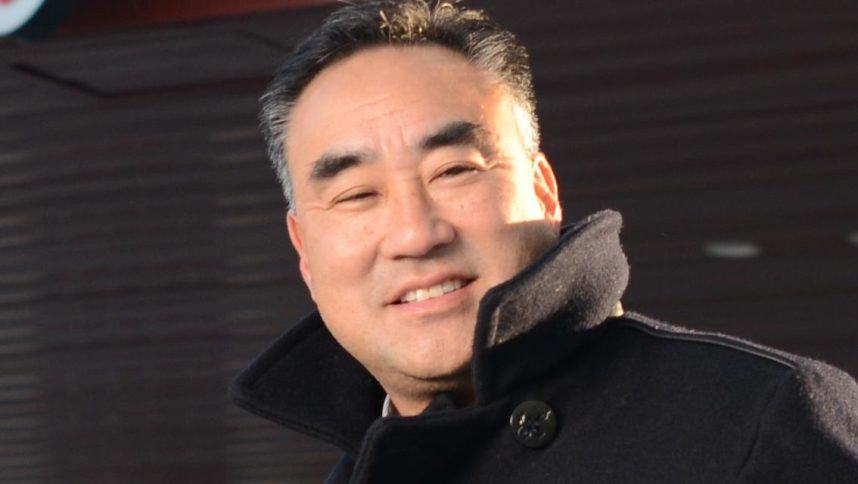
Running Aces president and CEO Taro Ito, above, says that all he wants to do is compete on a level playing field. But tribal interests dismissed his lawsuit as a stunt to designed to “mislead the public” and “influence the legislature.” (Image: The Business Journals)

Last month, the Columbus, Minn.-based racino sued the Grand Casino Hinckley, Grand Casino Mille Lacs, and Treasure Island Resort. Running Aces claims they conduct class III card games that are not covered by their tribal-state gaming compacts, such as Three Card Poker and Ultimate Texas Hold’Em.

The Grand Casinos are owned by the Mille Lacs Band of Ojibwe. Treasure Island belongs to the Prairie Island Indian Community.

In an amended complaint filed Tuesday, Running Aces added Mystic Lake and Little Six Casinos, which are owned by the Shakopee Mdewakanton Sioux Community (SMSC).

‘IGRA Violated’

The racino accuses all five casinos of violating the Indian Gaming Regulatory Act (IGRA), as well as state laws, by operating not only class III card games but also “video games of chance,” such as slots.

The tribes are permitted by the state to offer these games under the terms of their compacts. Minnesota was the first state to sign compacts with its federally recognized tribes after the enactment of IGRA in 1988.

Many feel lawmakers blundered by failing to negotiate revenue-sharing provisions. The state is not permitted to renegotiate any of these compacts without the tribes’ approval.

But the Minnesota criminal code “specifically prohibits and makes illegal the playing of electronic video games of chance for any person,” as the lawsuit notes.

This is something the tribes “know only too well,” per the lawsuit. When Running Aces applied to Minnesota Racing Commission to “modestly expand its ‘dealer assist’ table games,” the SMSC objected on the grounds that “video games of chance are not permitted in Minnesota,” the suit states.

‘No Merit’

“All that we have ever sought was to be treated fairly, compete on a level playing field, take advantage of improvements within the pari-mutuel environment, and operate without fear of being eliminated,” Running Aces president and CEO Taro Ito said in a statement to local CBS affiliate KSTP-TV. “It is our sincere desire to have our day in court and let the facts determine the outcome.”

But the SMSC dismissed the Running Aces lawsuit as having “no merit,” labeling it a “desperate stunt to attack the good reputation of tribes and tribal gaming” in a statement to FOX 9.

All gaming conducted at Mystic Lake and Little Six Casinos complies with tribal law, federal law, and the gaming compact that was executed in 1989,” read the statement.

The SMSC claims Running Aces is seeking to “mislead the public and influence the final stages of the Minnesota Legislature’s 2024 session,” to prevent the passage of a bill that would hand a sports betting monopoly to the tribes.

The post Minnesota’s Running Aces Racino Adds More Casinos to RICO Suit appeared first on Casino.org.

Caesars Q1 Results Miss Estimates as Regional Casinos, Sports Betting Lag

Shares of Caesars Entertainment (NASDAQ: CZR) slumped during Tuesday’s after-hours session, extending declines following a 4.66% drop during normal trading hours after the casino operator posted first-quarter results that badly missed Wall Street forecasts.

Caesars Digital
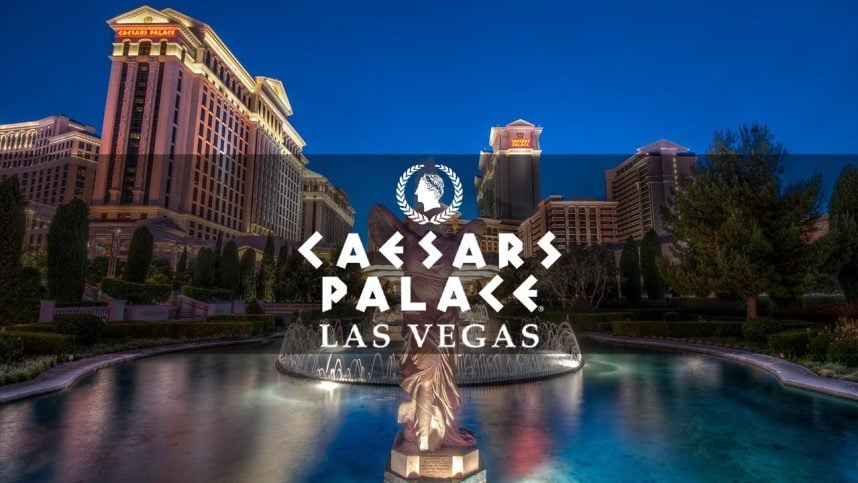
Caesars Palace Las Vegas. The operator said first-quarter earnings and revenue at its Las Vegas and regional casinos declined. (Image: YouTube)

The Harrah’s operator said it lost 73 cents a share on revenue of $2.74 billion in the first three months of the year. Analysts expected a loss of eight cents on sales of $2.83 billion. While the gaming company mentioned unfavorable outcomes on the Super Bowl and the NCAA Tournament as among the reasons the first-quarter numbers missed forecasts, analysts and investors might apply scrutiny to Caesars’ Las Vegas and regional casino results.

On the Strip where it’s the second-largest operator, Caesars revenue declined to $1.03 billion in the March quarter from $1.11 billion a year earlier. The gaming company said adjusted earnings before interest, taxes, depreciation, and amortization (EBITDA) at its Sin City venues declined to $440 million from $533 million a year earlier.

That could heighten concerns that activity is slowing down on the Strip following a multi-year run of pent-up demand sparked by coronavirus shutdowns.

Caesars Regional Woes Not Surprising

Caesars said its regional casinos posted first-quarter adjusted EBITDA of $443 million on revenue of $1.37 billion, down from $448 million and $1.39 billion a year earlier.

The tepid results from the regional side of Caesars aren’t surprising because multiple operators have flagged softness at such venues due to bad weather in January that hampered visitation to gaming venues in Reno/Tahoe and the Midwest. Additionally, there are mounting signs of lower-tier bettors reducing spending at gaming venues in the South.

There have been signs that high interest, sticky inflation, and other macroeconomic headwinds are weighing on some gaming venues in the Midwest and the South. Likewise, six of the nine casinos in Atlantic City, NJ experienced profit declines last year as more locals embraced iGaming.

“Moving past the first quarter headwinds, we remain optimistic toward improved operating results throughout the balance of the year,” said CEO Tom Reeg in a statement.

Modest Progress on Debt Reduction

Entering this year, analysts and investors wanted to see more evidence of Caesars trimming its debt burden — one of the industry’s largest. There were incremental signs of that progress in the first quarter. As of March 31, the Horseshoe operator had $12.436 billion in outstanding liabilities compared to $12.439 billion at the end of 2023.

At the end of the March quarter, Caesars had cash and cash equivalents of $726 million, a figure that does not include $139 million in restricted cash.

“Excluding joint venture capex, we estimate 2024 cash capex spend of $800 million. We anticipate using free cash flows to continue to reduce debt in 2024,” said CFO Bret Yunker in the press release.

The post Caesars Q1 Results Miss Estimates as Regional Casinos, Sports Betting Lag appeared first on Casino.org.

Nevada Casinos Report Net Income of $3.44B in Fiscal Year 2023

Nevada casinos generated record revenue of $29.86 billion during the state’s 2023 fiscal year, but net income slid because of billowing inflation, interest, and overall administrative costs.

Nevada casinos abstract income revenue
The Resorts World Las Vegas casino floor is bustling in a file photo. Nevada casinos reported net income of $3.44 billion during the state’s 2023 fiscal year on gross revenue of $29.86 billion. (Image: AP)

The Nevada Gaming Control Board (NGCB) on Friday unveiled the 2023 Gaming Abstract for the 12 months ending June 30, 2023.

During the fiscal year, 300 casinos grossed at least $1 million on their gaming floors. Only casinos that generated over $1 million in gross gaming revenue (GGR) are included in the annual report that provides a financial analysis of the state’s nonrestricted gaming licenses.

The nearly $30 billion in revenue includes gaming win and sales from hotel rooms, food and beverage, entertainment, spa services, and other resort attractions. Gaming represented about 37% of the revenue, or $10.92 billion.

On the $29.86 billion in sales — 8.9% higher than the 2022 fiscal year — the 300 casinos reported net income of $3.44 billion. Net income dropped over 21%, with higher borrowing rates, labor, and materials and goods costs blamed for the decline.

Net income refers to the amount of revenue retained by the casinos after expenses have been paid but before federal income taxes are deducted and extraordinary expenses are covered.

2023 Still Solid

Nevada casinos experienced their second-best financial year in 2023, as 2022 was a banner performance.

Clark County, home to Las Vegas, accounted for the most revenue at $26.86 billion, which was a 9.5% year-over-year increase. Net income for Southern Nevada casinos was $3 billion, a 21% drop but the market’s second-best year.

Strip casinos generated $20.48 billion of the revenue and $1.37 billion of the net income. Downtown casinos reported revenue of $1.55 billion and net income of $259.17 million. While Strip casinos saw net income slide almost 34%, downtown resorts said net income fell 4%.

Every metered area in the state report incurred a net income decline from the 2022 fiscal year. But each market still reported positive net income aside from Lake Tahoe’s South Shore.

The positive net income came despite interest expenses surging 23% to nearly $449 million, rent increases of 70%, or $248 million, and general expenses climbing 17% to $613 million.

2024 Outlook

Nevada casino execs aren’t expecting costs to subside anytime soon, so revenue must continue to increase. Many expect that to happen, including MGM Resorts International President and CEO Bill Hornbuckle.

2023 was an amazing year. We’ve got some headwinds, particularly with labor costs, but there’s enough programming and enough momentum that we think we surpass,” Hornbuckle said on the company’s earnings call last week.

Last fall, the Culinary Union that represents resort workers up and down the Strip struck new labor terms with several casino operators, including MGM, Caesars Entertainment, and Wynn Resorts. Some 50,000 Las Vegas casino employees are receiving wage increases as a result of the new five-year union contracts.

The 12 months in 2023 were a record year for Nevada casinos, as GGR climbed to a new high of $15.5 billion. Union leaders successfully campaigned that their members deserved a bigger piece of the financial pie by way of increased pay and more robust benefits.

The post Nevada Casinos Report Net Income of $3.44B in Fiscal Year 2023 appeared first on Casino.org.