Eleventh Winner Of Popular Dream Drop Mega Jackpot Revealed By Relax Gaming

Relax Gaming, an iGaming aggregator and developer, has officially announced its 11th winner of the popular Dream Drop Mega Jackpot, which was won when a lucky player activated the said jackpot with Jackpothunter.com online casino.

Winning the ultimate prize

After a player placed a bet of €2 on the Volatile Vikings Dream Drop slot, they won a whopping €2.976.908.13, automatically making them the eleventh lucky player to win a seven-figure sum in just a little more than a year, showing that Relax’s rewards from its innovative game portfolio are there for players to take. What’s more, this newest announcement took place just 4 hours after one more fortunate player won another Major jackpot while trying their luck on another Dream Drop Jackpot slot game.

Commenting on the win, Simon Hammon, CEO of Relax Gaming, said: “The way that Dream Drop has changed the industry never ceases to amaze us, and to create eleven millionaires in just over a year has exceeded our expectations. We knew the Dream Drop Jackpot would perform well with players and operators alike, and to see this become a reality is a constant source of pride. We would like to send our congratulations to the lucky winner, and we eagerly anticipate the twelfth millionaire.”

Jackpothunter casino added: “It is truly a delight to be the casino that has played host to the eleventh Dream Drop Mega Jackpot winner! Everyone at Jackpothunter is excited to see such an impressive win happen on our platform, it validates where our brand is heading as we make winning jackpots easier. The integration of Relax titles has been a huge boost to our brand and we are delighted to have played a part in creating this win.”

Description of Volatile Vikings Dream Drop slot

Volatile Vikings Dream Drop was officially added to Relax’s portfolio in July 2022 and includes a lot of thrilling mechanics and features which involve state-of-the-art Multiplier Reveal and a useful Free Spins bonus round. But that’s not all; because it also involves the Dream Drop progressive jackpot.

About

Relax Gaming was founded and officially launched in 2010 with headquarters in Malta. Since then, the company has experienced incredible growth and today their rapidly-growing, independently created game portfolio includes more than 4,000 online casino games. Its partners are B2B companies, which the company supplies with its iGaming content.

This outstanding, innovative iGaming supplier is present in key global markets through cooperation with its B2B partners. Its most recent awards include: Casino/Slot Developer of the year at the SBC AwardsBest Mobile Gaming Software Provider at the EGR B2B Awards and Best Game Provider at the AskGamblers Awards. Also, its amazing gaming platform is composed of aggregated content. Some of these are: video slots, online casinos, poker and bingo, which operators can access via simple integration to increase player engagement and profit.

One of the main reasons why Relax is the leading aggregator of the iGaming industry is because it is backed by innovative technology, which means it has the ability to give operators the opportunity to activate a range of features that increase user satisfaction and engagement and encourage extended play.

Source: “Relax Gaming crowns eleventh millionaire with Jackpothunter Dream Drop Win”. European Gaming, October 30, 2023.

The post Eleventh Winner Of Popular Dream Drop Mega Jackpot Revealed By Relax Gaming appeared first on Casino News Daily.

Stalled Dream Las Vegas Resort Project Renews Building Permits

The Dream Las Vegas project could soon awaken from its coma if an extension application recently filed for its building permits is any indication.

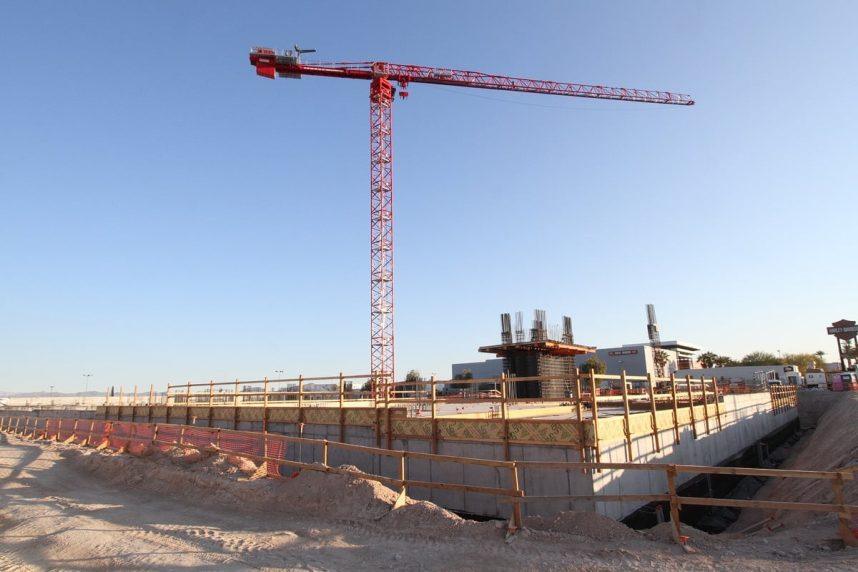
Construction on Dream Las Vegas, a boutique casino hotel planned for the Strip’s southernmost end, is shown last year. (Image: Scott Roeben/Vital Vegas)

Construction of the casino resort on the southernmost tip of the Strip stalled in March, with its developers reportedly owing between $25M and $30M. According to the new documents filed with Clark County, and first reported by the Las Vegas Review-Journal, it could restart at the beginning of 2024.

The Dream Hotel Group released this rendering in 2020. (Image: Dream Hotel Group)

One of those documents, a justification letter for the extension written on Oct. 4 by the developer’s attorneys, promised that the financing issues delaying the project were “being sorted out,” according to the newspaper.

Specifically, a bridge loan is expected to close by early November, followed by “the close of the full capital stack (equity and debt) by December 2023.”

At the time construction stopped, developer Bill Shopoff, president and CEO of Shopoff Realty Investments, told the R-J he expected to strike a new financing deal “in the next couple of weeks.”

What Dream is Made of

In February 2020, Shopoff and Contour, a privately owned commercial real estate development group, announced that they had purchased 5.25 acres of undeveloped Las Vegas Boulevard land next to Harry Reid International Airport.

Dream Hotel Group, a New York City-based operator of four Manhattan luxury properties and hotels in Miami Beach, Hollywood, and Nashville, signed on to run the planned 21-story luxury hotel.

It would include 531 guestrooms, seven dining and nightlife venues — one being a rooftop pool deck — a 12,000 square-foot convention center, spa, and a small casino floor. After being delayed by the pandemic shutdown, the casino hotel broke ground on July 8, 2022.

Dream Las Vegas was originally estimated to cost $300M to complete, but that estimate eventually doubled to $550M-$575M. Shopoff told the R-J last year that he blamed inflation, combined with the interest hikes on borrowing imposed last year by the Federal Reserve to control it.

Dream Hotel Group was acquired by Hyatt Hotels Corp. in February 2023. The corporation reportedly paid a base price of $125M, with an additional $175M due over the next six years “as properties come into the pipeline and open.”

The post Stalled Dream Las Vegas Resort Project Renews Building Permits appeared first on Casino.org.

Filling Lake Mead with Mississippi River Water No Longer a Pipe Dream

Despite recent rains, the water level in Lake Mead – which supplies Las Vegas with 90% of its water – was 1,046.94 feet above sea level on Feb. 2. That’s only 28% of its full capacity. And cutting water use, even drastically, may not solve the problem. Because of climate change, some estimates predict that the Colorado River may deliver only half its current amount of water by the year 2100.

Lake Mead
Lake Mead
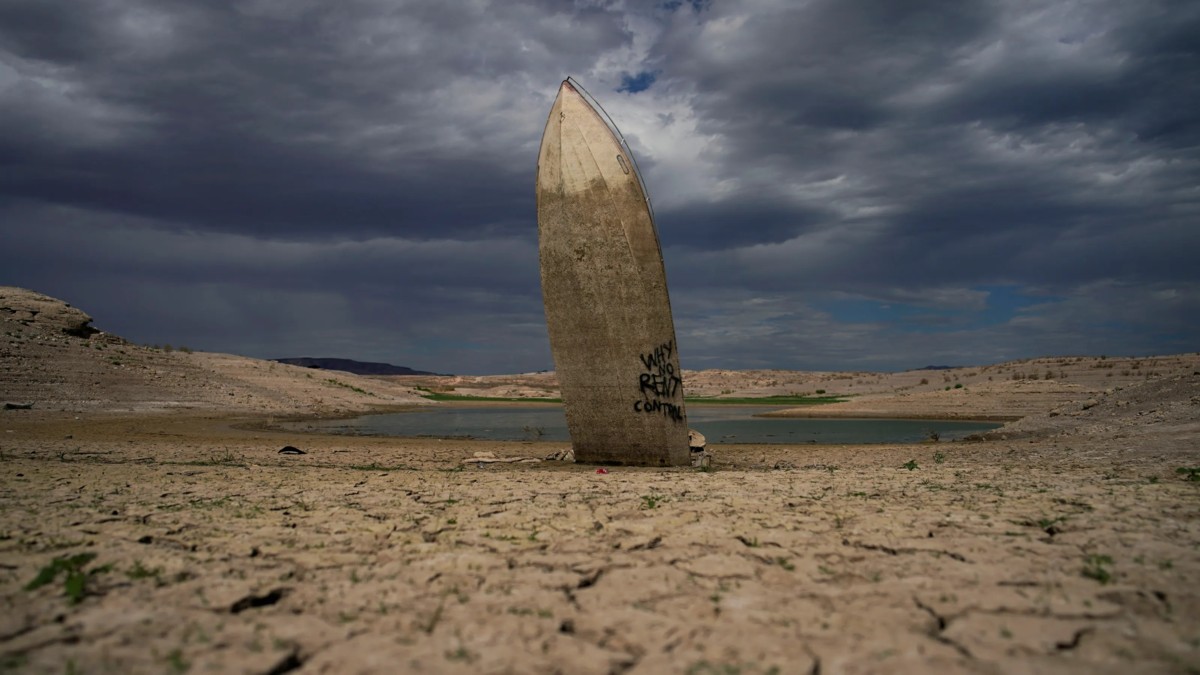
A 22-year drought in the American Southwest is sinking Lake Mead to depths it hasn’t seen since it was filled nearly 100 years ago, exposing several long-submerged bodies boats. (Image: azcentral.com)

Pumping Mississippi River water into Lake Mead has been suggested before. But as water levels drop – threatening to eventually cut off California, Arizona and Mexico from their Colorado River water allotments – and as engineering technology advances, large-scale river diversion doesn’t seem as much of a pipe dream as it once did.

In 2021, the Arizona state legislature actually passed a measure urging Congress to investigate pumping flood water from the Mississippi to the Colorado to boost its flow. Studies show that a project like this would be possible, though it would take decades of construction and billions of dollars. Maybe even trillions.

“I think it would be foolhardy to dismiss it as not feasible,” Richard Rood, professor of Climate and Space Sciences and Engineering at the University of Michigan told the Cedar Rapids Gazette. “But we need to know a lot more about it than we currently do.”

Large-scale river diversion projects have been proposed in the US since the 1960s, when an American company sought to redistribute Alaskan water across the continent using canals and reservoirs. That plan never generated enough support – a fate shared by similar proposals in Minnesota and Iowa.

Still Too Pricey … For Now

In 2012, the U.S. Department of the Interior’s Bureau of Reclamation performed a Colorado River Basin analysis considering several solutions to the current drought – including importing water from the Missouri and Mississippi Rivers.

Under the analyzed scenario, water would be diverted to Colorado’s Front Range and areas of New Mexico. That would cost at least $1,700 per acre-feet of water, potentially yield 600,000 acre-feet of water per year by 2060, and take 30 years to construct.

A decade later, Roger Viadero, an environmental scientist and engineer at Western Illinois University, calculated that moving this scale of water would require a pipe 88 feet in diameter – twice as long as a semi trailer – or a 100-foot-wide channel that’s 61 feet deep.

“As an engineer, I can guarantee you that it is doable,” Viadero told the Cedar Rapids Gazette. “But there are tons of things that can be done but aren’t ever done.”

Viadero’s team estimated the cost of buying enough water to fill up the Colorado River’s Lake Mead and Lake Powell at more than $134 billion, assuming a penny per gallon. Add to that heavy construction costs and the costs of powering the equipment needed to pump the water over the Western Continental Divide. Buying the land to secure water rights would be very costly, too.

Politics: The Other Problem

The political hurdles are also considerable. They include wetlands protections, endangered species protections, drinking water supply considerations, and interstate shipping protections. Precedents set by other diversion attempts – such as the ones that created the Great Lakes Compact, also cast doubt over the political viability of any large-scale Mississippi River diversion attempt.

And trans-national pipelines would also impact ecological resources. Lower Mississippi River flow means less sediment carried down to Louisiana, where it’s needed for coastal restoration. Diverting that water also means spreading problems, like pollutants, excessive nutrients, and invasive species such as Asian carp.

None of this even considers the most important question: Is there even enough water to spare? The Mississippi River basin may no longer even be a reliable answer to the Colorado River basin’s problem, since the Mississippi is drying up, too. Water levels are at or below the low-water threshold along a nearly 400-mile stretch of the river. This past year, sunken boats, such as the Diamond Lady riverboat casino, are surfacing like bodies are in Lake Mead.

“No one wants to leave the western states without water,” Melissa Scanlan, a freshwater sciences professor at the University of Wisconsin-Milwaukee, told the Cedar Rapids Gazette. “But moving water from one drought-impacted area to another is not a solution.”

Growing Precedent

Still, there is hope. Last year, a Kansas groundwater management agency received a permit to truck 6,000 gallons of Missouri River water into Kansas and Colorado to recharge an aquifer. Several approved diversions already drain water from the Great Lakes. And in northwestern Iowa, a river has repeatedly been pumped dry by a rural water utility that sells at least a quarter of the water outside the state. And there

In July 2022, former Arizona Gov. Doug Ducey signed legislation investing $1.2 billion into projects that conserve water and bring more into the state. Among its provisions, the law granted Arizona’s water infrastructure finance authority to “investigate the feasibility” of potential out-of-state water import agreements.

And, as the tired adage goes, desperate times call for desperate measures. According to a two-year projection by the federal Bureau of Reclamation, by the end of July 2024, Lake Mead’s water level could fall to as low as 992 feet above sea level. That’s perilously close to dead pool (895 feet), the point when a reservoir is so low, gravity will no longer allow it to release water downstream. If and when Lake Mead hits this point, that will be dire news for downstream regions, including Los Angeles, Phoenix, San Diego, Tucson, and Mexico.

“It’s possible that the situation gets so dire that there is an amount of money out there that could overcome all of these obstacles,” Rhett Larson, an Arizona State University professor of water law, told the Cedar Rapids Gazette. “It might be in the trillions, but it probably does exist.”

In the meantime, researchers encourage more feasible and sustainable options, such as better water conservation, water recycling, and less agricultural reliance.

The post Filling Lake Mead with Mississippi River Water No Longer a Pipe Dream appeared first on Casino.org.