Mississippi Casino Project in East Biloxi in Jeopardy, Jackson Gaming Bill Rescinded

It was a busy week in the Mississippi State Capitol regarding gaming matters. One powerful lawmaker proposed allowing a commercial casino resort in Jackson, while other legislation stands to block a proposed $300 million gaming development on the Gulf Coast.
Mississippi casino tidelands bill
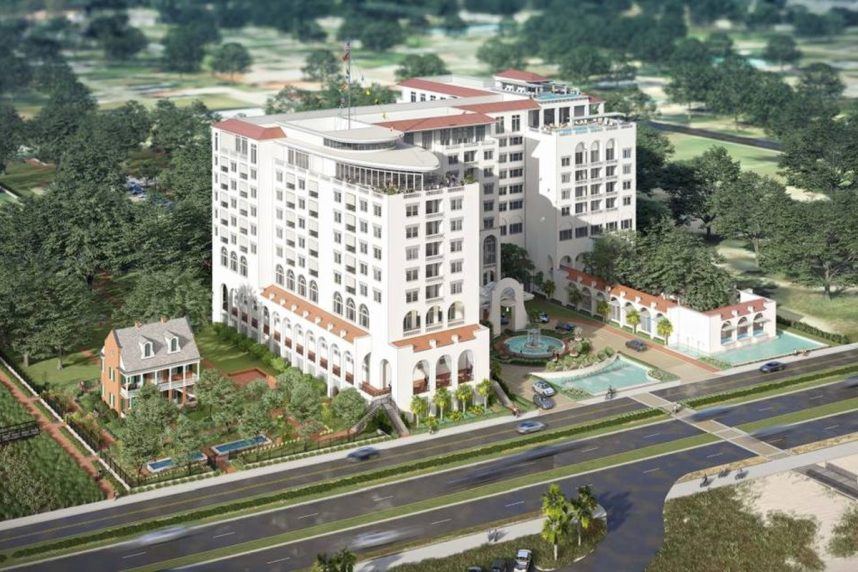
A rendering of the Tullis Garden Hotel in Mississippi includes a replica of the Tullis Manor that was destroyed by Hurricane Katrina. The development, which is to include a casino, remains in jeopardy as state lawmakers consider a tidelands lease bill. (Image: Frank Genzer Architects)

Mississippi House Ways and Means Committee Chair Trey Lamar (R-Lafayette) on Monday introduced a bill motioning to allow a casino in Jackson, the state capital. The pitch seemingly faced long odds from the onset, as Mississippi’s gaming industry for decades has been confined to the Coast and Mississippi River.

Lamar’s casino pitch would have allowed the stakeholders behind the state’s current commercial casinos to bid on a resort opportunity in the state capital. Mississippi is currently home to 12 casinos on the Gulf and 14 along the Mighty Mississippi. The state is also home to three Native American gaming facilities.

Lamar quickly fielded pushback for his enthusiasm to bring a casino to the central part of the state. After determining that he didn’t have the votes needed in the 122-member chamber, the Republican folded and rescinded the bill, but says he will resume the fight next year.

Vicksburg Opposition

Jackson is Mississippi’s most populated city with about 144K residents.

Named for General Andrew Jackson, a war hero in the War of 1812’s Battle of New Orleans who subsequently became the seventh president of the United States, Jackson’s population continues to decline. The U.S. Census Bureau says Jackson saw the largest exodus between the 2010 and 2020 censuses of any major US city.

Lamar’s casino bill projected that a gaming resort would generate more than 1,000 jobs and provide new local tax revenue for city improvement projects. But casinos in Vicksburg and state reps from the city located about 50 miles west of the capital — the closest gaming destinations — were quick to oppose Lamar’s capital city casino campaign.

The Coast may survive it, but there’s no way anybody else could,” said House Leader Robert Johnson (D-Natchez) of a Jackson casino’s impact on current gaming markets.

“It would have been devastating,” added Rep. Oscar Denton (D-Vicksburg).

Tide Lease Bill

After Hurricane Katrina, the state amended its riverboat laws to allow land-based gaming along the Gulf. However, the brick-and-mortar gaming spaces must be located within 800 feet of the 19-year mean high water line average.  

The Mississippi Supreme Court last year ruled that counties along the Gulf have the authority to sell lands that butt up against tidelands that are owned by the state. They can do so without first obtaining a tidelands lease from the state. The vital ruling paved the way for businessman Ray Wooldridge’s long-stalled casino project at the intersection of Veterans Ave. and Beach Blvd. to move forward.

As a result of the ruling, state lawmakers are considering legislation that would require casino sites to have state tidelands leases. The bill is currently in a House conference committee that’s trying to iron out differences between the two legislative chambers.

Along with Woolridge’s development, the legislative outcome could determine whether a $300 million casino scheme called Tullis Garden in East Biloxi advances. The developers of the project have an agreement with Biloxi to purchase the eight-acre site from the city, which would include access to the tidelands to qualify the project for gambling.

The state’s current gaming interests are thought to be lobbying for the state tidelands bill to give Jackson more control and prevent further competition from coming to the Gulf. Gross gaming revenue along the Gulf Coast last year was down nearly 1%.

The post Mississippi Casino Project in East Biloxi in Jeopardy, Jackson Gaming Bill Rescinded appeared first on Casino.org.
Myanmar’s Kayin State Gambling Project Leads to Sanctions Against Officials

Myanmar is in the middle of an unofficial civil war that has at its roots, in part, an attempt to rid the country of its gambling element. The U.S., the UK, and other countries are making a statement about the ongoing conflict, introducing sanctions against two high-ranking officials in the country who also have ties to a major gambling operation.

Colonel Saw Chit Thu with his entourage traveling through Kayin
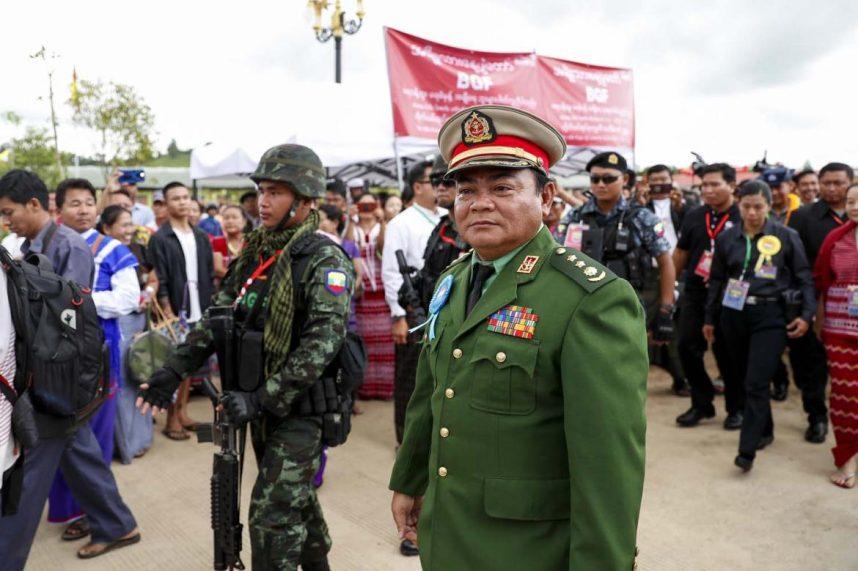
Colonel Saw Chit Thu, with his entourage, traveling through Kayin. The leader of Myanmar’s Border Guard Force faces new sanctions for his ties to illegal gambling. (Image: Frontier Myanmar)

Colonel Saw Chit Thu, a leader with the Burmese junta-tied Border Guard Force (BGF), alongside two other individuals, incurred sanctions from the UK last Friday. The other two are Chinese investor She Zhijiang and Colonel Saw Min Min Oo, a primary leader under Saw Chit Thu.

The sanctions link back to their alleged involvement in the recently established Shwe Kokko town in Kayin (previously Karen) State. This decision comes as a response to the severe accusations related to human trafficking, forced labor, and infringements on human rights against the two.

Cracking Down on Fraud Farms

On Friday, the UK unveiled the joint sanctions against Saw Chit Thu and the others. These restrictions were implemented in response to the exposure of nine individuals and five companies involved in internet-based “fraud farms” located in Cambodia, Laos, and Myanmar. It has been widely documented that the workers of those operations are victims of human trafficking.

The sanctions mean an asset freeze that prevents anyone from the participating country from dealing with the economic or financial resources of the sanctioned individual(s). In this case, it also comes with a travel ban that prevents the sanctioned individuals from traveling to or through the participating countries.

An official statement from the UK explained that Saw Chit Thu and the other two have been implicated as accomplices or beneficiaries of human trafficking in the operations of Shwe Kokko. The trio, with assistance from others, forced their victims into slave labor and allegedly routinely subjected them to torture, physical abuse, and various forms of exploitation.

The United Nations has estimated that as many as 120K individuals in Myanmar face similar conditions of forced labor. At least another 100K in Cambodia are also victims of human trafficking.

Shwe Kokko Survives Attempts to Shut it Down

The Shwe Kokko Project is a collaboration between Chit Lin Myaing Co and Yatai International Holding Group, a company registered in Hong Kong. Chit Lin Myaing Co allegedly belongs to the BGF, with Saw Chit Thu serving as its highest-ranking executive.

Saw Chit Thu and his border guards are reported to significantly benefit from the operation, which has gained a notorious reputation in Southeast Asia due to its connections with Chinese criminals. Apart from its involvement in human trafficking, labor exploitation, online fraud, and gambling, the operation presents itself as a major revenue stream for the BGF officer.

Last year, Thai police arrested She Zhijiang in Bangkok. His apprehension was triggered by a foreign warrant accusing him of managing an internet-based casino.

In addition to his involvement with Shwe Kokko, he allegedly has deep involvement in several controversial ventures in other countries, as well as in Cambodia’s gambling industry. Despite the arrest, Shwe Kokko remains operational, as highlighted by previous comments by the BGF.

The post Myanmar’s Kayin State Gambling Project Leads to Sanctions Against Officials appeared first on Casino.org.

Stalled Dream Las Vegas Resort Project Renews Building Permits

The Dream Las Vegas project could soon awaken from its coma if an extension application recently filed for its building permits is any indication.

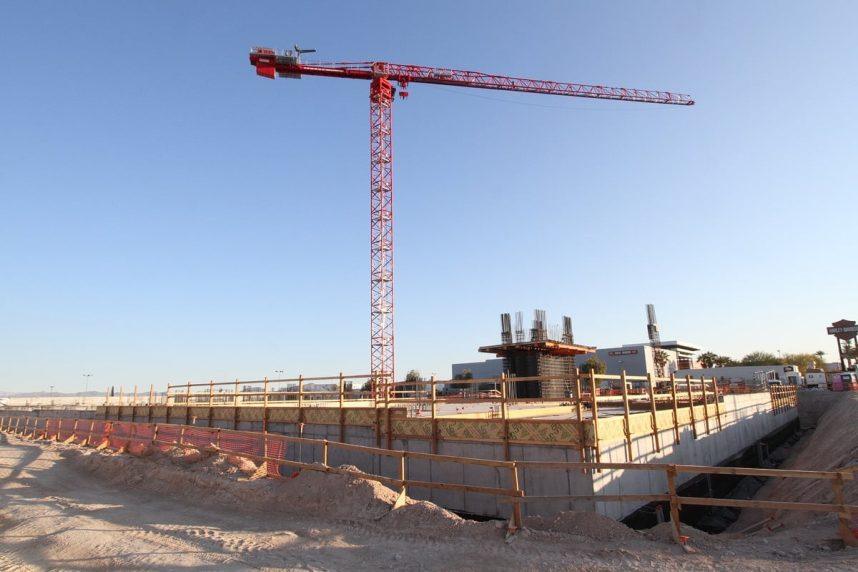
Construction on Dream Las Vegas, a boutique casino hotel planned for the Strip’s southernmost end, is shown last year. (Image: Scott Roeben/Vital Vegas)

Construction of the casino resort on the southernmost tip of the Strip stalled in March, with its developers reportedly owing between $25M and $30M. According to the new documents filed with Clark County, and first reported by the Las Vegas Review-Journal, it could restart at the beginning of 2024.

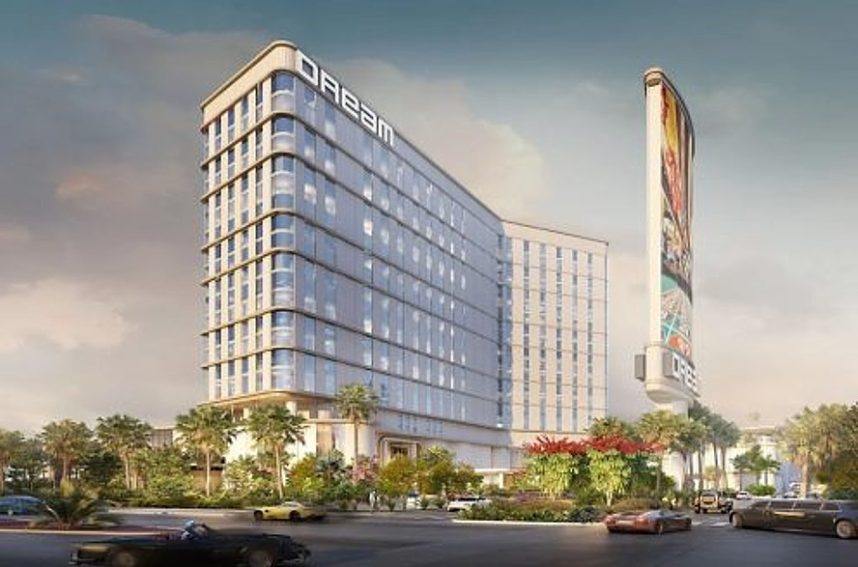
The Dream Hotel Group released this rendering in 2020. (Image: Dream Hotel Group)

One of those documents, a justification letter for the extension written on Oct. 4 by the developer’s attorneys, promised that the financing issues delaying the project were “being sorted out,” according to the newspaper.

Specifically, a bridge loan is expected to close by early November, followed by “the close of the full capital stack (equity and debt) by December 2023.”

At the time construction stopped, developer Bill Shopoff, president and CEO of Shopoff Realty Investments, told the R-J he expected to strike a new financing deal “in the next couple of weeks.”

What Dream is Made of

In February 2020, Shopoff and Contour, a privately owned commercial real estate development group, announced that they had purchased 5.25 acres of undeveloped Las Vegas Boulevard land next to Harry Reid International Airport.

Dream Hotel Group, a New York City-based operator of four Manhattan luxury properties and hotels in Miami Beach, Hollywood, and Nashville, signed on to run the planned 21-story luxury hotel.

It would include 531 guestrooms, seven dining and nightlife venues — one being a rooftop pool deck — a 12,000 square-foot convention center, spa, and a small casino floor. After being delayed by the pandemic shutdown, the casino hotel broke ground on July 8, 2022.

Dream Las Vegas was originally estimated to cost $300M to complete, but that estimate eventually doubled to $550M-$575M. Shopoff told the R-J last year that he blamed inflation, combined with the interest hikes on borrowing imposed last year by the Federal Reserve to control it.

Dream Hotel Group was acquired by Hyatt Hotels Corp. in February 2023. The corporation reportedly paid a base price of $125M, with an additional $175M due over the next six years “as properties come into the pipeline and open.”

The post Stalled Dream Las Vegas Resort Project Renews Building Permits appeared first on Casino.org.