Las Vegas Sands’ Dr. Miriam Adelson Makes First Political Donation in Nearly Two Years

Dr. Miriam Adelson, the largest individual shareholder of the Las Vegas Sands casino empire she inherited from her late husband, has made her first political donation in nearly two years. But the cash didn’t go directly to Donald Trump, the former president whose 2016 and 2020 White House campaigns she and her husband, Sheldon Adelson, dumped more than $200 million into.
Miriam Adelson Donald Trump Las Vegas Sands
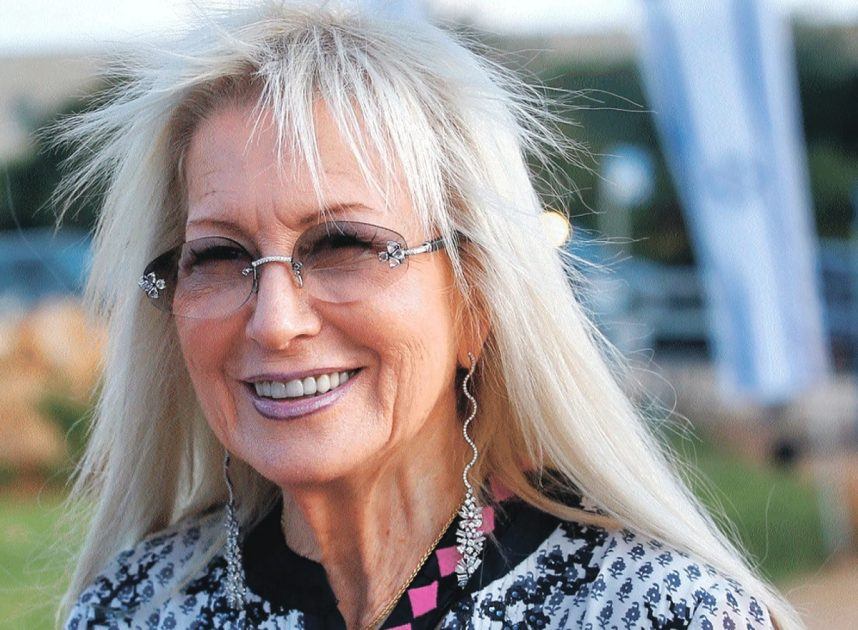
Dr. Miriam Adelson remains the largest shareholder of Las Vegas Sands, the casino empire founded by her late husband. Adelson hasn’t yet donated to Donald Trump’s 2024 presidential bid, though she resumed her political spending in March after nearly two years. (Image: Haaretz)

Adelson controls 46% of the Sands organization following her $2 billion stock sell-off last year to acquire a controlling ownership position in the NBA Dallas Mavericks. Adelson, a stalwart Republican and perhaps the strongest pro-Israel voice in the United States, remained politically active in 2022 after the January 2021 death of her husband.

Adelson gave $1 million to Texas Gov. Greg Abbott’s (R) reelection in 2022, a contribution many saw as an effort to win political favor for the state welcoming in commercial casinos. She also gave $20 million to GOP congressional committees that year.

Adelson’s political spending went quiet throughout 2023. But federal campaign finance records show that Adelson, who’s worth more than $30 billion, might be returning to the political arena ahead of the November 2024 presidential election.

PAC Money

Before 2024, Adelson’s last political donation was an $8,100 contribution in November 2022 to a California Republican’s Attorney General campaign. Records from the Federal Election Commission reveal that Adelson reopened her political treasure chest in March with a $5,000 donation to the Las Vegas Sands Political Action Committee (Sands PAC).

The Sands PAC predominantly supports Republican candidates both on the federal and state level. The PAC limits its contributions to a maximum of $5,000 per candidate.

Adelson pitching in $5,000 is rather uneventful, but it could hint that the billionaire is readying to ramp up her political spending. Adelson said during the 2024 GOP primary that she wouldn’t endorse or financially support a candidate in favor of allowing the Republican electorate to decide who should challenge President Joe Biden.

The primary is long over, yet Adelson hasn’t contributed to Trump’s 2024 campaign. He needs cash, as the costly lawsuits against him play out.

Adelson and her husband poured more than $524 million into Republican campaigns and PACs between 2011 and 2022.

Biden Outpacing Trump

According to the FEC, Biden has significantly more cash on hand than Trump. The incumbent has around $130.8 million in funds to spend on his 2024 campaign, while Trump is said to have around $66.7 million.

Adelson, of course, can singlehandedly push Trump above Biden, assuming the Democrats’ largest donors, including George Soros and Michael Bloomberg, don’t do the same with hefty donations to the president.

Trump will be without the support of Americans for Prosperity, the super PAC controlled by the Koch network. The group backed Nikki Haley during the 2024 GOP presidential primary. The Koch network is controlled by Charles Koch, one of the world’s richest individuals who has long been a Republican supporter, but a Trump foe.

The post Las Vegas Sands’ Dr. Miriam Adelson Makes First Political Donation in Nearly Two Years appeared first on Casino.org.
Pennsylvania Gaming Industry Reports Best Year Ever, 2023 Revenue Nearly $5.7B

Add Pennsylvania to the list of states calling 2023 their best year ever in terms of gaming. Joining New Jersey, which earlier this week announced record annual revenue, Pennsylvania on Thursday revealed that 2023 was a banner year for its gaming industry.

Pennsylvania gaming revenue casinos
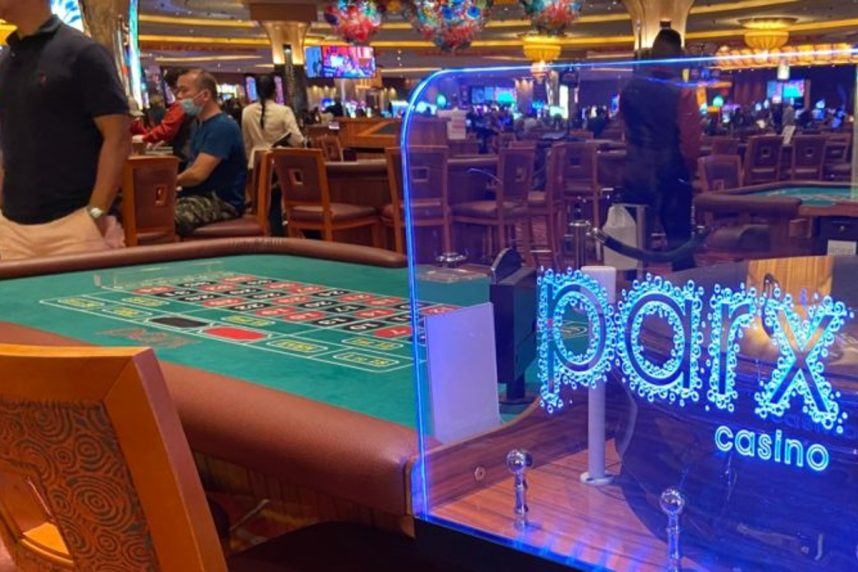
Parx Casino was the top-grossing property in the Pennsylvania gaming industry in 2023. The year was a banner performance for the state industry, as revenue reached nearly $5.7 billion. (Image: Parx Casino)

Pennsylvania has brick-and-mortar casinos, iGaming, in-person and online sports betting, truck stop video gaming terminals, and fantasy sports. In 2023, the varying gaming interests combined to win a record $5.697 billion. The 2023 win represents a 9.3% year-over-year increase.

The year-end report from the Pennsylvania Gaming Control Board (PGCB) revealed that iGaming, consisting of online slot machines and table games, was primarily responsible for the record performance. Internet gamblers lost $1.74 billion, 28% more than they did in 2022.

Physical slot machines inside the state’s 17 casinos also fared well, as the terminals generated record gross gaming revenue (GGR) of $2.46 billion, a 3% improvement. Oddsmakers saw their sports betting hold climb more than 14% to a record $458.6 million.

The other verticals experienced slight year-over-year declines. Casino table game win dropped 2% to $990.5 million. VGT revenue fell 2% to $42 million, and revenue from fantasy sports contests slowed by 10% to $20 million.

iGaming Surging

iGaming in the six states where online casinos are legal continues to thrive. The $1.74 billion won by the online channels last year continued the sector’s impressive run.

Pennsylvania legalized iGaming through the state’s 2017 gaming expansion package. Online operations didn’t go live until late 2019.

iGaming’s first full year in Pennsylvania in 2020 came at a most suitable time. As the state ordered its physical casinos to shutter amid the pandemic, online casinos were open for play. iGaming platforms won more than $565.7 million that year.

Pennsylvania online casinos have only furthered their growth since. iGaming GGR in 2021 topped $1.11 billion, and ballooned to $1.36 billion in 2022.

The state’s land-based casinos have managed to increase their revenues despite iGaming’s significant revenue increases.

Retail slots and tables won $3.43 billion last year, a 1.6% year-over-year increase. The 2023 casino win also represents a 7% surge on 2021 GGR, but was only 5% richer than pre-pandemic 2019.

While brick-and-mortar casinos in iGaming states have managed to increase their year-over-year GGRs, analysts have expressed concerns that the online games could be slowing more robust brick-and-mortar growth.

Parx Leads

Parx Casino north of Philadelphia was the top-grossing casino in the commonwealth last year. The property won $386.2 million on its slots and $202 million on its tables for a combined haul of $588.2 million.

Parx and its sister casino, Parx Casino Shippensburg, are the only smoke-free casinos in the state.

Wind Creek Bethlehem placed second with GGR of $526.3 million, with slots accounting for $285 million and tables for $241.3 million.

As for iGaming, Penn Entertainment’s Hollywood Casino online brand led the way with revenue of $712.4 million. Penn held an impressive 41% market share of the iGaming industry. There are 12 online casino operators.

Pennsylvania Loses to New Jersey

Nevada and New Jersey had long been the country’s two richest gaming states until 2022 when Pennsylvania squeaked by the Garden State for second place. Pennsylvania’s 2022 GGR of $5,211,274,456 edged New Jersey by just $28,735.

New Jersey regained the second spot in 2023 after reporting GGR of more than $5.77 billion. Nevada hasn’t yet revealed its December numbers, but through November, the state’s casinos won more than $14 billion.

The post Pennsylvania Gaming Industry Reports Best Year Ever, 2023 Revenue Nearly $5.7B appeared first on Casino.org.

Las Vegas’ Allegiant Stadium Nearly Doubled 2022 Tourism Forecast

Nearly half of the 1.7M fans who packed sporting and music events at Allegiant Stadium in 2022 were tourists, according to a new report in the Las Vegas Review-Journal. That is nearly double the number that was originally forecast.

Allegiant Stadium Las Vegas
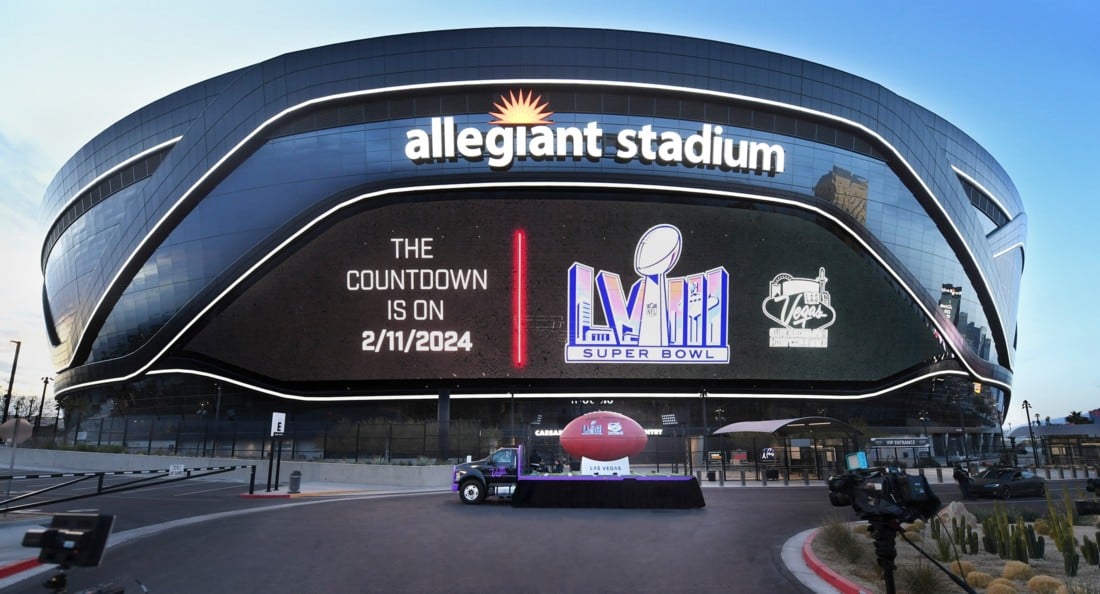
The top-attended Allegiant Stadium event in 2022 was the Las Vegas Raiders vs. Los Angeles Chargers NFL game on January 1. It drew 58,871 fans. (Image: Facebook)

Stadium Authority chair Steve Hill — who also serves as president and CEO of the Las Vegas Convention and Visitors Authority — told the newspaper that his organization had predicted that tourism would account for only 27% of an average Allegiant crowd. Instead, that number turned out to be somewhere between 40% and 49%.

About 65% of the approximately 500K fans who attended the last five Raider home games of last season (or 325K) came from out of town, according to the stadium authority, with a high of 69% (or 39.9K) coming for the December 18, 2022 matchup against the New England Patriots.

But the highest percentage of tourists was the whopping 87% (or 48,716 fans) in the stands for the October 8, 2022 one-off Shamrock Series football game between Notre Dame and BYU. According to the stadium authority, 81% of those fans traveled to Las Vegas specifically to attend that game.

In Your Face, Doubters!

This is great news for Las Vegas tourism, the kind winning converts of those who opposed the original plan to build Allegiant.

Constructed between 2017 and 2020 to bring the NFL’s Raiders over from Oakland, the stadium cost $1.9B. That makes it the second most expensive stadium ever built — after the Rams’ $5.5B SoFi Stadium in LA. The difference is that SoFi was 100% privately funded, while $750M of Allegiant’s price tag was footed by municipal bonds issued by Clark County. Those bonds were backed by the proceeds of a 1.4% special tax on Las Vegas hotel rooms — a tax that also partially funded an expansion of the Las Vegas Convention Center.

In 2016, two grassroots lobbying organizations fiercely opposed the public funding, noting that it came at a time when state budgets had been slashed by $300M to cover shortfalls. In a statement made at the time, Nevadans for the Common Good said the stadium deal “involves substantial risk to the public without providing commensurate community benefits.” A statement from the Nevada Taxpayers Association noted that there was “significant data indicating that subsidized stadiums can be a detriment to a community.”

News of Allegiant’s unexpectedly high 2022 contribution to Las Vegas tourism was  enough to get at least one former naysayer singing a new tune. In 2016, Tick Segerblom, now a Clark County Commissioner, was one of only five state senators who voted against Allegiant’s public funding.

“The truth is, I think it’s beat everybody’s wildest expectations,” Segerblom told the R-J. “It filled a void and now we can hold any event in the world. It really has been incredibly beneficial.”

The post Las Vegas’ Allegiant Stadium Nearly Doubled 2022 Tourism Forecast appeared first on Casino.org.

Kentucky House Passes Sports Betting Bill By Nearly 2-to-1 Margin

The Kentucky House passed a bill to legalize sports betting in the state early Monday evening.

Meredith
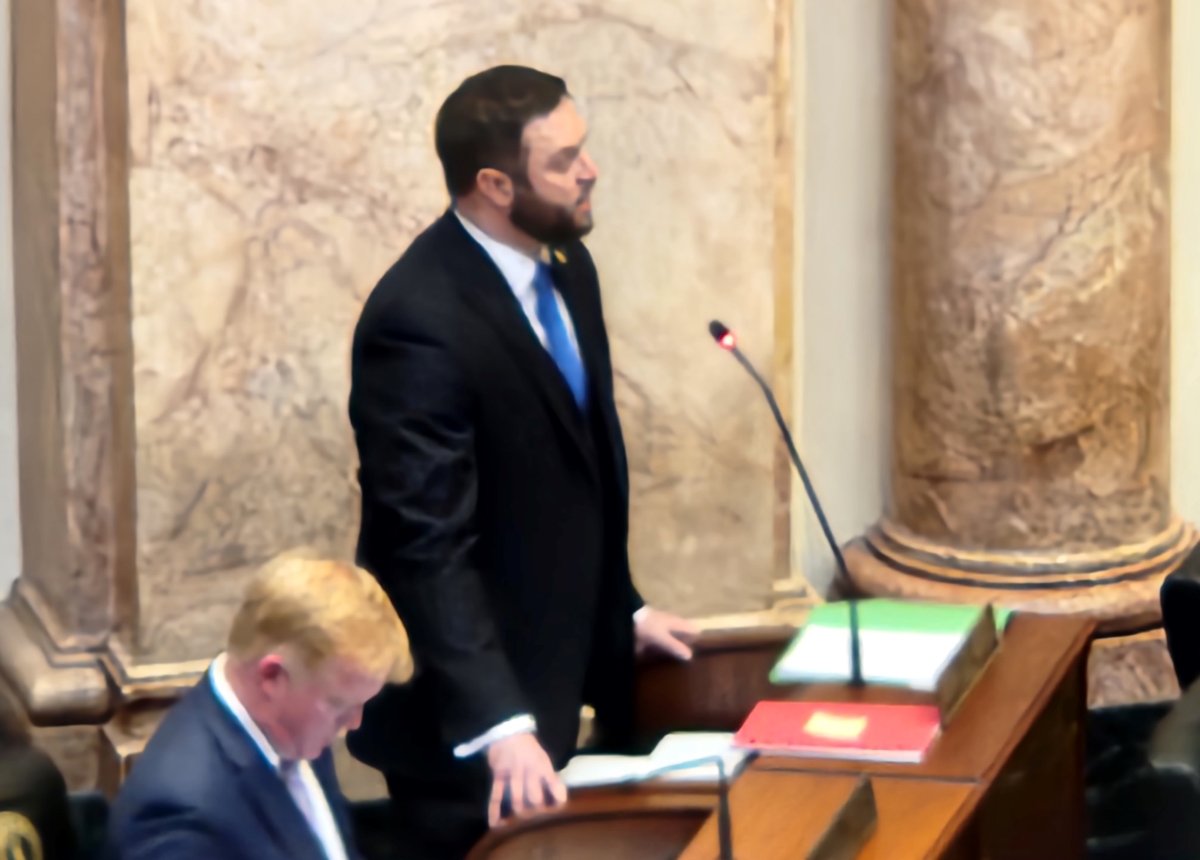
State Rep. Michael Meredith discusses House Bill 551, which would legalize sports betting in the state, on the House floor Monday. The bill passed by a nearly 2-to-1 margin and now heads to the Senate. (Image: Casino.org)

The 62-34 vote on House Bill 551 cleared the three-fifths majority supporters needed to get since the bill generates revenue and makes appropriations in a non-budget year.

The bill would allow Kentucky’s nine racetracks to offer retail sportsbooks at its tracks and simulcasting facilities. It also would allow tracks to partner with up to three mobile operators each.

Tracks would pay $500,000 for a license, with an annual renewal fee of $50,000. Operators would pay a $50,000 license fee and an annual renewal fee of $10,000.

Retail sports betting revenues would be taxed at 9.75% of adjusted gross revenues, while online operators would pay a 14.25% tax. The only deductions allowed would be for the .25% federal excise tax the federal government places on each wager.

It’s the second straight year the House has passed a bill. Once again, the bill now heads to the Senate, where last year’s bill died after failing to get a committee hearing or a floor vote before the session ended. This year, the bill will need 23 yes votes to pass in the 37-member Senate.

However, supporters are expressing optimism for this year’s bill, even as just five legislative days remain in the session.

State Rep. Michael Meredith, R-Oakland, the bill’s primary sponsor, believes they are about a couple of votes away from the 23 they need to pass the bill in the Senate this year.

Problem Gaming Fund Added to Bill

One reason for Meredith’s optimism is what was included in a House floor amendment Monday. That bill included a provision for a problem gaming fund, with that fund receiving 2.5% of the tax revenue generated annually.

That was explicitly added, Meredith said, because a couple of senators requested it.

Hopefully, that’ll shore up those (votes), and we’ll narrow it down,” Meredith told Casino.org after the bill’s passage.

The problem gaming fund was one that state Rep. Al Gentry had championed, D-Louisville, who has been the primary co-sponsor on sports betting legislation in the House.

Gentry had filed a bill earlier in the session that would have created a problem gaming fund that would have received money from all sectors of legal gaming in Kentucky. While this fund would only be covered by sports betting tax revenue, he told Casino.org he was still delighted to see it inserted.

Kentucky is one of a few states that does not have a problem gambling fund.

“I put a lot of work into pushing that for a few years now and glad to see it’s in there,” he said.

In addition, both Meredith and state Rep. Matt Koch, R-Paris, have talked about bringing up a more comprehensive problem gaming fund for next year’s session.

The problem gaming fund was the second significant positive change for the bill. Last week, the House Licensing, Occupations, and Administrative Regulations Committee approved a substitute bill that removed a 12-month, in-person licensing requirement for mobile account registrations.

While the House passed Meredith’s floor amendment, two others brought by a bill opponent failed.

State Rep. Josh Calloway, R-Irvington, sought to ban the use of credit cards for sports betting deposits and raise the minimum age to place a wager on a sporting event from 18 to 21. Both failed, with the age change falling by a 39-48 vote.

Calloway, after his amendments were defeated, said on the floor that he would not stop fighting for Kentuckians, especially against things that can “destroy people’s lives permanently.”

Time Running Out in Kentucky General Assembly

Supporters of the sports betting bill received good news last week when an advanced agenda for Tuesday’s Senate Licensing and Occupations Committee hearing included HB 551. However, Meredith said , after Monday’s vote, the committee may not take up his bill until possibly Wednesday. The Senate L&O Committee is also expected to take up the gray/skill games bill that passed the House last week and a bill that would legalize medical marijuana.

While Meredith and other supporters express optimism about the bill’s chances, the clock is running out on this year’s session.

After Monday, there are just five legislative days remaining. Three of them take place this week, with lawmakers recessing starting on Thursday for Gov. Andy Beshear’s veto consideration period.

The session will conclude on March 29-30.

Another thing the bill has in its favor is Beshear’s support. He campaigned four years ago on legalizing sports betting and reiterated that support earlier this year in his State of the Commonwealth address.

“I don’t think you’re going to see a veto,” Meredith said. “So, I think everybody’s pretty comfortable sitting it down until after the veto period.”

The post Kentucky House Passes Sports Betting Bill By Nearly 2-to-1 Margin appeared first on Casino.org.