Venetian Slot Outage NOT a Cyberattack, Las Vegas Casino Insists

An outage taking at least 50 slot machines out of service at The Venetian on Friday was not the result of a cyberattack, officials with the Las Vegas Strip resort insisted.
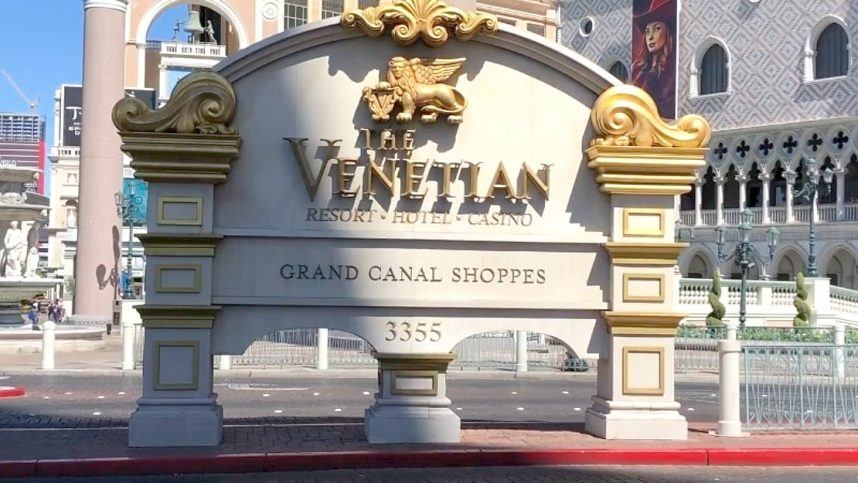
The Venetian
When The Venetian suffered an outage of its slot machines on Friday, casino attendants reportedly told guests it was from “a system-wide upgrade.” (Image: beatthefish.com)

At around 2:45 p.m., gaming-floor guests began posting on social media that slot machines were either down or glitching. The outage apparently ended around 4:30 p.m.

Today, we experienced a brief outage of some of our slot machines,” read a statement from The Venetian to the media. “This was not a cyber-related incident. Slot machines have now been restored, and we are working with guests who were impacted.”

A normally trivial slot outage at The Venetian — and the casino resort’s need to issue a media statement about it — illustrates how on edge every casino on the Las Vegas Strip is right now about cyberattacks. This week, MGM Resorts International (MGM) and Caesars Entertainment (CZR) admitted to being hit by them.

According to KLAS-TV, attendants at The Venetian told guests at the time that the outages resulted from a “system-wide upgrade.” Perhaps The Venetian upgraded its system security in light of current events.

Caesars paid a ransom after getting hit by ransomware a few weeks ago, according to a report from The Wall Street Journal. However, it stated that the company paid half of the $30 million originally demanded. According to a filing with the U.S. Securities and Exchange Commission, Caesars said its breach compromised customer driver’s licenses and Social Security numbers that were part of a customer loyalty program database.

Citing an ongoing investigation, MGM Resorts has yet to confirm what kind of cyberattack it is facing or what customer data, if any, was stolen. However, according to the credit rating firm Moody’s, it faces potential revenue losses, litigation, and a big hit to its reputation regardless of the damage the attack did.

Maybe Not Now, But Then…

The Venetian was the target of a cyberattack in February 2014, back when it was owned by billionaire Sheldon Adelson.

The attack had no financial motive and was apparently orchestrated to punish Sands’ CEO and largest shareholder for comments he made the previous October during a panel discussion at Yeshiva University. During that discussion, Adelson suggested that the U.S. should detonate a nuclear bomb in the Iranian desert if Tehran continued its nuclear program.

According to former U.S. Director of National Intelligence James Clapper, the Iranian government was behind the attack.

Adelson died in 2021. A year later, his family sold the casino resort and its sister property, The Palazzo, to its current owner, Vici Properties. Apollo Global Management operates it.

The post Venetian Slot Outage NOT a Cyberattack, Las Vegas Casino Insists appeared first on Casino.org.
LOST VEGAS: The Las Vegas Park Racetrack

Las Vegas Park opened 70 years ago this week. And you can easily be forgiven for never having heard of the one-mile horse track that was located on the site of today’s Las Vegas Country Club and Westgate Hotel.

That’s because it operated for a total of 13 days.

Las Vegas Park
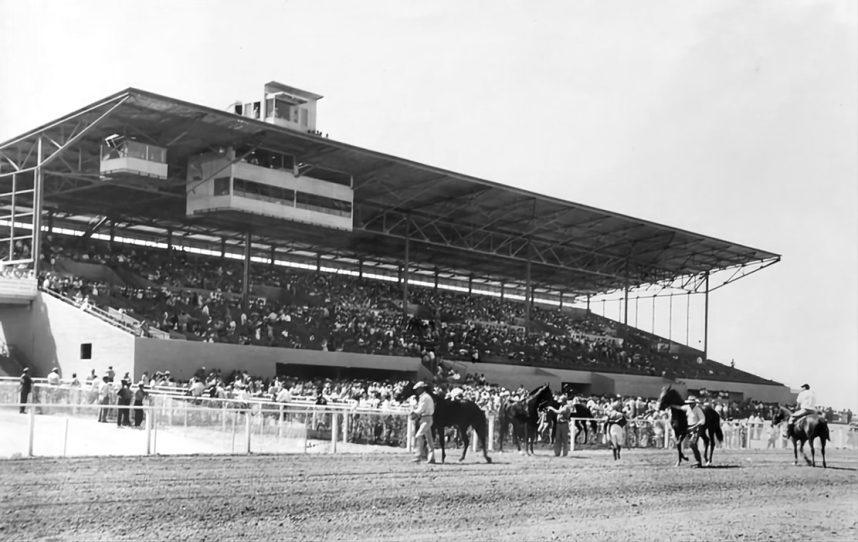
Opening day of Las Vegas Park, Sept. 4, 1953. (Image: Keeneland Library Thoroughbred Times Collection)

Las Vegas Park opened with giant aspirations on Sept. 4, 1953 for a 67-day inaugural meet. Its failure to meet those aspirations, or even to complete that schedule, is legendary.

It Seemed Like a Good Bet

Las Vegas Park
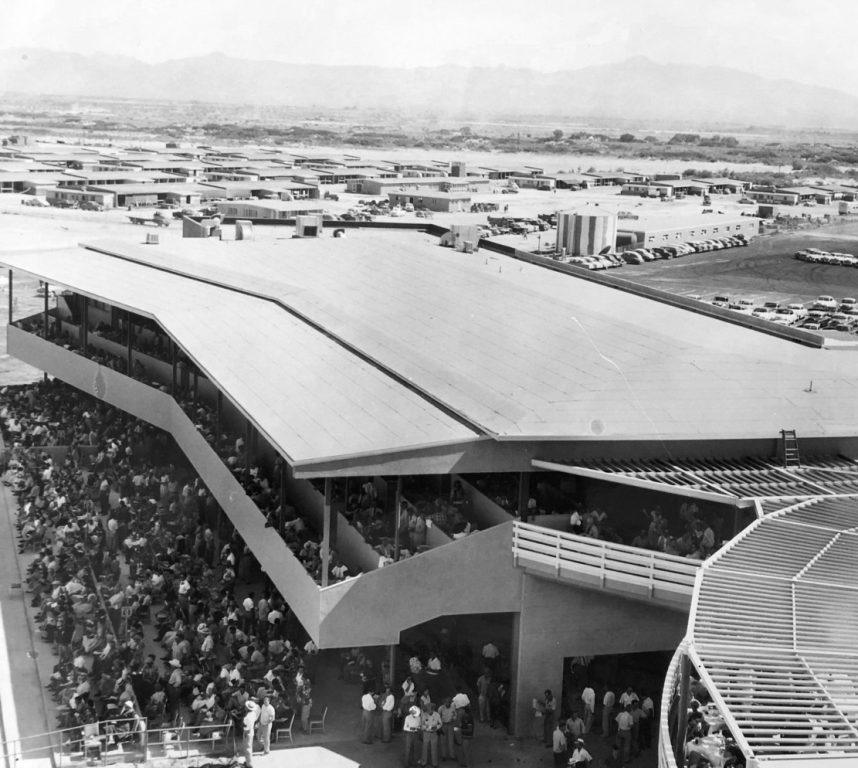
The clubhouse and turf club on one of the few race days at Las Vegas Park in 1953. (Image: Keeneland Library Thoroughbred Times Collection)

Las Vegas’ birth as an entertainment and gambling mecca dovetailed perfectly with the ‘50s boom in Thoroughbred racing. In fact, Las Vegas Park even made history as America’s first racino. (The Las Vegas Gaming Commission permitted 165 slots at the racetrack.)

It was gorgeous for its day, too. The clubhouse and grandstand were painted pink to replicate Argentina’s Hipodromo Rosado. Virtually no expense was spared in its $4.5 million budget (more than $40 million today).

And its schedule fit neatly in between the end of the Del Mar race meeting and the start of the Hollywood Park meeting.

This track seemed like a sure bet to host one of the premier Kentucky Derby prep races.

So how did something so perfect stumble out of the gate?

Major Blinders

Before the track ever opened, it already had a backstory tainted by corruption, embezzlement, and major blinders.

Las Vegas Park
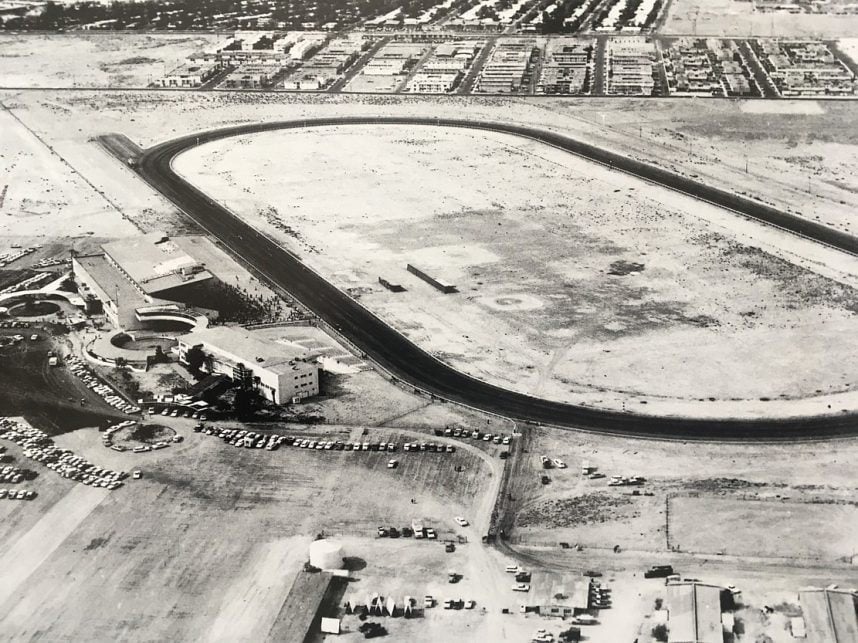
An aerial view of Las Vegas Park shows Sahara and Karen avenues at the top. (Image: Vintage Las Vegas)

That backstory began with Joseph M. Smoot — a New York racing promoter who had an early hand in the success of the Santa Anita and Hialeah racetracks, and figured that meant he could do anything.

In 1948, Smoot purchased 750 acres of vacant land just east of the Strip from the Leigh Hunt estate, at $750 per acre, and began constructing his dream a year later.

But a little more than a year after that, Smoot woke up in a nightmare. He was charged with three counts of embezzling $24K from the Las Vegas Thoroughbred Racing Association, over which he presided. During a hearing, a federal court judge  reportedly asked Smoot to produce receipts or canceled checks for $500K that reportedly went missing without a trace.

Smoot responded: “You ever try to pay a politician with a check?”

Smoot remained under indictment until he died of natural causes in 1955, penniless, in a free room at the Grand Hotel.

Second Race

By 1953, Las Vegas Park was bought out of its first bankruptcy and completed by the Las Vegas Jockey Club, a new corporation headed by investors including Lou Smith and Al Luke. Counting on a ton of big-name horses, and their big-spending Southern California owners, the partners promised to award $1.9 million — the richest prize ever offered by a first-year track.

To take their bets, they opened the very first $500 betting window at a horse track.

Las Vegas Park
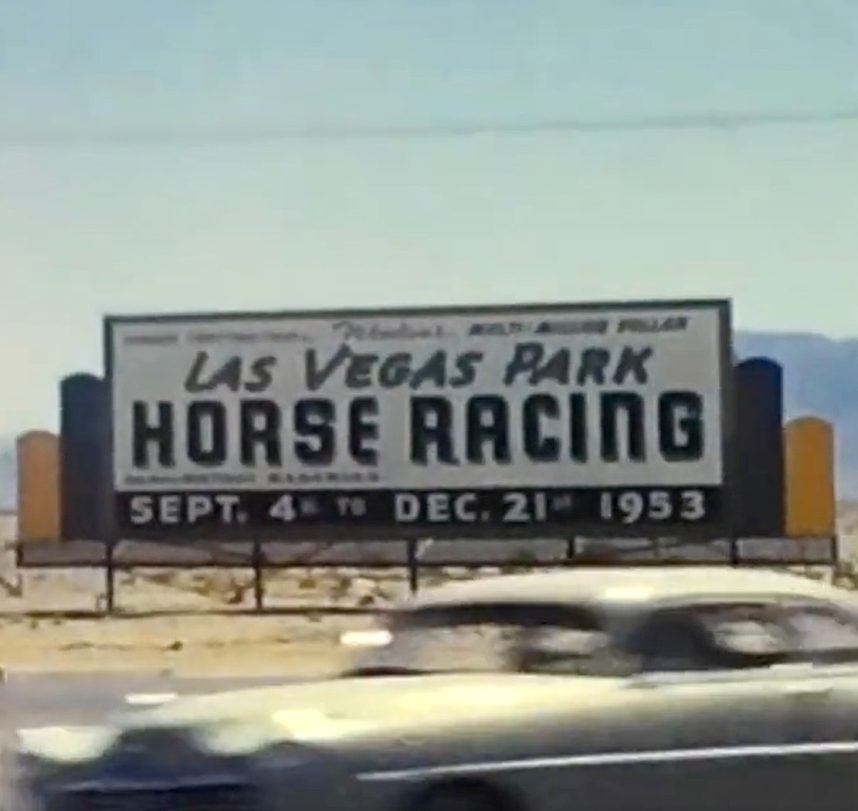
The sign for Las Vegas Park advertises a meet from Sept. 4 through Dec. 21, 1953 that ended two months early. (Image: YouTube/Ryan Lee Price)

When Las Vegas Park finally opened that Sept. 4, some of the horses came. (Among the 75 that ran was 15-time stakes winner Blue Reading.) But the big spenders were mostly AWOL. A devastating take of $252,683 fell nearly $150K short of the $400K daily requirement for the racetrack to meet expenses.

And the local population couldn’t  fill the void left by absentee tourists. Clark County had only 50,000 residents back then, compared to nearly 3.3 million today. In all, 8,200 paying customers occupied a space designed to hold 20,000.

Malfunctioning ticket booths, only one entrance that worked, and a major malfunction of the infield tote board didn’t help matters. After its third day open, the track closed for two weeks while a replacement board was installed, erasing what little momentum and word-of-mouth opening day generated.

After Las Vegas Park reopened, it didn’t log a single break-even day . When 4,000 customers wagered a total of $100K on Oct. 10, veteran racing journalist Pete Bonamy called it “one of the poorest showings by a racing crowd ever recorded.”

Las Vegas Park closed on Oct. 19, 1953, after racing only 13 programs.

“Racing needs population,” columnist Leon Rasmussen wrote in Thoroughbred Record magazine at the time, “and although Las Vegas does not hew to convention in very many ways, it is still not quite fabulous enough to sustain a track as pretentious as this one hoped to be.”

Beating a Dead Horse Track

Its stables were vacated in October 1953, though the complex was revived for another short but failed horseracing run the next year. The daily attendance recorded by the Las Vegas Turf Club in December 1954 was even more dismal than its predecessor — at times as low as 400. That experiment lasted seven weeks.

Las Vegas Park
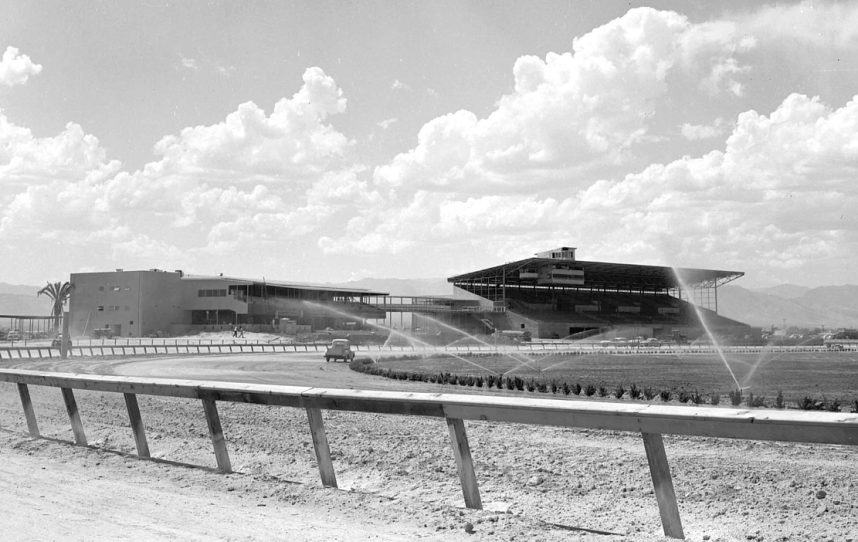
Las Vegas Park during its construction in 1951. The turf course, shown being watered, would have been the first used for racing the western US, but it was never used. (Image: Las Vegas News Bureau)

By January 1955, an oil magnate bought the racetrack out of its second bankruptcy for $2.65 million. But Joe W. Brown didn’t intend to build a third failed horseracing track. His thing was purchasing properties to hold onto them for others. Two years earlier, he purchased the Horseshoe Club from his old Texas buddy, Benny Binion, so he could run it while Binion served four years in Leavenworth Penitentiary for tax evasion.

And Brown purchased Las Vegas Park for a similar reason. He was holding onto it while the City of Las Vegas got its ducks in a row. The city wanted a portion of the land to build what eventually became the Las Vegas Convention Center, but didn’t have the funding at the time.

By January 1956, that deal was complete and the first convention hall — a 6,300 capacity, silver-domed rotunda with an adjoining 90,000 square-foot exhibition hall — opened following Brown’s death three years later. On Aug. 20, 1964, it hosted the only Beatles concert in Las Vegas.

Vroom For Rent

While it awaited demolition, the mostly intact and renamed Las Vegas Park Speedway was repurposed for auto racing. It hosted three major races: the AAA Champ Car event in 1954, the NASCAR Grand National Championship in 1955, and a United States Auto Club Grand Prix in 1959.

In 1965, Brown’s estate sold most of its remaining acreage to National Equities Inc., which used it to construct the Las Vegas Country Club — along Joe. W. Brown Drive.

National Equities sold a leftover parcel to hotel magnate Kirk Kerkorian to build the International Hotel. An extra 20 acres was sold to Clark County to expand the Convention Center. And the southeast corner became the site of the Regency Tower, Las Vegas’ first residential high-rise.

Las Vegas Park was finally demolished in 1966.

“Lost Vegas” is an occasional Casino.org series featuring remembrances of Las Vegas’ lesser-known history. Click here to read other entries in the series. Think you know a good Vegas story lost to history? Email corey@casino.org.

The post LOST VEGAS: The Las Vegas Park Racetrack appeared first on Casino.org.

VEGAS MYTHS BUSTED: The ‘World’s Tallest Thermometer’

The “world’s tallest thermometer” in Baker, Calif. is a liar.

It’s not that there’s a taller thermometer somewhere in the world robbed of its rightful title. It’s that the spectacle that towers over the Mad Greek Café, a dozen gas stations, and everything else in the Mojave Desert town two-thirds of the drive up Interstate 15 from LA to Vegas isn’t a working thermometer.

World's Tallest Thermometer, Baker, desert, Las Vegas
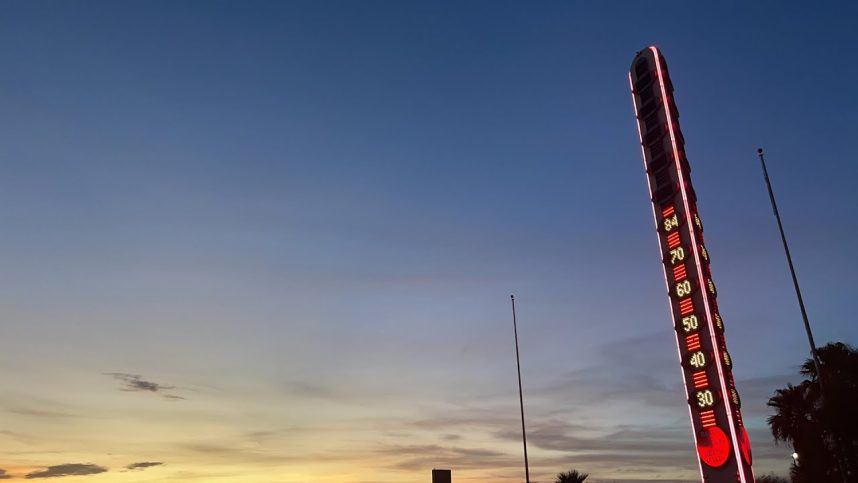
The “world’s tallest thermometer” can be seen dozens of miles away from its location in Baker, Calif. (Image: YouTube)

It’s just a three-sided digital sign that displays the temperature measured by a thermometer that is real — but much, much smaller — located somewhere inside of it.

And, as far as freestanding digital signs go, the “world’s tallest thermometer” doesn’t even make the Top 10. The current record holder, located 94 miles north of Baker in Las Vegas, is nearly three times its size. And before the MSG Sphere’s 366 foot tall LED outer skin was switched on this July 4th, the record holder was the Aria sign — also in Las Vegas — at twice the size of Baker’s digital sign.

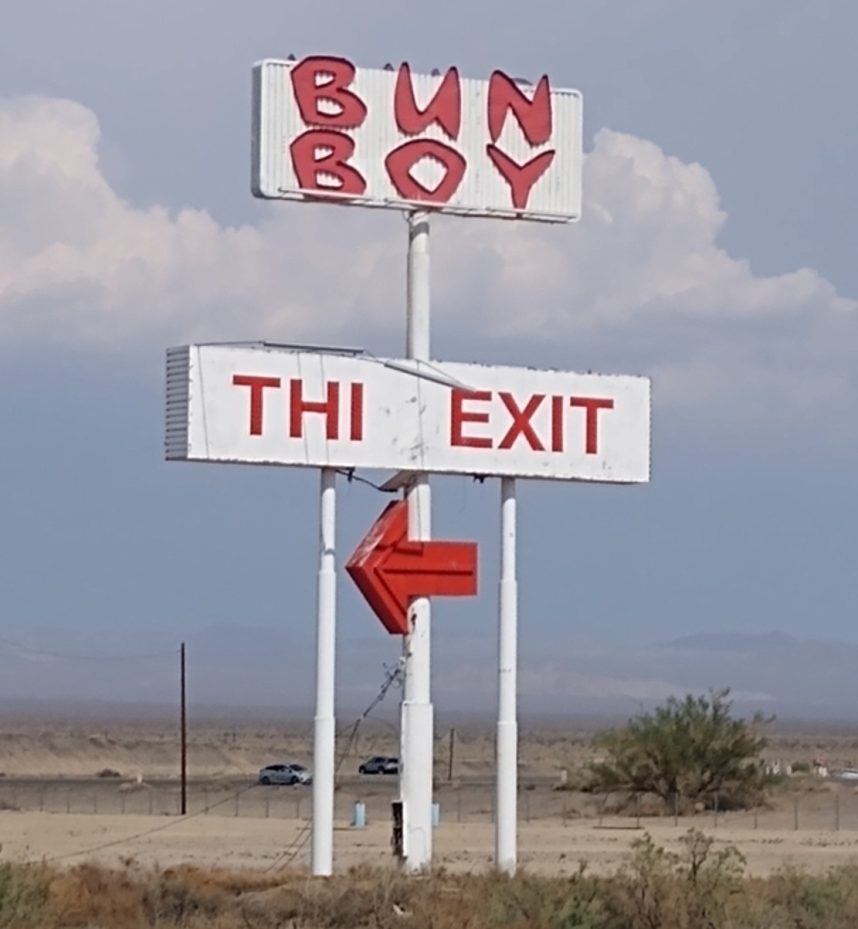
Bun Boy, restaurant, sign, Baker
This sign wasn’t tall enough for restaurateur Willis Herron. So he conceived of a bigger idea. (Image: weirdca.com)

Bun Warmer

In 1956, Willis Herron became a co-owner of the Bun Boy on Baker Boulevard. According to its roadside sign, this restaurant was the “home of the best fresh strawberry pie & butter thin pancakes.”

When the Bun Boy burned down in 1990, Herron sought to rebuild it but to add something memorable for the public to associate it with — other than offensive jokes about the restaurant’s name.

At the time, Baker was known to the outside world for only two things — being a rest stop and being hot as blazes. So Herron threw in with the latter, and paid YESCO $700K to do its thing. (The Salt Lake City-based Young Electric Sign Co. built Vegas Vic and owns and operates the Welcome to Fabulous Las Vegas sign.)

The resulting sign featured 5,000 incandescent light bulbs and stood 134 feet tall. That wasn’t coincidental. It’s because 134 degrees was the highest official temperature ever recorded on Earth — set in neighboring Death Valley on July 10, 1913. (Click here for a trip into the weeds about whether that record may have also been a myth.)

After it was built but before it was switched on, Herron’s sign was snapped in two by 70 mph winds that also trashed a gift shop below it. It was rebuilt and 125 cubic yards of concrete were poured into its steel core as reinforcement. Opening day was Oct. 9, 1992.

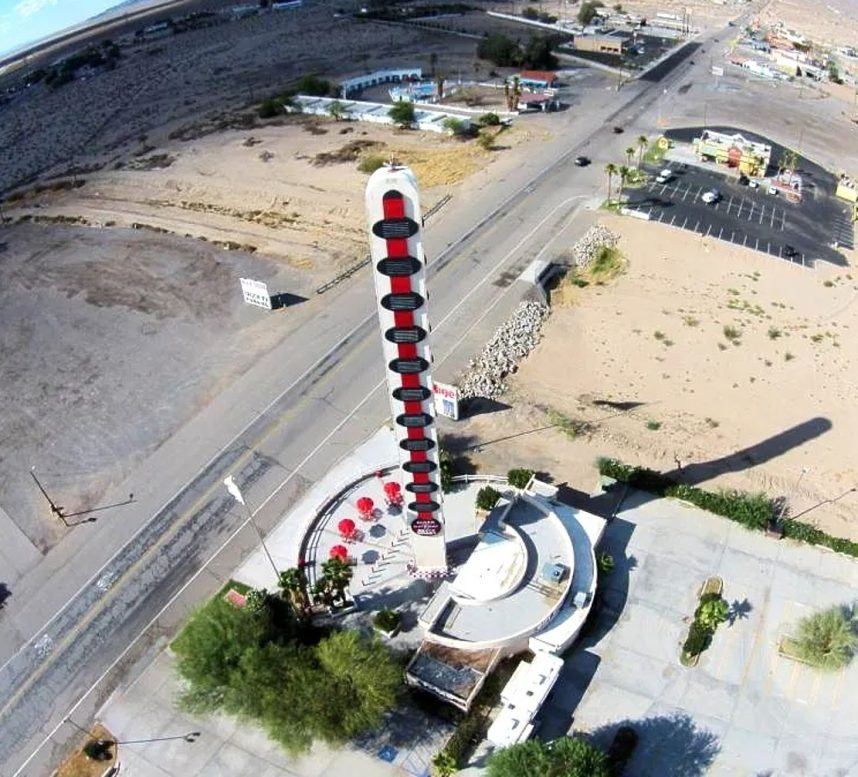
World's Tallest Thermometer, Baker, desert, Las Vegas, tourist attraction
Baker, Calif.’s biggest tourist attraction as photographed by a drone. (Image: worldrecordacademy.org)

Under the Weather

Eight years later, an ailing Herron sold his thermometer — along with his Bun Boy and an associated motel — to a Burger King franchisee. Five years after that, the franchisee sold them to a local businessman named Matt Pike. Pike turned the Bun Boy into a Bob’s Big Boy and, in 2012, switched off the fake giant thermometer to save on its very real giant electric bill: $8K a month.

Yet saddened tourists still stopped to take photos of darkened sign. So Herron’s widow vowed to buy it back.

Though Pike’s $1.75 million asking price was too steep, a foreclosure and a court order by a federal judge intervened. In a ceremony attended by all 916 Baker residents two years later, Barbara Herron switched her late husband’s crowning achievement back on. Only now, it used energy-saving LEDs.

After Barbara died in 2022, ownership of the sign passed to her children.

Bonus Tall Tale

Because the temperature in Death Valley was never expected to top 134 degrees Fahrenheit, that’s supposedly the highest temperature the sign is capable of displaying.

Nope. This is also a myth, because the sign can go up to 139 degrees.

“The digital readout is set up to go up by ten-degree increments between the balls,” LaRae Harguess, one of the Herron children, told Casino.org. “The highest ball is 130, so 139 is the highest it will go, since there isn’t a 140 ball.”

Could a new computer program be written written to accommodate even higher temperatures caused by global warming?

“Not without changing everything,” Harguess said.

Look for “Vegas Myths Busted” every Monday at Casino.org. Visit VegasMythsBusted.com to read previously busted Vegas myths. Got a suggestion for a Vegas myth that needs busting? Email corey@casino.org.

The post VEGAS MYTHS BUSTED: The ‘World’s Tallest Thermometer’ appeared first on Casino.org.

Big Ten Mulling Move of Football Title Game to Las Vegas

The rapidly expanding Big 10 Conference is considering moving its football championship game and Las Vegas is reportedly one of the cities under consideration.

Big Ten
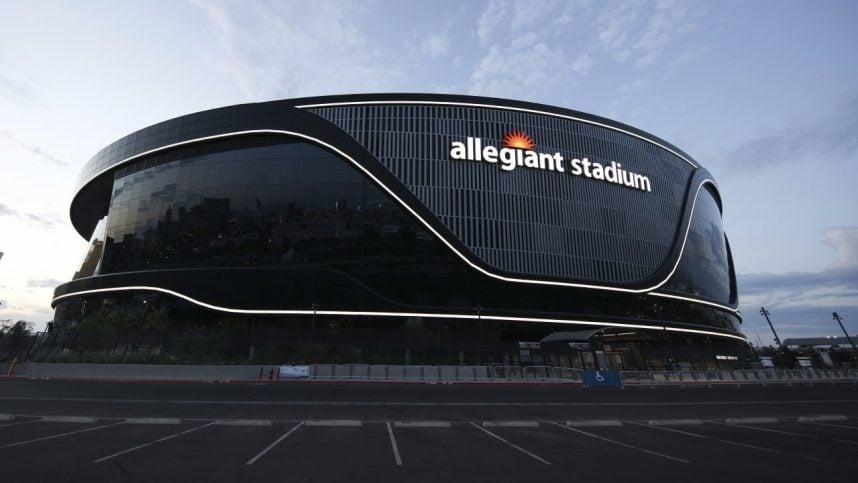
Allegiant Stadium, home of the Las Vegas Raiders. The venue could be a future host of the Big Ten championship game. (Image: NFL.com)

The game, which has been held in Indianapolis since its inception in 2011, would be held at Allegiant Stadium, home of the NFL’s Las Vegas Raiders, if it makes the move to Sin City. The $1.9 billion stadium, which opened in July 2020, already has ties to college football as it serves as UNLV’s home field and the host of the Las Vegas Bowl.

The Big 10 has asked us to submit proposals. I’m sure they have asked a number of cities. We are certainly interested, will put our best foot forward and know there is no better place for their football championship,” Steve Hill, the Las Vegas Convention and Visitors Authority (LVCVA) president and chief executive officer, said in an interview with the Las Vegas Review-Journal.

Allegiant Stadium has hosted the Pac-12 championship game for the past several years and will serve as the home of that conference’s final title tilt later this year. The storied, 108-year-old conference is a shell of itself after other leagues raided its members in the latest round of expansion. That conference and others have also held men’s and women’s basketball tournaments in Las Vegas.

Pac-12 Additions Make Vegas Relevant for Big Ten

The Big 10 is one of the most inappropriately named sports conferences in the world. It’s currently home to 14 universities but next year, that number will swell to 18.

That’s because UCLA and USC, the schools that drove the initial nails into the Pac-12’s coffin, and the Universities of Oregon and Washington are joining the Big 10. There’s also speculation that at some point in the future, the Big Ten could take mercy upon the University of California-Berkeley (Cal) and Stanford, and invite those schools into the league.

Even if that doesn’t happen, the Big Ten’s westward expansion enhances the relevance of Las Vegas as a potential home city, even if it’s on a rotating basis, for the conference’s football championship game.

Additionally, there’s talk that the league will take the Pac-12’s automatic bid for the Las Vegas Bowl, further enhancing its relationship with Allegiant Stadium and Sin City.

Moving Parts in Moving Big Ten Title Game to Las Vegas

As the LVCVA’s Hill told the Review-Journal, it’s possible the Big Ten is talking with other cities, so it’s not a foregone conclusion the league will play a football title game in Las Vegas.

Should Allegiant Stadium host a Big Ten championship clash, the ideal scenario in terms of filling seats and driving visitation to the city would be a combination of UCLA or USC — due to proximity — against the Big Ten’s most venerable brands, Michigan, Penn State, and Ohio State.

While that would be a “perfect world” scenario for a Big Ten title game in Las Vegas, it’s far from guaranteed in any given year. Amid expansion, the conference is dropping divisions, meaning that the two teams with the best records, regardless of geography, will be the participants in the championship game.

That also means that in some years, it’s possible the conference title game will be a rematch of a regular season tilt.

The post Big Ten Mulling Move of Football Title Game to Las Vegas appeared first on Casino.org.
Hard Rock’s Center Bar May Return to Virgin Las Vegas

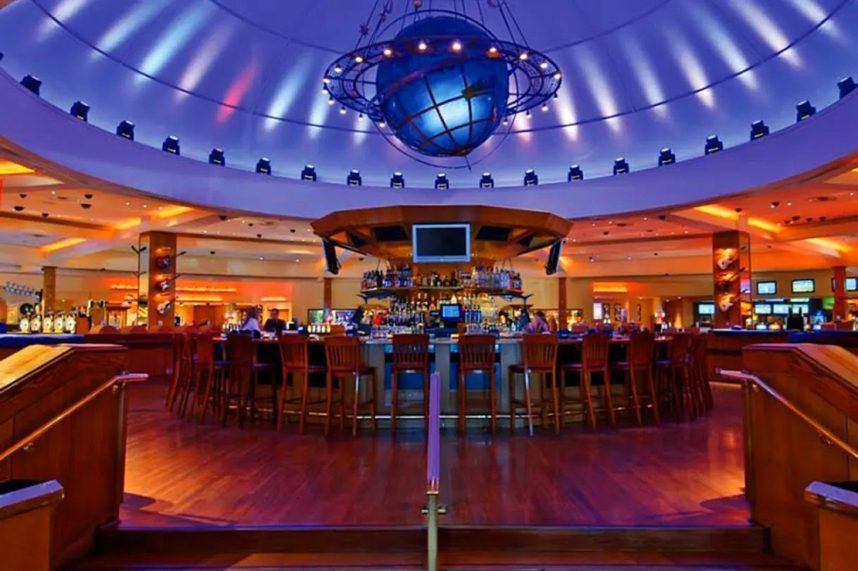
It looks as though the future of the Virgin Hotels Las Vegas may depend in no small part on its past. Cliff Atkinson — the former Fontainebleau Las Vegas president who was installed last month as Virgin Hotels’ new president — says he’s considering bringing back the center bar, the centerpiece of the Hard Rock Hotel from its 1995 grand opening to its quiet 2020 closure.

The original center bar at the Hard Rock Hotel and Casino is pictured before its 2015 renovation and 2020 removal by the property’s current owner, Virgin Hotels. (Image: Hard Rock Hotel and Casino)

“That’s one (idea) we’re heavily considering,” Atkinson told the Las Vegas Review-Journal last week. “You don’t want to go back in time, you want to look forward, but that is one thing people just knew, and they associated with our property.

“If you want to lean into a little nostalgia at this property, that’s a great way to do it.”

In other words, Virgin probably goofed by removing it.

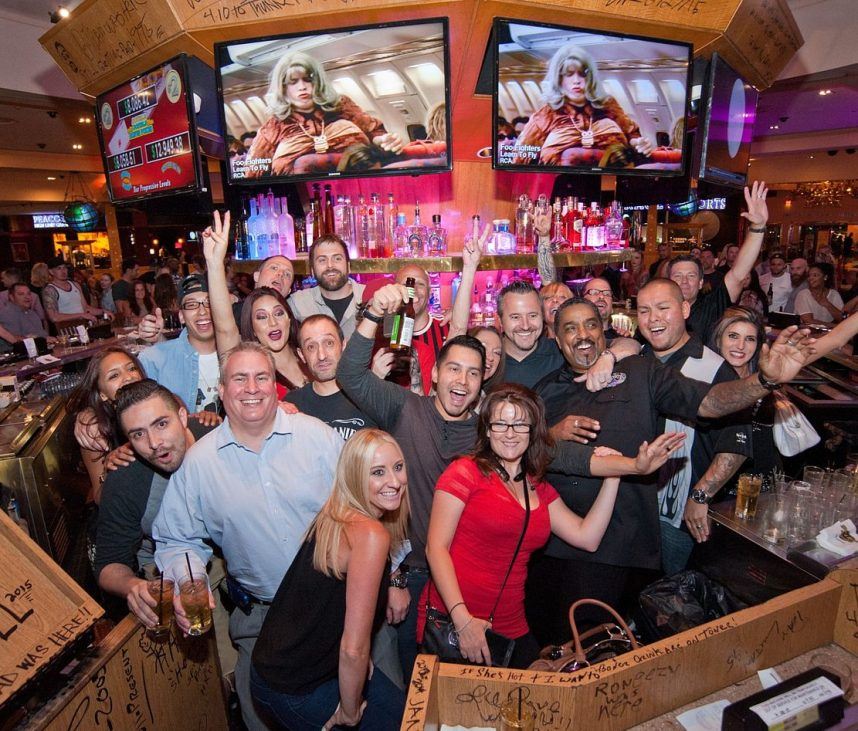
Revelers at the Hard Rock Hotel and Casino’s center bar celebrate its closing for a renovation in 2015. (Image: Eater Vegas)

The Hard Rock Hotel and Casino opened on March 10, 1995 as the world’s first rock n’ roll-themed resort. Despite its off-Strip location — a mile east of the Las Vegas Strip on Harmon Avenue — it was an unmitigated success.

The casino floor’s museum-quality display cases — whose artifacts included a smashed Kurt Cobain guitar and multiple Prince stage outfits — brought seemingly every Gen-X Las Vegas tourist through the door for at least one initial visit.

But it was its center bar — which on Friday and Saturday nights was packed with young people on 360-degree display to the entire casino — that spurred most of its return visits.

Musical Owner Chairs

The property was a joint venture between Hard Rock Café founder Peter Morton and Harveys Lake Tahoe, whose share Morton bought out in 1997. A new 11-story hotel tower was added in 1999, as part of its $100 million initial renovation.

Morton sold the property to Morgans Hotel Group and DLJ Merchant Banking Partners in 2007, prompting its second renovation — to the tune of $750 million.

In 2011, Morgans sold the property to Brookfield Asset Management, which hired Warner Gaming as its operator. Realizing the center bar’s value, Brookfield renovated it, for $3.4 million, four years later. Upgrades were also performed on the resort’s convention facilities and on a number of restaurants.

Brookfield sold the property three years later to Richard Branson’s Virgin Hotels, in partnership with a group of investment firms, for a reported $500 million. Virgin then spent an additional $200 million on yet another renovation to the property — one that removed the center bar.

A Rebrand Too Far?

As strongly suggested by the resignation in March 2023 of Virgin Las Vegas Hotels president Richard ‘Boz’ Bosworth after fewer than two years on the job, Virgin has been unable to recapture the original Hard Rock Hotel’s mojo.

In addition to the center bar, Atkinson, as quoted by the R-J, said his new/old plans also include reopening the Hard Rock’s former Body English, which later served as a theater for Magic Mike.

The post Hard Rock’s Center Bar May Return to Virgin Las Vegas appeared first on Casino.org.