VEGAS MUSIC NEWS: Sick New World Canceled Forever?

“Sick New World” has called in sick, canceling its third and possibly final year at the Las Vegas Festival Grounds on April 12. Its ambitious bill was supposed to include Metallica and Linkin Park, whom organizers were reportedly paying $5 million each.
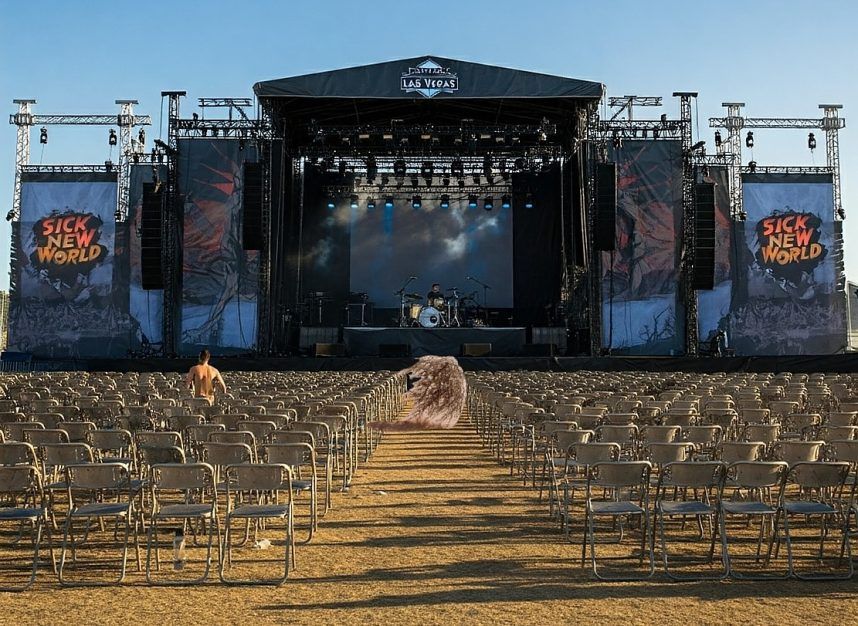
AI renders its interpretation of a canceled “Sick New World” festival. (Image: Google Gemini)

“It is with great disappointment that we announce that Sick New World will no longer take place in Las Vegas on April 12, 2025,” festival organizers posted on the event’s website on Friday. “Despite our best efforts, we’ve encountered unforeseen circumstances that we are unable to overcome for next year’s show.”

The organizers did not identify the circumstances it couldn’t foresee, nor did they speculate on whether Sick New World might be back in 2026 or ever again. However, Vital Vegas has some intriguing guesses, some of which are tied to the fate of Circus Circus.

The festival debuted in 2022 with headliner System of a Down.

“We extend our heartfelt thanks to all the dedicated SNW fans who had made plans to join us for another cultural celebration of hard rock, goth, alternative and heavy music,” the statement continued. “Please stay tuned for further and future information regarding Sick New World.”

Anyone who already purchased tickets from Front Gate Tickets will receive a refund within 30 days, the promoters say.

Josh Groban’s Got a Small One!
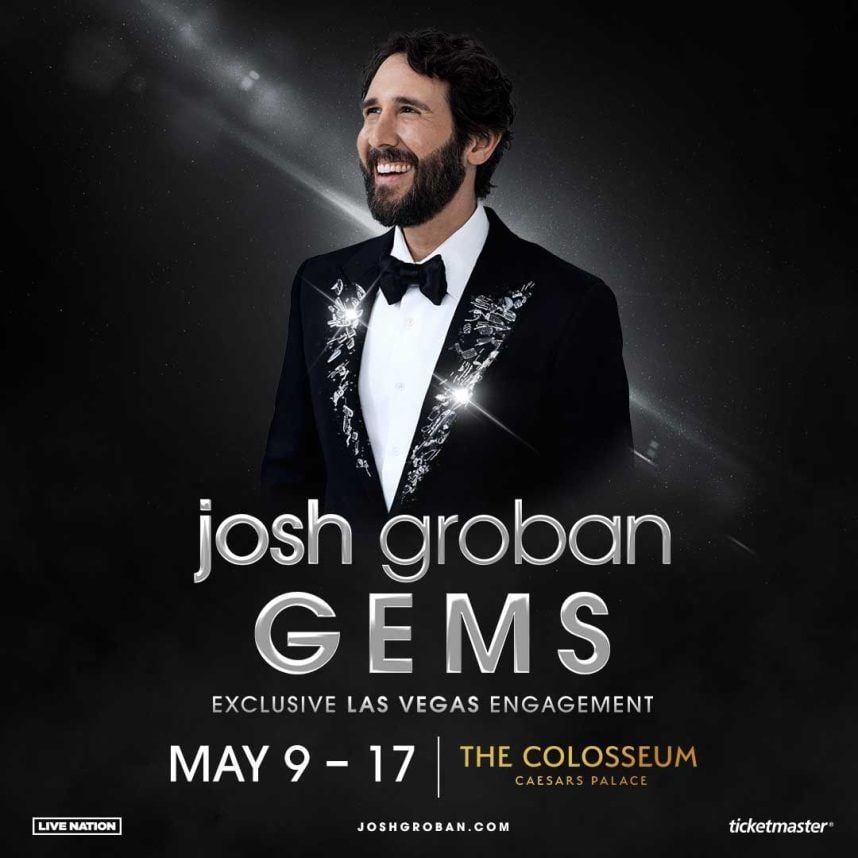
The ad announcing Josh Groban’s Caesars Palace residency. (Image: Live Nation)

A small residency, that is. The classical crossover crooner — who has sold over 35 million albums globally — is playing five nights at the Colosseum at Caesars Palace. That’s 95 shows short of Adele‘s Caesars residency and 15 short of The Killers’.

It’s apparently big enough for its own residency name, however. as performances of of “Josh Groban: Gems” will take place May 9, 10, 14, 16 and 17.

Tickets go on sale 10 a.m. PT Friday, December 6 at ticketmaster.com/JoshGrobanVegas.

Fan club and Citi card members will have access to a presale starting 10 a.m. PT Tuesday, December 3.

Caesars Rewards members, Caesars Entertainment’s loyalty program, as well as Live Nation and Ticketmaster customers, will have access to a presale starting 10 a.m. PT Wednesday, December 4.

Back in Blackjack

As part of their first US tour since 2016, AC/DC will play Allegiant Stadium on April 26, 2025. The tour, which will play 12 other stadiums coast to coast, will feature Stevie Young filling in on rhythm guitar for his late uncle, AC/DC co-founder Malcolm Young, who died from dementia in 2017. Tickets go on sale at noon PT Friday, December 6 via Ticketmaster.

The post VEGAS MUSIC NEWS: Sick New World Canceled Forever? appeared first on Casino.org.

Paraguay Advances Bill to End Gambling Monopoly and Open Market to Competition

 paraguay_moves_to_end_gambling_monopoly_as_bill_to_amend_law_partially_approvedParaguay is taking a significant step toward transforming its gambling industry. In early November 2024, the government presented a bill that aims to amend the country’s gambling legislation (Law No 1,016/1997) and liberalise the market by ending the current monopoly on gambling operations. This initiative, championed by the government’s executive branch, has now been partially approved by the Chamber of Deputies and will move forward to the Senate for final approval.
Key Points of the Bill

The primary objective of the bill is to open up the gambling market to private companies, moving away from the exclusive public tender system that currently governs the industry. Under the new framework, operators will no longer be required to secure gambling rights through tenders. Instead, they will be able to enter the market more freely, fostering competition and allowing for a greater number of stakeholders to operate within the gambling sector.

One of the key provisions of the bill is the strengthening of the National Commission of Gambling (Conajzar), which will be placed under the National Tax Revenue Directorate (DNIT). This move is designed to improve the regulation and oversight of the sector, while also boosting the country’s ability to collect taxes from gambling operations.

Carlos Liseras, President of Conajzar, has expressed optimism about the bill, stating that the liberalisation of the gambling market will lead to enhanced tax contributions for the government, better competitiveness, and more opportunities for both operators and workers in the industry.

Economic and Social Implications

The bill comes at a time of significant social and economic change in Paraguay, with the country’s market undergoing rapid development. As noted by Liseras, technological and economic advancements have spurred the growth of new types of gambling, as well as an increasing number of both providers and users.

Paraguay’s shift toward a more competitive gambling environment reflects the broader economic policy changes under the current government, which came into power in August 2023. The bill is expected to attract more international investments, creating new job opportunities and contributing to the growth of the Paraguayan economy. The competition introduced by the bill will allow workers, such as lottery brokers, to have a choice in selecting which companies to work with, thereby promoting a healthier job market.

Deputy Billy Vaesken, who supported the bill, emphasized that the legislation would create more opportunities within the gambling sector and lead to a more dynamic and diverse market. He explained that greater competition would enable different companies to offer a variety of games of chance, including lotteries, benefiting both workers and consumers.

What’s Next?

The bill has been approved by the Chamber of Deputies and will now be reviewed by the Senate. If approved, the changes could signal a new era for Paraguay’s gambling industry, promoting growth, competition, and innovation. The government hopes that this shift will lead to increased foreign investment, more jobs, and better working conditions in the sector, making it a significant driver for the Paraguayan economy in the coming years.

Source:

“Diputados aprueban eliminar monopolio de juegos de azar”, abc.com.py, November 26, 2024.

The post Paraguay Advances Bill to End Gambling Monopoly and Open Market to Competition appeared first on Casino News Daily.

LOST VEGAS: The Historic Holy Cow Casino

The building that housed the Holy Cow Casino and Brewery, on the northeast corner of Sahara and the Strip, made Las Vegas history for a couple of big reasons.

Tom “Big Dog” Wiesner and his Holy Cow Casino, sometime after the Stratosphere opened down the street in 1996. (Images: urbanphotos.net and Inset: Neenah Joint School District)

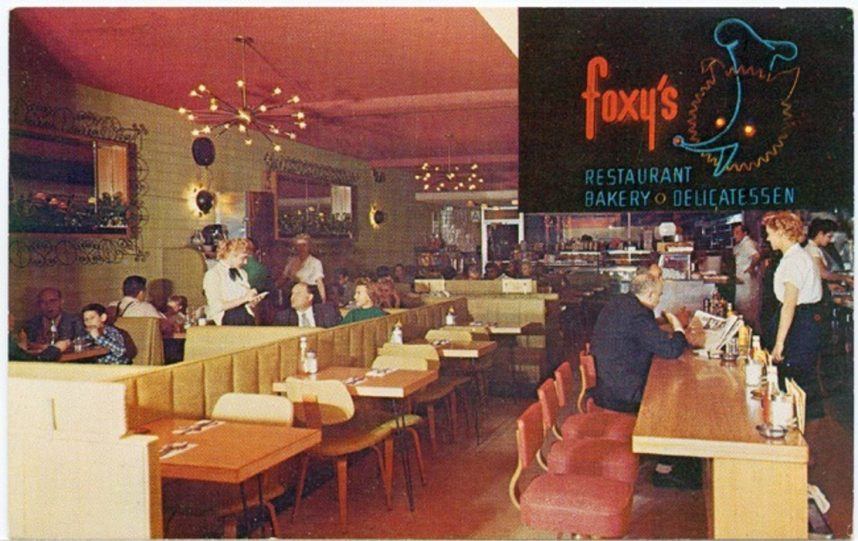
In 1955, five years before the Strip was officially desegrated, the property opened as Foxy’s Deli and became the first restaurant on the Strip to serve Black people. Abe “Foxy” Fox, its Jewish owner from New York, was an early donor to the local NAACP.

“It was an anomaly,” Claytee White, director of UNLV’s Oral History Research Center, told KSNV-TV/Las Vegas in 2017 of Foxy’s, noting that African-Americans at the time “could have some food in the kitchen area, but to go out to get a sandwich, to get something to eat, Foxy’s was the only location.”

Abe and his son, Jerry, would also deliver food to Louis Armstrong, Nat King Cole and other Black entertainers who stayed in trailers in back of the Sands, where they performed but weren’t allowed to stay, eat, gamble or swim.

A postcard from Foxy’s Deli. (Image: KSNV-TV/Las Vegas)

The only deli in town, and open 24/7 to cater to entertainers, Foxy’s became a home away from Shecky Greene, Don Rickles and Liza Minnelli. Liberace often came in with his mother, who loved the stuffed cabbage. Songwriter Paul Williams said he wrote the songs from the 1976 movie “Bugsy Malone” in a rear booth.

In 1975, Fox sold the deli and went into real estate.

“He didn’t want the unions,” Jerry Fox told KSNV. “We had almost 50 employees. He didn’t want the aggravation. Land was going good. He said ‘the hell with it,’ and that was it.”

Fox also owned Foxy Dog, a hot-dog joint with slot machines downtown, from 1966 to 1976.

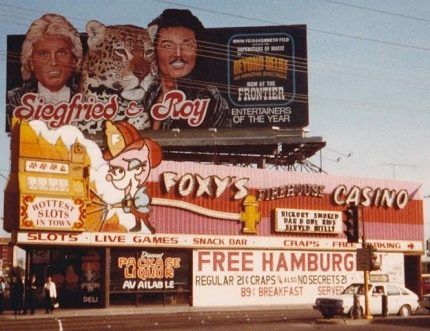
Foxy’s Firehouse Casino gets upstaged by Siegfried & Roy. (Image: Neon Museum)

The new owners of Foxy’s (Donald S. Gilday, Mike V. Stober. Earl Wilson and Melvin Wolzinger) converted it to Foxy’s Firehouse Casino, a slot parlor with about 100 machines and a half-sized craps table. It operated until 1988.

Sacred Cow

In 1989, former NFL linebacker Tom “Big Dog” Wiesner sold his stake in the Marina Hotel to casino magnate Kirk Kerkorian, who incorporated the Marina into the current MGM Grand. Wiesner used the profits to reopen Foxy’s Firehouse as a new casino in 1992.

Wiesner, who grew up in Wisconsin a fan of the nearby Chicago Cubs, named it Holy Cow. That was what legendary Cubs announcer Harry Carey would scream to emphasize big plays. (One of Wiesner’s childhood dreams was realized the day Carey signed a wall inside with his signature phrase.)

Wiesner had a 14-foot-tall fiberglass Holstein built and installed on the casino’s roof. She wore sunglasses and was encircled by a neon rainbow. He named her Alphie.

A year after opening, the Holy Cow made its own history by opening the first legal brewery in Nevada.

At the time, the Silver State followed a three-tiered system for liquor sales, an archaic law established at the end of Prohibition in 1933. The law required producers of beer to sell their products only to wholesalers, who would then sell to retailers. They couldn’t sell directly to consumers.

Wiesner, who had served as a Clark County Commissioner from 1970 to 1978, helped lobby for the 1993 state law that allowed him to add the brewpub.

Udder Disappointment

The Holy Cow was successful for nearly a decade, but was forced to close in March 2002. Sadly, it was a victim of the decline in tourism post 9/11. Only three months later, Wiesner died of leukemia.

In 2003, the brewery changed its name to Big Dog’s Draft House, in honor of Wiesner’s nickname, and moved to its current location in northwest Las Vegas. Austrian developer Victor Altomare purchased the former Holy Cow site for $1 million in 2004.

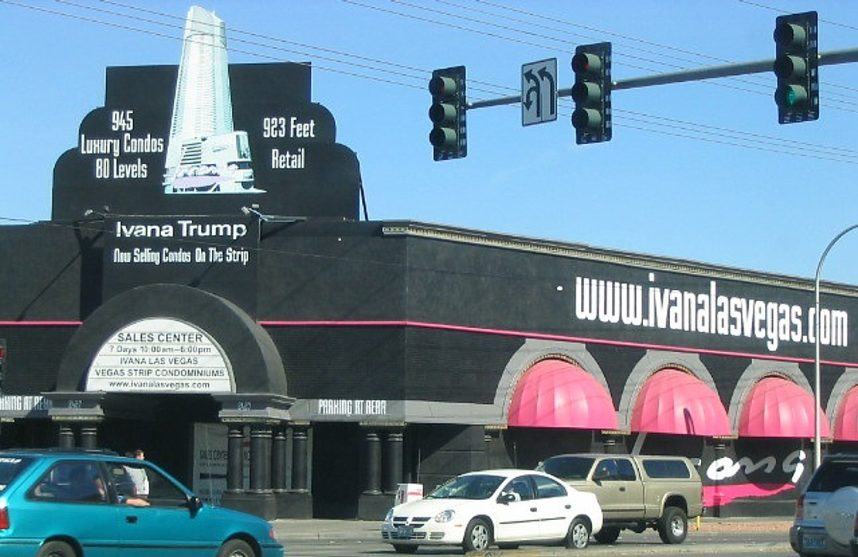
A year later, Altomare reopened the building (briefly) for use as a sales office for The Summit. The $700 million condo project he planned was to have been the tallest habitable residential building west of the Mississippi at 923 feet.

Altomare renamed it Ivana Las Vegas in 2005, thinking that the involvement of Donald Trump’s ex-wife would stoke more investment.

The short-lived Ivana Las Vegas occupies the Holy Cow with visions of a skyscraper that would never be. (Image: flickr)

It didn’t, and the former Holy Cow building sat idle for seven more years. Altomare sold the land for $47 million to Aspen Highlands, a company owned by Arizona real estate developer Steven Johnson, in September 2007.

Five years later, Aspen Highlands demolished the former Holy Cow to build the two-story Walgreens that stands there today.

Cow Comes Home

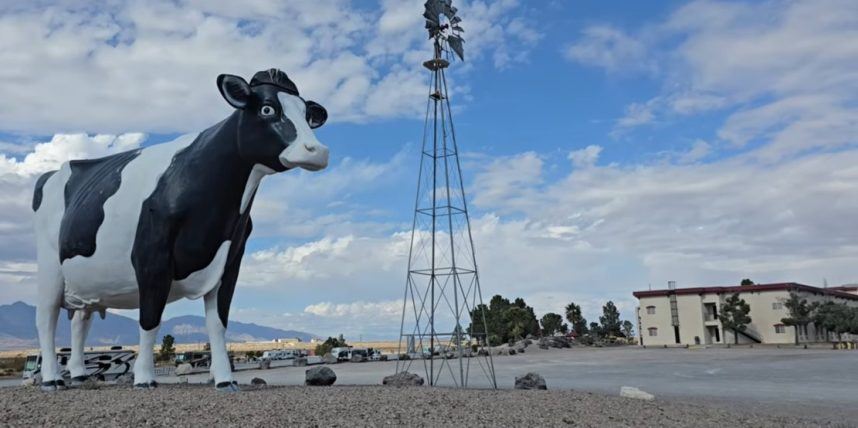
Fortunately, Alphie escaped the wrecking ball. The Holy Cow’s longtime roof mascot was sold for $2,200 to Jim Marsh, a Las Vegas casino and car dealership owner who put the cow out to pasture. Alphie now stands sentry just outside the parking lot of Marsh’s Longstreet Inn and Casino, 100 miles northwest of Las Vegas on the California state line in Amargosa Valley.

Alphie in her new home. (Image: YouTube/Wonderhussy Adventures)


The post LOST VEGAS: The Historic Holy Cow Casino appeared first on Casino.org.

VEGAS MYTHS RE-BUSTED: ‘Fear and Loathing’ Really Happened

EDITOR’S NOTE: “Vegas Myths Busted” publishes new entries every Monday, with a bonus Flashback Friday edition. Today’s entry in our ongoing series originally ran on March 3, 2023. 


Hunter S. Thompson, who died by suicide 18 years ago last Monday, is famous for being a gonzo journalist. So, many of his fans regard his book, Fear and Loathing in Las Vegas, as a journal of events that actually occurred.

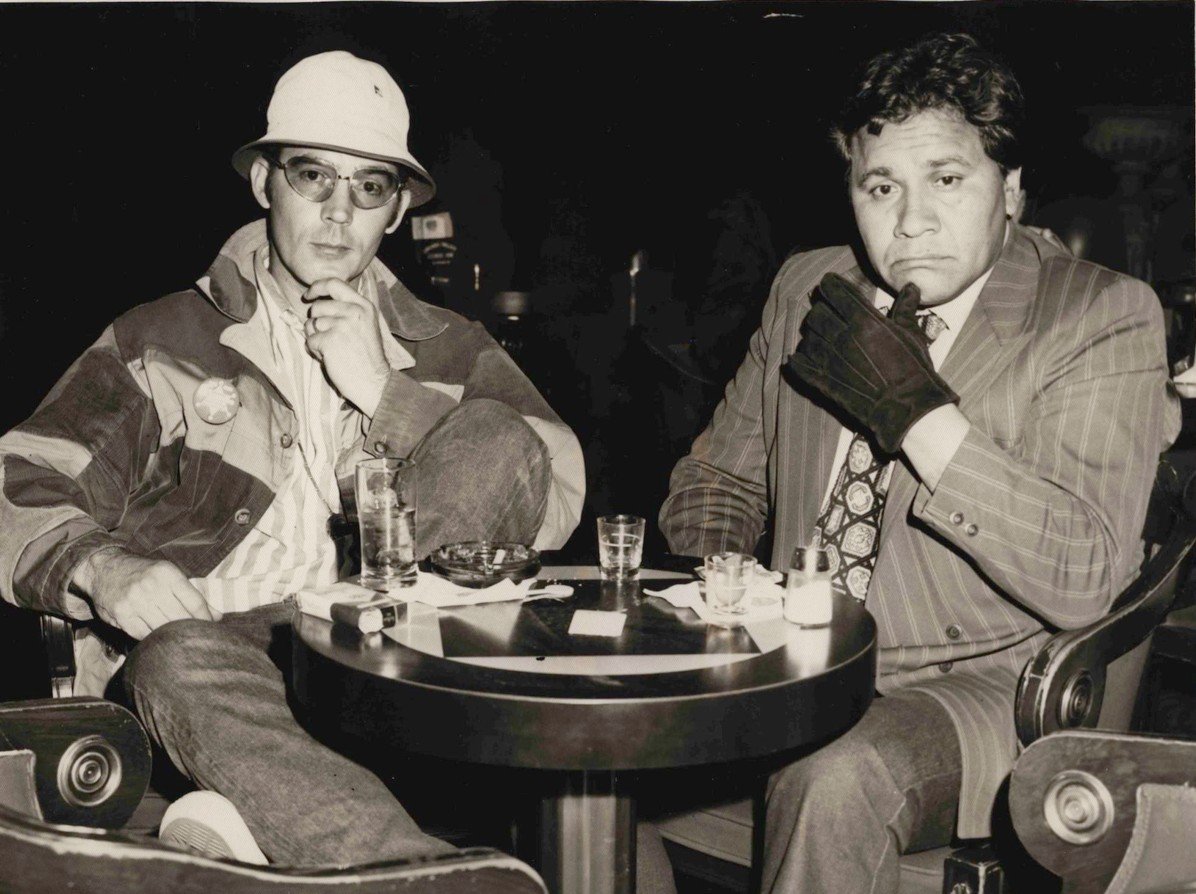
Hunter S. Thompson, Oscar Acosta
Hunter S. Thompson (left) and Oscar Acosta pose in the Baccarat Lounge at Caesars Palace in April 1971. (Image: ‘Fear and Loathing in Las Vegas’ book cover)

Actually, that’s not so much their fault, since Random House published the author’s 1972 masterwork under the category of general nonfiction. But Thompson never claimed any of the events described in it were true.

The fact that neither of his main characters was a real person should have been the first clue. The story is narrated by one Raoul Duke, whose traveling companion/attorney is Dr. Gonzo.

In real life, Thompson was assigned by Rolling Stone magazine to write an exposé on civil rights activist and Los Angeles Times columnist Ruben Salazar, whom LA County Sheriff’s officers “accidentally” shot and killed with a tear gas grenade fired at close range during a Vietnam War protest in 1970. After a week or so of asking tough questions around L.A., Thompson grew scared.

Figuring he might be next, he whisked his main source for the story, attorney Oscar Zeta Acosta, off to Las Vegas to interview him there. Sports Illustrated had hired Thompson to cover the Mint 400, an off-road vehicle race around undeveloped parts of North Las Vegas from March 21-23, 1971.

Sports Illustrated “aggressively rejected” (Thompson’s words) what he submitted as his race coverage. What was supposed to be a 250-word caption instead became a 2,500-word screed on the death of the American dream. So, Thompson instead offered it to Rolling Stone, whose editor, Jann Wenner, scheduled it to run in two parts in future issues.

More than a month later, Thompson and Acosta returned to Las Vegas. They were there to cover the National District Attorneys Association’s Conference on Narcotics and Dangerous Drugs for the second half of his Rolling Stone assignment. With only a few minor edits and the addition of the grotesquely hallucinogenic illustrations of Ralph Steadman, the magazine series became the book that would forever entwine Thompson’s name with Las Vegas. He wrote most of it in a hotel room in Arcadia, Calif., while completing Strange Rumblings in Aztlan, his Salazar article for Rolling Stone.

So how much really happened in Fear and Loathing in Las Vegas: A Savage Journey to the Heart of the American Dream? Based on interviews with witnesses and participants, somewhere around 25%.

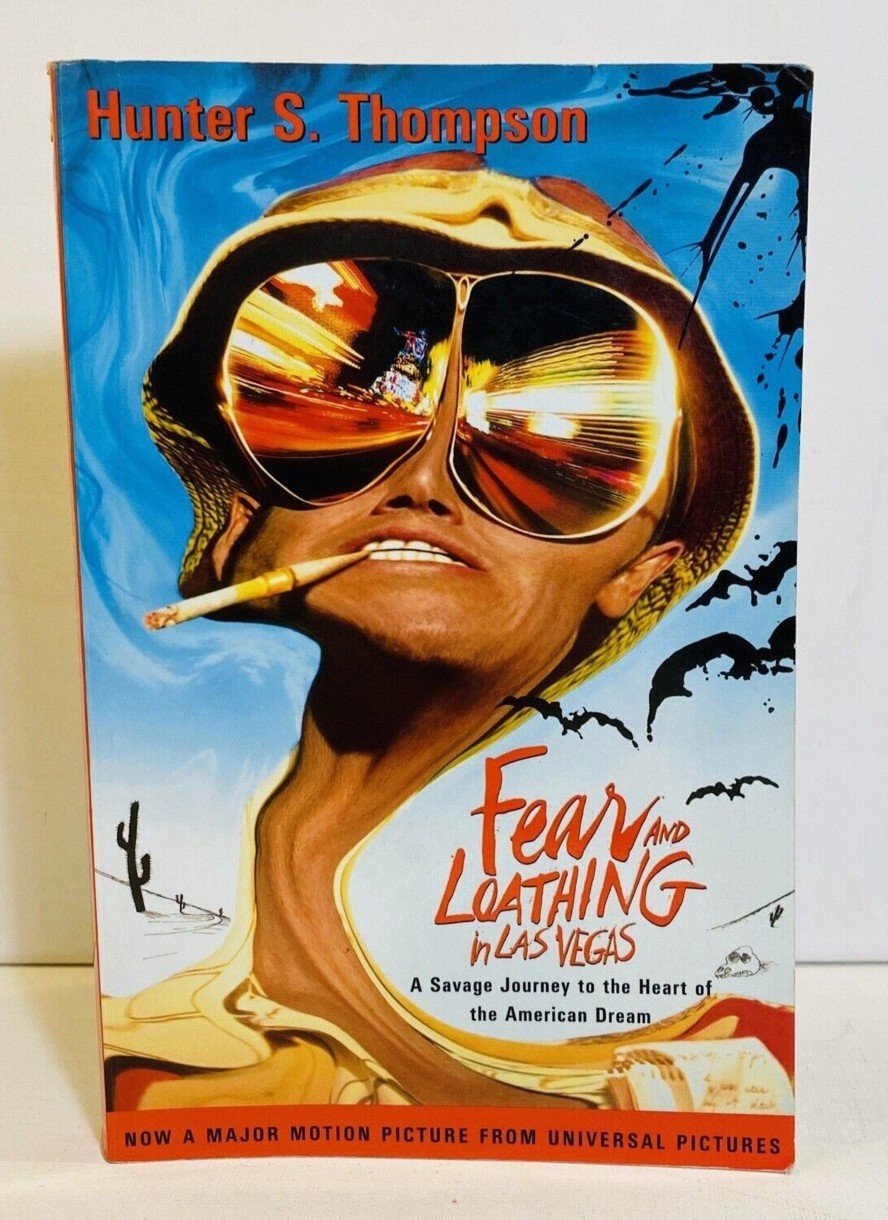
Since the release of Terry Gilliam’s phantasmagoric 1998 film adaptation of Fear and Loathing in Las Vegas,  the cover of the paperback edition has further blurred fact from fiction. It prominently features the face of actor Johnny Depp, who played Raoul Duke in the movie. (Image: eBay)

The 75% That Didn’t Happen

Let’s start with the legendary contents of Thompson and Acosta’s rental car trunk. In the book, it included “seventy-five pellets of mescaline, five sheets of high-powered blotter acid, a salt shaker half full of cocaine, and a whole galaxy of multi-colored uppers, downers, screamers, laughers, … a pint of raw ether and two dozen amyls,” all gathered during one feverish night in L.A.

This was supposedly the fuel for all the book’s misadventures.

However, in a letter to his Random House editor, published in the 1997 book, Fear and Loathing in America, Thompson admitted there was no actual drug use. The novel “was a very conscious attempt to simulate drug freakout,” he wrote, though he did “at times, bring situations & feelings I remember from other scenes to the reality at hand.” He later wrote to the same editor: ”I have never had much respect or affection for journalism.”

A good chunk of the book’s action took place in Room 1850 of The Mint’s tower (one of 365 rooms that new owner Binion’s Horseshoe permanently closed in 2009). According to Duke’s narration, he and Dr. Gonzo ran up an unpaid room service bill of $29 to $36 an hour for 48 consecutive hours before trashing their room and swiping 600 bars of Neutrogena soap.

“That is something I would have been immediately informed of, but I never heard that,” K.J. Howe, a publicity executive with the Mint at the time, told the Las Vegas Review-Journal in 2010. According to Howe, there was no “Mr. Heem” or any other hotel executive looking for Thompson, Acosta couldn’t have ordered a set of luggage from room service without paying, and no soap was reported stolen.

His concept of what was going on and what was really going on was two different things,” Howe said.

However, Thompson did get the brand of allegedly stolen soap right. (Millionaire real-estate developer Del Webb, who owned the Mint, also sat on the company’s board that made Neutrogena.) Thompson’s eye for detail could imbue an air of believability into the most obvious fantasy.

Another event that never happened is the Debbie Reynolds show at the Desert Inn, at least in the way Thompson reported it. In the book, Duke and Dr. Gonzo witness the opening number (a cover of the Beatles’ Sgt. Pepper’s Lonely Hearts Club Band) before getting bounced for having conned their way in for free.

While Reynolds did play the Desert Inn in March 1971, the singer said she was never informed of any incident resembling this. However, she was sure of one detail that casts suspicion over the entire account: never, she told the R-J, did she perform Sgt. Pepper.

Other embellishments require no witnesses to identify. For instance, the district attorneys’ conference Thompson was assigned to cover by Rolling Stone convened in late April, more than a month after the Mint 400. Yet the book places the events a week apart, joining them through an aborted trip to L.A. punctuated by a traffic stop conducted by a California Highway Patrol officer who supposedly let Thompson go after the author led him on an off-road chase, at 100 mph, with a Budweiser in hand.

“You know,” Thompson quoted the officer, “I get the feeling you could use a nap.”

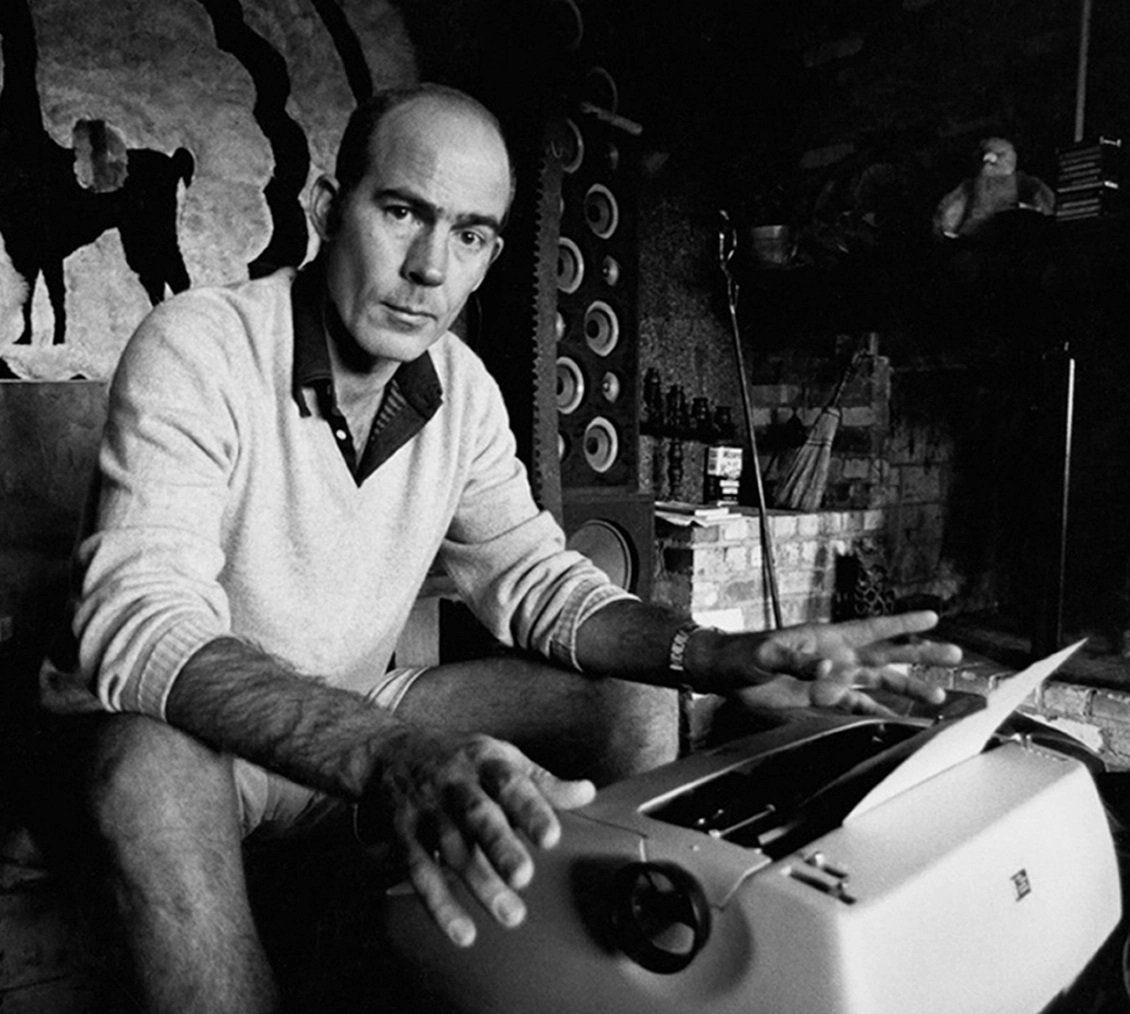
Hunter S. Thompson
Gonzo journalism, a style of reporting invented by Hunter S. Thompson, is based in part on fellow author William Faulkner’s premise that ‘the best fiction is far more true than any kind of journalism.’ (Image: Rolling Stone)

The 25% That Did Happen

In the 2008 documentary, Gonzo, Thompson and Acosta can actually be heard living out Chapter 9 as they pull into a Boulder City, Nev. taco stand during their second trip to Las Vegas.

“We’re looking for the American dream,” Acosta tells a waitress, “and we were told it was somewhere in this area.”

The waitress turns to the cook, thinking she has just been asked directions to a nightclub.

“Hey Lou,” she says, “you know where the American Dream is?”

That whole chapter is a transcription of that audiotape,” “Gonzo” director Alex Gibney told the R-J  in 2010. “So it leads you to believe that some of this stuff is real.”

For the final say, we’ll go to the horse’s mouth. Here’s a blurb from Thompson that was published on the book’s original jacket cover…

“My idea was to buy a fat notebook and record the whole thing, as it happened, then send in the notebook for publication — without editing,” Thompson wrote. “But this is a hard thing to do, and in the end, I found myself imposing an essentially fictional framework on what began as a piece of straight/crazy journalism.”

Look for “Vegas Myths Busted” every Monday on Casino.org. Visit VegasMythsBusted.com to read previously busted Vegas myths. Got a suggestion for a Vegas myth that needs busting? Email corey@casino.org.

The post VEGAS MYTHS RE-BUSTED: ‘Fear and Loathing’ Really Happened appeared first on Casino.org.

UK Implements Online Slot Stake Limits and Gambling Levy

tatutory-levy-and-online-slot-stake-limits-to-be-introduced-to-tackle-gambling-harm-1The UK government has announced comprehensive measures to address gambling-related harm, introducing a statutory levy on gambling operators and online slot stake limits. These initiatives aim to bolster protections for vulnerable individuals while funding essential research, prevention, and treatment programs.

Mandatory Levy to Raise £100 Million

A new mandatory levy will require licensed gambling operators to contribute to a ringfenced fund dedicated to tackling gambling harm. Replacing the existing voluntary system, this statutory levy is expected to generate £100 million annually, with 50% of the funds allocated to NHS-led gambling treatment services across England, Scotland, and Wales. The remainder will support prevention campaigns and groundbreaking research initiatives.

Gambling Minister Baroness Twycross emphasized the importance of this measure, stating, “Gambling harm can ruin people’s finances, relationships, and ultimately lives. We are absolutely committed to implementing strengthened measures for those at risk, as well as providing effective support for those affected.”

Unlike the voluntary system, which saw some operators contributing as little as £1 annually, the mandatory levy ensures consistent and equitable funding. Contributions will vary depending on the type and risk level of gambling activities, with oversight provided by the Gambling Commission.

New Online Slot Stake Limits

To further safeguard vulnerable players, the government is introducing stake limits for online slots, a product often associated with prolonged play and significant losses. Adults aged 25 and over will face a £5 limit per spin, while younger players aged 18-24 will have a lower limit of £2 per spin.

This decision follows evidence from the Office for Health Improvement and Disparities, highlighting the susceptibility of younger adults to gambling-related harm. The measure aims to provide greater protection while encouraging responsible gambling practices.

Baroness Twycross reinforced the government’s focus on safeguarding younger demographics, noting, “We are also helping to protect those at risk, with a particular focus on young adults, by introducing stake limits for online slots.”

Funding Allocation and Long-Term Goals

The government’s consultation process, held between October 2023 and January 2024, guided the distribution of levy funds. The NHS will utilize half of the proceeds to develop a comprehensive treatment and support system, encompassing triage, recovery, and aftercare services.

An additional 30% of the funding will target prevention efforts, including public health campaigns and training for frontline workers. The remaining 20% will support research through UK Research and Innovation (UKRI), driving data-informed policies and regulations to combat gambling harms effectively.

Claire Murdoch, NHS National Director for Mental Health, praised the initiative, citing a 129% rise in service referrals over the past year. “This mandatory levy will help treat this growing problem,” she stated.

A New Era of Safer Gambling

The statutory levy and stake limits are part of broader efforts to modernize gambling regulations in an era of technological advancements. Other measures include financial risk checks and stricter marketing controls to create a safer gambling environment.

By combining mandatory funding with proactive safeguards, the UK government aims to balance enjoyment and responsibility, ensuring that players can gamble safely while receiving necessary protections and support.

Source:

Statutory levy and online slot stake limits to be introduced to tackle gambling harm GOV.UK, November 27, 2024.

The post UK Implements Online Slot Stake Limits and Gambling Levy appeared first on Casino News Daily.