Paraguay Advances Bill to End Gambling Monopoly and Open Market to Competition

 paraguay_moves_to_end_gambling_monopoly_as_bill_to_amend_law_partially_approvedParaguay is taking a significant step toward transforming its gambling industry. In early November 2024, the government presented a bill that aims to amend the country’s gambling legislation (Law No 1,016/1997) and liberalise the market by ending the current monopoly on gambling operations. This initiative, championed by the government’s executive branch, has now been partially approved by the Chamber of Deputies and will move forward to the Senate for final approval.

Key Points of the Bill

The primary objective of the bill is to open up the gambling market to private companies, moving away from the exclusive public tender system that currently governs the industry. Under the new framework, operators will no longer be required to secure gambling rights through tenders. Instead, they will be able to enter the market more freely, fostering competition and allowing for a greater number of stakeholders to operate within the gambling sector.

One of the key provisions of the bill is the strengthening of the National Commission of Gambling (Conajzar), which will be placed under the National Tax Revenue Directorate (DNIT). This move is designed to improve the regulation and oversight of the sector, while also boosting the country’s ability to collect taxes from gambling operations.

Carlos Liseras, President of Conajzar, has expressed optimism about the bill, stating that the liberalisation of the gambling market will lead to enhanced tax contributions for the government, better competitiveness, and more opportunities for both operators and workers in the industry.

Economic and Social Implications

The bill comes at a time of significant social and economic change in Paraguay, with the country’s market undergoing rapid development. As noted by Liseras, technological and economic advancements have spurred the growth of new types of gambling, as well as an increasing number of both providers and users.

Paraguay’s shift toward a more competitive gambling environment reflects the broader economic policy changes under the current government, which came into power in August 2023. The bill is expected to attract more international investments, creating new job opportunities and contributing to the growth of the Paraguayan economy. The competition introduced by the bill will allow workers, such as lottery brokers, to have a choice in selecting which companies to work with, thereby promoting a healthier job market.

Deputy Billy Vaesken, who supported the bill, emphasized that the legislation would create more opportunities within the gambling sector and lead to a more dynamic and diverse market. He explained that greater competition would enable different companies to offer a variety of games of chance, including lotteries, benefiting both workers and consumers.

What’s Next?

The bill has been approved by the Chamber of Deputies and will now be reviewed by the Senate. If approved, the changes could signal a new era for Paraguay’s gambling industry, promoting growth, competition, and innovation. The government hopes that this shift will lead to increased foreign investment, more jobs, and better working conditions in the sector, making it a significant driver for the Paraguayan economy in the coming years.

Source:

“Diputados aprueban eliminar monopolio de juegos de azar”, abc.com.py, November 26, 2024.

The post Paraguay Advances Bill to End Gambling Monopoly and Open Market to Competition appeared first on Casino News Daily.

Finland Advances Gambling Reform, Adding Horse Racing to Competitive License Market

Finland-sends-gambling-regulation-to-EC-licensed-operators-can-offer-horseracing-bettingThe Finnish government has approved a significant reform to its gambling system, marking a shift away from the state monopoly model as it prepares to introduce a competitive licensing structure. Announced on November 1 by Finland’s Economic Policy Committee, this reform includes the addition of horse racing betting to the competitive market, aligning it with other forms of licensed sports betting. Under this new framework, the state-run Veikkaus Oy will maintain its monopoly over lotteries and physical gaming machines, while a license-based system will govern betting, online casino games, and digital bingo starting January 1, 2026.


The updated gambling legislation, spearheaded by the Ministry of the Interior, aims to reduce gambling-related harms while increasing the market’s channelization rate. Channelization refers to directing players to regulated services rather than unregulated ones, thus enhancing consumer protection and responsible gambling practices. With the inclusion of horse racing in this competitive market, state funds previously allocated to horse racing will now focus on other industry needs, such as supporting breeding and advising horse-related businesses.

Competitive Licensing Model and Regulatory Review

The proposed law grants licenses for online sports betting, digital casino games, electronic bingo, and virtual slot machines. Meanwhile, Veikkaus will retain its exclusivity over lottery operations and physical gaming venues. In addition to moving horse racing under the license model, Finland’s new legislation will undergo a review by the European Commission (EC) and other EU member states to ensure compliance with EU principles of free movement and competition. This three-month evaluation will gather feedback to refine the proposal before it is submitted to Finland’s parliament in spring 2025.

According to Jari Vähänen, a local gaming consultant, this regulatory shift aligns with heavy lobbying efforts from the Finnish horse racing industry, which had advocated for a more flexible licensing environment. Industry observers expect horse racing betting to potentially expand into retail outlets under the new regulations, providing broader accessibility for bettors.

Revised Draft Eases Business Restrictions

The latest version of the proposed law has introduced several business-friendly changes compared to its initial draft in July. Marketing restrictions have been relaxed, allowing offline brand marketing, and certain bonus offerings will now be permitted under specific conditions for existing customers. Legal Gaming’s Finnish advisor Antti Koivula noted that while the Gross Gaming Revenue (GGR) tax rate remains at 22%, an increased supervision fee based on GGR levels could add a tax burden exceeding 2% for some operators. Koivula called the revised law “significantly more business-friendly” while recognizing that not all stakeholders are satisfied.

With the law’s emphasis on consumer protection, the updated regulations also limit certain advertising methods. Veikkaus Oy, Finland’s state-owned gambling operator, will be restricted from using influencer marketing. This ban prevents public figures from promoting Veikkaus products on personal platforms, even without monetary compensation, though they may appear in Veikkaus’ official advertisements. Further restrictions will curb affiliate marketing that directs users to gambling websites, with the intent to shield minors from exposure to gambling content.

Nordic Gambling partner Morten Ronde noted that Finland’s reform resembles the regulatory models in Denmark and Sweden, providing familiarity for operators active in the Nordic region. Ronde lauded the moderate allowance for bonuses and the 22% tax rate as positive steps, though he highlighted the need for clarity on what constitutes a “moderate” bonus.

Timeline and Industry Reactions

Finland plans to introduce the final version of the law to parliament by early 2025, with a target date of mid-2025 for its passage. This reform not only paves the way for competitive licensing but also expedites the timeline, allowing licensed operators to potentially begin operations by July 1, 2026. As noted by Finnish iGaming consultant Pasi Koskela, while some advertising limitations may redirect traffic from regulated sites to unlicensed ones, the overall impact remains to be seen. Koskela suggested that without established guidelines for affiliate marketing, consumer interest may shift to less reputable platforms, creating challenges for consumer protection.

Incorporating both traditional and modern business concerns, Finland’s evolving gambling system signals a new era for the country’s betting landscape. The balance of consumer safety with industry flexibility aims to foster a responsible and competitive environment, strengthening Finland’s role in the broader European gambling market.

Sources:

Gambling Reform in Finland Advances, Adding Horse Racing to Competitive Market, valtioneuvosto.fi, November 1, 2024.

The post Finland Advances Gambling Reform, Adding Horse Racing to Competitive License Market appeared first on Casino News Daily.

Nebraska Online Sports Betting Bill Advances, Odds Remain Long

Legislation to expand gambling in Nebraska to allow online sports betting advanced out of committee on Monday during the legislature’s special session.

Nebraska online sports betting
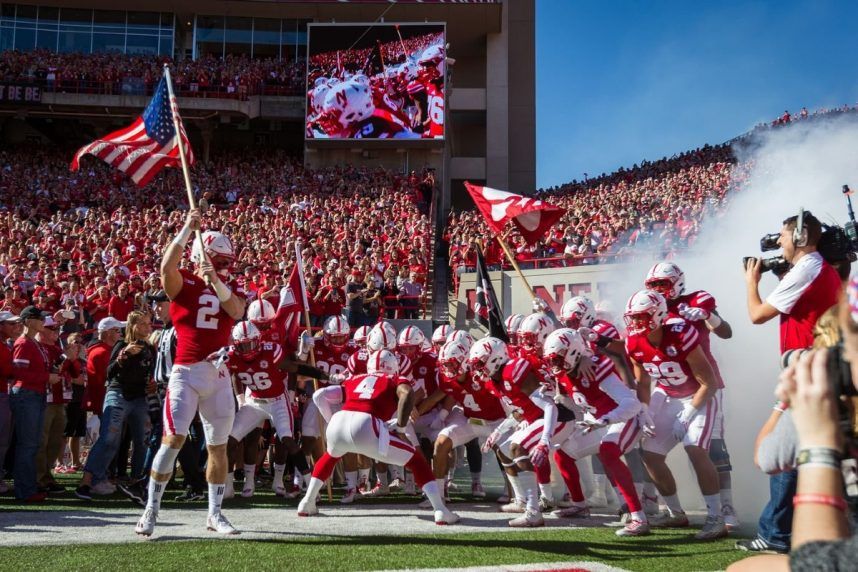
Nebraska’s beloved Cornhuskers football program kicks off its 2024-25 season on August 31. Nebraska sports betting remains limited to retail sportsbooks at casinos. (Image: Getty)

The Unicameral General Affairs Committee passed LR3CA by a 5-2 vote on the 10th day of the special legislative session. Lawmakers were called back to the Lincoln capital by Gov. Jim Pillen (R) to come up with ways to reduce property taxes.

LR3CA is a proposed legislative referendum. For the 49 elected senators in Nebraska to authorize online sports betting, they must first gain electorate support to amend the state constitution to allow such gambling.

LR3CA seeks to ask Nebraskans during the November 5 presidential election if they wish to further expand gambling in the Cornhusker State. The gaming question would come four years after Nebraska voters approved three ballot referendums that legalized commercial casino gambling at horse racetracks and provided a regulatory framework for slot machines, table games, and in-person sports betting.

Referendum Bid Finds Support

LR3CA was filed by Sen. Eliot Bostar (D-Lincoln). Bostar says it’s time Nebraska reap the tax benefits of the many Nebraskans who are already betting on sports online, whether it be in neighboring states that offer legal, regulated internet sportsbooks or by gambling on illegal, offshore websites that cater to states that have limited gaming.

Bostar says allowing online sports betting and taking sportsbooks’ gross revenue at 20% would deliver Nebraska more than $30 million a year in new revenue. That money, his LR3CA proposes, could be directed to the Property Tax Credit Cash Fund.

During the committee’s deliberation of the referendum statute, General Affairs members voted to retain control over whether Nebraska becomes an online sports betting state upon a successful referendum. While Bostar’s initial draft sought to require the legislature to pass regulatory conditions to allow online sportsbooks should the public back the ballot question, the bill was reworked to allow — not require — the lawmaking body to authorize internet sportsbooks.

It keeps power in the hands of the legislature, allows voters to speak on it, and then lets the legislature decide,” said amendment sponsor Sen. John Cavanaugh (D-Omaha).

Under Nebraska’s current gaming laws, sports bets can only be made in person at one of the state’s brick-and-mortar commercial casinos.

Long Odds

Online sports betting’s forecasted $32 million a year tax windfall wouldn’t do much to offset the $5.3 billion in property taxes the state collected from property owners last year.

The legislature is instead focusing on avenues that could significantly help homeowners during the special session. Pillen has suggested that lawmakers send him bills that trim the state government’s spending and eliminate more than 100 tax exemptions that could generate $350 million annually for the state.

Online sports betting is expected to take a back seat, the Lincoln Journal Star reports. Unless lawmakers decide to act on the Bostar bill and it finds majority support in the chamber, Nebraskans won’t be asked about online sports betting until at least November 2026, as the state only permits statewide ballot referendums during even-numbered years.

The post Nebraska Online Sports Betting Bill Advances, Odds Remain Long appeared first on Casino.org.