3370 Feet from Hell’s Kitchen is Times Square – New York Casino License Contest Shows Embers

3370_feet_from_hells_kitchen_is_times_quare_new_york_casino_license_contest_shows_embersAs one old adage goes, “If you can’t stand the heat, get out of the kitchen.” Another cautions that adding fuel to the fire only increases the heat. None we are aware of speak to what happens when you add your own fuel by stating your case and promoting your own interests or having others do that for you.

Hell’s Kitchen is a part of New York City with a storied past quite unlike that of Times Square, a little more than a mile away. Centre Street, the Bowery, Canal Street, and Park Row – the general location of Martin Scorcese’s and Leonardo Di Caprio’s epic historical fiction story, the Gangs of New York is only about three miles away.

Setting the Stage for an Epic Battle

That backdrop should set the stage for what could be about to commence in the competition for three new downstate casino licenses in New York state – the first actual bonafide real Las Vegas casino licenses ever issued in or around a bustling metropolis holding some 19 million potential casino customers. A market that some have deemed to be potentially be the most lucrative latent casino market in the world.

Although there are three casino licenses available in downstate New York, potentially in and around New York City, most reporting indicates that two of those licenses are “widely believed” to be destined for the existing lottery-based casinos in Yonkers and Jamaica, Queens. The existing casinos are relatively large gaming venues that already provide tens of millions of dollars if not hundreds of millions in annual tax revenues, jobs benefits, and other financial knock-ons to local communities and the state in general. They are also operated by Resorts World and MGM, two of the largest casino operators in the world.

If two of the licenses are as good as thrown to the wind by simply changing the way two large casinos account for their handle, churn, and hold more to “real casino” standards rather than the simpler video lottery terminal and more or less fixed odds electronic gaming table accounting practices with wilder swings in gross gaming revenue for the more volatile games or natural swings in deviations from the mean for “coin flip” games like real baccarat, roulette or even baccarat, what is to be gained by the state?

That seems to be the elephant-in-the-room question most reporting fails to ask. We proffer that all three licenses might actually be up for grabs because “damn the torpedoes”. New York state will choose whichever options actually generate the most revenue and benefits for the people of New York, the local communities, and the state, because “that’s actually the remit” isn’t it?

The state is not in the business of doing favors for competitive businesses or at least it shouldn’t be, and if existing “casino communities” and their attendant gaming operators lose a little for the greater good of the state by creating three brand new revenue streams “cannibalism be damned” then that’s exactly what the location selection committee will recommend – or should.

If, in the end, a greater benefit for the whole of the state and the populace can be shown to be better attained by simply expanding the current gaming venues – more or less grandfathering in existing operators without fear or favor, then that is what the selection will, or should determine its job is to do.

Back to the Heat in the Kitchen

If that is the case, and the world’s most powerful casino interests are about to embark on a competition for perhaps the most lucrative market on earth – observers and participants should be ready for an epic battle of the titans as has never been seen before and it’s going to get so hot in downstate New York that an outside observer wouldn’t know the difference between Hell’s Kitchen, Times Square, Staten Island, Coney Island, any of the potential sites for a single new casino license. Or hell itself.

We saw amazing machinations for placement, power and control of the upstate casino markets a few short years ago when the first Las Vegas-style casino towns and operators were chosen – so-called “grassroots organizations”, false-flag petition drives, disinformation, seriously flawed “gaming studies”, political upheavals and almost every other imaginable disruption of industry-standard business decorum and charm offensive imaginable.

You ain’t seen nothing yet

For now, we see self-promotion, goodwill advocacy, and some local resistance to each announced contender’s proposal. We see good corporate “citizens” pitching themselves as the most viable alternative and none of the half dozen or so serious contenders has attacked any other in public – nor are they likely to overtly. Nothing “dirty” has bubbled up yet and none of those vying for a new license outside of Yonkers or Queens has alluded to there only being one license available – nor have the two “widely believed” “shoe-ins”.

MGM Resorts International, the owners of Empire City Casino at Yonkers Raceway in Yonkers has remained mostly mum on the subject as has Genting Malaysia Berhad – the ultimate owner of Resorts World New York at Aqueduct Raceway. And that is the wise move. Isn’t it? That could change.

What’s Coming?

When the state opened bidding for the licenses they set the minimum bid at half a billion dollars and let it be known that it would be a competitive bidding process. At least one player stated it would not go down that route – it would offer a proposal, and negotiate in good faith, but not go head over heels into a bidding process. There are, of course, many possible reasons for such a position not the least of which could be that it would show weakness if it were to find itself unable to compete in a high-priced auction of sorts or that it might not have quite the resiliency to be an effective world power if it tied up resources in an unproven market due to the “known unknowns” of just how many licenses might be up for grabs in reality.

Perhaps New York state or the existing video lottery terminal and electronic table game providers should clear the air and let the public, as well as the potential contenders, know specifically if the existing lottery casinos are on equal footing with other competitors or if they are to enjoy a potentially unfair advantage. Each new proposal we have examined has addressed community benefits and other aspects expected of them in the request for proposals. There is still an elephant in the room and that elephant, if not stared down and asked to dance could quite possibly, become exhibit #1 in any “sour grapes” lawsuits, which inevitably arise before all is said and done when the stakes are this high.

For now, the question remains, just how hot is this contest going to get? The answer is most likely just hot enough to create inflection point after inflection point and just hot enough to bend reality in the mirror of time enough that when it is all said and done, most people will be glad just to be shut of it and to get on with life in the fast lane of gambling. However, it also could present myriad risks to consumer confidence in any and all processes involved in American casino license tenders.

Were two additional licenses approved by voters with a simple majority of Yay vs Nay votes after all seven currently authorized licenses have been issued under the 2013 referendum – all stakeholders, including the public, deserve the quietude of a clear and transparent process with no wild animals lurking in, stumbling. Around, or crashing through the room

If that is true, then why not now? If not now, when? The tender candidates who may risk many times the “minimum bid” to build the casino(s), as well as the public surely deserve to know.

The post 3370 Feet from Hell’s Kitchen is Times Square – New York Casino License Contest Shows Embers appeared first on Casino News Daily.

Stakeholder Numbers Gelling for US$1.5 Billion A’s Stadium at Tropicana on LV Strip – 1/4 Public

stakeholder_numbers_gelling_for_usdlr1_5_billion_as_stadium_at_tropicana_on_lv_strip_1_4_publicThe Nevada Independent reported on Friday that a bill was to be introduced that day into the state Senate outlining the amount of state funding lawmakers were willing to tentatively commit to funding a new stadium for the Oakland A’s MLB baseball team on land provided by Ballys’ Tropicana Las Vegas. The nine-acre plot is part of 35 acres owned by GLPI and leased for 99 years by Bally’s. The proposed stadium and entertainment site sits on a contiguous plot of land along with the casino resort hotel.
A financing package, capped at $380 million in public funds was proposed later that day in the bill with those funds contributing to the overall expected cost of the project being $1.5B.

Governor’s Office Introduced the Measure

According to updates and later reporting by the news source, a good portion of the previously announced funding structure carried over from discussions to the written proposed legislation. The draft, seen by reporters there prior to being introduced at the capitol was the first glimpse in writing of the scope of a potential financing agreement that includes $120m from Clark County (where Paradise, Nevada “The Strip” is located), and $180m in tax credits (transferable) by the state.

The Governor’s office itself introduced Senate Bill SB509 which foresees the management of a Stadium Authority undertaken by a 9-member board. The Stadium Authority itself has been authorized since 2016 and the venue it oversees and manages would reportedly be named Allegient Stadium.

Since no new revenue-based funding would be needed, only transferable tax credits, a simple majority vote in both houses of Congress, and a signature by Governor Joe Lombardo who has been in office since January of this year is all that is needed for the measure to become law. A more detailed look at the tax credits shows them to consist of tax-increment financing (TIF district) to repay county bonds and a 30-year-long exemption from taxes. GLPI/Bally’s would allow the use of the property for zero fees and create their own revenue from it by means other than rent or lease costs to the Stadium Authority or ball club.

The ball club itself would be responsible for any over-runs in costs, rather than the county or state, and the property tax exemption would be separate from the private portion of the funding needed to bring the project to fruition.

Adding to the public good and mitigating any potential unseen impacts of the deal, the measure would require the county to create a “resort corridor homelessness prevention and assistance fund”. There would be no financial input from the Authority of the project until construction is completed and then only after debt obligations are met. It would be managed by a partnership with the Nevada Resort Association and the Oakland A’s and will seek to reduce homelessness throughout the Southern Nevada resort corridor.

The corridor, which includes the Las Vegas and Reno areas, has a higher homeless rate than the national average with the Reno area suffering the greatest incidence count between the two. However, it has recently been estimated that as many as 1,500 people live “like moles” beneath the Strip area in tunnels mostly to escape the heat.

Unhoused Population Would Get Help from Funding Scheme

Stated reasons for the higher homeless rate include inflation, high rent, and unemployment. Direct studies of problem gambling and homelessness by causation are few and far between. While the number of homeless people in Nevada could be 3x as many as the national average it’s unclear how baseball or expanded gambling at Bally’s Tropicana Las Vegas would contribute to the problem so the fund should probably be seen simply as a way for lawmakers to capture a financial opportunity to address a very real need in the area with “found money” rather than a mitigation measure.

Earlier, the athletic club had sought $500m in public funding to relocate to a new stadium in Las Vegas but abandoned that plan when the Bally’s opportunity presented itself to them, saving the public some $120m over the previous “ask”.

The Oakland A’s AAA Farm Team, the Las Vegas Aviators of the Minor league have been in the valley as Oakland affiliates since 2019 with the club’s origins in the valley going back to 1983 as the Aviators and under other names, affiliations, and locations since 1919. The Oakland A’s have been seeking a move from California to Las Vegas since at least September 2021 amid trouble securing a new stadium in Oakland. The current arena was first opened in 1966 and last renovated in 2017 after only one other refurbishment in 1995-1996.

The Independent reports that all is not a smooth slide to home base with the deal as the Republican governor and Democratic lawmakers are struggling to address overall budget issues with less than two weeks left in the regular legislative session. Senate leaders and the governor have seemingly used stadium approval as a bargaining chip to get their way. It’s not out of the question for a special legislative session to be called to extend lawmaking business, but it’s unclear if the stadium proposal would survive such a measure or if the governor might try to use his veto power on individual segments of the state’s budget in an attempt to exert power of the Democratic lawmakers or simply keep the government running.

Fast Tracking of Bill Possible

However, special legislative rules do allow for the fast-tracking of certain bills, bypassing the regular parliamentary (bureaucratic) process and allowing lawmakers to amend important measures much quicker than normal. As the measure was introduced in the Senate it would presumably be passed there, be forwarded to the House for approval, and then arrive on the Governor’s desk for his signature or veto.

Source: A’s stadium bill language arrives, caps public financing at $380M, The Nevada Independent, May 26, 2023

The post Stakeholder Numbers Gelling for US$1.5 Billion A’s Stadium at Tropicana on LV Strip – 1/4 Public appeared first on Casino News Daily.

Genius Sports Could Be Hidden Gem Among Sports Betting Stocks

Shares of sports betting data provider Genius Sports (NYSE: GENI) are higher by nearly 57% year-to-date and on May 26, closed at the highest levels since February. A sell-side analyst believes the stock has more upside ahead.

Genius Sports
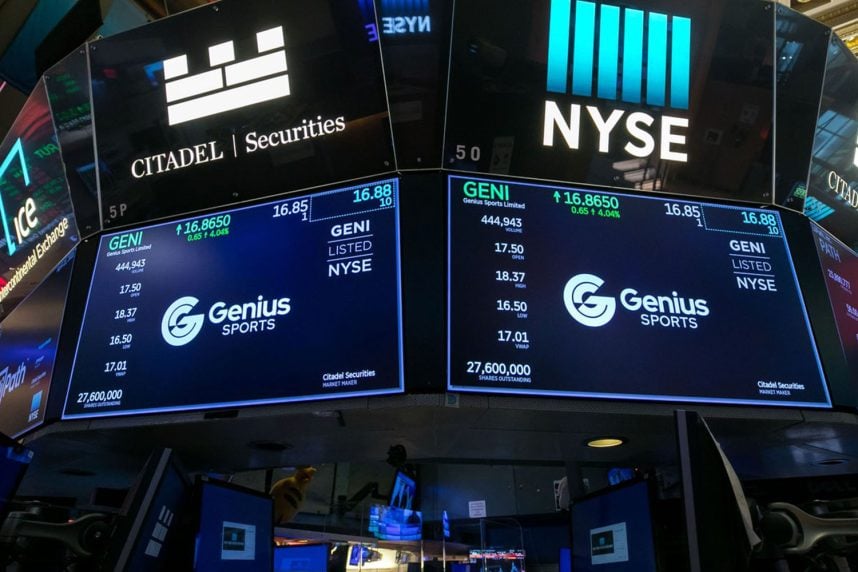
Genius Sports appears on the screens of the NYSE after it went public. An analyst says the stock can deliver more upside. (Image: Genius Sports)

In a recent note to clients, Lake Street Capital markets analyst Eric Martinuzzi initiated coverage of Genius Sports with “buy” rating and a $7 price target. That implies upside of 25% from the May 26 close. That’s slightly below the Wall Street consensus of $7.50, but Martinuzzi is now one of nine analysts covering Genius with a “buy” or “strong buy” rating. Another calls the stock a “hold.”

The analyst described Genius as a “picks and shovels player” that markets live betting data and “other sticky services” to global sportsbook operators, including Bet365 and DraftKings (NASDAQ: DKNG), among others. Some analysts believe the stock  could benefit from bettors’ increasing preference for in-game or live wagers over pregame investments.

That thesis could further be enhanced by same-game parlays — bets operators such as DraftKings and FanDuel are leveraging to significant success.

Genius ‘Baby’ Thrown Out with ‘SPACwater’

London-based Genius Sports went publicly in April 2021 following a reverse merger with special purpose acquisition company (SPAC) dMY Technology Group, Inc. II. The stock caught some of the tail-end of investors’ enthusiasm for SPAC and sports betting stocks, but slumped last year as market participants punished equities previously tied to blank-check companies.

At one point in 2021, Genius traded north of $24 and Martinuzzi describes the subsequent tumble experienced by the stock as a case of the “Genius baby being thrown out with the SPACwater.”

Genius is on the cusp of turning free cash flow positive and is growing faster than its higher-valued peers,” wrote the Lake Capital analyst. “We also feel it has better rights relationships — NFL, English Premier League — and offers faster profit growth than data licensing competitor Sportradar. We anticipate Genius showing fundamental outperformance driven by a decade-plus growth in U.S. sports betting as more states legalize online gambling.”

Genius hovering around profitability and generating free cash flow are noteworthy traits if for no other reason than that they’re rare in the universe of sports betting equities.

Genius Sports Impressive Client Roster

Martinuzzi is right to mention Genius Sports’ client portfolio — a roster that includes not only the English Premier League and the NFL, but the PGA Tour, Major League Baseball (MLB), the NCAA and Euroleague Basketball, among others.

In addition to the NFL itself, which is also a major Genius shareholder, several of the league’s teams are Genius clients as are some of the biggest names in sports broadcasting, including ESPN.

Beyond Bet365 and DraftKings, Genius’s other sprotsbook clients include 888 Sports, BetMGM and Caesars, according to the data provider’s website.

The post Genius Sports Could Be Hidden Gem Among Sports Betting Stocks appeared first on Casino.org.

Ivan Toney: Banned EPL Star Bet on His Own Games, FA Says

Brentford FC and England striker Ivan Toney wagered on games he was involved in, according to the findings of a Football Association (FA) regulatory commission, published Friday.

Ivan Toney, Brentford, gambling, FA
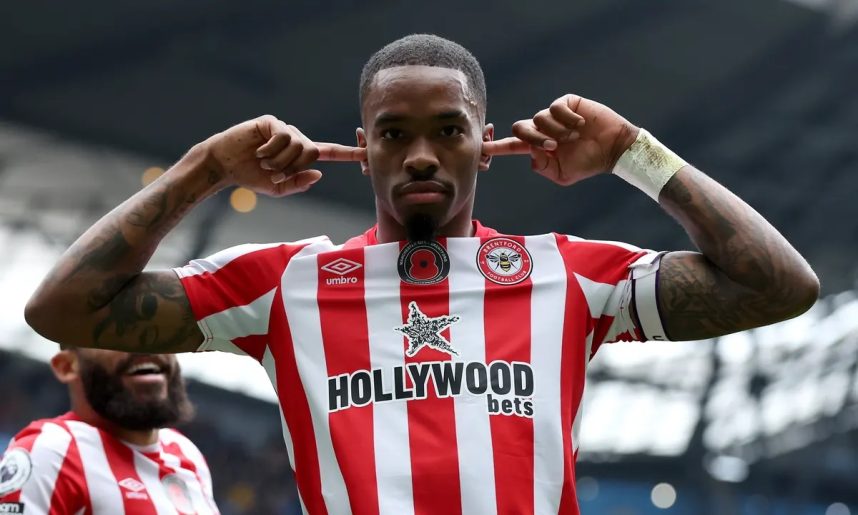
Ivan Toney, above, wears a gambling logo on his jersey every time he takes the field for Brentford. But the player has been diagnosed with a gambling addiction, prompting calls for a review into elite soccer’s financial relationship with the gambling industry. (Getty)

Last week, Toney, 26, was banned from professional soccer for eight months after admitting to 232 breaches of FA betting rules, a penalty that many viewed as harsh. However, the charges were not previously thought to have related to games in which the player was personally involved.

In fact, Toney might consider himself lucky. Under FA rules, betting on your own games can result in a life ban from soccer.

No Match-Fixing

The commission found that Toney placed 26 bets that related to the club he was registered with at the time. This included 13 occasions when he backed his own team to lose, although he was not directly involved in these matches.

Of the matches he did play in, he always backed his team to win (16 occasions). On 15 occasions, he also bet on himself to score at a time when it was not public knowledge that he would be playing in a game, which constituted insider betting. However, the commission found no evidence of match-fixing.

There is no evidence that Mr Toney did or was even in a position to influence his own team to lose when he placed bets against them winning — he was not in the squad or eligible to play at the time,” it concluded.

But the commission found that Toney lied about the extent of his betting and used third parties to gamble on his behalf, according to the commission.

However, it reduced his sanction from 14 to 11 months. That’s because Toney has been diagnosed with a gambling problem and had sought professional help.

Brentford Backing Toney

Brentford said it would “do everything possible” to support Toney with his addiction. The team’s manager, Thomas Frank, said in a statement that soccer’s financial relationship with gambling needs to be reviewed. Frank also criticized the decision to ban Toney from training with the squad until September.

“We got a massive reminder [on gambling],” he said. “Do we do enough to educate our players? The authorities have a massive task to make sure we do this much better.

“If I can’t speak to him, I guess they will have to ban me as well. If I am not allowed to support him there must be something wrong,” Frank added.

The EPL has voted to ban gambling logos on the front of jerseys from the end of the 2025/26 season. Gambling advertising will still be prevalent elsewhere, including on stadium hoardings.

The post Ivan Toney: Banned EPL Star Bet on His Own Games, FA Says appeared first on Casino.org.

Insane Graffiti Art Loft Hides in Las Vegas Suburb

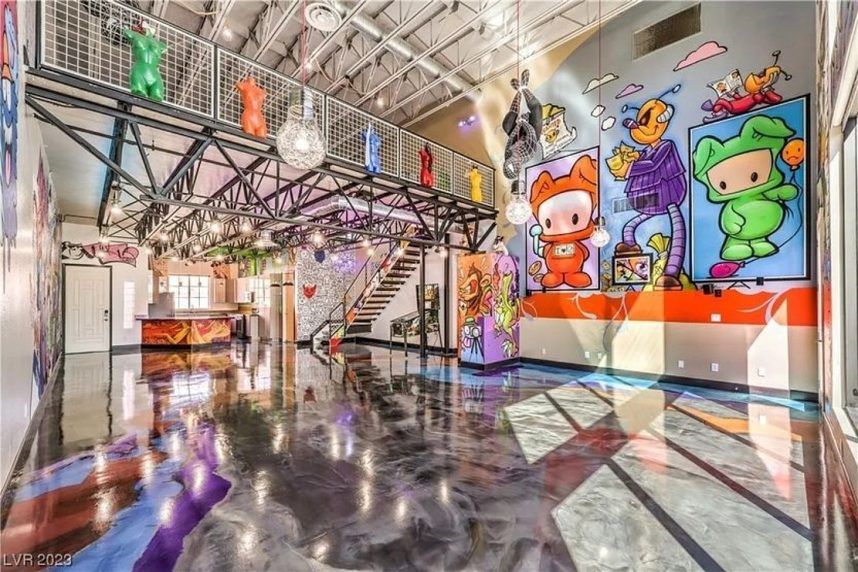
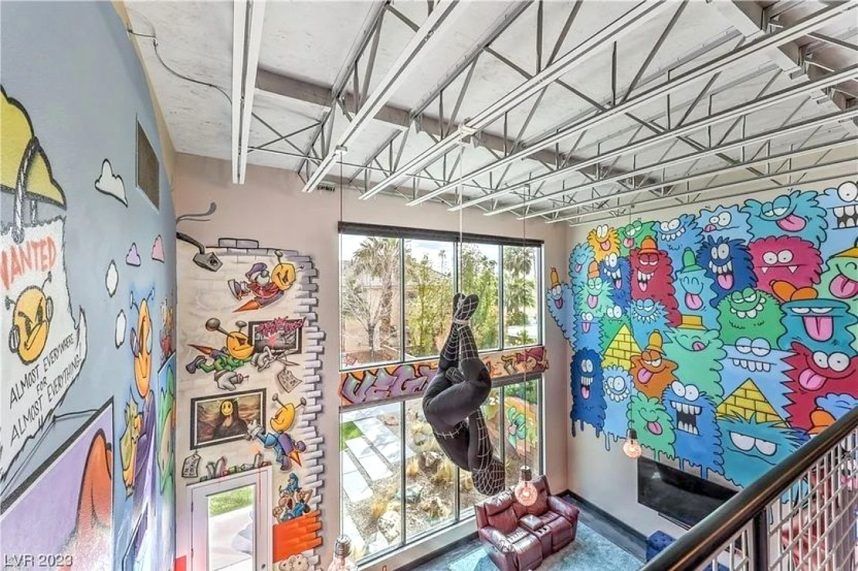
The wildest home we’ve seen in years has come on the market in Las Vegas for just shy of a mil. Its walls are slicked in gallery-grade graffiti and comic strip art, and dangling from the rafters is a sculpture of a human body hanging upside-down from a fish net.

Andy Warhol’s New York City studio, The Factory, did not look like this, but should have. (Image: realtor.com)

The 3,381 square-foot home was built in 2005 to resemble a New York City artist’s loft, with two large bedrooms downstairs and a large loft upstairs. The asking price is $995K.

Judging from the blah look of the exterior, it’s a safe bet the neighborhood is governed by a homeowner’s association. (Image: realtor.com)

Perhaps the wildest thing about the property is how blah it seems from the outside. Located in a gated suburb, the house is painted in traditional desert pastels, without a shred of a clue what’s inside.

Jordon Metz, a realtor with BHHS Nevada Properties, told Realtor.com that the sellers were inspired by the graffiti art in downtown Las Vegas to do something special with the house they bought in 2011. So they hired three of them – Tiki Jay One, Pretty Done, and Juan Muniz — to decorate the walls and other surfaces, including the cement floors, which were then sealed to preserve the art.

One of the downstairs bedrooms. (Image: realtor.com)

Metz said the perfect buyer will be someone who leaves the art as it.

“When you have something that special and unique, when the right buyer sees it, he or she is going to say, ‘Oh, my goodness. This is really special. I want it this way,‘’” he said.

The post Insane Graffiti Art Loft Hides in Las Vegas Suburb appeared first on Casino.org.