Playtech Acquires Less Than 10% Stake in Hard Rock Digital for $85M

playtech_acquires_less_than_10pct_stake_in_hard_rock_digital_for_dlr85m.Playtech has entered into a wide-ranging global partnership with Hard Rock Digital (HRD), the iGaming and sports arm of Hard Rock International and Seminole Gaming.

HRD’s customers in the US and Canada will have access to a selection of Playtech slots, live dealer table games, and random number generator games through HRD’s existing proprietary platform and technology offering.

Outside the US and Canada, HRD will have access to HRD’s player management platform and other solutions including operations management, payment advisory, and marketing, as well as customer support services.

Playtech Purchases Minority Equity Share

In support of the deal, Playtech has purchased a single-digit minority share of equity in HRD for US$85 million from Hard Rock International and Seminole Gaming.

Playtech has purchased a minority equity ownership stake in Hard Rock Digital (HRD), the interactive gaming and sports betting division of Hard Rock International and Seminole Gaming, as part of a wider deal between the two businesses.

Hard Rock currently operates online and retail sports betting in the US inside the borders of Arizona, Indiana, Iowa, New Jersey, Ohio, Tennessee, and Virginia and expects to expand the offering internationally.

Revenue Sharing Part of the Deal

In addition to the equity share purchase, additional long-term agreements include revenue sharing with Playtech in return for offering its products and services through HRD.

Mor Weizer, Playtech CEO said: “The Playtech team is thrilled to announce our strategic partnership with HRD. Hard Rock International has cemented itself as a marquee name worldwide, not just in gambling, but more widely in entertainment.

HRD will combine the strength of this global brand with a proven management team, some of whom we at Playtech have known for many years and believe to be among the strongest in the online gambling industry.

For Playtech, this partnership significantly advances our position in the North American market and is very much in line with our B2B strategy.

Hard Rock International and HRD chairman Jim Allen added: “This partnership will act as an accelerator to Hard Rock Digital’s planned strategic initiative to expand its online gaming offerings to international markets, becoming the first operator with a global omnichannel offering under a singular, irreplaceable brand.

This announcement only reinforces our commitment to lead innovation in the gaming industry and expand the ‘Hard Rock’ experience worldwide. We look forward to providing an authentic, digital experience for Hard Rock’s global fan base within a comprehensive, omnichannel offering.”

Source: Hard Rock Digital, Playtech Enter Strategic Partnership, Hard Rock Digital News, March 14, 2023

The post Playtech Acquires Less Than 10% Stake in Hard Rock Digital for $85M appeared first on Casino News Daily.

Small Texas Slot Casino Pumps $212M a Year Into Local Economy

small_texas_slot_casino_pumps_dlr212m_a_year_into_local_economyNaskila Entertainment is a small, slots-only casino in Polk County, Texas with an outsized impact on the local economy. In fact, it’s really an electronic bingo facility but visitors get the feeling they are playing slots and most people would never know the difference – much like playing at a video lottery terminal (VLT) in a huge New York City casino.
The casino is operated by the Alabama-Coushatta Tribe of Texas on its Reservation near Livingston, about 75 miles north of Houston, a city of over two million people.

According to a report that was commissioned by the Texas Forest Country Partnership, the facility, directly and indirectly, pumped some $212 million into the county economy in 2022.

Casino Generates 800+ Permanent Jobs

TXP Inc. of Austin, the economic analysis firm that conducted the study reports that the operation is responsible for more than 800 permanent jobs, half of them at the casino, and a total payroll of $22.5 million a year collectively.

This economic impact and these jobs would simply not exist without Naskila. Because 95 percent of Naskila’s customers come from outside of Polk County, and more than 80 percent come from outside the region, Naskila is an economic engine that benefits every stakeholder in the region,” the study stated.

According to a report in Blue Bonnet News, the Winter 2023 TXP study was the third one the Texas Forest Country Partnership had commissioned on the casino’s economic impact. The venue opened as a 15,000 sq ft slot parlor in 2016 and has had to fight until fairly recently to defend its operation as legal under the 1988 Indian Gaming Regulatory Act.

Last summer the United States Supreme Court finally put overzealous Texas prosecutors to rest over the issue when the Court confirmed the gaming center’s standing.

Steady Increase in Economic Value

The first study, done in 2018 showed an economic impact of $140 million increasing to $170m in 2020 and continuing to grow to the current $212m arrived at in the current report found here, courtesy of the Liberty County news outlet. Overall direct and indirect jobs have grown from 550 to 700 and finally to 825 found today with nearly half of them part of the casino operation itself.

Chairman of the Alabama-Coushatta Tribe of Texas Tribal Council, Ricky Sylestine commented on the study and its findings: “We are grateful that our guests, our employees, and our neighbors in Deep East Texas have allowed the impact of Naskila Casino to continue to grow,” he said. “This facility helps sustain our Tribe and our region.”

The average salary and benefits for a Naskila employee are $50,000 according to the report. The impact includes a variety of quality-of-life improvements for those who are employed directly or not in the area with funding for scholarships and additional housing on the Reservation as well as a retail center, health care clinic, and a daycare center.

The growth of Naskila’s success is very good for Polk County,” said Polk County Judge Sydney Murphy. “Naskila draws visitors into our region and provides stable income and benefits for its employees. We know that Naskila will continue to play an important role in our county’s future.

Source: Study finds Naskila Casino injects $212 million into local economy, Bluebonnet News, March 13, 2023

The post Small Texas Slot Casino Pumps $212M a Year Into Local Economy appeared first on Casino News Daily.

FEATURED — MVB Financial, Bank to Sportsbooks, Avoids Silicon Valley Bank, Silvergate Calamity

Amid Great Depression-style bank runs and the recent collapses of Silicon Valley Bank (NYSE: SVB) and SVB Financial (NYSE: SIVB), among other financial institutions, sports bettors can rest assured that their deposits with gaming companies are likely safe.

MVB Financial
MVB Financial highlighted at the Nasdaq market site. The company isn’t as vulnerable as some of its banking peers. (Image: Twitter)

MVB Financial (NASDAQ: MVBF), the West Virginia-based community bank that’s the dominant third-party financial institution for internet casino and online sportsbook operators, saw its shares slump more than 15% for the week ending March 13 as some banks with cryptocurrency exposure and risky deposit bases were forced to the brink. However, MVB is arguably a baby being thrown out with the bathwater as some market participants fret about a repeat of a 2008-style financial crisis.

MVB stands in stark contrast to some of its banking peers with crypto exposure and, importantly, nearly all of the bank’s deposits qualify for Federal Deposit Insurance Corporation (FDIC) protection.

In comments made to Casino.org earlier today, KBW analyst Catherine Mealor said she doesn’t see ripple effects from other banks impacting MVB, noting that just $100 million of MVB’s $2.6 billion in deposits are in crypto while adding that 94% of MVB deposits are insured compared with a 90% or more uninsured rate at institutions such as SVB Financial and Signature Bank of New York, the latter of which was taken over by New York regulators last weekend.

Short Sellers Ignoring MVB Financial for Now

In recent days, encouraged by the calamity at Silicon Valley Bank, bearish traders sank their teeth into a slew of financial services stocks, but they ignored MVB Financial.

S3 Partners Director Matthew Unterman told Casino.org that short interest in the preferred bank of sportsbooks is currently just 190,000 shares, or 1.69% of the shares outstanding. In notional dollar terms, that’s a mere $4.07 million. MVB fundamentals indicate shorts might do well to avoid the name.

MVBF is well positioned for substantial profitability improvement over the course of 2023 (1.1% return on assets in sight for 1Q23, up from 0.47% in ‘22) as the company benefits from deeper penetration in the gaming industry (deposits/payments), growth in its card acquiring business, fees and deposits from its partnership with Credit Karma,” wrote KBW’s Mealor in a note to clients.

She adds that National Insurance Board (NIB) deposits — the bulk of MVB’s deposit base — are “more valuable than ever.” That protection is important to the bank’s gaming clients and the bettors making deposits with those firms. The benefit for MVB is that it doesn’t have to pay interest on that capital, making its relationships with iGaming and sportsbook operators compelling from a margin perspective.

Sports Betting Looking Advantageous for MVB

At a time when crypto exposure is harming some banks and Silicon Valley Bank’s decision to buy bonds in 2021 prior to the start of the Federal Reserve’s interest rate tightening regime now looks regrettable, MVB’s gaming ties could be seen as attractive by analysts and investors.

“We believe that MVBFs gaming vertical has substantial opportunity for deposit and fee growth as more states get approval for online betting and the card acquiring business has also seen some momentum with new accounts coming online and increased penetration from current relationships (Fiserv and World Pay),” noted Mealor.

She adds that while the bank’s gaming deposit base is highly concentrated with DraftKings and FanDuel commanding the bulk of those deposits, MVB defrays some of that risk by pushing some of that capital off its balance sheet. Additionally, the average balance is around $150,000 — well within the parameters of FDIC protection.

Casino.org reached out to MVB Financial and DraftKings for comment. Neither company replied prior to publication of this article.

The post FEATURED — MVB Financial, Bank to Sportsbooks, Avoids Silicon Valley Bank, Silvergate Calamity appeared first on Casino.org.

Kentucky House Passes Sports Betting Bill By Nearly 2-to-1 Margin

The Kentucky House passed a bill to legalize sports betting in the state early Monday evening.

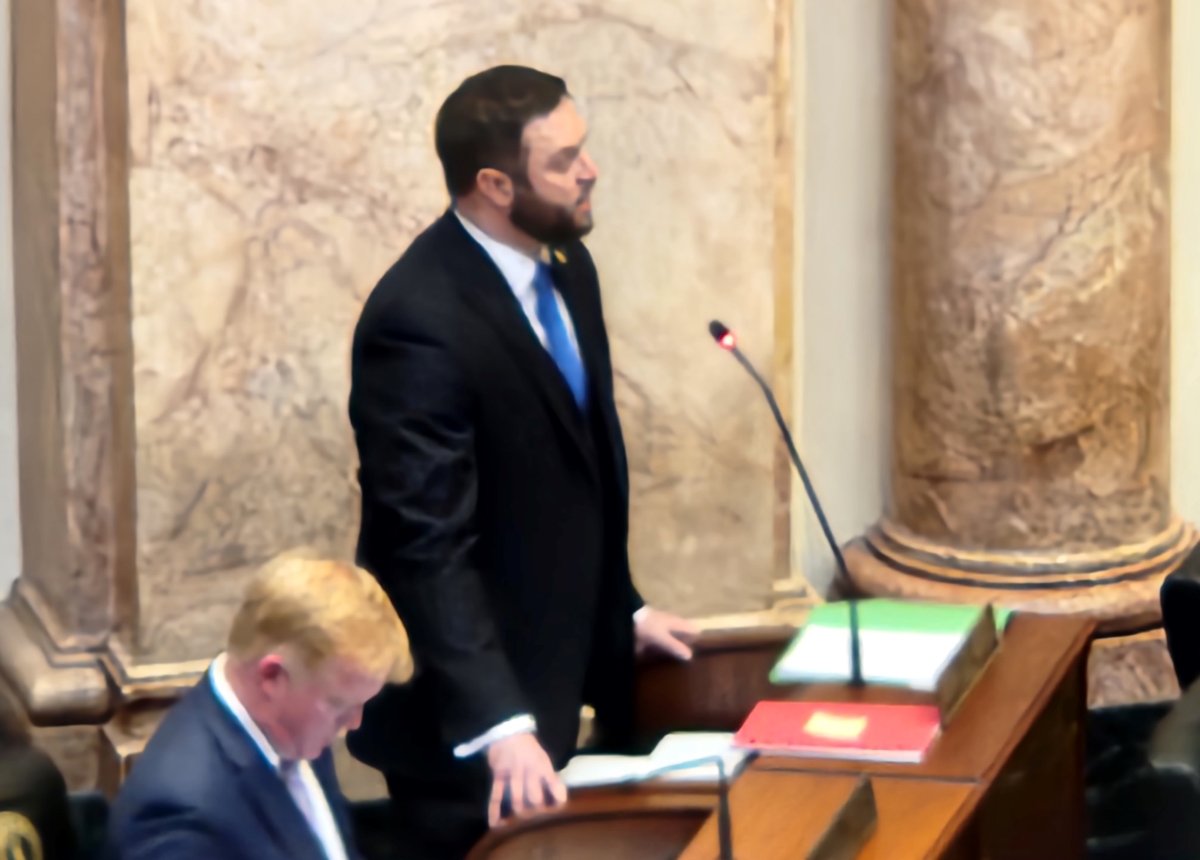
Meredith
State Rep. Michael Meredith discusses House Bill 551, which would legalize sports betting in the state, on the House floor Monday. The bill passed by a nearly 2-to-1 margin and now heads to the Senate. (Image: Casino.org)

The 62-34 vote on House Bill 551 cleared the three-fifths majority supporters needed to get since the bill generates revenue and makes appropriations in a non-budget year.

The bill would allow Kentucky’s nine racetracks to offer retail sportsbooks at its tracks and simulcasting facilities. It also would allow tracks to partner with up to three mobile operators each.

Tracks would pay $500,000 for a license, with an annual renewal fee of $50,000. Operators would pay a $50,000 license fee and an annual renewal fee of $10,000.

Retail sports betting revenues would be taxed at 9.75% of adjusted gross revenues, while online operators would pay a 14.25% tax. The only deductions allowed would be for the .25% federal excise tax the federal government places on each wager.

It’s the second straight year the House has passed a bill. Once again, the bill now heads to the Senate, where last year’s bill died after failing to get a committee hearing or a floor vote before the session ended. This year, the bill will need 23 yes votes to pass in the 37-member Senate.

However, supporters are expressing optimism for this year’s bill, even as just five legislative days remain in the session.

State Rep. Michael Meredith, R-Oakland, the bill’s primary sponsor, believes they are about a couple of votes away from the 23 they need to pass the bill in the Senate this year.

Problem Gaming Fund Added to Bill

One reason for Meredith’s optimism is what was included in a House floor amendment Monday. That bill included a provision for a problem gaming fund, with that fund receiving 2.5% of the tax revenue generated annually.

That was explicitly added, Meredith said, because a couple of senators requested it.

Hopefully, that’ll shore up those (votes), and we’ll narrow it down,” Meredith told Casino.org after the bill’s passage.

The problem gaming fund was one that state Rep. Al Gentry had championed, D-Louisville, who has been the primary co-sponsor on sports betting legislation in the House.

Gentry had filed a bill earlier in the session that would have created a problem gaming fund that would have received money from all sectors of legal gaming in Kentucky. While this fund would only be covered by sports betting tax revenue, he told Casino.org he was still delighted to see it inserted.

Kentucky is one of a few states that does not have a problem gambling fund.

“I put a lot of work into pushing that for a few years now and glad to see it’s in there,” he said.

In addition, both Meredith and state Rep. Matt Koch, R-Paris, have talked about bringing up a more comprehensive problem gaming fund for next year’s session.

The problem gaming fund was the second significant positive change for the bill. Last week, the House Licensing, Occupations, and Administrative Regulations Committee approved a substitute bill that removed a 12-month, in-person licensing requirement for mobile account registrations.

While the House passed Meredith’s floor amendment, two others brought by a bill opponent failed.

State Rep. Josh Calloway, R-Irvington, sought to ban the use of credit cards for sports betting deposits and raise the minimum age to place a wager on a sporting event from 18 to 21. Both failed, with the age change falling by a 39-48 vote.

Calloway, after his amendments were defeated, said on the floor that he would not stop fighting for Kentuckians, especially against things that can “destroy people’s lives permanently.”

Time Running Out in Kentucky General Assembly

Supporters of the sports betting bill received good news last week when an advanced agenda for Tuesday’s Senate Licensing and Occupations Committee hearing included HB 551. However, Meredith said , after Monday’s vote, the committee may not take up his bill until possibly Wednesday. The Senate L&O Committee is also expected to take up the gray/skill games bill that passed the House last week and a bill that would legalize medical marijuana.

While Meredith and other supporters express optimism about the bill’s chances, the clock is running out on this year’s session.

After Monday, there are just five legislative days remaining. Three of them take place this week, with lawmakers recessing starting on Thursday for Gov. Andy Beshear’s veto consideration period.

The session will conclude on March 29-30.

Another thing the bill has in its favor is Beshear’s support. He campaigned four years ago on legalizing sports betting and reiterated that support earlier this year in his State of the Commonwealth address.

“I don’t think you’re going to see a veto,” Meredith said. “So, I think everybody’s pretty comfortable sitting it down until after the veto period.”

The post Kentucky House Passes Sports Betting Bill By Nearly 2-to-1 Margin appeared first on Casino.org.

Indiana Gaming Commission Raises Concerns Over NeoGames 2020 License Application

The Indiana Gaming Commission (IGC) pulled from its meeting Thursday a decision to act on a vendor’s license application that has been in review for nearly three years. However, that move appears to be the last time the application for NeoGames will get extended.

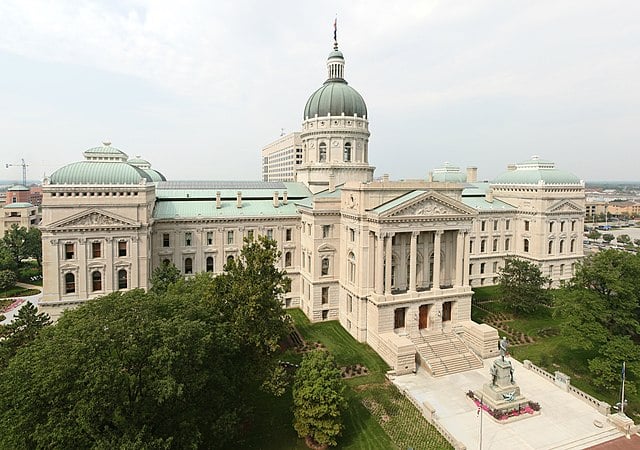
An aerial shot of the Indiana State House in Indianapolis. The Indiana Gaming Commission on Thursday delayed taking action on the license application for NeoGames, a vendor that applied for its license in September 2020. IGC officials said there are concerns about one of the owners of the company. (Image: Massimo Catarinella/Wikimedia Commons)

NeoGames provides player account management (PAM) services in the state for Caesars Sportsbook. It applied for its Indiana license on June 8, 2020, according to IGC records. It received a temporary license three months later and has received two renewals of that temporary license.

IGC Executive Director Greg Small told commissioners that IGC staff has raised issues about its suitability for permanent licensure. In particular, the concerns regard a “substantial owner” of the company headquartered in Tel Aviv.

“Staff and applicant have been working to resolve these concerns, but I regret to inform the commission that we do not have a resolution at this time,” Small said.

The continued delay frustrated IGC Chairman Milton Thompson, who said the review seemed to be taking “abnormally long.” Other commissioners felt the same way.

This looks like a matter that we’ve been kicking the can down the road, or all parties have, and it’s time for everybody to show their hands,” Commissioner Michael Williams said.

Thompson called on the commission staff to provide “a definite plan of action” by the time it comes before the body in June.

Messages sent Thursday to NeoGames and Caesars seeking comment were not returned.

NeoGames Expanding in US

The partnership between NeoGames and Caesars dates back nearly five years. In October 2018, NeoGames reached a deal with William Hill to provide PAM services for the company’s online sportsbooks. Two years later, Caesars Entertainment announced its acquisition of William Hill. Last year, Caesars sold William Hill’s non-US assets to 888 Holdings.

When it purchased William Hill, Caesars acquired a 24.5% ownership share in the iGaming and iLottery services provider. It divested from that position by March 2022.

While NeoGames has not been able to complete its license application in Indiana, it has moved forward to expand its US operations. On Friday, NeoGames announced its iGaming content-providing subsidiary Pariplay agreed to provide games to the DraftKings online casino platform in New Jersey.

“Launching our content with them in New Jersey is a huge statement of intent for us regarding our plans for North America, and we very much look forward to developing this relationship,” NeoGames President Tsachi Maimon said.

NeoGames mentioned Pariplay also expects to provide content for DraftKings iGaming operations in Michigan and West Virginia, with the possibility for additional states pending regulatory approvals.

IGC Fines Ameristar, Horseshoe Casinos

Also at Thursday’s IGC meeting, commissioners approved disciplinary actions against 20 vendors, companies, casinos, and sports betting operators.

The two biggest fines were levied against Ameristar Chicago, which operates a casino in East Chicago. The IGC charged the Penn Entertainment Casino on five counts and fined $37,000. The most serious violation stemmed from a sportsbook supervisor accepting wagers from players via text messages without collecting payment.

Horseshoe Hammond agreed to a $34,000 fine covering five counts against it. The most serious charge was the Caesars casino laying off 16 individuals without first seeking IGC approval. The order stated the casino notified IGC about its intent to lay off workers. Commission staff responded that such a move would only be approved if casino leadership followed the routine procedure.

Last August, Horseshoe reported the positions to be eliminated, including a marketing director and an executive sous chef. However, by the time Horseshoe filed its report with the IGC, those positions were already eliminated and the workers in those roles were let go.

The post Indiana Gaming Commission Raises Concerns Over NeoGames 2020 License Application appeared first on Casino.org.