Surge in Ontario’s iGaming Market in Early 2024

iGaming-Ontarios-FY-2024-25-Q1-Market-Performance-ReportThe first quarter of the fiscal year 2024-25 has been stellar for Ontario’s iGaming industry, as reported by iGaming Ontario. The period spanning April to June 2024 witnessed substantial activities across the province’s regulated online gaming platforms, involving 50 operators.

Martha Otton, Executive Director at iGaming Ontario, commented on the sector’s growth: “Our regulated iGaming market, with its expanded operator base and increased wagering, offers a myriad of enjoyable gaming options. This growth not only enhances the gaming experience but also substantially contributes to provincial funds aimed at infrastructure, healthcare, and education.”

Performance Metrics and User Participation

The market experienced a total wagering sum of $18.4 billion, showing a growth of 3.4% from the previous quarter and a 31% increase from the first quarter of the previous year. Gaming revenues were equally strong, with a total of $726 million recorded, marking a 5.2% increase quarter-over-quarter and a 34% increase year-over-year. These revenues are calculated from total cash bets, inclusive of various game-related fees, and are net of payouts to players, excluding operational expenditures.

The user engagement was robust, with nearly 1.9 million player accounts active during the quarter. These accounts include both cash and promotional betting activities, and the figure does not represent unique individual players as some hold accounts across multiple platforms. The average monthly spend by these players was approximately $284.

Gaming Categories Detailed

In terms of wager distribution, casino games led the pack. These games, which include slot machines, digital and live table games, as well as peer-to-peer bingo, commanded nearly $15.5 billion or 84% of the total wagers. They generated $529 million in gaming revenue, accounting for 73% of the total.

The sports betting segment also performed well, with a total of $2.5 billion wagered, constituting 14% of the overall betting amount and generating $181 million in revenue. Highlight events such as the Stanley Cup Final, where the Edmonton Oilers competed, significantly contributed to the wagering volume.

Peer-to-peer poker contributed $402 million to the total wagering, about 2.2% of the overall, and generated $16 million in revenue. This shows a slight seasonal dip, possibly influenced by major poker events like the World Series of Poker in Las Vegas, which typically draws players away from local platforms.

Continued Commitment and Prospects

iGaming Ontario is dedicated to maintaining transparency and accountability by regularly publishing market performance reports. These reports provide valuable insights into the market dynamics and help monitor the impact of regulatory measures on the economic benefits to the province.

Looking forward, the Ontario iGaming market is poised for continued growth, surpassing initial expectations and contributing significantly to the province’s economic and social objectives. This sector’s continued success reflects a robust regulatory environment and a diverse range of gaming options available to residents.

Source:

iGaming Ontario’s FY 2024-25 Q1 Market Performance Report, igamingontario.ca, July 24, 2024.

The post Surge in Ontario’s iGaming Market in Early 2024 appeared first on Casino News Daily.
Washington, DC Could Soon Have Competitive Sports Betting Market

Washington, DC could soon allow multiple operators to conduct mobile sports wagering in the District after City Council member Kenyan McDuffie’s (I-At Large) amendment to broaden the market was included in the council’s proposed budget for fiscal 2025, which was passed Tuesday.

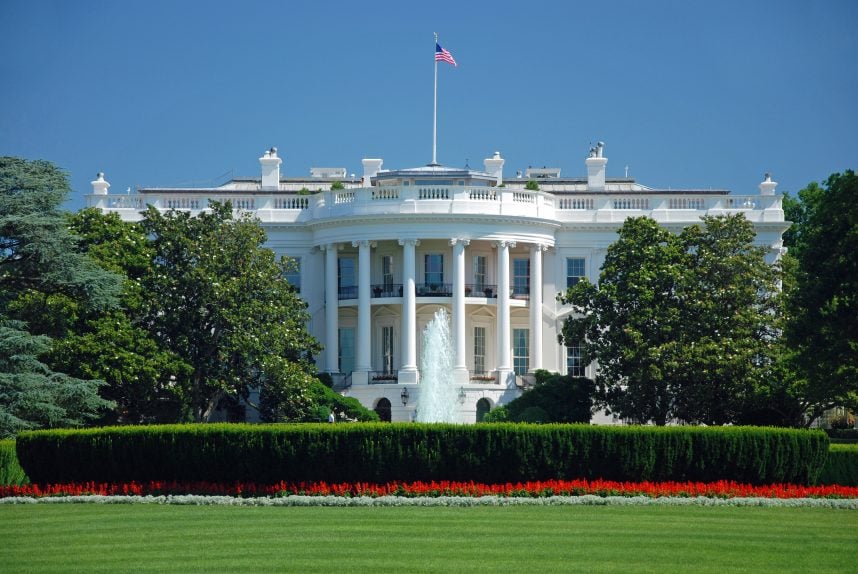
White House
A street-level view of the White House in Washington, DC. The city could soon open its online sports betting market to multiple competitors. (Image: Adobe Stock Images)

McDuffie introduced the Sports Wagering Amendment Act of 2024 in March. Mayor Muriel Bowser (D) still has to approve the budget, but if she does, that could open the door to the city having more than one mobile sports betting option. Currently, FanDuel has a monopoly on mobile betting in the US capitol city.

The unit of Flutter Entertainment took over online sports betting in the city in April after the city council allowed Intralot to subcontract its responsibilities out to another company. Intralot previously ran the heavily criticized GambetDC app.

Last month, representatives from BetMGM, Caesars Sportsbook, DraftKings, and Fanatics Betting & Gaming testified before the Washington, DC City Council’s Committee Business and Economic Development Committee to advocate for a more competitive mobile sports betting landscape in the city.

Usual Suspects Likely to Eye DC Sports Betting Entry

Should Washington, DC’s sports wagering market be liberalized, forcing FanDuel to shed its brief monopoly, the typical names in the industry would likely seek entry.

Currently, BetMGM (Nationals Park) and Caesars Sportsbook (Capital One Arena) have retail sportsbooks at professional sports venues in the city. Those operators would almost certainly pursue licenses if the District opens to mobile wagering competition as would rivals DraftKings and Fanatics.

A decision on making the District’s sports betting market could boil down to simple economics. FanDuel paid a $5 million conversion fee to the Office of Lottery and Gaming (OLG) to take over the Intralot deal and is promising $2 million to $4 million in annual operating payments to the city. If several other gaming companies made similar financial commitments, mobile betting expansion could be a significant moneymaker for the city.

However, there are market share considerations for operators. While Washington, DC is an enticing market for sportsbook firms, there are no guarantees adequate threats to FanDuel will be mounted. In the first quarter in neighboring Virginia, FanDuell commanded market share of 40.14%, or more than DraftKings and BetMGM combined.

Resistance to Open DC Sports Betting Market

Obviously, FanDuel wouldn’t be thrilled about the idea of shedding its monopoly in DC, but there’s likely to be resistance to an open market from other corners — namely small businesses that have sports wagering kiosks.

Those FanDuel-operated machines are found in 63 locations across the city, including bars and lottery retailers, and have become important revenue streams for those establishments.

Retailers that have those kiosks fear that if more mobile wagering options are permitted in the District, bettors will be less inclined to use the kiosks. McDuffie believes that other gaming companies could provide comparable devices to businesses should the Washington market be liberalized.

The post Washington, DC Could Soon Have Competitive Sports Betting Market appeared first on Casino.org.

Ontario iGaming Market Surpasses $2 Billion in Revenue, Sustains 15,000 Jobs

ONTARIO_IGAMING_MARKET_SUSTAINING_15000_JOBS_IN_SECOND_YEAR_SINCE_LAUNCHOntario’s regulated iGaming market has made significant economic strides, generating more than CAD$2 billion in revenue for the provincial government since its inception two years ago. According to a recent report by Deloitte, in its second year, Ontario’s competitive iGaming market (excluding the Ontario Lottery and Gaming Corporation’s iGaming offering) has sustained nearly 15,000 full-time equivalent jobs, marking an increase of 2,800 jobs from the first year.

A Recognized Leader in iGaming

“Our made-in-Ontario iGaming sector is being recognized internationally for its success as a leader in this space,” said Ontario Attorney General Doug Downey. “Working together with our partners and industry, we will continue to drive innovation and deliver robust player protections, all while displacing the unregulated market. Our iGaming sector is not only a job creator here in Ontario but it shows the world our ongoing commitment to building a sustainable and responsible iGaming industry.”

Deloitte’s report highlights that the total government revenue generated through the iGaming market reached $1.24 billion in the second year. This revenue includes $790 million supporting provincial government revenue, $75 million bolstering municipal government revenues, and $380 million aiding federal government revenue.

“This report puts Ontario’s iGaming market government revenue contribution at over $2 billion since it launched and with job contribution up by 24% from its first year, the benefits to Ontarians are significant,” said Heidi Reinhart, chair of the iGaming Ontario board.

Economic Contributions and Growth

Ontario’s iGaming market contributed $2.7 billion to Ontario’s GDP in its second year of operation, up from $1.58 billion in the first year. For every dollar spent by iGaming operations, an estimated $1.40 of GDP was supported in the Ontario economy, an increase from $1.14 in the first year.

The iGaming market has already achieved or nearly reached many of Deloitte’s year-five projections in its second year, with government revenue at 94%, direct jobs sustained at 120%, total full-time jobs sustained at 9%, and GDP contributions at 93% of the initial expectations.

“Through the development and growth of Ontario’s regulated iGaming market, we’re helping achieve the government’s goals in terms of job creation, innovation, and development while providing a safer experience for consumers,” added Martha Otton, executive director of iGaming Ontario.

Detailed Economic Impact

The report from Deloitte indicates that Ontario’s regulated iGaming market sustained 14,935 full-time equivalent jobs in its second year, a significant increase from the previous year. The market’s contribution to the GDP amounted to $2.7 billion, with a notable portion of $1.3 billion supporting labor income. This economic activity resulted from both operational activities and capital investments by licensed iGaming operators.

The breakdown of government revenue supported by the iGaming market is substantial: $790 million in provincial government revenue, $75 million in municipal government revenue, and $380 million in federal government revenue. These revenues include various taxes such as the Harmonized Sales Tax (HST), property taxes, and corporate and personal income taxes.

Comparing Year 1 and Year 2 Results

The growth from Year 1 to Year 2 of Ontario’s regulated iGaming market is significant. The estimated contribution to Ontario’s GDP grew by 70%, from $1.6 billion to $2.7 billion. The contribution to labor income increased by 45%, rising from $905 million to $1.3 billion. Employment contributions saw a 24% rise, growing from 12,070 full-time equivalent jobs to 14,935. Additionally, the contribution to provincial and municipal government revenue in Ontario increased by 66%, from $525 million to $865 million.

This robust growth illustrates the dynamic impact of Ontario’s regulated iGaming market on the province’s economy. The sector not only creates jobs but also drives significant revenue for the government, supporting a variety of public services and initiatives.

Source:

ONTARIO IGAMING MARKET SUSTAINING 15,000 JOBS IN SECOND YEAR SINCE LAUNCH, gamingintelligence.com, June 20, 2024.

The post Ontario iGaming Market Surpasses $2 Billion in Revenue, Sustains 15,000 Jobs appeared first on Casino News Daily.

Spanish Online Gambling Market Sees Strong Growth in Q1 2024

The Spanish online gambling market has shown robust growth in the first quarter of 2024, as reported by the Directorate General for the Regulation of Gambling (DGOJ). The Gross Gaming Revenue (GGR) for the quarter reached €350.69 million, marking an 11.23% increase quarter-over-quarter and a 15.14% increase year-over-year. This significant rise underscores the market’s resilience and recovery from previous fluctuations.

Growth Across Key Segments

spanish_online_gambling_report_q1_2024_ggr_up_15_1pctIn terms of player transactions, both deposits and withdrawals showed notable increases compared to the previous year, rising by 15.85% and 13.90%, respectively. Quarter-over-quarter, deposits grew by 5.61% while withdrawals saw a modest increase of 0.72%. Despite the overall growth, marketing expenditure saw a slight decrease of 1.0% quarter-over-quarter, while the number of new accounts surged by 15.21%.

The GGR is distributed across various gaming segments, with betting, casino, bingo, contests, and poker all contributing to the total. Betting accounted for €150.28 million (42.85% of the total GGR), followed by the casino segment with €167.76 million (47.84%). Bingo contributed €4.19 million (1.19%), contests €0.002 million (0.00%), and poker €28.45 million (8.11%).

Betting and Casino Drive Growth

The betting segment experienced a significant positive variation rate of 30.99% quarter-over-quarter and 15.37% year-over-year. This growth was largely driven by a remarkable 588.84% increase in pre-match betting, although in-play sports betting saw a decline of 31.69%. Other betting categories also grew by 1.57% this quarter, whereas horse betting decreased by 28.36%.

The casino segment, despite a slight quarter-over-quarter decline of 2.05%, showed a strong annual growth rate of 17.02%. Within the casino segment, slots increased by 14.98% year-over-year, and live roulette saw an impressive 22.19% growth. Quarter-over-quarter, Blackjack, conventional roulette, and live roulette grew by 7.32%, 9.69%, and 6.37%, respectively, while slots fell by 7.51%.

Other Segments Show Mixed Results

Bingo showed steady growth, with a 9.18% increase quarter-over-quarter and 24.93% year-over-year. Conversely, the contests segment continued its irregular performance, experiencing a dramatic fall of 96.79% quarter-over-quarter and 99.38% year-over-year.

Poker presented a positive outlook with an 11.98% quarter-over-quarter increase and a 3.99% year-over-year rise. Poker tournaments grew by 11.19% quarter-over-quarter and 2.04% year-over-year, while poker cash games increased by 13.91% compared to the previous quarter and 8.91% compared to the same quarter of the previous year.

Player Engagement and Market Dynamics

The average number of active game accounts per month reached 1,327,575, reflecting a 4.57% increase quarter-over-quarter and a 14.58% increase year-over-year. The average number of new game accounts per month stood at 148,862, with a growth of 15.21% quarter-over-quarter and 33.64% year-over-year.

For this quarter, there were 78 licensed operators in the market. The number of active operators by segment included 41 for betting, 4 for bingo, 50 for casino, 2 for contests, and 9 for poker.

Marketing Expenses

Marketing expenses for the last quarter totaled €112.79 million, broken down into €14.27 million for affiliation expenses, €1.07 million for sponsorship, €55.67 million for promotions, and €41.78 million for advertising. Compared to the previous quarter, marketing expenses declined by 1.00% but increased by 14.86% year-over-year. Specifically, sponsorship decreased by 12.55%, affiliates by 0.87%, advertising by 7.68%, while promotions increased by 4.93% quarter-over-quarter. Year-over-year, sponsorship fell by 27.23%, affiliates increased by 14.82%, advertising by 22.49%, and promotions by 10.92%.

Source: “1st Quarterly Report 2024”. Directorate General for the Regulation of Gambling. June 4, 2024.

The post Spanish Online Gambling Market Sees Strong Growth in Q1 2024 appeared first on Casino News Daily.

Microgaming Updates Brand Looking to Return to Leading Market Position

Entering its third decade of operation, Microgaming, a pioneering platform software provider, announces a complete visual rebrand for its corporate websites. The move is expected to redefine the company’s identity and strengthen its transformative journey.

Comprehensive Website Update

The comprehensive update of the corporate online presentation, including the subsidized PlayItForward websites, represents a milestone in the 30-year company’s history. Microgaming is entering a new era of its operations and the transformation is designed to provide an effective marketing tool to ensure an appealing yet seamless transition.

Name and Logo Remains the Same

For such purpose, the visual language of the brand will continue to communicate with customers and partners in the same manner as before. The Microgaming name and logo will remain unchanged as the company sets out for a transformative journey to get back to the position of a leading platform software provider superiorly held in 1994.

Focus on People

Therefore the upgrade of the corporate web pages will provide the brand with a contemporary look and sophisticated design to communicate the company’s focus on its people. The visual transformation is a part of the new corporate strategy designed to refresh the brand and open a brand new chapter of its operations.

Addition of Game Aggregation Business

Microgaming will add weight to its operations by adding its new content aggregation business to the established corporate platform software and technology provisions. The addition is a result of the Games Global’s acquisition of Micogaming’s online gaming and content distribution operations in 2022.

Bridge Over Still Waters

microgaming_unveils_new_corporate_and_play_it_forward_websitesAs a pioneering platform and technology software provider, Microgaming has powered leading online gaming brands and currently distributes over 210 million bets on a daily basis. The latest overhaul is set to represent a bridge across still waters between the past and future pioneer’s accomplishments. It’s no wonder that such a transition has been facilitated by the board and the employees alike as the company has earned over 20 industry awards for the application of diversity and inclusion standards in the workplace.

Alex Wilson, Head of Marketing at Microgaming, commented:  “We’re incredibly excited to be able to announce the rebranding of the corporate and Play It Forward websites at Microgaming in a move that will not only breathe fresh visual life into our brand, but also redefine who we are as a business’’.

Wilson added: “Having been in the industry for 30 years, the repositioning of our value proposition will see Microgaming get back to its roots as an established corporate platform software and technology provider while simultaneously celebrating the people who’ve helped get us to where we are today. As such, it marks the start of what promises to be a transformative journey for the company as we enter a new chapter in our development and we can’t wait to share it with our iGaming peers.”

Source: Microgaming Unveils New Corporate and PlayItForward Websites’’. Microgaming. February 5, 2024.

The post Microgaming Updates Brand Looking to Return to Leading Market Position appeared first on Casino News Daily.