Curacao Online Casino License Changes Coming End of Summer

curacao_online_casino_license_changes_coming_end_of_summerChanges are coming to the online gambling jurisdiction of Curacao with a new law coming into effect soon. For background and a frame of reference, readers can find more information at the end of this article.

Beginning September 1, all new licenses will be issued by the Curaçao Gaming Control Board (GCB).

At a recent iGB LIVE (iGaming Business conference) Curaçao’s Ministry of Finance, Sixienne Jansen laid out how the online gaming licenses issued by the jurisdiction of Curacao will function beginning on September 1, 2023, under Curacao’s National Ordinance for Games of Chance (LOK).

LOK is Not Yet the Law of the Land

It’s important to note that the LOK is not yet the “law of the land” but binding agreements exist between Curacao and Amsterdam for its content and full implementation. After August this year, new licenses will be issued to the Master License holders under new rules, even though the LOK has not been introduced into parliament yet. In order to ensure continuity, all four Master License holders will automatically receive one of the new licenses on September 1. The license will be provisional and valid for one calendar year.

The LOK will reform how online gambling licensing will work for foreign operators. Nearly all licensed offshore casinos accessible to players in the United States are licensed in and regulated by Curacao.

Under the current law, there are four Master License holders in Curacao and those license holders can issue “sub-licenses” for operators of any game of chance or skill – whether it is poker, table games, bookmaking, online casinos, lottery, or any other form of remote gambling. By some estimates there could be as many as 12,000 gambling operators licensed in Curacao. However, the number of active operators is most likely much smaller

The Curacao government plans to change the entire system in a phased reform without disrupting current business operations.

According to Jansen: “No operator is going to have to pause or stop any business as a result of anything done by the Ministry. One of the primary elements of the transitions into the new regime is to facilitate uninterrupted continuity of all operations of sublicense holders.

When the LOK actually becomes law, all “sub-licensed” operators will only have 90 days to apply for a new license without regard to any time remaining on their former license. However, Master Licensers will no longer issue any new permits and all interim or provisional licenses will be issued directly by the Curaçao Gaming Control Board (GCB). Those licenses will automatically convert into LOK licenses later on.

New Regime to Comply With International Standards

However, the new regime will be a bit tighter to conform more to international standards. While current license holders already have specific obligations and are investigated by the Master License holders, three forms must be submitted by operators under the LOK whereas the application process under the current regime has never been fully explained to the public.

  • Online Gambling Application:
  • Personal Declaration:
  • Corporate Disclosures:

Once an applicant has satisfied the GCB in terms of the forms and documentation submission, then a license will be issued,” Jansen said.

Within 6 months of that license audited policies and procedures will need to be submitted for evaluation.

The same regulations that apply now will continue to be binding during a 9-month transitional phase so there should be no disruption of business practices for operators.

Jansen explained that operators who don’t wish to participate in the new regime will have ¾ of a year to wind up their businesses under existing regulations: “For those operators who do not wish to move to the new licensing regime, they can continue to conduct business up until the date the relevant master license expires,” said Jansen.

A summary of points regarding the new licenses includes the following:

  • Licenses issued from September 1 will be issued by the GCB under current legislation and regulations and will not immediately be controlled by the LOK as it is not yet the “law of the land”.
  • Sub-licenses will not be issued by the GCB, however, they will still be available from master License holders from September 1, 2023, until the LOK is implemented.
  • New provisions addressing anti-money laundering and responsible gambling will become known to the public as they will be part of the new licenses.
  • Current license holders or those with approval in process should consult with their master licenser for more information on how to proceed – this includes operators whose licenses are currently “on hold”.

Business as Usual – For Now – As Operators Go – New Process Coming

“Contrary to much speculation, there has been no change whatsoever to the legislation or permissions since the minister publicly announced the drafting of the new legislation last November,” said Jansen.

One point bears repeating:
Beginning September 1, all new licenses will be issued by the Curaçao Gaming Control Board (GCB).

The Minister is expected to issue further guidance and more updates in September as well as a new fee structure for operators.

More Information on Curacao Gambling Law

Curacao is an online gambling website license provider and casino regulator with an antiquated and semi-transparent framework that is little understood by laymen and government officials in other nations. In a nutshell, the government has issued “Master Licenses” to four Master Licensers who then accept or reject individual gambling operators and issue “sub-licenses” to online casinos, bookmakers, and other remote gambling providers.

More background on the former “Netherlands Antilles” island shows the difficulty in whether to even call it a country or to explain its relationship with the Netherlands, its independence, or its obligations to the Dutch government.

The following is from Wikipedia and is known to be a true statement: “Following a referendum, and as a result of constitutional change, Curaçao became a constituent country within the Kingdom of the Netherlands on October 10, 2010.

The further background shows that since that time the kingdom and the government in Amsterdam have wrestled with how to modernize gambling law there and more recently, to bring it more in line with how regulation and gambling law enforcement functions in other jurisdictions.

The Netherlands is a parliamentary democracy. Dutch people can choose who represents them in parliament. The Netherlands is also a constitutional monarchy.

Further complicating the push for reforms from the Dutch government includes the following fact:
Curaçao has full autonomy on most matters, with the exceptions summed up in the Charter for the Kingdom of the Netherlands under the title “Kingdom affairs”.

It wasn’t until the small island constituency needed assistance from Amsterdam during the world health emergency of the Covid pandemic that the Dutch government was able to exert enough influence over Curacao to “encourage” them to change the way gambling regulation and enforcement is handled and to get them on a timeline to implement those changes.

It is also important to note that the Netherlands itself has only recently reformed its online gambling laws.

The UK’s Law Review is a well-known and trusted website with specific and well-cited information on gambling law around the world. Lawyers there state the following about Dutch online gambling law:
As of 1 April 2021, remote gambling licenses are available for casino games and sports and horse race betting.

A more transparent regulatory framework with public and private assurances that it is in line with international standards can only be a good thing for Curacao. More accountability in regard to responsible gambling measures can only improve the player experience. However, until a process for complaints is outlined by the CGB and it is shown to be working on behalf of players, perceptions are not likely to change much.

If the CGB is no more responsive than most of the Master License holders have been to “small” complaints, it will have been an exercise in futility and lip service to the problem of murky terms and conditions including “gotcha” and “God” clauses. As it stands now, only a serious breach of licensing terms will be investigated and the public has no direct knowledge of what those terms might be and rarely if ever learns the result of an intervention.

Source: Curaçao: All master licences to get one-year extension, iGaming Business, July 12, 2023

The post Curacao Online Casino License Changes Coming End of Summer appeared first on Casino News Daily.
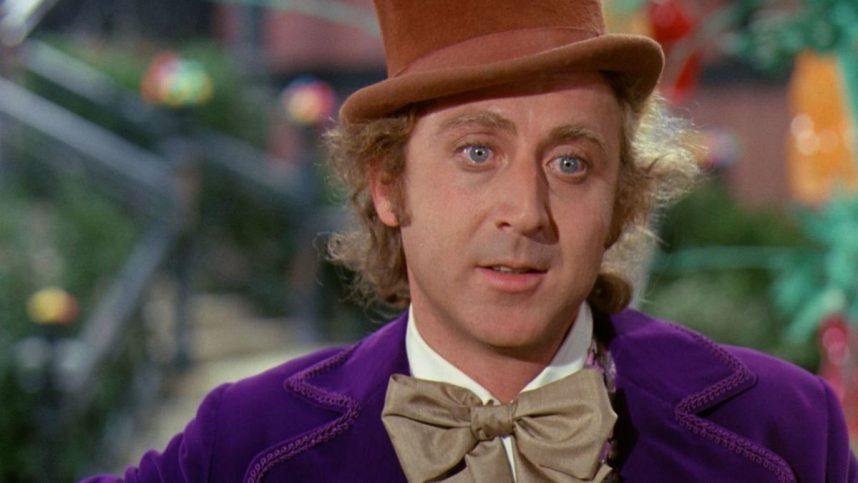
Light & Wonder Bringing Willy Wonka, Other Warner Bros. Classics to Online Slots

Slot machine behemoth Light & Wonder announced it expanded an agreement with Warner Bros. to bring more of the entertainment company hit movies to the gaming firm’s portfolio of online slots.

Willy Wonka
Gene Wilder in Willy Wonka and the Chocolate Factory. Light & Wonder is bringing slots inspired by the movie to internet casinos. (Image: Delish.com)

Las Vegas-based Light & Wonder will work with Warner Bros. Discovery Global Themed Entertainment to introduce more internet slot titles that are themed with Warner Bros. movies. The menu of movie-inspired slots will start with Willy Wonka: World of Wonka, which has long been a favorite among slots players at land-based casinos.

The long-term agreement will see Light & Wonder’s in-house game development teams leverage a series of highly successful brand licensing offerings from its long-term partner Warner Bros. Discovery Global Themed Entertainment, with titles across a range of verticals set to hit regulated markets worldwide through the OPENGAMING ecosystem,” according to a statement.

Financial terms of the expanded agreement were not disclosed. Light & Wonder has previously offered Willy Wonka-inspired lottery tickets in some states.

Wizard of Oz on Deck

Light & Wonder will roll out the internet version of the Willy Wonka: World of Wonka slot game in the US, UK and Europe. The company added other Willy Wonka-inspired online slots will be developed in the future.

As for other Warner Bros. movies that could be leveraged for iGaming content, “Wizard of Oz” could be on deck behind “Willy Wonka and the Chocolate Factory.

“Light & Wonder is also set to bring another land-based hit, The Wizard of Oz: Road to Emerald City online as part of the global rights agreement, with additional branded games from the Warner Bros. Discovery portfolio to follow,” added the gaming company. “As with the Wonka titles, more hit Wizard of Oz games are planned for release across 2024 and beyond.”

The press release didn’t mention other Warner Bros. content that could eventually be used for themed slots, but the entertainment company has a rich content library including Batman films and Looney Tunes cartoons, among many more.

Why It Matters

News of the expanded Light & Wonder/Warner Bros. agreement comes at a time when iGaming operators are increasingly looking to bolster their slot portfolios, and that includes leveraging established and unique content to appeal to bettors.

That’s a practical approach because slots are higher-margin games, and players are usually devoted to particular brands and titles. As such, there’s an increasing intersection between online casino operators and slot machine manufacturers.

For slot machine manufacturers such as Light & Wonder, there are obvious benefits to boosting exposure to the online casino market. Notably, iGaming is projected to grow more rapidly and deliver better profit margins over the long-term than brick-and-mortar casinos and sports wagering.

The post Light & Wonder Bringing Willy Wonka, Other Warner Bros. Classics to Online Slots appeared first on Casino.org.

Constitutionality of Rhode Island Online Casino Bill Questioned

constitutionality_of_rhode_island_online_casino_bill_questionedBally’s Corp. and IGT, two major gambling businesses with headquarters in America’s smallest but most densely populated state, had a chance to pitch their plan for online casino gambling in Rhode Island, but not every stakeholder in government the local gambling economy appeared to be happy about the prospect as proposed.

IGT is a familiar name to most seasoned casino gamblers in the US, but not everyone is aware of the fact that Si Redd’s Las Vegas-based company was acquired by and merged with the world’s largest lottery operator, GTECH – a company that posted over US$ 4 billion in revenue for 2022 or that Bally’s as we know it is not the Bally’s they may have known a decade ago. That company sprung from Twin Rivers (Rhode Island’s exclusive video lottery terminal casino game supplier with venues in Lincoln and Tiverton) and acquired the Bally’s name from Caesar’s a short time ago in relative terms.

The pushback comes from what might seem to be the most unlikely of places – the Rhode Island State Lottery (RILOT). Under the proposed bill, RILOT would have complete control of nearly every aspect of the proposed online casino gambling market in the state from the making of game rules to terms and conditions, and every regulatory duty normally associated with online casino gambling. The servers themselves would be located in one or both of Bally’s land-based casinos in the state.

IGT provides Bally’s with technology and machines to run its lottery casinos and sportsbetting applications in the state.

The Will of the People

Casino gambling and gambling expansion in the state were allowed under voter referendums in accordance with the state constitution, which as of today states:

No act expanding the types or locations of gambling which are permitted within the state or within any city or town … shall take effect until it has been approved by the majority of those electors voting in a statewide referendum and by the majority of those electors voting in said referendum in the municipality in which the proposed gambling would be allowed.”

Furcolo said (formatting – source article): “While the Rhode Island Lottery believes there is a legislative path for authorizing iGaming, and is supportive of iGaming, it is the … Lottery’s position that the bill — as drafted — is likely unconstitutional and must be revised to conform with the authorization under the 2012 and 2016 Voter Referendums related to casino gaming.

IGT is Rhode Island’s exclusive supplier of lottery solutions such as traditional lottery, instant win tickets, video lottery terminals (casino “slots”), and internet lottery games in the state.

The company’s lottery contract was recently extended until 2043 guaranteeing IGT the exclusive right to provide those games and services for an additional 20 years.

More recently, Bally’s was approved by RILOT to continue its exclusive provenance of sportsbetting in the state for three years, in concert with and using the technologies of IGT.

More than Constitutional Issues?

According to a report in the Providence Journal, one of the problems raised at a Senate hearing was one of monopoly as the legislation under consideration would not allow competitive bidding for an online casino license tender. The legislation, as proposed, was written and delivered to state lawmakers by Bally’s Corp, IGT, or one of the consortium’s affiliates.

Another issue, the one at front and center is the ability of 18-year-olds to act as “gambling surrogates” or proxy bettors for other high school-aged residents even younger.

Rhode Island teens of 18 years or older are currently banned from purchasing or using alcohol, cigarettes, or recreational marijuana – but they are allowed to place sports bets. According to the Providence Journal article: “<this> has made them kingpins of sorts in high school gambling operations.”

It’s not always easy to parse what’s “really” being said in Rhode Island media as the state has an antiquated but fully democratic government in the republican form, but a labyrinthine and impossible for outsiders to navigate political system as well as a history of less than savory characters holding sway over many elements of power in the state. If those nuances, as well as other things about America’s oldest state, are not understood by readers, the media may falsely assume that readers outside of the state may know what is behind certain references.

One salient example is a statement made by former Sen. John Tassoni Wednesday night when he was speaking in the capacity of a Rhode Island Council on Problem Gambling board member. He told a Senate committee: “They were called ’10 percenters’ on Federal Hill,” while referring to 18-year-olds giving younger children access to gambling online.

The former Senator’s office was closed on Sunday as this article was written so we were unable to contact him for clarification. We find no history of the “obvious” assumption that teens “ran numbers” for bookmakers or any other guess at what nefarious nature a “teen ten percenter” would represent.

A snippet of RI history for context from WorldAtlas:

On May 4th, 1776, Rhode Island was the first colony to renounce allegiance to Great Britain and declare its independence. However, Rhode Island was the last state to ratify the United States Constitution. It finally did so on May 29, 1790.

Readers are welcome to do their own research on Federal Hill and its history to form a personal assumption about the former Senator’s reference. A cursory search revealed no reference to gambling for our researchers.

Former Senator Not Alone in Concerns

Rhode Island Lottery director, Mark Furcolo warned that the Senate bill (S948) is “likely unconstitutional” as it is currently written. The Journal states that even if that issue is put to rest, iGaming “is likely” to cannibalize state revenues from existing Lottery offerings. However, Bally’s addressed that issue in a Spectrum Gaming analysis prior to announcing the new legislation at a Chamber of Commerce dinner a couple of months ago.

It would appear to the casual observer that some of the “noise” rising up against the casino bill may come from competitors, as is understandably the case in a capitalist system that is supposed to be fair and free of monopolization.

A spokesman for the Sports Betting Alliance (a coalition that includes BetMGM, DraftKings, and FanDuel) reportedly asked why Rhode Island might join Delaware as the only state in the Unionwhose residents would be limited to a single choice when it comes to iGaming.”

While the aforementioned businesses are all primarily sportsbetting operators, they also have casino components in some states that allow online casino gambling along with sportsbetting.

The spokesperson, Jon Mandel continued: “The result will be no different than mobile sports betting,” referring to the recent RILOT/Bally’s contract renewal of three years.

Residents will continue to use the illegal market; <they will> drive into Connecticut; or <they will> wait until Massachusetts legalizes iGaming to then cross the border, to the benefit of that state, not Rhode Island.”

Is $210 Million Per Year in New Revenue Enough?

Mandelas purportedly backed up his argument by referring to stats from the first month the neighboring state, Massachusetts opened online sports betting in that state, beginning on March 10, 2023.

Mandalas stated: “GeoComply identified 1,761 instances of a Rhode Island resident first attempting to access a Massachusetts sports betting app in Rhode Island and then traveling to Massachusetts and successfully logging into an app.”

The Sports Betting Alliance argues: “Multiple iGaming operators will generate significantly more tax revenue for the state than if the state grants one company a monopoly.”

The Bally’s measure as written is expected to generate about $210 Million a year for state coffers based on its Spectrum Gaming analysis and report which was tendered along with the proposed legislation in February this year.

Source: Online gambling could bring $210m in revenue. Why is Rhode Island Lottery pushing back? Providence Journal, May 12, 2023

The post Constitutionality of Rhode Island Online Casino Bill Questioned appeared first on Casino News Daily.

Endorphina is on the front lines with AI-assisted image generation for online slot machines

endorphina_is_on_the_front_lines_with_aI_assisted_image_generation_for_online_slot_machinesEndorphina is one of the first better-known slot studios to enter the fray at the front lines of AI-assisted image generation for online slot machines. Joker Ra was released on April 27, 2023. The company stakes a claim to the first-ever online video slot release wherein every design element was created with the help of artificial intelligence.

The press on the game doesn’t go into any great detail about what that means nor how much coaxing, coaching, prompting, or other ‘training’ went into the design in order to create harmonious effects between all of the iconography and to tie the theme together – it was most likely intensive and extensive.

How Was Ra Chosen as the Mascot?

Ra was the father of creation according to ancient Egyptian mythology and the king of all other deities. His symbology belies his patron hood of the sun, heaven, kingship, power, and light.

Endorphina has pulled that all off with a deft hand, however, there is – and perhaps intentionally – a tinge of hauntedness to the game, a creepiness like many early AI images portrayed. That’s not to say the artwork is any less than excellent, it’s just a little creepy when you mix a Joker with the king of creation – you are sure to end up with something inherently disturbing. The Joker can signify all of the beginnings and endings in life’s journey so they also fit together in a sort of perverse way.

As with many of Endorphina’s works, this one lacks a comprehensive rule set in the pay table. There are two scatter symbols and you’ll have to use your imagination or simply jump into gameplay and wait awhile to figure out which does what and why. None of it is explained in the directions or pin the paytable but we do learn that one of the scatters only appears on certain reels. We also learn that wild Jokers appear on the three central reels and expand vertically to complete all winning combinations.

The Pyramid of the Sun scatter, which appears on all reels is simply rendered but well executed and the Pharaoh’s Chest scatter (reels 1, 3, and 5) is an ornate scarab-wing adorned box that cries out to be larger in size so we can examine the details more closely.

Expanding Wilds on Three Middle Reels

The expanding Ra wild symbols on reels 2, 3, and 4 have plenty of opportunities to spread out vertically on this 5 reel, 4 position slot with 100 fixed paylines – so expect his disturbing little chortle quite often prior to the sound effects of the standard symbols whose win lines he helps to connect.

Much as NetGaming chose to keep the underlying slot game maths and mechanics simple when it released its first AI-assisted imagery game on April 13, Wild Buffalo Bonanza – so has Endorphina with the release of Joker Ra.

From a purely visual perspective, one would almost have to be more a fan of Egyptian slots than great American Bison games to prefer this title over the other – unless a more regimented and segmented art style is more to your liking. Buffalo is quintessentially NetGaming and nearly unmistakable as a hybrid creation that shows an almost atmospheric collaboration between man and machine. Joker Ra has uniquely defined elements that fit well into a visual narrative yet remain somewhat distinct while not disjointed. BGaming’s Alien Fruits is, well, as the name implies simply kind of goofy looking but not in any way that would reveal to a casual observer anything about its creationary origins.

According to the company: “The AI’s algorithms and machine learning capabilities allow for intricate and visually impressive designs that blend Ancient Egypt’s essence with a modern twist.”

Source: Designed by AI, a Game by Endorphina, Endorphina News, April 27, 2023

The post Endorphina is on the front lines with AI-assisted image generation for online slot machines appeared first on Casino News Daily.

Three Online Slots Made with AI Assistance

three_online_slots_made_with_aI_assistanceThe casino industry online and on land has been using artificial intelligence (AI) for quite some time now. However, with the advent of Generative AI across several models, the term with broad meaning can now be used to generate images directly from text prompts.


With competition for your gambling dollar strong, and an ever-increasing number of people around the globe partaking in risk-based entertainment along with a variety of other reasons we’ll look at as this report progresses, it comes as no surprise that AI-generated images have found their way onto slot reels, albeit only on virtual online slot machines at this point.

April 2023 saw the release of at least three online slot titles with imagery created by or with the help of artificial intelligence. The three pioneering companies and titles we’ll cover here are NetGaming (Wild Buffalo Bonanza), Endorphina (Joker Ra), and BGaming (Alien Fruits). And while there could be more (disclosed or undisclosed) we’ll focus on these games as they all came out about the same time and have been heralded in the press – or at least press releases – as innovations and game changers.

Click on the following links to see release notes and details of the following slot titles developed with AI-assisted imaging:

Wild Buffalo Bonanza (released by NetGaming on April 13, 2023, to Whitehat Gaming operators and globally on 4-27) See here.

Joker Ra (released by Endorphina 4-27) See here.

Alien Fruits (released by BGaming on April 13, 2023) See here.

A Little Background on AI in the Gambling Industry

One of the most obvious ways AI has been used in the gambling world is for security Facial recognition coupled with AI has been used to identify card counters, self-excluded gamblers, banned cheats, and organized criminals from land-based operations. On the negative side, it has been used in whale playgrounds like Macau to identify high rollers in order to target them for casino profits through various tradecraft.

On the online end of things, AI can analyze data on player patterns and habits and when an aberration occurs even real-time play can be examined more closely by the machine or by operations management. If it appears the purported gambler is not behaving like the known player, steps can be taken to prevent fraud including theft from the player or casino such as money laundering.

AI is also used more extensively all the time in jurisdictions with robust player protection frameworks to identify problem gamblers and either intervene automatically or by alerting staff who know what to look for, what type of questions to ask, and which actions to take to protect vulnerable persons.

Artificial intelligence has been used by companies big and small in all online markets analyzed. There isn’t much public domain information available but reading between the lines can be productive when the story seems to be the same or similar if what is seen in the gaps is the same across multiple platforms, markets, and jurisdictions.

In a nutshell, the most obvious use of AI in online casinos is in collecting data on players’ behaviors and then shaping the online experience to give gamblers the most satisfying experience possible without affecting the odds or any other element of a fair game.

Understanding what type of slots most appeal to a certain player and then making similar titles with some of the same or similar maths or mechanics will allow the operator to further define what the player is after. Was it simply the buffalo theme or was it the risk and reward factor? Was it the fact there are two bonus rounds or the possibility to buy one of the bonuses?

Just a Few of the Things Affected by AI

These are but a few of the elements that can be sussed out to deliver a better player experience. A better experience means more intense engagement and deeper engagement means longer playtime. Since the House always wins in the end (or at least can maintain an edge until time guarantees it if players don’t quit while they are ahead), the longer a player plays the more they will lose, on average.

The type of bonus you use most often, the sort of wagering requirements you normally accept, whether or not you are more apt to take a once-in-a-lifetime huge cashout type offer or are simply happy to greatly extend playtime and are willing to accept a huge percentage match in exchange for liberal terms and a maximum cap on how much you can win – these can all be handled by AI. In fact, they are and have been for nearly a decade in some instances – but again – it’s not really something that operators or marketers want their competitors to know or even their players – that could take the fun out of it for some.

While many things are accomplished by algorithms or outright AI in the background, none can change the end result of games like slots. Well, sure they could, but not in a way that matters. Regulators such as the BGC, (UKGC) not only require a game to have a stated or “theoretical” RTP (return to player percentage) they also require the actual RTP to fall in line with that given number.

How long (how many iterations or spins) it takes to reach it, how long it stays at that point, and how often and far it deviates over the course of time are simply matters of volatility rather than payback percentages and that is taken into account as well. If it takes a low variance title 400,000 spins for the actual RTP to arrive at the theoretical RTP number – and stays within the standard deviation (say 5 points above, 5 points below, or anywhere in between) for 95 out of 100 simulations (5% confidence interval) then it would appear not to matter to the regulator just how that occurred as long as the maths are solid.

By the same measure, players shouldn’t care how it occurs as long as it occurs – and – each spin has the same chance to produce any given result.

Thankfully, there aren’t any games that mess around with the maths that are written in stone. There was one product on the market several years ago that was really a scratch card but looked like and behaved like a slot machine. The problem with it was that as soon as the “jackpot prize” was awarded – once out of every million interactions – it was no longer available to be won until “all the tickets” were sold – or every spin needed to award each and every prize was executed. The developer responsible for that type of game changed methods prior to being awarded a license in Great Britain.

AI could handle every element of all of the inner workings of a slot game and even come up with new mechanics that nobody has tried so far. It’s entirely possible that there are labs undertaking the challenge right now. However, the first AI-generated slots were strictly garbage – even though high-quality clones could be created today with the tech.

Garbage in – Garbage Out

In 2019, Ars Technica reported on a duo of developers who created a robot to create mobile slot games in 2013. The experiment created over 1,500 junk games with minor variations in theme and changed perhaps one image to match the theme. The games, available on Google Play, are all dead now and the duo credits their junk with helping “train” Google algorithms to recognize and remove certain types of apps.

According to Ars: “In their GDC presentation, <the devs> mostly left the data up for people to peruse in a laughing manner, but also with a human angle about the costs that might arise if you chase such a robo-generated app dream with profit, not laughs, as the goal.”

The direction today’s developers are taking in an increasingly competitive marketplace seems much better – the images are stunning and on point and the game maths and mechanics are still, presumably, human creations. Where AI-assisted game development goes from here is anybody’s guess.

Source: Here’s How Casinos Are Using AI, Medium, May 31, 2021

The post Three Online Slots Made with AI Assistance appeared first on Casino News Daily.