Curaçao Launches Updated Online Gambling License Application Process

The Curaçao Gaming Control Board (GCB), Curaçao’s gaming regulatory body, has taken an important step in regulating the country’s online gambling by officially opening the application process for those operators looking for new online gambling licenses.

Latest online portal

curaçao_opens_licence_application_portal_From Friday, September 1, interested operators may access the GCB’s newly launched online portal, which provides guidance to new applicants on the licensing procedure. Once inside, they may fill out a license application form and see instructions and downloads, which are there to make sure everything goes smoothly. Additionally, submission of finalized applications will begin in November of this year.

The portal isn’t only open to the newest operators, but also to those who already own existing sub-licenses. However, those operators can operate unhindered and “under their current arrangements.” What’s more, the latest opening of the portal represents a preparation for the National Ordinance for Games of Chance (LOK).

However, the latest licensing process does not “reform the National Ordinance on Offshore Games of Hazard, Curaçao’s existing legislation, but adds to it.”

Temporary license

As soon as the submission of finalized applications is completed by the end of November, those who have been officially accepted for a license will receive a temporary license from the aforementioned regulator. Additionally, this will be subject to the adoption of revised policies as well as procedures during a period of 6 months of its issuance.

However, the most important benefit is that those operators who have officially received the mentioned license will not have to apply again under the aforementioned LOK, because their position will be “transferred to the new authority.”

LOK to change the excising regulatory framework for online gambling

The goal of LOK is to update and simplify the regulatory framework for online gambling, ranking it with the best global standards and practices. In addition, it will present the newest licensing requirements, improved oversight to make sure the continued fairness and integrity of Curaçao’s online gambling segment, and compliance measures. In addition, this new law will certainly be “monumental for the market”, although it was once defined as “passive when it comes to regulation.” Relatedly, after it was pointed out that the newest, updated licensing standards could lead to the removal of excising operators from the region, the Minister of Finance of Curacao, Javier Silvania, commented that “he saw no issue with the matter.”

Because the country’s excising law requires operators to submit application for 1 out of 4 “existing master licensees” to obtain a sub-license, once the LOK comes into effect, the holders of the above sub-licenses will have a period of 3 months to file new application to the regulator to receive a “direct operator license.” 

Speaking about the details of the newest licensing process, Curaçao’s Finance Ministry legal advisor, Sixiènne Jansen, said at the iGB L!VE held in July: “The application process consists of three forms. Each of the forms will require relevant supporting documentation. The first is an online gaming application, in which the applicant will provide projections for business operations and strategic targets. The second is a personal declaration, detailing information about key figures involved in the business. A source of funds check will be carried out on any involved person with more than 10% control of the business. The final form consists of corporate and business disclosures.”

Source: Curaçao opens license application portal”IGB. September 1, 2023

The post Curaçao Launches Updated Online Gambling License Application Process appeared first on Casino News Daily.

Curacao Online Casino License Changes Coming End of Summer

curacao_online_casino_license_changes_coming_end_of_summerChanges are coming to the online gambling jurisdiction of Curacao with a new law coming into effect soon. For background and a frame of reference, readers can find more information at the end of this article.

Beginning September 1, all new licenses will be issued by the Curaçao Gaming Control Board (GCB).

At a recent iGB LIVE (iGaming Business conference) Curaçao’s Ministry of Finance, Sixienne Jansen laid out how the online gaming licenses issued by the jurisdiction of Curacao will function beginning on September 1, 2023, under Curacao’s National Ordinance for Games of Chance (LOK).

LOK is Not Yet the Law of the Land

It’s important to note that the LOK is not yet the “law of the land” but binding agreements exist between Curacao and Amsterdam for its content and full implementation. After August this year, new licenses will be issued to the Master License holders under new rules, even though the LOK has not been introduced into parliament yet. In order to ensure continuity, all four Master License holders will automatically receive one of the new licenses on September 1. The license will be provisional and valid for one calendar year.

The LOK will reform how online gambling licensing will work for foreign operators. Nearly all licensed offshore casinos accessible to players in the United States are licensed in and regulated by Curacao.

Under the current law, there are four Master License holders in Curacao and those license holders can issue “sub-licenses” for operators of any game of chance or skill – whether it is poker, table games, bookmaking, online casinos, lottery, or any other form of remote gambling. By some estimates there could be as many as 12,000 gambling operators licensed in Curacao. However, the number of active operators is most likely much smaller

The Curacao government plans to change the entire system in a phased reform without disrupting current business operations.

According to Jansen: “No operator is going to have to pause or stop any business as a result of anything done by the Ministry. One of the primary elements of the transitions into the new regime is to facilitate uninterrupted continuity of all operations of sublicense holders.

When the LOK actually becomes law, all “sub-licensed” operators will only have 90 days to apply for a new license without regard to any time remaining on their former license. However, Master Licensers will no longer issue any new permits and all interim or provisional licenses will be issued directly by the Curaçao Gaming Control Board (GCB). Those licenses will automatically convert into LOK licenses later on.

New Regime to Comply With International Standards

However, the new regime will be a bit tighter to conform more to international standards. While current license holders already have specific obligations and are investigated by the Master License holders, three forms must be submitted by operators under the LOK whereas the application process under the current regime has never been fully explained to the public.

  • Online Gambling Application:
  • Personal Declaration:
  • Corporate Disclosures:

Once an applicant has satisfied the GCB in terms of the forms and documentation submission, then a license will be issued,” Jansen said.

Within 6 months of that license audited policies and procedures will need to be submitted for evaluation.

The same regulations that apply now will continue to be binding during a 9-month transitional phase so there should be no disruption of business practices for operators.

Jansen explained that operators who don’t wish to participate in the new regime will have ¾ of a year to wind up their businesses under existing regulations: “For those operators who do not wish to move to the new licensing regime, they can continue to conduct business up until the date the relevant master license expires,” said Jansen.

A summary of points regarding the new licenses includes the following:

  • Licenses issued from September 1 will be issued by the GCB under current legislation and regulations and will not immediately be controlled by the LOK as it is not yet the “law of the land”.
  • Sub-licenses will not be issued by the GCB, however, they will still be available from master License holders from September 1, 2023, until the LOK is implemented.
  • New provisions addressing anti-money laundering and responsible gambling will become known to the public as they will be part of the new licenses.
  • Current license holders or those with approval in process should consult with their master licenser for more information on how to proceed – this includes operators whose licenses are currently “on hold”.

Business as Usual – For Now – As Operators Go – New Process Coming

“Contrary to much speculation, there has been no change whatsoever to the legislation or permissions since the minister publicly announced the drafting of the new legislation last November,” said Jansen.

One point bears repeating:
Beginning September 1, all new licenses will be issued by the Curaçao Gaming Control Board (GCB).

The Minister is expected to issue further guidance and more updates in September as well as a new fee structure for operators.

More Information on Curacao Gambling Law

Curacao is an online gambling website license provider and casino regulator with an antiquated and semi-transparent framework that is little understood by laymen and government officials in other nations. In a nutshell, the government has issued “Master Licenses” to four Master Licensers who then accept or reject individual gambling operators and issue “sub-licenses” to online casinos, bookmakers, and other remote gambling providers.

More background on the former “Netherlands Antilles” island shows the difficulty in whether to even call it a country or to explain its relationship with the Netherlands, its independence, or its obligations to the Dutch government.

The following is from Wikipedia and is known to be a true statement: “Following a referendum, and as a result of constitutional change, Curaçao became a constituent country within the Kingdom of the Netherlands on October 10, 2010.

The further background shows that since that time the kingdom and the government in Amsterdam have wrestled with how to modernize gambling law there and more recently, to bring it more in line with how regulation and gambling law enforcement functions in other jurisdictions.

The Netherlands is a parliamentary democracy. Dutch people can choose who represents them in parliament. The Netherlands is also a constitutional monarchy.

Further complicating the push for reforms from the Dutch government includes the following fact:
Curaçao has full autonomy on most matters, with the exceptions summed up in the Charter for the Kingdom of the Netherlands under the title “Kingdom affairs”.

It wasn’t until the small island constituency needed assistance from Amsterdam during the world health emergency of the Covid pandemic that the Dutch government was able to exert enough influence over Curacao to “encourage” them to change the way gambling regulation and enforcement is handled and to get them on a timeline to implement those changes.

It is also important to note that the Netherlands itself has only recently reformed its online gambling laws.

The UK’s Law Review is a well-known and trusted website with specific and well-cited information on gambling law around the world. Lawyers there state the following about Dutch online gambling law:
As of 1 April 2021, remote gambling licenses are available for casino games and sports and horse race betting.

A more transparent regulatory framework with public and private assurances that it is in line with international standards can only be a good thing for Curacao. More accountability in regard to responsible gambling measures can only improve the player experience. However, until a process for complaints is outlined by the CGB and it is shown to be working on behalf of players, perceptions are not likely to change much.

If the CGB is no more responsive than most of the Master License holders have been to “small” complaints, it will have been an exercise in futility and lip service to the problem of murky terms and conditions including “gotcha” and “God” clauses. As it stands now, only a serious breach of licensing terms will be investigated and the public has no direct knowledge of what those terms might be and rarely if ever learns the result of an intervention.

Source: Curaçao: All master licences to get one-year extension, iGaming Business, July 12, 2023

The post Curacao Online Casino License Changes Coming End of Summer appeared first on Casino News Daily.

3370 Feet from Hell’s Kitchen is Times Square – New York Casino License Contest Shows Embers

3370_feet_from_hells_kitchen_is_times_quare_new_york_casino_license_contest_shows_embersAs one old adage goes, “If you can’t stand the heat, get out of the kitchen.” Another cautions that adding fuel to the fire only increases the heat. None we are aware of speak to what happens when you add your own fuel by stating your case and promoting your own interests or having others do that for you.

Hell’s Kitchen is a part of New York City with a storied past quite unlike that of Times Square, a little more than a mile away. Centre Street, the Bowery, Canal Street, and Park Row – the general location of Martin Scorcese’s and Leonardo Di Caprio’s epic historical fiction story, the Gangs of New York is only about three miles away.

Setting the Stage for an Epic Battle

That backdrop should set the stage for what could be about to commence in the competition for three new downstate casino licenses in New York state – the first actual bonafide real Las Vegas casino licenses ever issued in or around a bustling metropolis holding some 19 million potential casino customers. A market that some have deemed to be potentially be the most lucrative latent casino market in the world.

Although there are three casino licenses available in downstate New York, potentially in and around New York City, most reporting indicates that two of those licenses are “widely believed” to be destined for the existing lottery-based casinos in Yonkers and Jamaica, Queens. The existing casinos are relatively large gaming venues that already provide tens of millions of dollars if not hundreds of millions in annual tax revenues, jobs benefits, and other financial knock-ons to local communities and the state in general. They are also operated by Resorts World and MGM, two of the largest casino operators in the world.

If two of the licenses are as good as thrown to the wind by simply changing the way two large casinos account for their handle, churn, and hold more to “real casino” standards rather than the simpler video lottery terminal and more or less fixed odds electronic gaming table accounting practices with wilder swings in gross gaming revenue for the more volatile games or natural swings in deviations from the mean for “coin flip” games like real baccarat, roulette or even baccarat, what is to be gained by the state?

That seems to be the elephant-in-the-room question most reporting fails to ask. We proffer that all three licenses might actually be up for grabs because “damn the torpedoes”. New York state will choose whichever options actually generate the most revenue and benefits for the people of New York, the local communities, and the state, because “that’s actually the remit” isn’t it?

The state is not in the business of doing favors for competitive businesses or at least it shouldn’t be, and if existing “casino communities” and their attendant gaming operators lose a little for the greater good of the state by creating three brand new revenue streams “cannibalism be damned” then that’s exactly what the location selection committee will recommend – or should.

If, in the end, a greater benefit for the whole of the state and the populace can be shown to be better attained by simply expanding the current gaming venues – more or less grandfathering in existing operators without fear or favor, then that is what the selection will, or should determine its job is to do.

Back to the Heat in the Kitchen

If that is the case, and the world’s most powerful casino interests are about to embark on a competition for perhaps the most lucrative market on earth – observers and participants should be ready for an epic battle of the titans as has never been seen before and it’s going to get so hot in downstate New York that an outside observer wouldn’t know the difference between Hell’s Kitchen, Times Square, Staten Island, Coney Island, any of the potential sites for a single new casino license. Or hell itself.

We saw amazing machinations for placement, power and control of the upstate casino markets a few short years ago when the first Las Vegas-style casino towns and operators were chosen – so-called “grassroots organizations”, false-flag petition drives, disinformation, seriously flawed “gaming studies”, political upheavals and almost every other imaginable disruption of industry-standard business decorum and charm offensive imaginable.

You ain’t seen nothing yet

For now, we see self-promotion, goodwill advocacy, and some local resistance to each announced contender’s proposal. We see good corporate “citizens” pitching themselves as the most viable alternative and none of the half dozen or so serious contenders has attacked any other in public – nor are they likely to overtly. Nothing “dirty” has bubbled up yet and none of those vying for a new license outside of Yonkers or Queens has alluded to there only being one license available – nor have the two “widely believed” “shoe-ins”.

MGM Resorts International, the owners of Empire City Casino at Yonkers Raceway in Yonkers has remained mostly mum on the subject as has Genting Malaysia Berhad – the ultimate owner of Resorts World New York at Aqueduct Raceway. And that is the wise move. Isn’t it? That could change.

What’s Coming?

When the state opened bidding for the licenses they set the minimum bid at half a billion dollars and let it be known that it would be a competitive bidding process. At least one player stated it would not go down that route – it would offer a proposal, and negotiate in good faith, but not go head over heels into a bidding process. There are, of course, many possible reasons for such a position not the least of which could be that it would show weakness if it were to find itself unable to compete in a high-priced auction of sorts or that it might not have quite the resiliency to be an effective world power if it tied up resources in an unproven market due to the “known unknowns” of just how many licenses might be up for grabs in reality.

Perhaps New York state or the existing video lottery terminal and electronic table game providers should clear the air and let the public, as well as the potential contenders, know specifically if the existing lottery casinos are on equal footing with other competitors or if they are to enjoy a potentially unfair advantage. Each new proposal we have examined has addressed community benefits and other aspects expected of them in the request for proposals. There is still an elephant in the room and that elephant, if not stared down and asked to dance could quite possibly, become exhibit #1 in any “sour grapes” lawsuits, which inevitably arise before all is said and done when the stakes are this high.

For now, the question remains, just how hot is this contest going to get? The answer is most likely just hot enough to create inflection point after inflection point and just hot enough to bend reality in the mirror of time enough that when it is all said and done, most people will be glad just to be shut of it and to get on with life in the fast lane of gambling. However, it also could present myriad risks to consumer confidence in any and all processes involved in American casino license tenders.

Were two additional licenses approved by voters with a simple majority of Yay vs Nay votes after all seven currently authorized licenses have been issued under the 2013 referendum – all stakeholders, including the public, deserve the quietude of a clear and transparent process with no wild animals lurking in, stumbling. Around, or crashing through the room

If that is true, then why not now? If not now, when? The tender candidates who may risk many times the “minimum bid” to build the casino(s), as well as the public surely deserve to know.

The post 3370 Feet from Hell’s Kitchen is Times Square – New York Casino License Contest Shows Embers appeared first on Casino News Daily.

Caesars Windsor Operating License to Expire, Ontario Opens Competitive Bidding

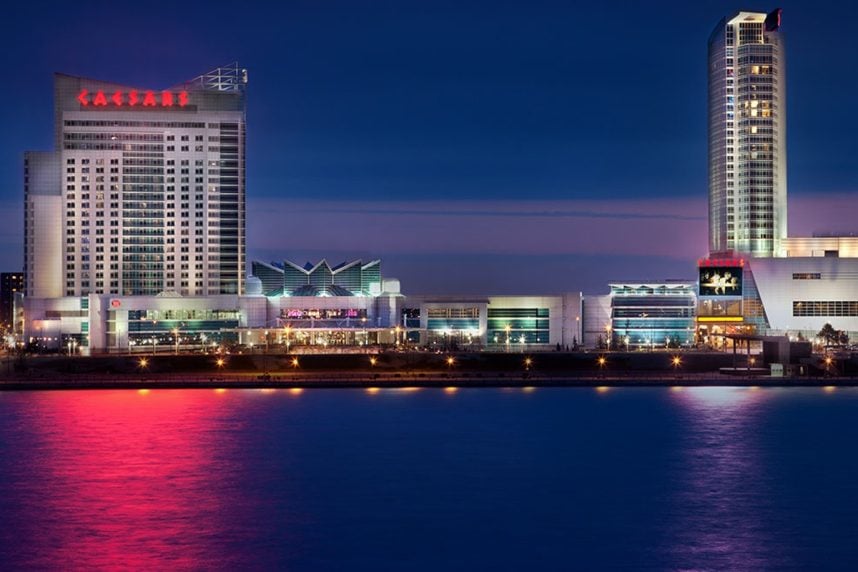
Caesars Entertainment’s operating license at Caesars Windsor will expire in 2025. In anticipation of reaching a new partnership with the Las Vegas Strip firm or a new gaming management entity, the Ontario Lottery and Gaming Corporation (OLG) this week opened up a competitive bidding process.

Caesars Windsor Ontario Lottery OLG casino operator
Caesars Windsor in Ontario has an operational agreement in place with Caesars Entertainment that runs through 2025. In anticipation of renewing the contract or finding a new partner, the casino’s owner, the Ontario Lottery and Gaming Corporation, is conducting a competitive bidding process. (Image: Caesars Windsor)

The OLG on Wednesday initiated its Request for Pre-Qualification (RFPQ) for its Windsor casino. The RFPQ, the OLG explained, is the first step in the procurement process to select the casino’s next operator.

OLG is advancing plans that will support the long-term vibrancy and excitement of the casino experience in Ontario,” said Duncan Hannay, the president and CEO of the OLG. “Releasing the RFPQ for the Windsor casino is the first step in selecting a highly qualified service provider that will ensure the long-term competitiveness of the site while continuing to generate economic benefits for the local community and for Ontario.”

To prequalify, interested firms must demonstrate to the OLG that the organization has a lengthy track record in managing a large casino resort such as Caesars Windsor. Companies that prequalify will advance to the Request for Proposal (RFP) phase of procurement.

Caesars Windsor is near Detroit and features 750 hotel rooms. The casino floor offers 2,230 slot machines, 85 table games, and a Caesars Sportsbook. The resort also has six restaurants and four bars, plus the 5,000-seat Colosseum theater.

Caesars Favored

The OLG says the casino operators that qualify for the RFP will be given the opportunity to present their ideas for the future of Caesars Windsor. In the second round of the bidding process, the OLG will supply bidders with documents and information outlining the opportunity and the sort of information the government is looking for in a proposal.

The OLG is a Crown corporation owned by the Ontario government. Formed in 1975 with the purpose of using lotteries and gaming to generate provincial tax revenue, the OLG today owns the province’s lotteries, charity gaming businesses, Aboriginal casinos, commercial casinos such as Caesars Windsor, and racinos.

The OLG partners with both public and private companies to manage its locations. While Caesars Entertainment is a publicly traded firm, the Great Canadian Gaming Corporation and Gateway Casinos, which operate numerous OLG casino properties, are privately held.

Caesars Entertainment has operated the Windsor casino throughout its entire existence, which dates back to 1994 when the venue opened as the first commercial casino in Ontario. Caesars is reportedly interested in extending its OLG contract and is the presumed heavy front-runner in the competitive bid.

Contracts Uniform

The OLG’s brick-and-mortar casino portfolio includes 28 locations. The OLG’s gaming partners all utilize the same formula to decide the amount of the gaming proceeds that must be shared with the government unit. Those proceeds are predominantly allocated back to the host community.

The City of Windsor’s revenue share from Caesars Windsor in the fourth quarter of 2022 was a little more than $2 million. Since its opening, the casino has benefited Windsor with more than $80.3 million.

The post Caesars Windsor Operating License to Expire, Ontario Opens Competitive Bidding appeared first on Casino.org.

Indiana Gaming Commission Raises Concerns Over NeoGames 2020 License Application

The Indiana Gaming Commission (IGC) pulled from its meeting Thursday a decision to act on a vendor’s license application that has been in review for nearly three years. However, that move appears to be the last time the application for NeoGames will get extended.

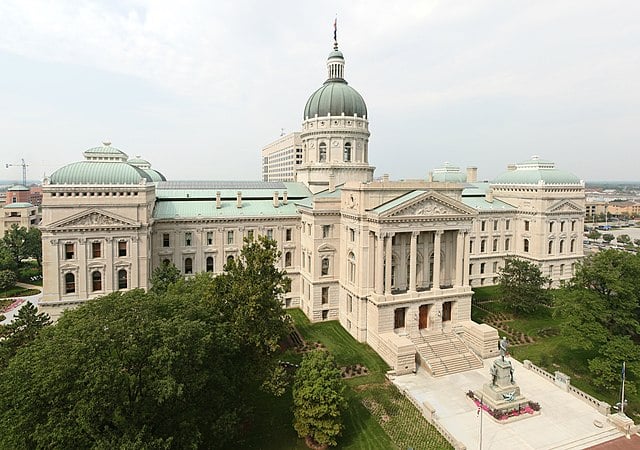
An aerial shot of the Indiana State House in Indianapolis. The Indiana Gaming Commission on Thursday delayed taking action on the license application for NeoGames, a vendor that applied for its license in September 2020. IGC officials said there are concerns about one of the owners of the company. (Image: Massimo Catarinella/Wikimedia Commons)

NeoGames provides player account management (PAM) services in the state for Caesars Sportsbook. It applied for its Indiana license on June 8, 2020, according to IGC records. It received a temporary license three months later and has received two renewals of that temporary license.

IGC Executive Director Greg Small told commissioners that IGC staff has raised issues about its suitability for permanent licensure. In particular, the concerns regard a “substantial owner” of the company headquartered in Tel Aviv.

“Staff and applicant have been working to resolve these concerns, but I regret to inform the commission that we do not have a resolution at this time,” Small said.

The continued delay frustrated IGC Chairman Milton Thompson, who said the review seemed to be taking “abnormally long.” Other commissioners felt the same way.

This looks like a matter that we’ve been kicking the can down the road, or all parties have, and it’s time for everybody to show their hands,” Commissioner Michael Williams said.

Thompson called on the commission staff to provide “a definite plan of action” by the time it comes before the body in June.

Messages sent Thursday to NeoGames and Caesars seeking comment were not returned.

NeoGames Expanding in US

The partnership between NeoGames and Caesars dates back nearly five years. In October 2018, NeoGames reached a deal with William Hill to provide PAM services for the company’s online sportsbooks. Two years later, Caesars Entertainment announced its acquisition of William Hill. Last year, Caesars sold William Hill’s non-US assets to 888 Holdings.

When it purchased William Hill, Caesars acquired a 24.5% ownership share in the iGaming and iLottery services provider. It divested from that position by March 2022.

While NeoGames has not been able to complete its license application in Indiana, it has moved forward to expand its US operations. On Friday, NeoGames announced its iGaming content-providing subsidiary Pariplay agreed to provide games to the DraftKings online casino platform in New Jersey.

“Launching our content with them in New Jersey is a huge statement of intent for us regarding our plans for North America, and we very much look forward to developing this relationship,” NeoGames President Tsachi Maimon said.

NeoGames mentioned Pariplay also expects to provide content for DraftKings iGaming operations in Michigan and West Virginia, with the possibility for additional states pending regulatory approvals.

IGC Fines Ameristar, Horseshoe Casinos

Also at Thursday’s IGC meeting, commissioners approved disciplinary actions against 20 vendors, companies, casinos, and sports betting operators.

The two biggest fines were levied against Ameristar Chicago, which operates a casino in East Chicago. The IGC charged the Penn Entertainment Casino on five counts and fined $37,000. The most serious violation stemmed from a sportsbook supervisor accepting wagers from players via text messages without collecting payment.

Horseshoe Hammond agreed to a $34,000 fine covering five counts against it. The most serious charge was the Caesars casino laying off 16 individuals without first seeking IGC approval. The order stated the casino notified IGC about its intent to lay off workers. Commission staff responded that such a move would only be approved if casino leadership followed the routine procedure.

Last August, Horseshoe reported the positions to be eliminated, including a marketing director and an executive sous chef. However, by the time Horseshoe filed its report with the IGC, those positions were already eliminated and the workers in those roles were let go.

The post Indiana Gaming Commission Raises Concerns Over NeoGames 2020 License Application appeared first on Casino.org.