Texas Sports Betting Unlikely Before 2027 Amid Rising Opposition

Indy-Gaming-Why-Texas-is-for-now-not-likely-to-legalize-sports-bettingEfforts to legalize sports betting in Texas are facing substantial hurdles, largely due to increased lobbying and campaign contributions aimed at legalizing casinos in the state. These actions have galvanized anti-gaming forces in Texas, reducing the likelihood that sports betting will be legalized in the near future.

According to a recent report by Eilers & Krejcik Gaming, a Southern California advisory firm specializing in sports betting analysis, Texas has been removed from the list of states likely to legalize sports betting by 2025. The firm attributes this decision to the intensifying opposition to gambling in Texas, driven primarily by efforts from Las Vegas Sands Corp.

Las Vegas Sands has invested millions of dollars over the past decade in failed attempts to legalize casinos in Texas. The company is once again leading a push for a casino bill as the state approaches its biennial legislative session. Despite these efforts, opposition to gambling in the state has only strengthened, creating significant obstacles for the legalization of sports betting.

The Texas Tribune reported in May that Miriam Adelson, who controls 53 percent of Las Vegas Sands, contributed $9 million to the Texas Defense Fund, a political action committee that supported Republican incumbents in the Texas House during the primary elections. In addition to this political involvement, Adelson spent $3.5 billion in December to acquire a 73 percent stake in the NBA’s Dallas Mavericks. The team, which recently lost to the Boston Celtics in the NBA Finals, is expected to advocate for a new arena in Dallas, potentially tied to a future hotel-casino resort operated by Las Vegas Sands.

Mark Cuban, co-owner of the Mavericks who retained a 27 percent stake in the team, emphasized the importance of the casino aspect of the project. Speaking at a sports economics forum in Dallas, Cuban stated, “The 10 percent of the people who gamble pay for everything else,” highlighting the financial viability of integrating a casino into the project.

Andy Abboud, Senior Vice President of Sands, also spoke at a recent event hosted by the North Texas Commission, a public-private partnership that includes Dallas-area businesses and local governments. Abboud briefed business leaders on the potential benefits of destination gaming, with the commission forming an exploratory committee to examine the issue further.

However, these initiatives have only intensified opposition from Texas’ anti-gaming faction, which is predominantly led by Republicans in the Texas State Senate. Chris Krafcik, an analyst from Eilers & Krejcik, noted that while the Texas House passed an online sports betting bill in 2023—backed by major sports betting companies, a coalition of Texas’ professional sports teams, and former Texas Gov. Rick Perry—it was ultimately blocked in the Senate. This development supports Krafcik’s view that “the Senate is the chamber that matters, and things there are not moving in the right direction.”

Krafcik also pointed out that the Texas Republican Party has explicitly instructed lawmakers to oppose any form of gambling expansion, as well as any budget proposals that include revenue from legalized gambling. He highlighted the party’s firm stance against gambling, noting that “[the party’s platform]

even explicitly addresses the warmer reception gambling expansion has had in the House.”

Given these challenges, Krafcik now believes that Texas may not legalize sports betting until at least 2027, with the earliest possible launch coinciding with the NFL season opener in the fall of 2028.

Source:

Indy Gaming: Why Texas is, for now, not likely to legalize sports betting, thenevadaindependent.com, August 21, 2024.

The post Texas Sports Betting Unlikely Before 2027 Amid Rising Opposition appeared first on Casino News Daily.

AGA: Regulators Should Probe Sweepstake Casinos and Sportsbooks

New-anti-sweepstakes-policy-released-by-American-Gaming-AssociationAs the popularity of sweepstakes-based wagering models continues to surge, the American Gaming Association (AGA) has sounded the alarm on the potential risks these platforms pose to consumers and the legal gaming industry. In a recently released policy statement, the AGA emphasized the need for increased regulatory oversight to prevent sweepstakes casinos from circumventing state gambling laws and exploiting legal ambiguities to operate unchecked.
Sweepstakes Casinos: A Growing Threat

The rise of so-called “sweepstakes casinos” has introduced a new and unregulated form of online gambling that mimics traditional casino games such as slots, roulette, blackjack, and poker. These platforms allow players to engage in gameplay either for free or by purchasing virtual currency, commonly known as Gold Coins. Alongside Gold Coins, players may also receive Sweep Coins, a secondary form of virtual currency that can be exchanged for cash or prizes, making these games increasingly indistinguishable from conventional online casinos.

However, the dual-currency model used by these operators—where Sweep Coins are presented as “free” but often require real money or significant time investment to redeem—has raised concerns among regulators and industry stakeholders. The AGA’s policy statement highlights the dangers posed by the lack of regulatory oversight, which “presents many risks for consumers as well as the integrity and economic benefits of the legal gaming market through investment and tax contributions.” The organization notes that many sweepstakes operators implement weak, if any, responsible gaming protocols and offer minimal self-exclusion processes, leaving players vulnerable to exploitation.

Michigan Takes Action Against Sweepstakes Operators

In response to the growing presence of sweepstakes casinos, some states have begun taking legal action to curb their operations. Michigan, in particular, has emerged as a battleground in the fight against unregulated sweepstakes gambling. In November and December of 2023, the Michigan Gaming Control Board (GCB) issued cease-and-desist orders to Cyprus-based Sweepstakes Limited (Stake.us) and San Francisco-based VGW Luckyland, both of which offer sweepstakes-based gaming services. These companies were found to be in violation of Michigan’s gaming laws, including the Lawful Internet Gaming Act, which mandates that internet gaming can only be offered by licensed operators.

The GCB’s crackdown on VGW Luckyland also cited violations of the Michigan Gaming Control and Revenue Act and the Michigan Penal Code. The GCB determined that VGW’s activities constituted illegal gambling, as they involved “conducting illegal gambling by offering an internet game in which a player wagers something of monetary value for the opportunity to win something of monetary value.” As a result of these violations, VGW and other sweepstakes operators have been forced to cease operations in Michigan.

A Call for Broader Regulatory Scrutiny

The AGA has called for more comprehensive regulatory scrutiny of sweepstakes casinos and sportsbooks operating under similar models across the United States. The trade group argues that these platforms exploit legal loopholes and often operate in a legal gray area, undermining the integrity of the regulated gaming industry and depriving states of crucial tax revenue. The AGA’s policy statement urges regulators and state attorneys general to investigate these companies thoroughly to ensure compliance with state laws and regulations.

In addition to enforcement actions, the AGA recommends that legislatures consider enacting new laws to close existing loopholes that allow unlicensed operators to offer online real-money gambling under the guise of sweepstakes. “Where state laws and regulations are not clear, legislatures should consider enacting legislation to prevent unlicensed operators from exploiting loopholes in sweepstakes regulations to offer online real money gambling,” the AGA stated in its policy.

The Need for Immediate Action

Industry experts warn that the rapid growth of sweepstakes casinos presents an urgent threat to consumers and the legal gaming industry. According to a recent report by Eilers & Krejcik, the market for sweepstakes gaming is expected to reach approximately $8.5 billion in 2024, with projections suggesting it could explode to over $11 billion by 2025. This growth has been fueled, in part, by a surge of private equity investment, with investors betting that states will be too slow to crack down on these operators.

As highlighted in a recent LinkedIn post, the opaque nature of sweepstakes operations “presents a prime opportunity for illegal activity and enriching bad actors.” The post further warns that sweepstakes casinos are “flooding into states in which online gaming is otherwise illegal, and it’s hitting unsuspecting consumers like a tidal wave.”

Given the potential for harm, the AGA and other industry stakeholders are urging regulators to take swift action to protect consumers and preserve the integrity of the legal gaming market. The sooner regulatory bodies and state attorneys general address these concerns, the better it will be for consumers, the industry, and the prevention of illegal activities such as money laundering.

The post AGA: Regulators Should Probe Sweepstake Casinos and Sportsbooks appeared first on Casino News Daily.

Genting NY Casino Bid Could Be Hindered by Las Vegas Controversy, Says CIMB

Genting Bhd’s effort to procure one of the three downstate casino licenses in New York could be damaged by potential regulatory discipline the operator faces in Nevada, according to CIMB Securities.

Selwyn Balkissoon
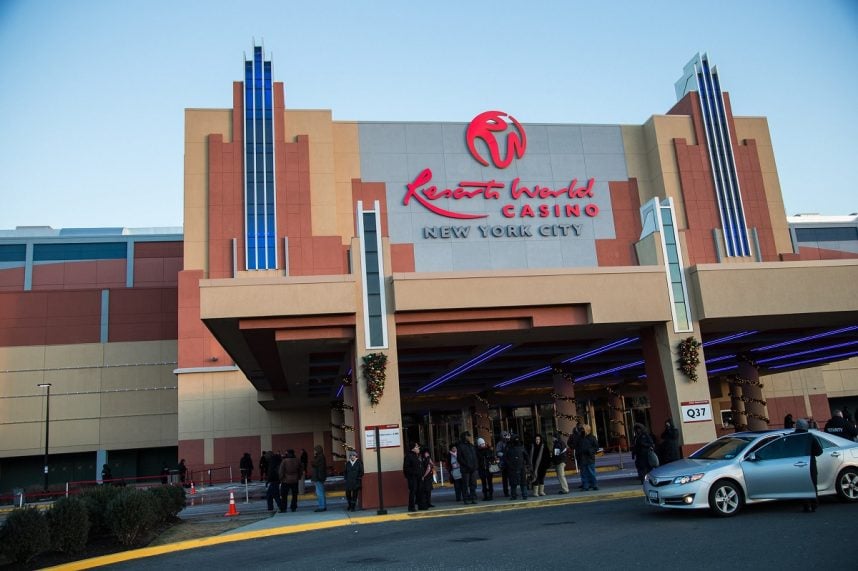
Resorts World New York in Queens. Operator Genting’s hopes of converting the venue to a traditional casino could be harmed by Las Vegas controversies, says a research firm. (Image: NYT)

Last week, the Nevada Gaming Control Board (NGCB) said it is examining financial penalties against Resorts World Las Vegas (RWLV) — Genting’s lone Nevada property — over that venue’s role in allowing known illegal bookmakers to wager there. Nevada regulators alleged that Resorts World Las Vegas not only knowingly allowed those bookies to bet there, but also didn’t scrutinize the source of their cash. That could call into question the veracity of the integrated resort’s anti-money laundering protocols.

We think another risk is that a negative review by the commission could jeopardize Resorts World New York City’s bid,” wrote CIMB analysts in a recent report to clients.

Genting-owned Resorts World New York is a slots-only venue in Queens. The venue has been operational for about 13 years and over that time, it’s delivered more than $4 billion in taxes for the state. That couple with its status as one of the highest-grossing regional casinos in the country despite having no table games has led to speculation that Resorts World New York is almost a lock to win one of three downstate permits.

Genting Could Face Hefty Fine in Nevada

CIMB Securities observed that Resorts World Las Vegas could have to answer for as many as 300 separate violations, which could result in fines totaling $75 million.

It’s also possible that if Nevada regulators want to take a hard line against Genting, RWLV’s non-restricted gaming license could be suspended or even revoked, though the research firm acknowledges that both a fine of that size and revocation of the gaming permit would be unusually harsh punishments.

“Some industry experts say that this is rare and the commission is unlikely to go that far, due to the uncertain long-term impact from taking such a drastic measure,” noted the brokerage firm.

Scott Sibella, the former MGM Resorts International and RWLV executive at the heart of the scandal, pleaded guilty in January to violating the federal Bank Secrecy Act and in May was tagged with $9,500 fine and a $100 special levy. In Nevada, he could face loss of his gaming license and up to $750,000 in fines.

Genting NY Casino Bid Could Withstand Controversy

To date, no New York regulators have commented on whether or not the goings on at Resorts World Las Vegas could endanger Genting’s Empire State ambitions. In New York, the current emphasis is on finding some way to expedite the start of the bidding process for the three downstate casino licenses — something that appears unlikely over the near-term.

About a year ago, rumors surfaced that MGM’s Empire City Casino could also be hampered in its efforts to land one of those permits because of Sibella’s ties to that operator. He served as president of MGM Grand on the Las Vegas Strip for a decade.

However, that’s just speculation and no New York regulator has publicly said the Genting and MGM bids there are in jeopardy due to controversies in Nevada. With both operators already established and known to New York policymakers and with both pledging billions of dollars enhancements to their existing venues and the creation of thousands of new jobs should they win traditional casino licenses, it’s possible their New York ambitions can withstand the Sibella-related imbroglio in Las Vegas.

The post Genting NY Casino Bid Could Be Hindered by Las Vegas Controversy, Says CIMB appeared first on Casino.org.

Virginia Lawmakers Mull Formation of Gaming Commission Following Expansion

Virginia lawmakers in Richmond continue to study whether the commonwealth should form an agency dedicated to the regulation of commercial gaming.

Virginia Gaming Commission casinos parimutuel wagering
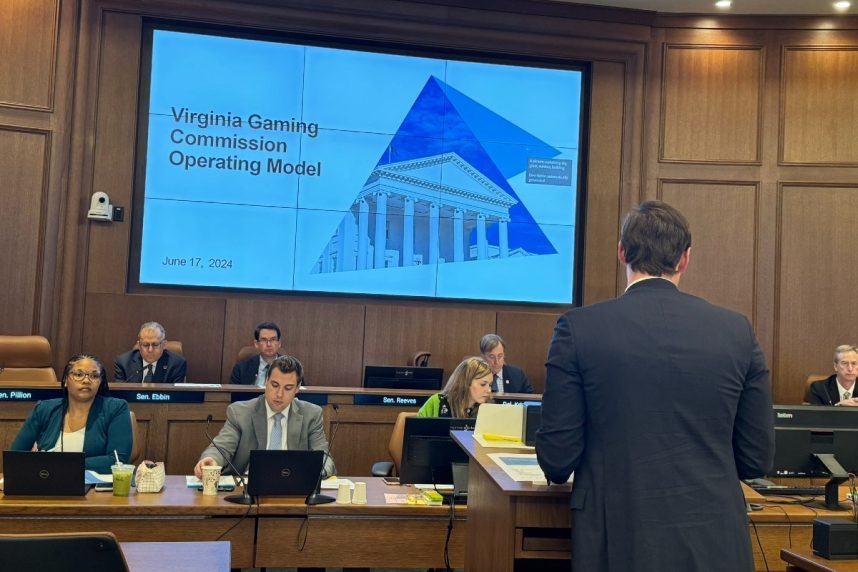
The Joint Subcommittee to Study the Feasibility of Establishing the Virginia Gaming Commission is seen in July 2024. Churchill Downs wants parimutuel wagering to remain under the regulatory scope of the Virginia Racing Commission. (Image: X)

Virginia has expanded gambling considerably in recent years to include up to five brick-and-mortar casinos with slot machines, live dealer table games, and sports betting. Virginia is also now home to online sports betting and slot-like historical horse racing machines that operate in parimutuel wagering facilities.

The Virginia Lottery oversees lottery gaming, casino activity, and retail and mobile sports betting. The Virginia Racing Commission regulates HHR gaming, horse racing, and parimutuel wagering.

A joint subcommittee of the Virginia General Assembly remains reviewing the feasibility of establishing a commercial gaming regulatory, which would be named the Virginia Gaming Commission. The body would regulate casino gambling, online sports betting, HHR wagering, and parimutuel facilities. The Virginia Lottery would return to only governing lottery operations.

The joint subcommittee is expected to make its recommendations to the General Assembly in January.

Consultant Recommends Formation 

During the joint subcommittee’s meeting on Wednesday, Brianne Doura-Schawohl, a consultant with her boutique Doura-Schawohl Consulting, LLC, recommended to the bipartisan panel to set aside funding for the establishment of the Virginia Gaming Commission. Doura-Schawohl said a central gaming regulatory agency is best at providing consumer protections, governing operators, and ensuring that the societal harms of expanded gaming are minimalized.

Doura-Schawohl said Virginia has an obligation to direct a percentage of its gaming tax for the research, prevention, treatment, and recovery of problem gambling.

The most comprehensive model to mitigate risk and reduce harm is a bifurcated approach between the state health agency and one central gaming regulatory agency,” Doura-Schawohl said. “The regulatory should be empowered to require and enforce stringent consumer protection provisions as part of licensure.”

Virginia, once among the most limited gaming states, is poised to become a big player in the US casino industry as retail casino resorts open across the commonwealth.

In January 2023, Rivers Casino Portsmouth became the first permanent casino to open in Virginia. Larger casino resorts are soon opening in Danville and Bristol.

Caesars Entertainment plans to open its $750 million integrated resort Caesars Virginia in Danville before the year’s end. Hard Rock International plans to open the $550 million Hard Rock Hotel & Casino Bristol this fall or winter.

Petersburg voters will decide whether to authorize a $1.4 billion mixed-use complex with an integrated resort casino this November. And the Pamunkey Indian Tribe continues to move forward with a more than $500 million casino project in Norfolk.

Churchill’s Opposition

Churchill Downs, Inc., which operates HHR machines in Virginia and is building The Rose Gaming Resort, a $460 million development, in Dumfries, is opposed to putting parimutuel wagering regulation under the scope of the proposed Virginia Gaming Commission.

Churchill, which also owns and operates the Colonial Downs Racetrack in New Kent, says other states that have moved parimutuel wagering regulation from a racing commission to a gaming commission have seen allocations to horsemen decline. The Kentucky-based company pointed to Michigan where in 1997 the Michigan Racing Commission merged with the newly formed Michigan Gaming Control Board.

Michigan’s once vibrant thoroughbred industry went from running over 1,000 races for $9 million in purses (2003) to ceasing thoroughbred racing,” Churchill’s presentation to the joint subcommittee detailed. “In 2003, there were 375 thoroughbreds foaled in Michigan and in 2022 there were four.”

Michigan’s final racetrack, Northville Downs, closed earlier this year bringing an end to Michigan’s horse racing industry.

“Given the nuances of parimutuel wagering, live horse racing, simulcast wagering, and advanced deposit wagering, Churchill Downs believes the oversight of historical and live horse racing should remain at the Virginia Racing Commission,” the company concluded.

The post Virginia Lawmakers Mull Formation of Gaming Commission Following Expansion appeared first on Casino.org.

Colombia’s Online Gambling Industry Fuels Economic Growth in Q2 2024

Colombia-government-credits-online-gambling-for-supporting-GDP-growth-in-Q2Colombia’s online gambling industry has emerged as a significant driver of economic growth in the second quarter of 2024, contributing to a 2.1% increase in the country’s Gross Domestic Product (GDP). The National Administrative Department of Statistics (DANE) identified online gambling as one of the key activities behind this economic upswing, highlighting the sector’s growing influence on the nation’s financial health.


Online Gambling’s Impact on GDP Growth

The recent report from DANE underscored the vital role of online gambling in bolstering Colombia’s economy, particularly through its association with major sporting events. Piedad Urdinola, DANE’s director, emphasized that the surge in online betting was largely driven by popular sporting events, such as the Copa América, where the Colombian national team made it to the final. This surge in sports-related betting activity has been credited with significantly boosting the overall performance of the iGaming sector.

In the second quarter alone, Colombia’s online gambling market generated a staggering COP10 billion (approximately $2.5 billion). According to Marco Emilio Hincapié, president of the Colombian gambling regulator Coljuegos, sports betting accounted for nearly half (47%) of the total gross gaming revenue (GGR) during this period. The success of the sector reflects a combination of well-regulated markets and strategic advancements that have effectively curbed illegal gambling operations.

Health Sector Benefits from Gambling Revenue

The growth of online gambling in Colombia has also translated into substantial benefits for the country’s health sector. Hincapié reported that, to date, online betting has generated nearly COP231.3 million (around $58 million) in revenues allocated to healthcare. This figure represents a 20% increase in monopoly revenues paid to Coljuegos compared to the previous year, underscoring the sector’s expanding contribution to public welfare.

Colombia was the first country in Latin America to regulate iGaming, a milestone achieved with the enactment of the Egaming Act in 2016. This legislation allowed for the legal operation of both online casinos and sports betting, subjecting operators to a tax rate of 15% of GGR for those with a return-to-player (RTP) rate of 83%, and 17% for operators exceeding this RTP threshold.

Future Outlook and Continued Innovation

The positive impact of the online gambling sector on Colombia’s economy and health system has encouraged regulatory bodies to pursue further innovations. Hincapié expressed optimism about the future of the industry, stating that if current trends continue, the total collection from gambling activities could exceed $1 billion by the end of the year. This would surpass initial projections and provide even more resources for public health and scientific research.

In addition to sports betting, other localized games such as bingo and casino games also contributed significantly, accounting for 33% of the GGR. Lottery games like AstroSport and Baloto added another 13% and 7%, respectively, to the revenue mix.

Hincapié concluded by reaffirming Coljuegos’ commitment to maintaining the growth trajectory of the gambling sector through ongoing regulation and innovation. By fostering a well-regulated environment, the industry aims to generate more jobs, stimulate economic activity, and continue to provide valuable financial support to vital public sectors such as health and research.

Source:

“Colombia government credits online gambling for supporting GDP growth in Q2”. iGaming Business. August 20, 2024.

The post Colombia’s Online Gambling Industry Fuels Economic Growth in Q2 2024 appeared first on Casino News Daily.