Loterj Operators Secured by Court Ruling Amid Federal Betting Regulations

Brazil-court-confirms-Rio-Loterj-licensees-can-remain-active-without-a-federal-licenceIn response to new federal betting regulations, the Brazilian government implemented significant changes in September with the introduction of Normative Ordinance No 1,475. This ordinance allowed only operators who had already applied for a federal betting license and were actively operating to continue doing so until the official launch of the regulated market on January 1, 2025. The deadline for submitting license applications passed on September 30, prompting a wave of last-minute submissions from businesses hoping to remain compliant.

A total of 182 applications were submitted via Brazil’s Sigap betting management system by the deadline. However, one submission, from Tecnologia e Desenvolvimento Ltda, was entered after the deadline, leaving it potentially vulnerable to the upcoming regulations.

Concerns Raised by State Lottery-Licensed Brands

The new federal rules sparked concerns among operators licensed under state lotteries like Loterj, the Rio de Janeiro State Lottery. These brands worried about their ability to continue operating beyond the October 1 deadline without a federal license. Fortunately for them, a ruling from Brazil’s Supreme Federal Court (STF) on October 1 provided a crucial exemption, protecting Loterj operators from the consequences of missing the federal deadline.

Federal judge Antônio Cláudio Macedo da Silva criticized the federal regulations for conflicting with Loterj’s Accreditation Notice 001/2023. This notice, which permits accredited entities to operate public lottery services for up to five years, was deemed incompatible with the federal ordinances regarding the advertisement and banning of unlicensed betting websites.

Loterj Operators Exempt from Federal Regulations

According to the court’s injunction, Loterj license holders retain “broad and unrestricted rights” to continue offering fixed-odds online betting. This exemption applies as long as their bettors are in Rio de Janeiro. The court found that the federal ordinances extended beyond the scope of federal jurisdiction and interfered with the regulatory authority of Brazil’s states. In his ruling, Judge Macedo da Silva stated that the ordinances violate Law No 13,756/2018, which supports the legality of previous legal acts, thus protecting Loterj operators from federal restrictions.

This decision was largely influenced by a previous ruling in 2020 that declared the federal monopoly on lotteries unconstitutional. The ruling permitted individual states and federal districts to establish their own lotteries, subsequently allowing operators in states like Rio de Janeiro to run sports betting under state licenses.

Previous Court Decisions Shape the Current Landscape

The STF’s 2020 ruling had already set a precedent for state-run lotteries like Loterj, deeming the federal lottery monopoly unconstitutional. Sports betting, which falls under the broader category of lottery games in Federal Law No 13,756/2018, has since been allowed under Loterj state licenses. This gave operators within Rio de Janeiro and other regions like Paraná the ability to offer sports betting under local jurisdiction.

Local legal experts, including Eduardo Carvalhaes and Karen Coutinho from Lefosse, expressed confidence that state-licensed operators would remain unaffected by the new federal restrictions. They explained that operators authorized under state licenses, such as Loterj, should continue their operations unhindered, even as unlicensed betting sites face new federal limitations.

Federal Injunction Secures Loterj’s Rights

In the days leading up to October 1, Loterj filed a lawsuit in federal court to prevent the blocking or banning of sportsbooks authorized within Rio de Janeiro. This legal challenge, aimed at the Ministry of Finance’s Prizes and Betting Secretariat, sought to overturn federal Ordinances No 1,225, 1,231, and 1,475, which imposed strict rules on advertising and site operation for unlicensed operators.

Loterj argued that these ordinances interfered with its regulatory authority by blocking sportsbooks that had not applied for federal licenses. In its writ of mandamus, Loterj emphasized the legality and regularity of its licensees’ operations within Rio de Janeiro, asserting that the federal government lacked the authority to prevent these operators from advertising or continuing to offer services.

Judge Macedo da Silva sided with Loterj, issuing an injunction that suspended the effects of the federal ordinances within Rio de Janeiro. His ruling ensured that Loterj operators could continue offering fixed-odds betting online without the need for dual accreditation from the federal government.

The court’s decision also clarified that bettors must declare that all wagers are placed within the state of Rio de Janeiro for taxation and legal purposes. With this ruling, Loterj operators can continue advertising their services and sponsoring events across Brazil, free from the penalties imposed by federal regulations.

Source:

Loterj gets injunction in defense of ‘Bets’ operating in Rio without requesting a federal license“, gamesbras.com, October 1, 2024.

The post Loterj Operators Secured by Court Ruling Amid Federal Betting Regulations appeared first on Casino News Daily.

Missouri’s Sports Betting Initiative Heads to November Ballot

Missouri-wagering-initiative-will-be-on-November-ballotIn November, Missouri voters will have the opportunity to decide the fate of sports betting within the state. After a long history of failed attempts to pass sports wagering legislation, a judge’s ruling last Friday, September 6, 2024, ensured that the sports betting ballot initiative would remain on the state ballot.

If passed, the initiative would legalize both digital and retail sports betting in Missouri. The initiative has garnered strong support from Missouri’s professional sports teams and residents. Currently, many bettors from the Show Me State travel to neighboring states such as Illinois and Kansas to place their wagers.

Financial and Regulatory Benefits for the State

With neighboring states like Arkansas and Kansas already legalizing sports betting, Missouri is losing out on a potential revenue stream. Legalizing wagering would not only allow residents to place bets from the comfort of their own state but also create new economic opportunities through tax revenue and licensing fees.

The proposed initiative places sports betting under the regulation of the Missouri Gaming Commission. Both digital platforms and physical venues such as casinos and professional sports stadiums would offer sports wagering, with the commission overseeing operations to ensure compliance with state laws.

The measure also includes provisions for responsible gambling, which would be supported by a minimum of $5 million in annual tax revenue. Any remaining tax revenue from sports betting would be directed toward funding education, including elementary, secondary, and higher education programs.

This initiative promises significant economic benefits, with proponents estimating that the state could see tax revenues ranging from $0 to $28.9 million annually, depending on deductions and other variables.

A recent poll conducted by Saint Louis University and YouGov PLC found that approximately 50% of Missouri residents support the sports betting initiative, while 30% oppose it, and 20% remain undecided.

Judge’s Decision Clears Path for Voter Approval

On Friday, Cole County Circuit Judge Daniel R. Green ruled that the sports betting ballot initiative would remain on the November ballot. This decision followed a seven-hour hearing in which political consultants argued that the initiative should be disqualified due to allegedly invalid signatures.

Judge Green ultimately ruled that the plaintiffs failed to present enough evidence to prove that 95 signatures were improperly verified by the Secretary of State’s office. He emphasized that lawsuits aimed at removing certified ballot initiatives are “highly disfavorable.” By keeping the sports betting initiative on the ballot, voters now have the opportunity to decide its future.

A Crucial Vote for Missouri’s Future

In addition to the sports betting initiative, Missouri voters will also weigh in on Amendment 5, which would authorize the Missouri Gaming Commission to issue an additional gambling boat license for the Lake of the Ozarks region. Both initiatives have the potential to reshape the state’s gaming landscape and provide new revenue streams for public services.

As Missouri looks to join the growing list of states that have legalized sports betting, the November vote will be a pivotal moment for the state’s economy and gaming regulations. If passed, the initiative will bring much-needed tax revenue while ensuring that sports wagering is conducted in a responsible and regulated manner.

Source:

“Sports betting will be on Missouri ballots this November” by Caroline Pettey and Joey Schneider, newsnationnow.com, September 8, 2024.

“Missouri wagering initiative will be on November ballot, judge rules” by Jill R. Dorson, igamingbusiness.com, September 8, 2024.

The post Missouri’s Sports Betting Initiative Heads to November Ballot appeared first on Casino News Daily.

Texas Sports Betting Unlikely Before 2027 Amid Rising Opposition

Indy-Gaming-Why-Texas-is-for-now-not-likely-to-legalize-sports-bettingEfforts to legalize sports betting in Texas are facing substantial hurdles, largely due to increased lobbying and campaign contributions aimed at legalizing casinos in the state. These actions have galvanized anti-gaming forces in Texas, reducing the likelihood that sports betting will be legalized in the near future.

According to a recent report by Eilers & Krejcik Gaming, a Southern California advisory firm specializing in sports betting analysis, Texas has been removed from the list of states likely to legalize sports betting by 2025. The firm attributes this decision to the intensifying opposition to gambling in Texas, driven primarily by efforts from Las Vegas Sands Corp.

Las Vegas Sands has invested millions of dollars over the past decade in failed attempts to legalize casinos in Texas. The company is once again leading a push for a casino bill as the state approaches its biennial legislative session. Despite these efforts, opposition to gambling in the state has only strengthened, creating significant obstacles for the legalization of sports betting.

The Texas Tribune reported in May that Miriam Adelson, who controls 53 percent of Las Vegas Sands, contributed $9 million to the Texas Defense Fund, a political action committee that supported Republican incumbents in the Texas House during the primary elections. In addition to this political involvement, Adelson spent $3.5 billion in December to acquire a 73 percent stake in the NBA’s Dallas Mavericks. The team, which recently lost to the Boston Celtics in the NBA Finals, is expected to advocate for a new arena in Dallas, potentially tied to a future hotel-casino resort operated by Las Vegas Sands.

Mark Cuban, co-owner of the Mavericks who retained a 27 percent stake in the team, emphasized the importance of the casino aspect of the project. Speaking at a sports economics forum in Dallas, Cuban stated, “The 10 percent of the people who gamble pay for everything else,” highlighting the financial viability of integrating a casino into the project.

Andy Abboud, Senior Vice President of Sands, also spoke at a recent event hosted by the North Texas Commission, a public-private partnership that includes Dallas-area businesses and local governments. Abboud briefed business leaders on the potential benefits of destination gaming, with the commission forming an exploratory committee to examine the issue further.

However, these initiatives have only intensified opposition from Texas’ anti-gaming faction, which is predominantly led by Republicans in the Texas State Senate. Chris Krafcik, an analyst from Eilers & Krejcik, noted that while the Texas House passed an online sports betting bill in 2023—backed by major sports betting companies, a coalition of Texas’ professional sports teams, and former Texas Gov. Rick Perry—it was ultimately blocked in the Senate. This development supports Krafcik’s view that “the Senate is the chamber that matters, and things there are not moving in the right direction.”

Krafcik also pointed out that the Texas Republican Party has explicitly instructed lawmakers to oppose any form of gambling expansion, as well as any budget proposals that include revenue from legalized gambling. He highlighted the party’s firm stance against gambling, noting that “[the party’s platform]

even explicitly addresses the warmer reception gambling expansion has had in the House.”

Given these challenges, Krafcik now believes that Texas may not legalize sports betting until at least 2027, with the earliest possible launch coinciding with the NFL season opener in the fall of 2028.

Source:

Indy Gaming: Why Texas is, for now, not likely to legalize sports betting, thenevadaindependent.com, August 21, 2024.

The post Texas Sports Betting Unlikely Before 2027 Amid Rising Opposition appeared first on Casino News Daily.

Notre Dame Men’s Swimming Team Suspended for One Year Over Betting Pool

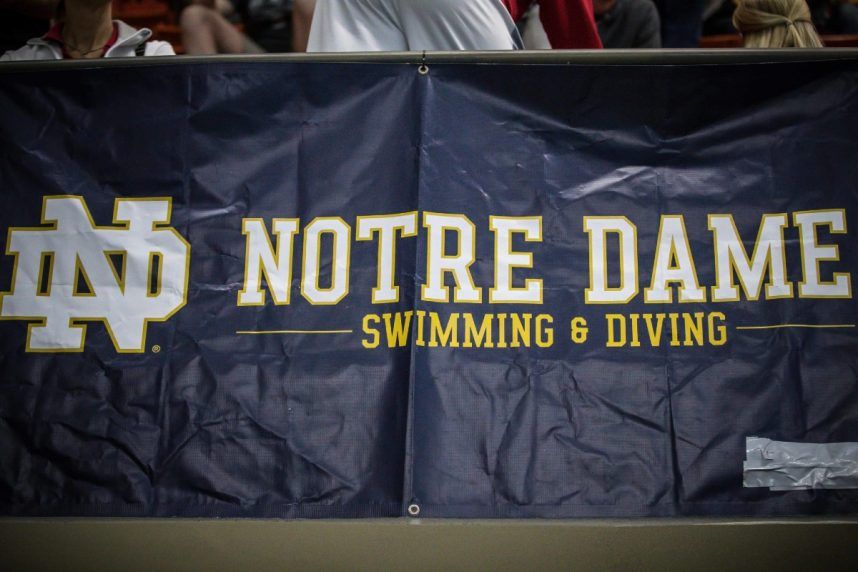
Notre Dame’s athletics department on Thursday banned its men’s swimming team for one year for violating NCAA and the school’s sports gambling rules.

Notre Dame men's swimming sports betting
The University of Notre Dame has suspended its men’s swimming team for a season after an investigation determined that a majority of the team’s swimmers participated in a rogue sports betting pool. Players on the team are free to transfer during the one-year ban. (Image: Shutterstock)

An internal investigation led by a private law firm concluded that a majority of the men’s swimmers on the Fighting Irish’s varsity team participated in an illegal betting pool. Investigators determined that the team engaged in wagering amongst themselves, and commonly bet on their individual performances and meet outcomes.

In order to ensure that this behavior ends and to rebuild a culture of dignity, respect, and exemplary conduct, we have decided to suspend the men’s swimming program for at least one academic year,” said Notre Dame Athletic Director Pete Bevacqua.

The NCAA prohibits student-athletes from participating in sports betting, regardless of whether it’s through legal sportsbooks in regulated sports betting states or through an offshore operator. College players are additionally banned from participating in betting pools and other social betting activities like Super Bowl squares.

There was no proof that any members of the women’s or diving teams partook in the betting.

Coaches Unaware

The Notre Dame probe didn’t turn up any evidence that men’s swimming coach Chris Lindauer was aware of the team’s betting activities. The investigators reported that no one on Lindauer’s staff was also in on the game.

“The review found that the staff was not aware of gambling or the scope and extent of other troubling behaviors because team members effectively concealed such behaviors from the coaches and staff through concerted efforts,” Bevacqua said. “According to the review, when the staff became aware of certain isolated incidents of unacceptable conduct, they treated them seriously and professionally.”

Lindauer only recently returned from Paris where he was an assistant coach for USA Swimming and helped his Fighting Irish swimmer Chris Guiliano win a gold medal as part of the men’s 400-meter freestyle relay team. The Notre Dame athletics department said Guiliano was among the minority on the Fighting Irish team who did not engage in the betting ring.

Bevacqua became Notre Dame’s athletics director in June 2023. He previously served as chair of NBC Sports and the CEO of the PGA of America 

Costly Outcome

Notre Dame’s decision to ban its men’s swimming team for one year comes with detrimental costs. The Fighting Irish finished the 2023-24 season ranked 11th in the nation and was expected to compete for a national title this winter with seven incoming transfers.

With the team banned from competition for a year, NCAA rules allow players to transfer out of Notre Dame. However, any forthcoming suspension the NCAA places on individuals for participating in the betting pool would follow them to their new school.

The NCAA is reviewing Notre Dame’s men’s swimming ban and working with school officials to determine if specific player suspensions are warranted.

“The national office is aware that Notre Dame has declared several student-athletes ineligible in light of potential violations of sports betting rules,” an NCAA spokesperson told the media. “We continue to work with the school as it determines what occurred. The NCAA does not comment on specific eligibility cases due to student privacy laws, and we have no further comment at this time.”

The post Notre Dame Men’s Swimming Team Suspended for One Year Over Betting Pool appeared first on Casino.org.

Nebraska Online Sports Betting Bill Advances, Odds Remain Long

Legislation to expand gambling in Nebraska to allow online sports betting advanced out of committee on Monday during the legislature’s special session.

Nebraska online sports betting
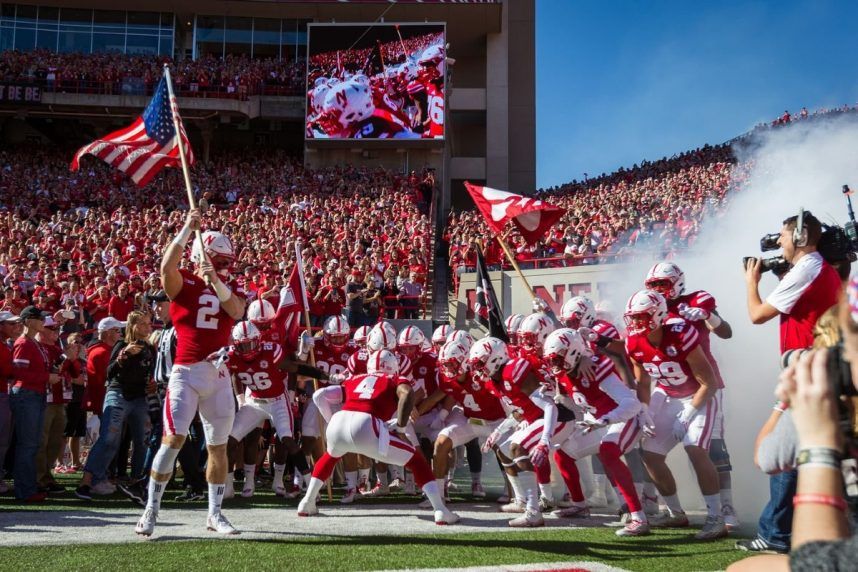
Nebraska’s beloved Cornhuskers football program kicks off its 2024-25 season on August 31. Nebraska sports betting remains limited to retail sportsbooks at casinos. (Image: Getty)

The Unicameral General Affairs Committee passed LR3CA by a 5-2 vote on the 10th day of the special legislative session. Lawmakers were called back to the Lincoln capital by Gov. Jim Pillen (R) to come up with ways to reduce property taxes.

LR3CA is a proposed legislative referendum. For the 49 elected senators in Nebraska to authorize online sports betting, they must first gain electorate support to amend the state constitution to allow such gambling.

LR3CA seeks to ask Nebraskans during the November 5 presidential election if they wish to further expand gambling in the Cornhusker State. The gaming question would come four years after Nebraska voters approved three ballot referendums that legalized commercial casino gambling at horse racetracks and provided a regulatory framework for slot machines, table games, and in-person sports betting.

Referendum Bid Finds Support

LR3CA was filed by Sen. Eliot Bostar (D-Lincoln). Bostar says it’s time Nebraska reap the tax benefits of the many Nebraskans who are already betting on sports online, whether it be in neighboring states that offer legal, regulated internet sportsbooks or by gambling on illegal, offshore websites that cater to states that have limited gaming.

Bostar says allowing online sports betting and taking sportsbooks’ gross revenue at 20% would deliver Nebraska more than $30 million a year in new revenue. That money, his LR3CA proposes, could be directed to the Property Tax Credit Cash Fund.

During the committee’s deliberation of the referendum statute, General Affairs members voted to retain control over whether Nebraska becomes an online sports betting state upon a successful referendum. While Bostar’s initial draft sought to require the legislature to pass regulatory conditions to allow online sportsbooks should the public back the ballot question, the bill was reworked to allow — not require — the lawmaking body to authorize internet sportsbooks.

It keeps power in the hands of the legislature, allows voters to speak on it, and then lets the legislature decide,” said amendment sponsor Sen. John Cavanaugh (D-Omaha).

Under Nebraska’s current gaming laws, sports bets can only be made in person at one of the state’s brick-and-mortar commercial casinos.

Long Odds

Online sports betting’s forecasted $32 million a year tax windfall wouldn’t do much to offset the $5.3 billion in property taxes the state collected from property owners last year.

The legislature is instead focusing on avenues that could significantly help homeowners during the special session. Pillen has suggested that lawmakers send him bills that trim the state government’s spending and eliminate more than 100 tax exemptions that could generate $350 million annually for the state.

Online sports betting is expected to take a back seat, the Lincoln Journal Star reports. Unless lawmakers decide to act on the Bostar bill and it finds majority support in the chamber, Nebraskans won’t be asked about online sports betting until at least November 2026, as the state only permits statewide ballot referendums during even-numbered years.

The post Nebraska Online Sports Betting Bill Advances, Odds Remain Long appeared first on Casino.org.